


Want help turning consistency into progress? Coaching keeps your training simple, structured, and sustainable.
Start Coaching →
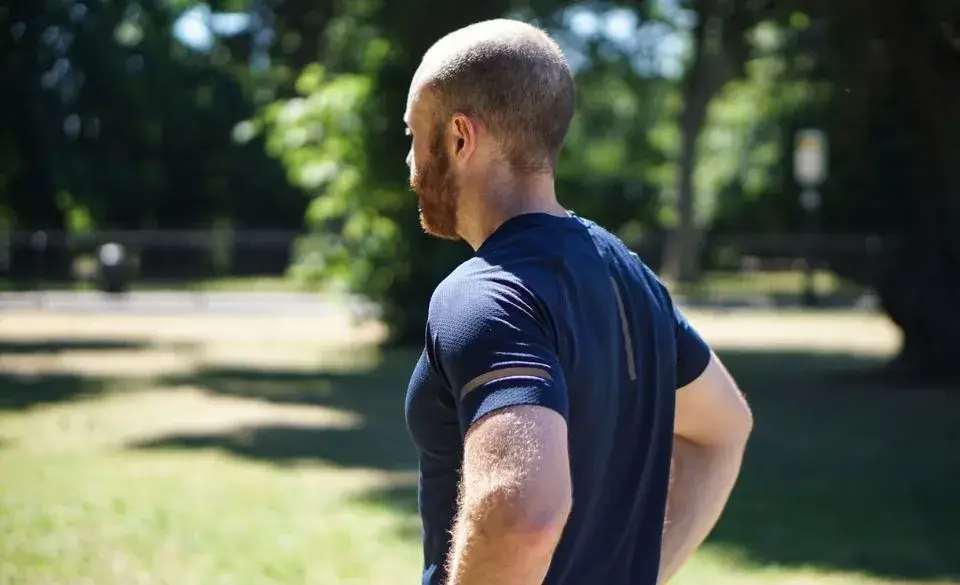
Runner checking posture after experiencing lower back pain from running in the park

Last updated:

Lower Back Pain When Running: Causes, Fixes and Prevention

Lower back pain is one of the most common musculoskeletal complaints in the world — the WHO estimates it affected 619 million people globally in 2020. Among runners, however, the picture is counterintuitively reassuring: research consistently shows that the prevalence of lower back pain is actually lower in runners than in the general population, and that regular running may reduce long-term LBP risk rather than increase it. A 2022 study found that marathon training produced no adverse structural changes to the lumbar spine on MRI scans.

That said, somewhere between 30% and 40% of runners experience lower back pain during their running careers, and when it strikes it can disrupt training significantly. Understanding the most common causes, what running-related LBP tells you about your body's current weak points, and how to address it systematically is what separates a runner who recovers quickly from one who cycles through the same injury repeatedly.

Chat with a SportCoaching coach

Not sure where to start with training?

Tell us your goal and schedule, and we’ll give you clear direction.

No obligation. Quick, practical advice.

Article Categories:

Explore our running training advice for more helpful articles and resources.

Quick Answer

Running-related lower back pain is most commonly caused by weak glutes, tight hip flexors creating anterior pelvic tilt, or weak deep core muscles — often amplified by a sedentary job. A 2021 study found runners who skip their warm-up are 2.6× more likely to experience LBP. Form corrections and targeted strengthening resolve most cases.

See a doctor if you have: pain radiating down the leg (possible sciatica), numbness or tingling in the leg or foot, pain at rest or overnight, pain that worsens with every run, or any change in bladder or bowel function (medical emergency). These symptoms suggest a structural issue beyond muscle overload.

Why Running Doesn't Cause Back Pain — But Exposes It

A useful way to think about running-related lower back pain: running rarely creates back problems from nothing. More often, it exposes problems that already exist. The lumbar spine is designed to be a stable, load-bearing structure. It handles the forces of running well when the muscles surrounding and supporting it — the deep core, the glutes, the hip abductors — are doing their jobs. When those muscles are weak or inhibited, the passive structures of the spine (the facet joints, the intervertebral discs, the ligaments) absorb forces they weren’t designed to handle at running’s repetition rate.

This is why the “desk runner” pattern is so common: someone spends 8–10 hours a day sitting, which progressively weakens the glutes and shortens the hip flexors. They then run — a sport that demands forceful hip extension at every stride and depends on the glutes for that extension. A body that can’t generate proper hip extension compensates by extending through the lumbar spine instead, increasing the load on the lower back with every step. The pain isn’t from running; it’s from a physical state that running reveals.

A PMC study of marathon runners confirmed this: poor running gait posture, insufficient warm-up, fatigue, and uncomfortable environmental temperature were the four significant risk factors for lower back pain onset. None of these are intrinsic to running itself — they are all modifiable. A 2021 study published in Pain Research Management quantified the warm-up effect precisely: marathon runners who did not warm up were 2.6 times more likely to experience lower back pain than those who did. This is one of the most actionable research findings in this area — the intervention is simple, free, and takes 8–10 minutes.

The Five Most Common Causes of Lower Back Pain in Runners

1. Muscle Strain and Paraspinal Overload

The paraspinal muscles — the erector spinae group running either side of the spine — work continuously to maintain upright trunk position during running. When these muscles fatigue (in the late miles of a long run, or in a runner who has increased mileage too quickly), form deteriorates and the muscles strain under load. The pain typically presents as a generalised bilateral ache across the lower back that worsens toward the end of runs and eases with rest. This is the most common and most benign form of running-related LBP — essentially the back equivalent of sore quads after a hard session. The treatment is relative rest, progressive load management, and strengthening to raise the threshold at which fatigue occurs. Our guide to building marathon mileage safely covers the 10% rule and structured progression that prevents the overload that leads to this type of strain.

2. Anterior Pelvic Tilt from Hip Flexor Tightness

The hip flexors — primarily the psoas major and iliacus — cross the front of the hip and attach to the lumbar vertebrae and pelvis. When they are chronically tight (as they are in most people who sit for long periods), they pull the pelvis into an anterior tilt: the front of the pelvis tips downward, the tailbone rises, and the lumbar spine arches excessively (hyperlordosis). Running in this position loads the facet joints and posterior elements of the lumbar spine under compression with every footstrike. The pain from anterior pelvic tilt-driven LBP often intensifies as a run progresses and the hip flexors fatigue further, pulling the pelvis into deeper tilt. Correcting this requires both releasing the hip flexors and strengthening the glutes and abdominals that counteract the tilt. Our guide to tight hip stretches covers the most effective hip flexor release techniques for runners.

3. Weak Glutes and Compensatory Lumbar Rotation

The gluteus maximus is the primary hip extensor during running — the muscle that drives the body forward at push-off. The gluteus medius stabilises the pelvis laterally during single-leg stance. When either is weak or inhibited, the body compensates. Weak glute max forces the hip flexors and lumbar extensors to compensate for missing push-off power, increasing lower back load. Weak glute med allows the pelvis to drop on the swing leg side (the Trendelenburg pattern), which creates a lateral trunk lean that asymmetrically loads one side of the lumbar spine at each stride. A 2018 study published in the Journal of Biomechanics found that runners with weak deep core muscles were more likely to develop back pain — and glute weakness commonly co-occurs with core weakness since both reflect the same sedentary lifestyle pattern.

4. Facet Joint and Sacroiliac Joint Irritation

The facet joints link adjacent vertebrae and guide the spine’s range of motion. They are susceptible to irritation when repetitive impact loading occurs with the lumbar spine in extension (i.e. during anterior pelvic tilt or overstriding). Facet joint pain typically presents as localised pain in the lower back, often unilateral, which may be worse with back extension and relieved by gentle forward flexion. The sacroiliac (SI) joints connect the sacrum to the pelvis and play a critical role in transferring force between the upper body and legs during running. SI joint dysfunction — common in runners with hip muscle weakness or leg length discrepancy — produces pain at the base of the spine near the dimple of the buttock, sometimes radiating into the buttock or upper thigh. Both conditions are usually managed conservatively but benefit from assessment to confirm the source. Our hip pain after running guide covers SI joint and hip-related pain patterns in more detail.

5. Disc Issues and Sciatica

A herniated or bulging intervertebral disc occurs when the soft nucleus of the disc protrudes through the outer casing, potentially pressing on adjacent nerve roots. If the disc contacts the sciatic nerve (which runs from the lumbar spine through the buttock and down the leg), the result is sciatica: pain, numbness, or tingling that radiates from the lower back through the buttock and into the leg, sometimes as far as the foot. Disc-related pain typically worsens with prolonged sitting, forward bending, and coughing or sneezing. Running with an acute disc issue can exacerbate nerve compression. This category requires medical assessment — imaging (MRI) to confirm the diagnosis and physio or sports medicine guidance on managing return to running. Do not attempt to run through radiating leg pain without professional clearance.

Causes at a Glance

👉 Swipe to view full table
CauseTypical pain patternKey risk factorsPrimary fix
Paraspinal muscle strainBilateral ache, worsens late in runRapid mileage increase, fatigueLoad management, progressive strengthening
Anterior pelvic tilt / hip flexor tightnessAche that intensifies as run progressesDesk job, tight psoasHip flexor stretching + glute/core strengthening
Weak glutesOne-sided or bilateral, sometimes diffuseSedentary work, glute inhibitionGlute strengthening, hip abductor work
Facet / SI jointLocalised, often one-sided near dimple of backPoor form, leg length differenceForm correction, assessment, targeted physio
Disc / sciaticaRadiating down leg, numbness/tinglingPre-existing disc pathologyMedical assessment, physio-guided return

Running Form Fixes That Reduce Lumbar Load

Form changes reduce the force the lumbar spine must absorb at each footstrike without requiring any equipment or gym time. The most impactful adjustments are cadence and posture.

Increase cadence. Most recreational runners overstride — landing the foot well ahead of the body’s centre of gravity. Each heel strike ahead of centre of gravity creates a braking force that travels up the leg into the lumbar spine. Increasing cadence by 5–10% (from, say, 160 to 170–175 steps per minute) shortens stride length naturally, moves foot contact closer to beneath the hips, and reduces peak impact forces. Research recommends a target cadence of approximately 170–180 steps per minute, though optimal varies individually. A metronome app or music at the target BPM is the most practical way to practise this change.

Lean from the ankles, not the waist. A slight forward lean is efficient and reduces lumbar extension under load — but the lean must come from the ankles with the body held in a straight line, not from bending forward at the hips or waist. Bending at the waist (a common compensation for fatigue) increases the moment arm on the lumbar spine dramatically, concentrating force at the L4–L5 and L5–S1 junctions where most disc pathology occurs. Think tall through the crown of the head, with a very slight whole-body lean forward as if falling into the run.

Engage the glutes at push-off. Many runners run passively — the leg swings forward but the hip isn’t actively driving back. Consciously thinking about pressing the stance leg foot into the ground and driving the hip back at push-off activates the glute max, which reduces the compensatory lower back extension that occurs when the glutes are asleep. This is easier said than done mid-run, which is why the gym work below matters: strong glutes fire more readily under fatigue.

Relax the arms and shoulders. Tight, elevated shoulders and arms crossing the body’s midline both increase trunk rotation, which asymmetrically loads the lumbar spine. Arms should swing forward-back from relaxed shoulders, with the hands moving from hip-pocket level to roughly chest height. Think of the arms as a rhythm guide for the legs, not a separate exercise.

The Most Effective Exercises for Running-Related Lower Back Pain

Bird-Dog

Start on hands and knees with a neutral spine. Simultaneously extend the right arm forward and the left leg back, maintaining a level pelvis without rotating or arching the lower back. Hold for 3–4 seconds, return, and repeat on the opposite side. The bird-dog trains anti-rotation core stability — the deep muscles (multifidus, transverse abdominis) that keep the lumbar spine stable while the limbs move. This is exactly the stability demand that running places on the spine at each stride. 3 sets of 10 repetitions per side.

Dead Bug

Lie on the back with arms pointing toward the ceiling and knees bent at 90 degrees (table-top position). Press the lower back flat to the floor — this is the key cue. Slowly lower the right arm overhead and extend the left leg simultaneously, keeping the lower back completely flat. Return and alternate. The dead bug works the transverse abdominis — the deepest core layer and the primary lumbar stabiliser — in an anti-extension pattern. If the lower back lifts off the floor at any point, the range should be reduced. 3 sets of 8–10 repetitions per side. Our guide to back exercises for runners at home covers these and additional core stability exercises with progressions.

Glute Bridge

Lie on the back with knees bent, feet flat, hip-width apart. Drive the heels into the floor and lift the hips until the body forms a straight line from knee to shoulder. Squeeze the glutes hard at the top, hold for 2 seconds, then lower slowly. Progress to single-leg glute bridge when bilateral feels easy. The glute bridge directly trains the glute max in hip extension — the movement that propels the runner forward and is commonly underperformed in desk-job runners. 3 sets of 12–15 repetitions.

Clamshell

Lie on the side with hips and knees at 45 degrees. Keeping the feet together, rotate the top knee toward the ceiling without rolling the pelvis back. The clamshell targets the gluteus medius — the lateral pelvic stabiliser that prevents the Trendelenburg drop at each running stride. Weak glute med is one of the most common contributors to both lower back pain and hip pain in runners. Add a resistance band above the knees to progress. 3 sets of 15 repetitions per side.

Kneeling Hip Flexor Stretch

Take a lunge position with one knee on the floor. Tuck the pelvis under (posterior pelvic tilt) and squeeze the glute of the kneeling leg, then lean the trunk slightly forward until a stretch is felt in the front of the hip. The pelvic tuck is critical — without it, the stretch is often felt in the quadriceps rather than the psoas. Hold 45–60 seconds per side. Adding a reach of the ipsilateral arm overhead increases the stretch. Perform twice daily to address chronic hip flexor tightness from sitting. Our hip flexor stretching guide covers this and additional variations for runners.

Cat-Cow

On hands and knees, alternate between arching the lower back upward (cat — lumbar flexion) and allowing it to sag downward (cow — lumbar extension). Move slowly and breathe through each position. Cat-cow restores lumbar mobility, which is often restricted in runners who run with a rigid or overly extended lower back. It is also an effective warm-up movement before a run. 10–15 repetitions, performed slowly. Our warm-up and cool-down guide covers how to structure these mobility movements before and after running sessions.

When to See a Doctor or Physiotherapist

Most running-related lower back pain falls into the muscle strain or muscle imbalance categories and responds to the approach outlined above within 2–6 weeks. However, certain symptoms suggest a more serious structural problem that requires clinical assessment before returning to running.

Seek medical assessment if pain radiates down the leg (sciatica), if there is numbness or tingling in the leg or foot, if pain is present at rest or wakes you overnight, if symptoms have not meaningfully improved after 4–6 weeks of modified training and consistent rehabilitation, or if the pain significantly worsens with each run rather than remaining stable or improving. Sudden onset of severe lower back pain after a specific incident (a fall, a collision, a heavy lift), or any change in bladder or bowel function alongside back pain, requires immediate medical attention.

A sports medicine clinician or physiotherapist with running experience can perform a gait analysis, identify the specific biomechanical drivers of the pain, and prescribe exercises targeting your individual weak points rather than a generic protocol. Our strength training programme for runners covers how to structure the gym work that complements targeted lower back rehabilitation.

Train Smarter, Run Pain-Free

SportCoaching's running training plans and coaching build the structured progression, strength work, and form awareness that prevent lower back pain from developing — and help you return to running confidently when it does.

FAQ: Lower Back Pain When Running

Why does my lower back hurt when I run?
Most commonly: weak glutes, tight hip flexors pulling the pelvis into anterior tilt, or weak deep core muscles — all exposed and amplified by running. A 2022 study found marathon training caused no structural lumbar spine damage, so running itself is not the problem. The problem is usually a pre-existing imbalance that running reveals. Poor warm-up significantly increases risk: runners who skip it are 2.6× more likely to develop LBP.

Is it OK to run with lower back pain?
Mild muscle soreness that eases during a run and resolves within 24 hours is generally manageable. Stop running and seek assessment if pain radiates down the leg, involves numbness or tingling, persists at rest or overnight, or doesn’t improve after 4–6 weeks. Bladder or bowel changes alongside back pain require immediate medical attention.

What exercises help lower back pain from running?
Bird-dog and dead bug (deep core stability), glute bridge and clamshell (glute strength and pelvic stability), kneeling hip flexor stretch (anterior pelvic tilt), and cat-cow (lumbar mobility). A 2018 Journal of Biomechanics study found runners with weak deep core muscles were significantly more likely to develop back pain.

Can running cause permanent lower back damage?
No — in healthy runners, running does not cause permanent structural lower back damage. MRI studies of marathon runners show no adverse changes to lumbar spine structure from training. Research consistently shows runners have lower rates of LBP than the general population and that running may reduce long-term LBP risk.

How does running form affect lower back pain?
Overstriding increases braking forces through the lumbar spine. Anterior pelvic tilt increases facet joint compression. Excessive trunk rotation asymmetrically loads the paraspinal muscles. The key form fixes: upright posture with a slight forward lean from the ankles, cadence of 170–180 steps per minute, and active glute engagement at push-off.

Find Your Next Running Race

Ready to put your training to the test? Here are some upcoming running events matched to this article.

Graeme - Head Coach and Founder of SportCoaching

Graeme

Head Coach & Founder, SportCoaching

Graeme is the founder of SportCoaching and has coached more than 750 athletes from 20 countries, from beginners to Olympians, in cycling, running, triathlon, mountain biking, boxing, and skiing. His coaching philosophy and methods form the foundation of SportCoaching's training programs and resources.

750+
Athletes
20+
Countries
7
Sports
Olympic
Level

Start Your Fitness Journey with SportCoaching

No matter your goals, SportCoaching offers tailored training plans to suit your needs. Whether you’re preparing for a race, tackling long distances, or simply improving your fitness, our expert coaches provide structured guidance to help you reach your full potential.

  • Custom Training Plans: Designed to match your fitness level and goals.
  • Expert Coaching: Work with experienced coaches who understand endurance training.
  • Performance Monitoring: Track progress and adjust your plan for maximum improvement.
  • Flexible Coaching Options: Online and in-person coaching for all levels of athletes.
Learn More →