


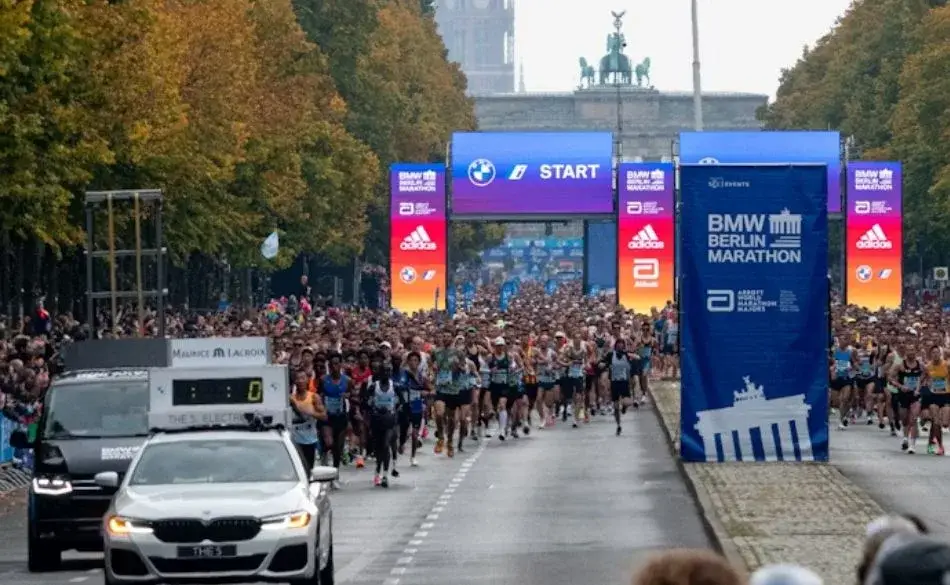



Find Your Next Running Race
Ready to put your training to the test? Here are some upcoming running events matched to this article.
 Coach Graeme

Last updated:
Your quads produce roughly 35% of your forward propulsive force per stride — and on downhills, they shift into braking mode, contracting eccentrically to control your descent with every landing. When they're undertrained, that braking load transfers to the knee joint, which is the mechanism behind runner's knee, patellar tendinopathy, and the form collapse in the final kilometres of a long run.
Running alone doesn't fix this. It builds aerobic quad endurance, but not the structural muscle and tendon strength that resistance training produces. This guide covers the eight most effective quad exercises for runners, why the eccentric (lowering) phase is the specific training type that matters, and how to fit it into your week.
Not sure where to start with training?
Tell us your goal and schedule, and we’ll give you clear direction.
No obligation. Quick, practical advice.
Explore our running training advice for more helpful articles and resources.
Most runners who do strength training focus on the push — the standing up from a squat, the straightening of the leg. This is the concentric phase: the muscle shortens as it contracts. The eccentric phase — the controlled lowering, where the muscle lengthens under load — is what most people rush through or skip entirely. This is the phase that matters most for runners.
Here’s why. Running on flat ground is relatively concentric — your quads extend the knee to propel you forward. But running downhill is primarily eccentric: your quads must contract while lengthening to control the rate at which your knee bends under your body weight on each landing. The faster the descent and the steeper the hill, the greater this eccentric demand. When the eccentric capacity isn’t trained, two things happen: the muscle fatigues faster (leading to that “legs going” sensation on extended descents), and the tendon and joint absorb forces the muscle should be handling (leading to patellar tendinopathy and runner’s knee).
Research supports eccentric training specifically. A 2025 meta-analysis found eccentric quad training produced a 25% increase in quad muscle mass after eight weeks of consistent training. A 2023 study found dosed eccentric protocols reduced DOMS by 30% at 48 hours and improved recovery time by 15% compared to controls. The practical implication: use a 3–5 second lowering phase on every exercise in this list. This is the single technique adjustment that transforms a standard strength session into effective eccentric quad training.
| Exercise | Primary quad focus | Sets × Reps / Tempo | Equipment | Best for |
|---|---|---|---|---|
| 1. Bulgarian split squat | Quad strength + eccentric control; single-leg | 3 × 8–10; 3-sec lower | Bodyweight / dumbbells | All runners — the highest-priority quad exercise |
| 2. Eccentric step-down | Eccentric quad; patellar tendon; knee stability | 3 × 10–12; 4-sec lower | Step or box | Knee pain prevention; downhill runners; marathon training |
| 3. Goblet squat | Bilateral quad strength + eccentric control | 3 × 12–15; 3-sec lower | Dumbbell or kettlebell | Beginners; building eccentric base; long-distance endurance |
| 4. Walking lunge | Quad strength + hip flexor stretch; mimics running stride | 3 × 10–12 each leg | Bodyweight / dumbbells | Running economy; hill climbing power; form under fatigue |
| 5. Wall sit | Quad endurance; isometric hold | 3 × 30–60 sec hold | Wall only | Long-distance endurance; building tolerance for sustained quad load |
| 6. Lateral skater | Eccentric quad + lateral stability; single-leg landing | 3 × 10 each side | Bodyweight | Knee stability; trail running; addressing asymmetry |
| 7. Single-leg squat (pistol progression) | Advanced eccentric single-leg quad + full range | 3 × 6–8 each leg; 4-sec lower | TRX / chair for support initially | Advanced runners; trail/ultra; maximum eccentric development |
| 8. Decline squat | Targeted patellar tendon load; eccentric with increased range | 3 × 10–15; 4-sec lower | Slope or wedge | Patellar tendinopathy rehab and prevention; downhill specificity |
The Bulgarian split squat — rear foot elevated on a bench or chair, front foot forward — is the highest-priority quad exercise for runners because it combines single-leg loading (matching running’s single-leg demand), deep quad range of motion, and significant eccentric capacity in one movement. It also reveals asymmetries between legs that bilateral squats mask.
How to do it: Stand about 60–70cm in front of a bench or chair. Place the top of the right foot on the bench behind you. Lower into the lunge, keeping the torso upright and the front knee tracking over but not beyond the toes. Lower for 3 seconds until the front thigh approaches parallel to the floor. Drive through the front heel to return upright. Complete all reps on one side before switching.
Key cue: keep the front knee tracking in line with the second toe — don’t let it cave inward. The eccentric loading in the front quad is the specific adaptation you’re building; don’t rush the lowering. Start with bodyweight for the first 2–3 sessions, add dumbbells held at the sides once the movement is clean.
Running connection: the forward lunge position with an upright torso closely mirrors the mechanics of the push-off phase of running. The single-leg load means strength gains transfer directly to running mechanics rather than being diluted across both legs. Our speed work guide covers how leg strength contributes to interval and tempo performance — Bulgarian split squat strength translates directly into more powerful stride at race pace.
The eccentric step-down is the most specific exercise for the exact load pattern that causes runner’s knee and patellar tendinopathy: single-leg eccentric quad loading with the foot forward and the knee tracking over a relatively flexed angle. Physical therapists use it widely for both rehabilitation and prevention.
How to do it: Stand on a step or box (15–20cm height initially) on one leg. Slowly lower the non-standing foot toward the floor over 4 seconds, bending the standing leg’s knee. Stop just before the heel touches the floor, then use both legs to step back up. The lowering is the work; the return is just the reset. Keep the standing knee tracking straight — not caving inward — throughout.
Key cue: the 4-second lowering is non-negotiable for this exercise. Fast step-downs are almost useless for the purpose. If the knee caves inward on the lowering, reduce the height of the box and focus on control before progressing.
Running connection: every footstrike in running is an eccentric step-down at speed. Strengthening this movement pattern — especially the slow, controlled version — directly prepares the patellar tendon and quad musculature for thousands of repetitions at running speed. Runners who experience knee pain specifically on descents or in the late stages of long runs often respond quickly to this exercise.
The goblet squat (holding a dumbbell or kettlebell at chest height while squatting) is the best accessible bilateral quad exercise for runners. Holding the weight in front naturally keeps the torso more upright than a back squat, which increases quad engagement relative to posterior chain. The eccentric phase (3-second lower) is the working part.
How to do it: Hold a dumbbell vertically at chest height, feet shoulder-width apart with toes angled slightly outward. Brace the core and lower for 3 seconds until thighs are roughly parallel to the floor (or as deep as comfortable without lower back rounding). Drive through the heels to return upright in 1 second.
Running connection: for downhill-specific preparation, slow goblet squats build the eccentric tolerance that allows you to run descents without the quads seizing up. For endurance runners, high-rep goblet squats (15–20 reps, lighter weight) develop the sustained quad endurance needed for maintaining form in the final 10km of a marathon.
Walking lunges are the closest gym equivalent to the actual running stride pattern — a repeated forward step into a loaded single-leg position. They train both the quad eccentrically (front leg controlling the descent) and the hip flexor of the back leg (stretched in the bottom position), which is uniquely valuable for runners whose hip flexors are chronically tight.
How to do it: Step forward into a lunge, lower until the back knee approaches the floor, then drive through the front heel to step the back foot forward into the next lunge. Keep the torso upright — don’t lean forward. Maintain rhythm: step, lower slowly, drive, step. Add dumbbells for progression once bodyweight is comfortable across all reps with good form.
Running connection: the alternating stride pattern of walking lunges mirrors running mechanics more closely than any bilateral exercise. They train the legs to manage force under fatigue in a movement pattern the nervous system recognises. Runners Blueprint’s coaching perspective: “I tell my runners: ‘Strength fills the cracks in your form.’ Without it, you leak energy and risk injury.” Walking lunges address both the quad strength and the hip flexor flexibility that most runners are simultaneously deficient in.
The wall sit is an isometric (static hold) quad exercise — the muscle is under tension but not moving. This builds the sustained contraction endurance that keeps the quad functioning in the late miles of a long run, when the repeated eccentric-concentric cycle becomes increasingly fatiguing.
How to do it: Back against a wall, feet about 60cm forward, lower until the thighs are roughly parallel to the floor (90-degree knee angle) or as deep as comfortable. Hold for 30–60 seconds. The burn in the quads is the point — it’s building tolerance to sustained muscle activation. Progress by increasing hold duration or adding weight on the thighs.
Running connection: the wall sit trains the specific ability to maintain quad activation under fatigue — the quality that holds running form together when everything is screaming to shuffle and collapse. Particularly valuable for marathon and half marathon runners who need sustained quad function for 2–5+ hours.
Lateral skaters develop eccentric quad strength in the lateral plane — something no other exercise in this list covers — and train single-leg landing stability. CTS (trainright.com) includes them specifically in eccentric training programmes for trail runners dealing with lateral instability and downhill fatigue.
How to do it: Stand in a slight athletic crouch. Push laterally off the right foot and land on the left foot, absorbing the landing through the left quad (bend the left knee to catch the load — don’t land stiff-legged). Hold the single-leg position for 1 second, then push back to the right. Progress by adding a pause, a deeper knee bend, or by holding a light dumbbell.
Running connection: lateral stability in the quad and hip stabilisers prevents the medial knee collapse that causes IT band syndrome and patellofemoral pain. Trail runners and any runner who experiences inward knee cave on single-leg loading will benefit particularly from this exercise.
The full pistol squat — lowering on one leg with the other leg extended forward — is the gold standard of single-leg eccentric quad strength. Most runners won’t start here, but progressing toward it through supported versions builds the highest level of running-specific quad capacity available without gym equipment.
Progression sequence: supported pistol (holding a TRX or sturdy pole while lowering on one leg) → box pistol (lowering onto a box, then standing on both legs) → full unsupported pistol (lowering to full depth, standing on one leg). CTS coaches describe the pistol as “generally considered an advanced level exercise” and recommend starting with a supported version and progressing over weeks. Lower for 4 seconds on every version. Depth is secondary to control — partial range with a controlled tempo is more valuable than deep range with a collapse.
Running connection: the pistol squat produces the most demanding single-leg eccentric quad load available without weights. For ultra runners, trail runners, and anyone preparing for hilly marathon courses, this is the highest ceiling exercise for downhill strength. Our ultra running training guide covers downhill-specific preparation in the context of trail ultra training — the single-leg squat progression is the on-foot complement to that trail-specific work.
The decline squat is performed with the heels elevated (on a wedge, sloped board, or the edge of a step), which shifts more load onto the quads and especially the patellar tendon compared to a flat-footed squat. It’s the most specific exercise for patellar tendinopathy prevention and rehabilitation.
How to do it: Stand with heels elevated about 15–25 degrees on a wedge or the edge of a step. Perform a slow squat (4-second lower) keeping the knees tracking forward — the declined position naturally allows the knees to travel further forward, which is the point. Stand single-leg for a more demanding version. This exercise may provoke some discomfort at the patellar tendon initially in susceptible runners — start with light load and shallow depth.
Running connection: the forward knee position of the decline squat replicates the quad loading pattern of downhill running more closely than any standard squat variation. Runnerclick explicitly recommends decline squats for mimicking the downhill position and building the eccentric strength that prevents quad failure on descents.
The principle: strength after running, not before. Quality running requires fresh legs. Hard strength work before an interval session degrades both the run quality and the strength work. If you must do both on the same day, run first, then strength. The exception is light activation work (bodyweight lunges, leg swings) as part of a pre-run warm-up — these don’t deplete the quad’s capacity for the run ahead. Our warm-up and cool-down guide covers the distinction between activation work and strength work in the context of the training week.
A practical two-session week for most runners: Session 1 after an easy Tuesday run (30–40 minutes total, covering Bulgarian split squats, goblet squats, and wall sits); Session 2 on Thursday rest or easy day (eccentric step-downs, walking lunges, lateral skaters). This hits all the key quad functions — concentric power, eccentric braking, lateral stability, endurance — without overloading any single session.
Beginners should start with 2 sets of each exercise at the lower end of the rep ranges and add a third set after 3–4 weeks. The first 2–3 sessions of eccentric work will likely produce significant DOMS in the quads — plan accordingly and don’t schedule a long run or hard interval session in the 48 hours after your first eccentric session. As Pliability’s guidance notes: increase load by no more than 10% or 2 additional reps every 7–10 days to prevent overload. This is the same progressive overload principle that applies to running mileage.
For runners building toward a first marathon, the connection between quad strength and late-race performance is direct. Our guide on building marathon mileage safely covers how the muscular fatigue of the final kilometres of a long run is partly a quad endurance issue — the form collapse that makes miles 35–42 of a marathon so much harder than the preceding kilometres often reflects undertrained eccentric quad capacity more than cardiovascular fitness. For older runners, maintaining quad strength is especially important because the natural reduction of fast-twitch muscle fibres with age accelerates quad weakness over time. Our guide for older athletes covers how strength training priorities shift with age and why quad work belongs in every masters runner’s programme.
Run Stronger, Stay Injury-Free
SportCoaching's running plans include targeted strength guidance — the right exercises, at the right time, in the right proportion to your running sessions. Quad strength, back strength, and glute work are built into the programme, not treated as optional extras.
Why do runners need strong quads?
Quads produce ~35% of forward propulsive force per stride. On downhills, they eccentrically brake the body against gravity with every landing. Weak quads shift this load onto the knee joint — causing runner’s knee, patellar tendinopathy, and form collapse in the late miles of long runs.
What is eccentric quad training and why does it matter for runners?
Eccentric training loads the muscle as it lengthens — the controlled lowering phase of squats and lunges. This is specifically what downhill running demands. A 2025 meta-analysis found eccentric training produced a 25% quad mass increase in 8 weeks. Use a 3–5 second lowering phase on all exercises to maximise this adaptation.
How often should runners do quad exercises?
Two sessions per week, 20–25 minutes each, on easy or rest days. Don’t schedule hard strength work before interval sessions or long runs. Expect significant DOMS after the first few eccentric sessions — allow 48 hours before the next hard run.
Will running alone build enough quad strength?
No. Running builds aerobic quad endurance but not the structural muscle and tendon strength that resistance training produces. Systematic reviews confirm strength training improves running economy, race times, and top speed. Eccentric strength specifically — the downhill braking capacity — requires dedicated resistance work to develop sufficiently.
What is the best single quad exercise for runners?
The Bulgarian split squat — single-leg, eccentric-capable, no equipment needed initially, and reveals strength asymmetry between legs. The eccentric step-down is the most specific for knee pain prevention. Both deserve a place in every runner’s programme.
Ready to put your training to the test? Here are some upcoming running events matched to this article.



Head Coach & Founder, SportCoaching
Graeme is the founder of SportCoaching and has coached more than 750 athletes from 20 countries, from beginners to Olympians, in cycling, running, triathlon, mountain biking, boxing, and skiing. His coaching philosophy and methods form the foundation of SportCoaching's training programs and resources.
No matter your goals, SportCoaching offers tailored training plans to suit your needs. Whether you’re preparing for a race, tackling long distances, or simply improving your fitness, our expert coaches provide structured guidance to help you reach your full potential.
Smart, progressive training from 5km to marathon with weekly guidance.
What’s included
Browse upcoming Australian running, cycling, and triathlon events in one place. Filter by sport, check dates quickly, and plan your training around something real on the calendar.
Choose your plan to get started with personalized training plans designed to help you reach your goals.


Minna Backman
When you’re new, feedback is especially important, and Graeme is highly skilled at both analyzing numbers and understanding the importance of mental strength.











