









Find Your Next Running Race
Ready to put your training to the test? Here are some upcoming running events matched to this article.
 Coach Graeme

Last updated:
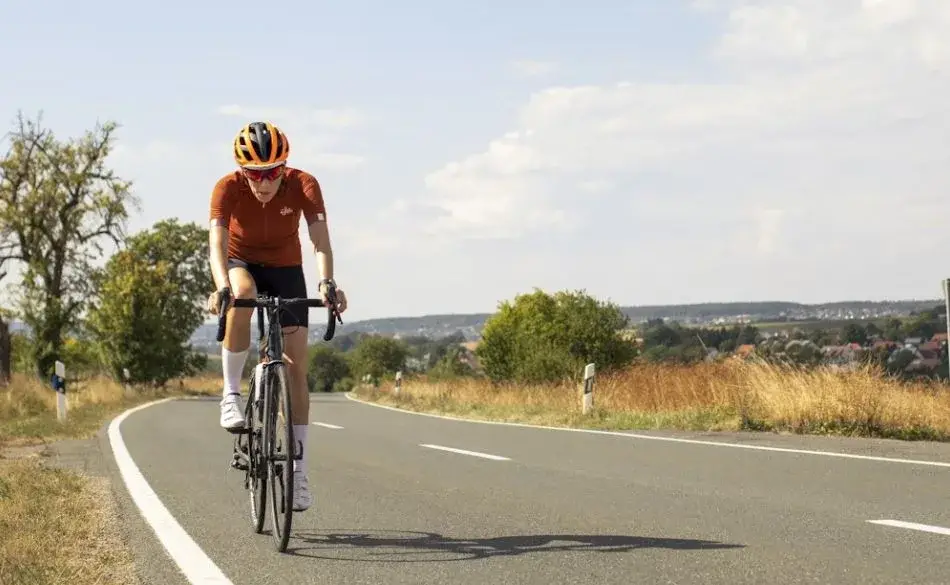
Cycling is one of the most effective cross-training tools available to runners. It is zero-impact, which means it adds meaningful aerobic training volume without the cumulative stress on joints, tendons, and bones that causes most running overuse injuries. It targets complementary muscle groups. It accelerates recovery between hard sessions. And the aerobic fitness it develops transfers directly to running performance in ways that are well-supported by research.
This guide covers why cycling works as cross-training for runners, what muscles it develops and why they matter for running, how to fit cycling into a weekly running programme, five specific workouts for different training goals, how much cycling to do, what cycling cannot replace in running training, and how elite cyclists and runners cross over between sports.
Not sure where to start with training?
Tell us your goal and schedule, and we’ll give you clear direction.
No obligation. Quick, practical advice.
Explore our running training articles for more helpful articles and resources.
Zero impact, high aerobic return. Running generates impact forces of 2–3 times bodyweight with every stride — accumulated over a 16-week marathon build at 60km/week, this represents millions of ground contacts. Cycling generates virtually no impact load. A runner can cycle for 90 minutes at moderate effort and return with a meaningful aerobic stimulus, zero additional impact on knees, hips, and shins, and minimal connective tissue fatigue. This allows runners to add total training volume beyond what running alone would sustain without increasing injury risk.
Aerobic carryover is real. Research published in Sports Medicine found that cross-training between cycling and running produces significant transfer of VO2 max improvements. A 1994 review (Tanaka, Sports Med) established that five weeks of either cycling-only or combined cycling and running training produced comparable improvements in running aerobic capacity. More recent research on high-intensity cycling intervals confirmed meaningful improvements in running performance metrics — including 5K and 10K times — even without increasing running volume. The aerobic system (heart, lungs, mitochondrial density, capillary network) adapts to cardiovascular stress regardless of sport, and running benefits from this adaptation.
Complementary muscle activation. Running is hamstring and calf dominant. Cycling is quadriceps dominant — the downstroke of the pedal stroke places primary demand on the quads in a hip-extended position that running rarely loads as heavily. This complementary loading pattern reduces muscle imbalances, builds overall lower body strength, and specifically strengthens the quad-dominant stabilisation the knee needs for injury resilience. Our gym exercises for runners guide covers the full strength training approach for runners; cycling adds a sport-specific quad and glute stimulus that complements targeted gym work.
Psychological variety. Training monotony — particularly during long marathon build-ups — is a real contributor to motivation loss and reduced training consistency. Replacing one or two running sessions per week with cycling provides variety without compromising the aerobic base. Research has also found that cross-training reduces psychological fatigue, helping athletes sustain motivation through longer training cycles.
| Muscle group | Running stimulus | Cycling stimulus | Benefit to runners |
|---|---|---|---|
| Quadriceps | Moderate (eccentric braking) | High (concentric drive) | Knee stability, uphill power |
| Gluteus maximus | Moderate (hip extension) | High (downstroke power) | Propulsion, hip extension strength |
| Calves | High (push-off) | Moderate (foot stabilisation) | Maintained calf conditioning |
| Tibialis anterior | Low (dorsiflexion control) | Moderate (pedal upstroke) | Shin strength, shin splint prevention |
| Core | Moderate (postural stability) | Moderate (saddle stability) | Running posture, late-race form |
| Hamstrings | High (hip extension, stride) | Low–moderate | Running primary; cycling supplements |
The quadriceps and tibialis anterior receive the most meaningful additional stimulus from cycling compared to running alone. Both are important for knee stability and shin resilience — two areas where runners are commonly under-conditioned relative to the demands placed on them. Hill cycling — particularly climbing out of the saddle — produces quad and glute activation that approaches the intensity of heavy gym exercises, making it an effective running performance enhancer beyond simple cardiovascular training.
The most common mistake runners make when adding cycling is treating it as additional training on top of full running volume. The more effective approach is strategic substitution — replacing lower-priority runs with cycling sessions to add aerobic volume without increasing total load.
Non-negotiables to preserve: The weekly long run, tempo session, and key interval session should always take priority over cycling. These are the sessions that drive running-specific adaptation. If something has to give, it should be an easy maintenance run — not a quality session.
Best substitution opportunities: Replace easy or maintenance runs (30–45 minute easy runs with no specific purpose) with 60–75 minute moderate cycling rides. The aerobic stimulus is comparable, the impact load is eliminated, and recovery is faster — meaning the following day’s quality run is less compromised.
Recovery day cycling: A 30–45 minute easy spin at 90–95+ RPM in Zone 1–2 (conversational pace, very low resistance) the day after a long run or hard interval session promotes active recovery. The high cadence and low resistance flush lactic acid from the legs without adding meaningful training stress. This is the most widely used application of cycling by running coaches.
Sample weekly structure (runner using cycling as cross-training):
Monday: Rest or 30-min recovery spin (Zone 1)
Tuesday: Interval session (running)
Wednesday: 60-min moderate cycling ride
Thursday: Easy run 45–50 min
Friday: Tempo run (running) or rest
Saturday: Long run
Sunday: 45-min recovery spin or rest
This structure preserves all running-specific sessions while adding 1–2 cycling sessions that build aerobic volume and accelerate recovery without increasing impact load.
Purpose: Active recovery, lactic acid clearance, blood flow promotion.
Duration: 30–45 minutes.
Effort: Zone 1 (very easy — conversational throughout). Cadence 90–100 RPM. Resistance low.
When to use: Day after a long run or hard interval session. Never use this as a “real” training session — its value is specifically in active recovery at minimal physiological cost.
Key note: Most runners do this too hard. If you can’t speak in full sentences, you’re going too hard.
Purpose: Aerobic base building, fat oxidation development, cardiovascular volume.
Duration: 60–120 minutes.
Effort: Zone 2 (comfortable but sustained — you can speak in sentences but wouldn’t want to maintain a long conversation). Approximately 60–70% of maximum heart rate.
When to use: As a replacement for an easy maintenance run, or as additional aerobic volume on a day between running sessions.
Key note: For runners using a power meter, target approximately 55–65% of FTP. Zone 2 cycling is the closest cycling equivalent to easy running and builds the same aerobic infrastructure.
Purpose: Lactate threshold development, VO2 max improvement — equivalent to a running tempo session.
Structure: Warm up 15 min easy → 20–30 min at threshold effort (Zone 3–4, comfortably hard — can speak 2–3 words) → 10 min cool down. Or: 3 × 10 min at threshold with 3 min easy recovery between.
When to use: Replacing a running tempo session when running load is high, or as an additional quality session that adds cardiovascular stimulus without running impact.
Key note: Our tempo run guide covers the threshold effort level in detail — the perceived exertion is identical whether running or cycling. This is one of the most direct running-to-cycling session translations available.
Purpose: VO2 max development, speed and power, metabolic conditioning.
Structure: Warm up 15 min → 8–10 × 1 min at maximal effort (Zone 5) / 2 min easy recovery → cool down 10 min.
When to use: Replacing a running interval session during injury, or as an additional quality session for runners who can handle the cardiovascular load without additional impact stress.
Key note: This session improves VO2 max and lactate tolerance comparably to running intervals. Research confirms it improves 5K and 10K running performance. The key distinction: it does NOT train running-specific neuromuscular patterns, so maintain running interval sessions when healthy.
Purpose: Extended time-on-feet adaptation, fat oxidation at sustained effort, mental endurance.
Duration: 2–4 hours at Zone 2.
When to use: During marathon build-up as an additional aerobic volume session, or during injury when the running long run cannot be completed. A 3-hour Zone 2 ride provides comparable cardiovascular stimulus to a 90-minute easy run.
Key note: Fuelling during rides over 90 minutes is important — use the same nutrition strategy you practise for running. Our half-to-marathon guide covers the fuelling approach that applies equally to long cycling sessions.
Running-specific neuromuscular patterns. The coordination of the running stride — the precise timing of hip extension, knee drive, ground contact, and push-off — is sport-specific. Cycling does not train these patterns. Runners who rely exclusively on cycling for fitness during injury frequently report that the first few runs back feel unfamiliar and uncoordinated. Running economy (how efficiently you use oxygen at a given pace) only improves through running. For this reason, maintaining even very easy running alongside cycling — 2–3 short runs per week — is strongly preferable to cycling-only training during injury rehab when possible.
Bone density maintenance. Running’s impact loading provides the mechanical stress that maintains bone density — particularly important for female runners and masters athletes who face age-related bone density decline. Cycling provides no impact loading and does not contribute to bone health. Runners who switch to long periods of cycling-only training may experience bone density reduction over months. Returning to running load progressively is essential, and strength training — particularly heavy compound exercises — provides partial compensation for lost impact loading during extended cycling-only periods.
The long run’s specific adaptations. The weekly long run produces adaptations — glycogen depletion training, fat oxidation at sustained pace, musculoskeletal durability — that cycling cannot replicate. For runners targeting half marathon, marathon, or beyond, the long run is the non-negotiable session that cycling must never replace when running is possible. Our marathon training guide covers why the 20-mile long run is irreplaceable in marathon preparation.
The aerobic carryover between cycling and running is perhaps best illustrated by elite athletes who cross between the two sports.
Tom Dumoulin, former Giro d’Italia winner and one of the best time-trial cyclists of his generation, ran a 2:29:21 marathon at the 2025 Amsterdam Marathon with relatively limited specific marathon preparation — demonstrating the exceptional aerobic base elite cycling develops. Mathieu van der Poel, widely regarded as one of the most aerobically gifted athletes in professional cycling, posted a 33:52 10K on Strava — faster than most serious competitive recreational runners ever achieve. Emma Pooley, a former Olympic cycling silver medallist, ran a 2:44 marathon after transitioning to triathlon.
These examples are not offered to suggest that cycling training alone will produce competitive running performance — the sport-specific neuromuscular components take months to develop. They do demonstrate that the aerobic engine built through cycling is genuinely world-class and translates powerfully when combined with running-specific training. For recreational runners, the takeaway is that cycling sessions are not “wasted” aerobic work — they build a cardiovascular foundation that running performance directly draws upon. Our sprint speed guide covers the underlying physiology of aerobic capacity and how VO2 max development transfers across endurance sports.
The most common application of cycling for runners is injury rehabilitation — maintaining fitness when running is reduced or impossible. Most running overuse injuries (IT band syndrome, shin splints, plantar fasciitis, stress fractures) are impact-related, meaning cycling can continue pain-free when running is not possible.
During injury rehab, the general principle is to replace running time with cycling time at approximately double the duration — a 45-minute run replaced by a 90-minute cycle — to maintain comparable cardiovascular stimulus. Intensity should be maintained at the equivalent effort level to the session being replaced: easy runs replaced by Zone 2 rides, tempo sessions replaced by cycling threshold work.
For triathletes using cycling as a core training discipline alongside running, our half Ironman training plans and Ironman training plans integrate structured cycling and running sessions designed to develop both sports simultaneously without the overuse injury risk of running-only training. Our cycling training plans cover the full progression for runners new to structured cycling.
Structured Training for Runners and Cyclists
SportCoaching's running and cycling training plans are built around your available time, current fitness, and target event — from 5K running through to Ironman triathlon. Every session has a specific aerobic purpose.
Is cycling good cross training for runners?
Yes — one of the best options. Zero impact, strong aerobic carryover, complementary muscle activation (especially quads), and proven to improve running performance metrics including VO2 max and 5K/10K times. 1–3 sessions per week alongside regular running is the most effective approach.
How much cycling should runners do?
1–3 sessions per week: one recovery spin (30–45 min Zone 1), one endurance ride (60–90 min Zone 2), optionally one interval session. Replace easy maintenance runs with cycling when training load is high. Always preserve the long run, tempo, and interval running sessions.
Can cycling replace running?
No — not fully. Cycling maintains aerobic fitness but does not train running-specific neuromuscular patterns or maintain bone density. During injury, cycling is the best fitness maintenance tool, but return to running as soon as possible. Even short easy runs alongside cycling preserve sport-specific adaptations better than cycling alone.
What muscles does cycling work that complement running?
Primarily quadriceps (undertrained in runners) and tibialis anterior (shin muscle). Cycling also loads the glutes, calves, and core differently to running, producing more balanced lower body development. The complementary muscle development reduces injury risk from imbalances common in running-only athletes.
How does cycling improve running performance?
Through aerobic development (VO2 max, lactate threshold, mitochondrial density) that transfers to running, without adding impact load. High-intensity cycling intervals improve running speed; Zone 2 rides build aerobic base; recovery spins accelerate recovery between hard running sessions. Elite cyclists transitioning to running demonstrate remarkable aerobic carryover — Tom Dumoulin ran 2:29 marathon; Mathieu van der Poel ran a 33:52 10K.
Ready to put your training to the test? Here are some upcoming running events matched to this article.

Head Coach & Founder, SportCoaching
Graeme is the founder of SportCoaching and has coached more than 750 athletes from 20 countries, from beginners to Olympians, in cycling, running, triathlon, mountain biking, boxing, and skiing. His coaching philosophy and methods form the foundation of SportCoaching's training programs and resources.
No matter your goals, SportCoaching offers tailored training plans to suit your needs. Whether you’re preparing for a race, tackling long distances, or simply improving your fitness, our expert coaches provide structured guidance to help you reach your full potential.
Smart, progressive training from 5km to marathon with weekly guidance.
What’s included
Browse upcoming Australian running, cycling, and triathlon events in one place. Filter by sport, check dates quickly, and plan your training around something real on the calendar.
Choose your plan to get started with personalized training plans designed to help you reach your goals.


Minna Backman
When you’re new, feedback is especially important, and Graeme is highly skilled at both analyzing numbers and understanding the importance of mental strength.











