What Counts as the “Fastest” Ironman Triathlon Time
When people refer to the fastest Ironman triathlon time, they are usually talking about the quickest completion of the full Ironman distance in a sanctioned race. At present, that time is 7 hours, 21 minutes, and 12 seconds, set by Kristian Blummenfelt at Ironman Cozumel in 2021. On the surface, this appears to settle the question. In practice, however, how that time is classified depends on context.
To understand why, it helps to look at how Ironman racing is structured. Ironman, as an organisation, does not maintain an official “world record” list in the way athletics does for events like the marathon. This is largely because Ironman races take place on open courses with meaningful variation in terrain, weather, and environmental conditions. As a result, performances are more commonly discussed as course records, winning times, or fastest known finishes rather than absolute records. This same variability is also why preparation timelines differ so widely, with many athletes following a progressive 12-month Ironman training approach to account for those changing demands.
This is where Blummenfelt’s Cozumel performance becomes a useful case study. The course is flat and designed for speed, and the swim leg featured a strong current. While the race was fully sanctioned and the distance was correct, some professional ranking systems and analysts choose not to compare that time directly with results from championship events or more demanding courses. That distinction does not invalidate the performance, but it does influence how it is interpreted.
By contrast, championship races such as the Ironman World Championship are typically slower despite featuring the strongest fields. These events place a greater emphasis on competitive depth, tactical decision-making, and environmental challenge rather than pure speed. Seen this way, “fastest” can mean different things depending on whether the focus is elapsed time, competitive context, or championship performance.
From a coaching perspective, the takeaway is straightforward. The fastest Ironman time highlights what is possible under ideal conditions, but it does not define the full range of demands that Ironman racing places on athletes.


How the Fastest Ironman Times Compare by Race Context
To make sense of the fastest Ironman triathlon time, it helps to view it alongside other meaningful reference points. While the distance is fixed, outcomes are shaped by race context, including course design, conditions, and how the event is raced. With that in mind, the table below places the fastest recorded Ironman finish next to typical championship, elite, and age-group ranges. The aim isn’t to treat every row as an equal comparison, but rather to show how “fastest” sits at one end of a much broader performance landscape.
👉 Swipe to view full table
| Race Context | Typical Winning / Reference Time | Why It Differs |
|---|---|---|
| Fastest Recorded Ironman Finish | 7:21:12 (Ironman Cozumel, 2021) | Flat course and favourable conditions can support exceptionally fast results; some analysts also note the swim current when comparing across races. |
| Ironman World Championship (Men) | Often between 7:35 and 8:10, depending on course and conditions | Championship courses and conditions typically prioritise durability and execution, and racing is often more tactical against a deeper field. |
| Typical Elite Ironman Wins | Often between 7:40 and 8:10, depending on course | Winning times vary widely by venue, weather, and race dynamics, even within the professional field. |
| Strong Age-Group Performance | Often between 9:00 and 10:30, depending on event | At this level, pacing and fuelling consistency tend to separate outcomes, and conditions can amplify errors over the final hours. |
| Median Ironman Finish | Often between 11:30 and 13:00, varying by race | This range reflects the broader field balancing training time, experience, and real-world constraints across a wide range of course difficulties. |

How Course Design and Conditions Shape Record-Fast Ironman Times
With record classifications in mind, the next factor to consider is why certain Ironman races consistently produce faster times than others. Although every Ironman covers the same total distance, the environment in which that distance is raced can vary widely. These differences shape how efficiently an athlete can move through the day, even at the highest level of the sport.
One of the most influential elements is course profile. Flat bike and run courses reduce the need for repeated changes in power or pace, allowing athletes to maintain steady, aerodynamic efforts for longer periods. Over 180 kilometres of cycling, this matters. Even small elevation changes can add fatigue and disrupt rhythm. Courses designed around long, uninterrupted roads tend to favour sustained output and energy efficiency. In contrast, hilly or technical courses require constant adjustments, braking, and climbing, which naturally limit average speed.
Alongside terrain, environmental conditions further influence performance. Temperature, humidity, and wind direction can either support faster racing or force athletes to be more conservative. Cooler conditions generally allow higher sustainable intensity with less thermal strain, while hot or humid environments increase fluid loss and pacing caution. Wind is particularly variable. A consistent tailwind can lift speeds, while shifting crosswinds raise energy cost and reduce control.
The swim leg adds another layer of variability. While the swim distance is fixed, open-water conditions are not. Currents, water temperature, and wave direction all influence swim times. A downstream current, as seen in some coastal events, can result in unusually fast swim splits, conserving energy early in the race.
Taken together, these factors explain why comparing Ironman times without context can be misleading. A fast course creates the conditions for extreme performances, while slower times on demanding courses often reflect disciplined execution rather than reduced fitness.


How Race Format and Eligibility Affect Record Recognition
In addition to course design and environmental conditions, race format and eligibility rules further shape how Ironman performances are recognised and compared. This distinction matters because not every race covering the full Ironman distance is treated the same when results are discussed or recorded. Understanding this framework helps explain why some exceptionally fast times are widely referenced, while others are placed into separate categories.
Ironman-branded events operate under a consistent distance and a defined set of competition rules, including drafting enforcement on the bike and verified timing protocols. Even so, these races serve different purposes. Regular season Ironman events are often raced with an emphasis on pacing and execution, while continental championships and world championship races tend to involve deeper fields and more tactical decision-making. As a result, a fast time at a standard Ironman may reflect optimal conditions, whereas a slower time at a championship event often reflects the demands of head-to-head racing.
Alongside Ironman-branded races, there are long-distance triathlons that match the Ironman distance but sit outside the Ironman organisation. Events such as Challenge Roth are accurately measured and highly competitive, yet governed by a different body. Performances at these races may rank among the fastest ever over 140.6 miles, but they are typically discussed separately to maintain clarity rather than to diminish their quality.
Finally, eligibility can be influenced by specific race conditions. Strong swim currents, altered course layouts, or unusually supportive environmental factors may lead analysts or ranking systems to exclude certain performances from comparative lists. These decisions are not judgments on athletes, but attempts to preserve consistency across very different racing environments.
How Elite Swim, Bike, and Run Execution Combine in Record Performances
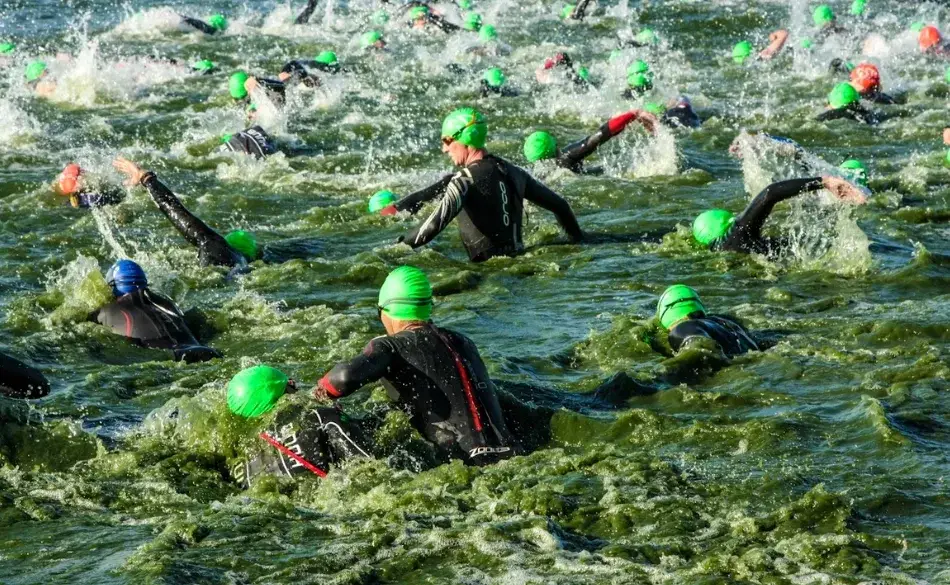
With race context and eligibility in place, it becomes clearer how record-fast Ironman times are actually produced on the day. Even under favourable conditions, an exceptional result requires precise execution across all three disciplines. No single leg determines the outcome in isolation. Instead, record performances emerge from small advantages managed consistently over many hours.
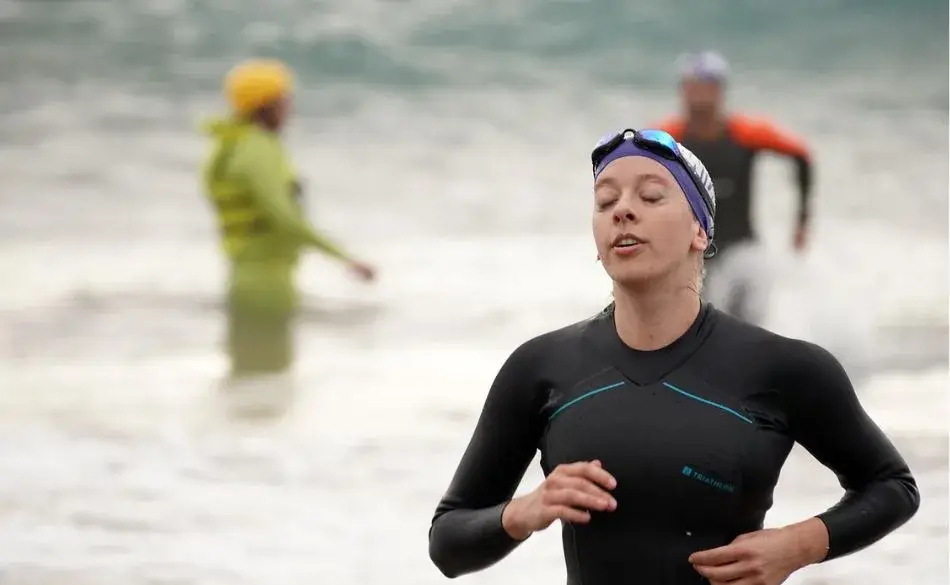
The swim, while the shortest segment in time, plays an important setup role. At the elite level, the goal is typically to exit the water near the front while limiting energy expenditure. A well-controlled swim positions athletes effectively without compromising the bike and run that follow. In races where currents assist the swim, front-pack athletes may gain both a time advantage and reduced early fatigue, which can influence later performance.
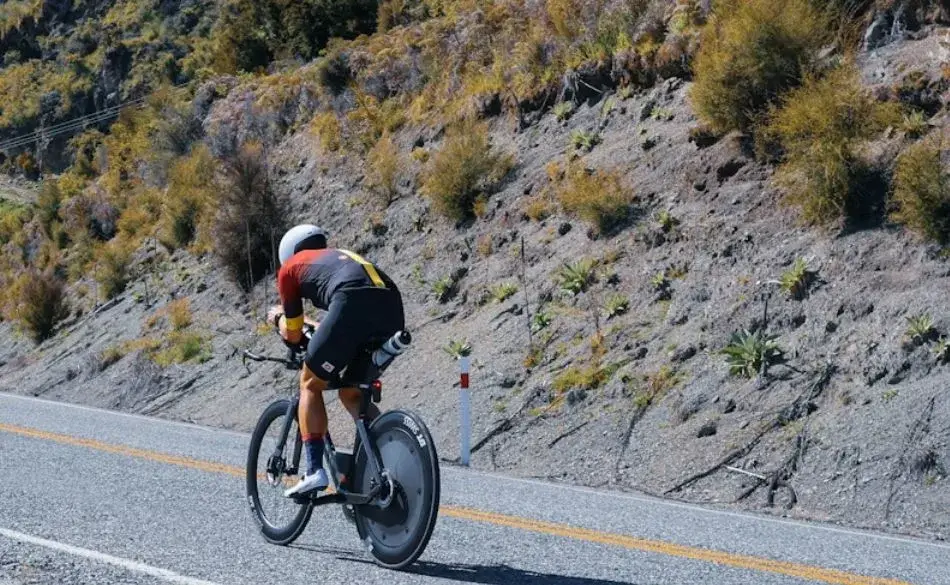
As the race unfolds, the bike leg becomes the primary driver of overall time. Over 180 kilometres, sustained aerodynamic efficiency and stable power output are more influential than short bursts of speed. Developing that capacity requires structured preparation, and well-designed Ironman triathlon training plans focus on building sustainable bike strength alongside fuelling discipline to protect the run.
By the time the marathon begins, accumulated fatigue defines what is possible. Even the fastest Ironman runs are characterised by control rather than aggression. Successful performances show minimal pace deterioration and efficient movement late in the race. When conditions are supportive, this controlled approach allows elite athletes to produce marathon times that were once considered unattainable after a full-distance swim and bike.
Taken together, these patterns highlight how record Ironman performances are built through consistency, efficiency, and restraint across all three disciplines.

How Technology, Equipment, and Regulation Influence Fast Ironman Times
Alongside course conditions and athlete execution, advances in technology and equipment have also played a role in shaping how fast Ironman racing can be. While fitness, pacing, and durability remain the primary drivers of performance, incremental gains from gear, aerodynamics, and regulatory frameworks have accumulated over time. These influences do not replace athletic ability, but they help explain why modern Ironman times differ from those recorded in earlier eras.
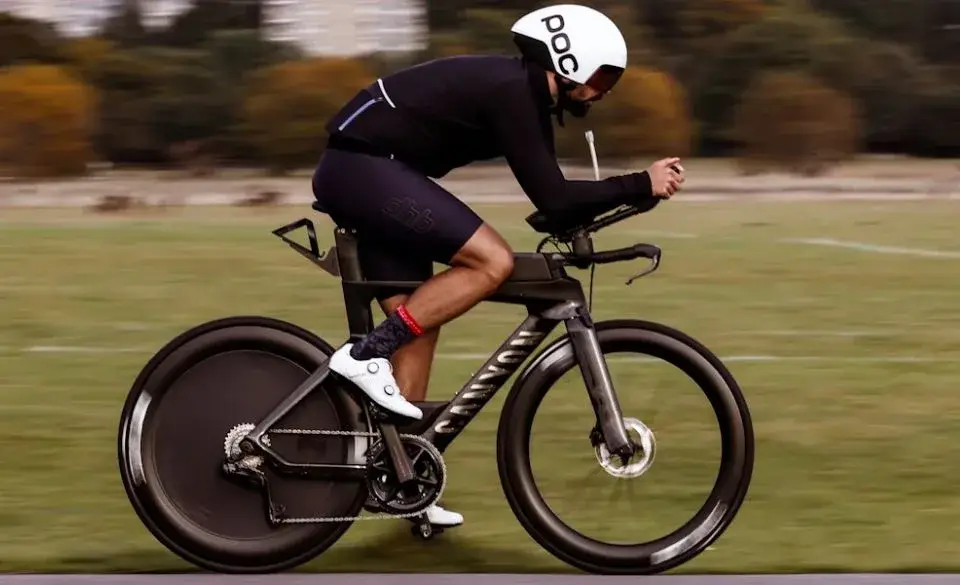
One of the most influential developments has been in bike aerodynamics. Over time, improvements in frame design, wheel profiles, cockpit integration, and race clothing have reduced drag at typical Ironman speeds. Across 180 kilometres, even small reductions in aerodynamic resistance can translate into meaningful time savings without increasing physiological strain. This effect is particularly evident on flat courses, where athletes can maintain an aerodynamic position with fewer interruptions.
Running footwear has evolved in parallel. Modern marathon shoes using energy-return foams and rigid plates can improve running economy when used within regulatory limits. In an Ironman marathon, this does not mean athletes exceed their fitness, but it can help preserve efficiency and slow the decline in pace as fatigue accumulates. The impact becomes most noticeable later in the run, when small efficiency gains matter.
At the same time, regulation and enforcement shape how much advantage technology can provide. Drafting rules, equipment legality, and course monitoring all influence race dynamics. Ironman’s standards are designed to maintain fairness, though subtle variations in enforcement or race density can still affect outcomes.
What the Fastest Ironman Time Really Means for Most Athletes
After examining records, courses, execution, and technology, the final step is considering what the fastest Ironman triathlon time actually represents for the broader field. This matters because elite records are often treated as benchmarks, when in reality they sit at the outer edge of what is possible. Rather than defining success, they illustrate the upper limits of performance under specific conditions.
Record-level Ironman results emerge from a combination of exceptional physiology, long-term development, and carefully chosen race environments. Athletes capable of producing these times typically train within professional systems and build their seasons around peaking for specific events. Even then, only a small number of races each year offer the conditions required for extreme outcomes. For most participants, progress is shaped by following a structured training program for Ironman triathlon that prioritises durability, pacing control, and recovery over chasing headline numbers.
This context helps explain why time comparisons can be misleading. When athletes measure their own performances against the fastest Ironman times, important details are often lost. A 9-hour, 10-hour, or 11-hour finish on a demanding course can reflect stronger execution than a faster result achieved under forgiving conditions. Heat, wind, terrain, and race density affect everyone, but they tend to magnify errors for age-group athletes, where pacing margins are smaller.
One athlete I coach completed his first Ironman in just over ten hours on a course known for variable wind and heat. While the finishing time appeared unremarkable on paper, his pacing remained stable across the bike and his marathon showed minimal fade. That result reflected sound preparation and disciplined decision-making on the day, rather than any lack of fitness or potential.


Putting the Fastest Ironman Time Into Perspective
When all the pieces are considered together, the fastest Ironman triathlon time ever recorded (7 hours, 21 minutes, and 12 seconds) reflects what can happen when elite physiology, favourable conditions, modern equipment, and precise execution align on the same day. It is an exceptional performance, but it is also a highly specific one, shaped by course design, environmental support, race format, and context. On its own, the number captures attention, but it does not tell the full story.
More broadly, the fastest Ironman time is best viewed as an outer boundary rather than a practical benchmark. Most Ironman races are not designed around record chasing, and most athletes are not racing under ideal conditions. In typical events, outcomes are shaped far more by pacing discipline, fuelling accuracy, resilience under fatigue, and the ability to adapt as conditions change.
Seen this way, the real value of record performances lies in perspective rather than imitation. They highlight how the sport has evolved and where its current limits sit. For most athletes, progress is measured less by comparisons to headline times and more by steady improvements in execution, consistency, and durability across the full Ironman distance.
Understanding records and race context is useful, but applying the right balance of swim, bike, and run training to your own situation is where many triathletes struggle. Small pacing or planning errors can quietly compound across long training blocks.
If you want support applying these principles to your own training, triathlon coaching at SportCoaching provides structured guidance based on your experience level, available time, and race goals so preparation stays consistent and sustainable.
Learn more about triathlon coaching