

Want help turning consistency into progress? Coaching keeps your training simple, structured, and sustainable.
Start Coaching →
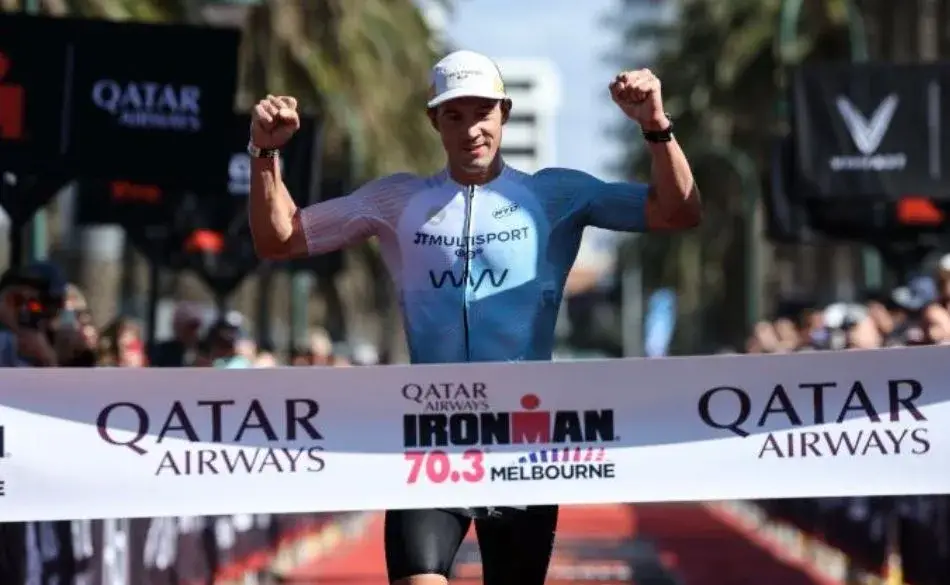
Triathlete running the final leg of an Ironman race after long bike and swim sections

Last updated:

6 Key Ironman Workouts to Build Race-Day Endurance

Ironman training doesn't fail because athletes don't do enough. It fails because they do the wrong sessions at the wrong intensity and can't recover between them. The athletes I coach who race well on the day are rarely the ones who trained the hardest — they're the ones who trained the most consistently, with sessions that had a clear purpose and an intensity they could repeat week after week.

These six workouts form the backbone of sustainable Ironman preparation. Each one targets a specific demand of the race: aerobic durability, pacing control, technique under fatigue, and the ability to run well after 180 km on the bike. None of them require you to bury yourself. All of them need to be done properly.

Chat with a SportCoaching coach

Not sure where to start with training?

Tell us your goal and schedule, and we’ll give you clear direction.

No obligation. Quick, practical advice.

Article Categories:

Explore our triathlon training advice for more helpful articles and resources.

Quick Answer

The 6 key Ironman workouts are: a long aerobic ride (4–6 hrs), a long continuous swim (60–90 min), a long controlled run (90 min–2.5 hrs), a bike-run brick (every 2–3 weeks), a race-pace calibration session, and a recovery-weighted mid-week quality session. The common thread across all six is restraint — controlled intensity that lets you absorb training consistently without breaking down.

1. Long Aerobic Ride

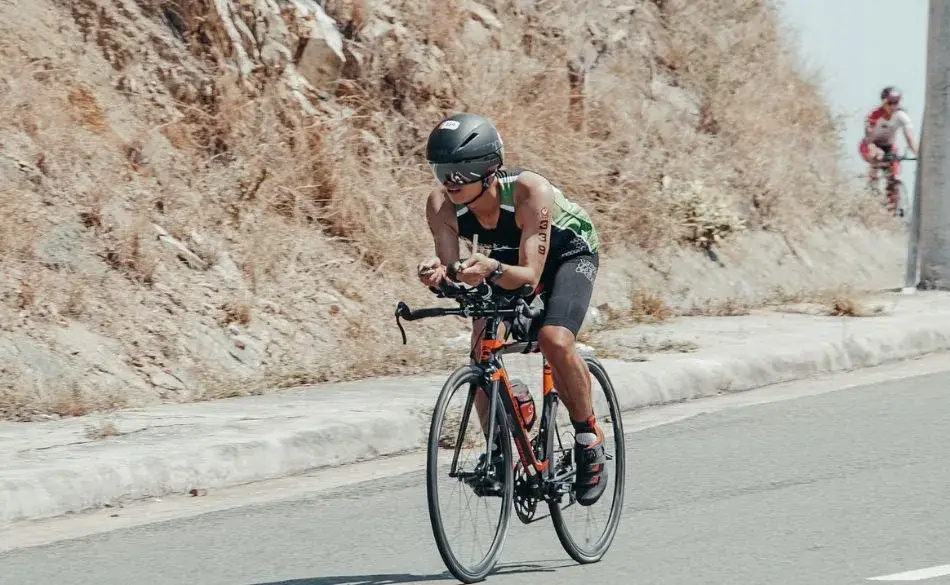
The bike leg is 180 km and takes most age-groupers 5–7 hours. It’s the longest portion of the race by far, and how you ride it determines whether your marathon is strong or a survival march. The long aerobic ride builds the durability and fuel efficiency to handle that load.

Keep intensity below threshold — in the zone where breathing stays controlled and you could hold a conversation. Chasing average power or pushing the final hour turns this into a fatigue session rather than an endurance session. One of my coached athletes couldn’t hold form in the Ironman marathon despite solid run volume. His long rides were consistently too hard in the last hour. Once we brought them back under control, his run split improved by 8 minutes with no change to running volume.

👉 Swipe to view full table

PhaseDurationIntensityFocus
Base (weeks 1–8)3–4 hrsZone 2 (65–75% FTP)Build time in saddle, steady effort
Build (weeks 9–16)4–5 hrsZone 2 with 2 x 20 min at race pace (75–82% FTP)Add race-intensity blocks in second half
Peak (weeks 17–22)5–6 hrsZone 2 with 3 x 20 min at race pacePractice nutrition, simulate race pacing

Finish every long ride feeling worked but stable — not depleted. If you can’t ride easy the next day, you went too hard. For more on pacing the 180 km bike leg specifically, see our guide to Ironman 180 km bike training.

2. Long Continuous Swim

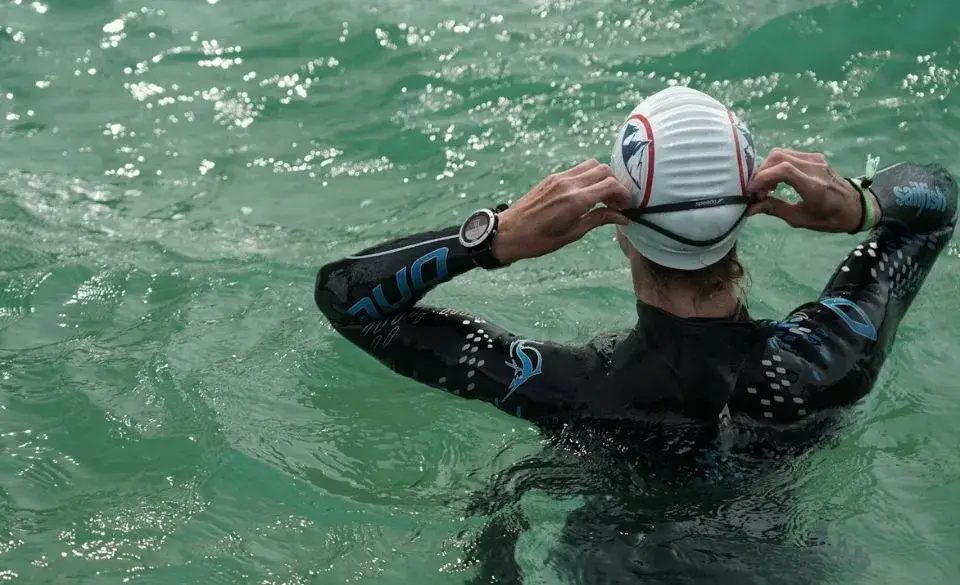
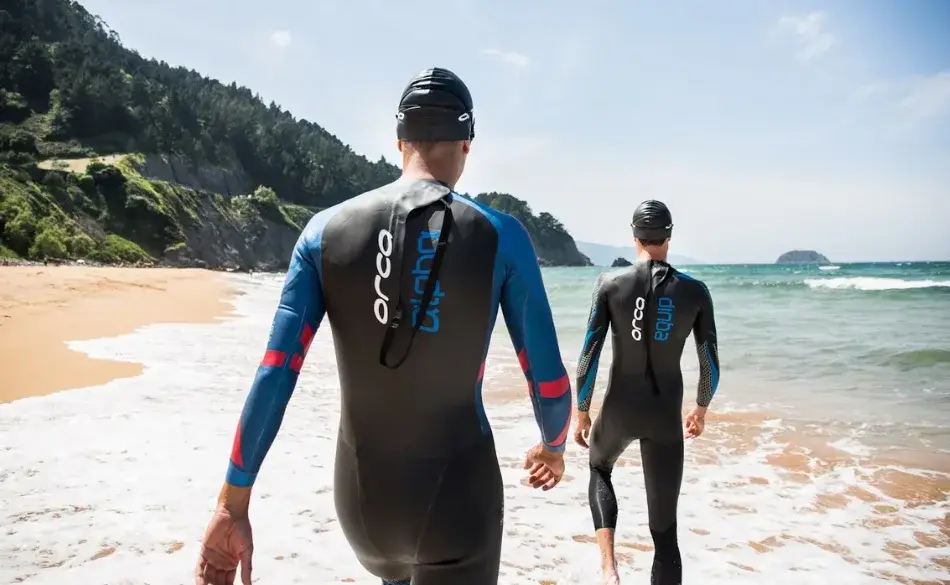
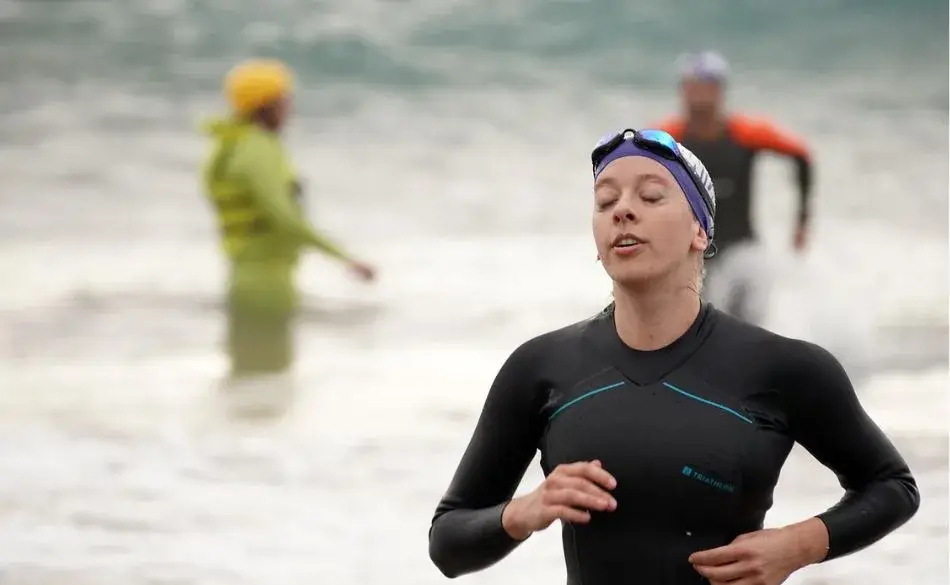
The Ironman swim is 3.8 km and takes most athletes 60–90 minutes. Yet many triathletes prepare for it with short interval sets and frequent rest. The long continuous swim closes that gap by building the ability to hold form for the full Ironman swim distance without breaking.

Swim 60–90 minutes at a controlled aerobic effort. No stopping at the wall every 100 m. The goal is to simulate open-water conditions where there are no rest breaks and rhythm matters more than speed. As fatigue builds, technique tends to drift — shorter catch, higher stroke rate, loss of rotation. The skill is noticing these changes and correcting them while keeping effort even.

👉 Swipe to view full table

Swim BackgroundSession DurationStructure
Beginner swimmer45–60 minContinuous swim with brief technique checks every 10 min (stroke count, breathing pattern)
Intermediate60–75 minContinuous, alternating 500 m steady with 200 m focused on catch and rotation
Strong swimmer75–90 minContinuous at race effort with 3 x 200 m at slightly faster pace woven in

Athletes who practise this consistently arrive at T1 calmer and with lower heart rates. That composure compounds — it means a smoother bike start and better early nutrition. For a structured swim session, see our 1-hour swim workout for triathletes.

3. Long Controlled Run

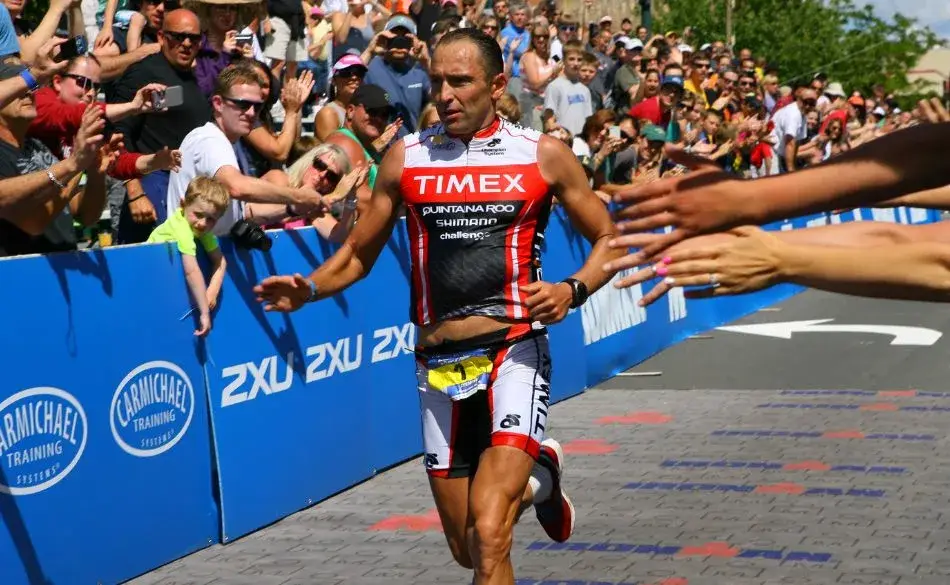
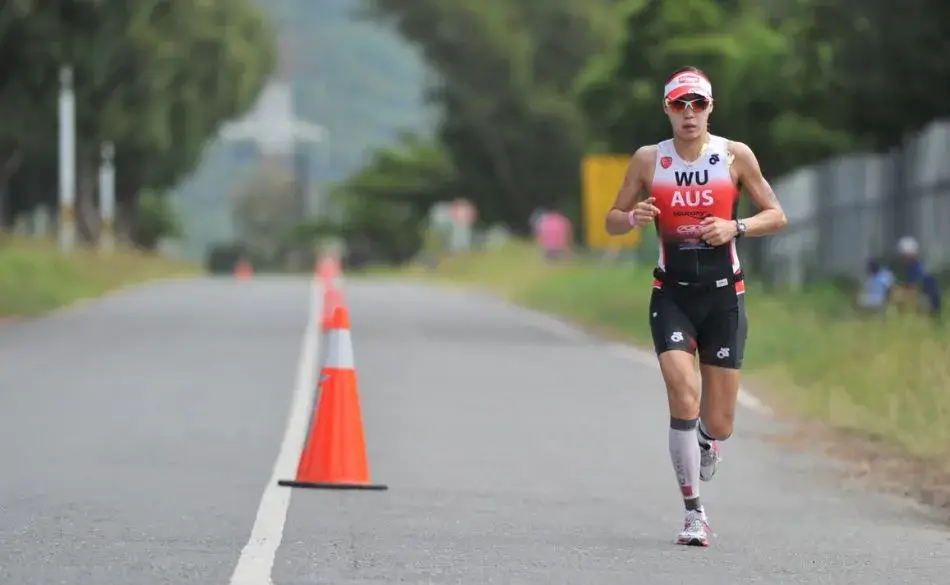
The Ironman marathon is run on fatigued legs after 6+ hours of racing. Training for it isn’t about pace — it’s about durability. The long controlled run builds the muscular resilience, connective tissue strength, and neuromuscular endurance to hold form when everything in your body wants to slow down.

Run at a controlled aerobic effort — the pace where breathing stays relaxed and your form stays intact. Most Ironman marathons are run well below threshold, so that’s where your long run should live. The biggest mistake is drifting into a “comfortably hard” pace in the final third. This increases muscle damage and delays recovery without improving race fitness.

👉 Swipe to view full table

PhaseDurationIntensityNotes
Base60–90 minZone 2 throughoutBuild time on feet gradually
Build90 min–2 hrsZone 2, last 20 min at Ironman marathon pacePractise holding form under light fatigue
Peak2–2.5 hrsZone 2, last 30–40 min at Ironman marathon paceMaximum long run — don't exceed 2.5 hrs

More time on feet doesn’t automatically mean better preparation. The most reliable gains come from repeating manageable long runs week after week — not from occasional 3-hour efforts that wipe you out for days. For specific marathon training within an Ironman build, see our guide on how to train for the Ironman marathon.

4. Bike-Run Brick

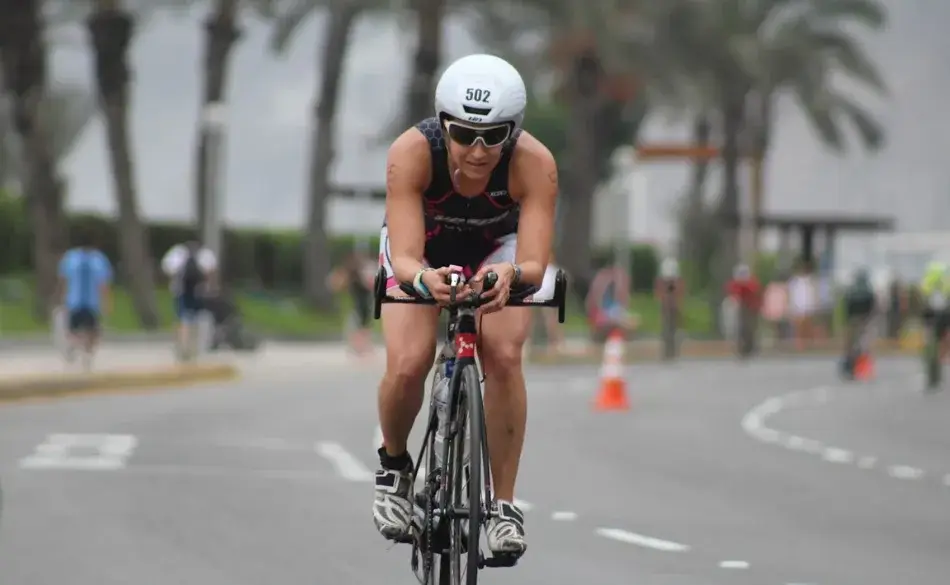
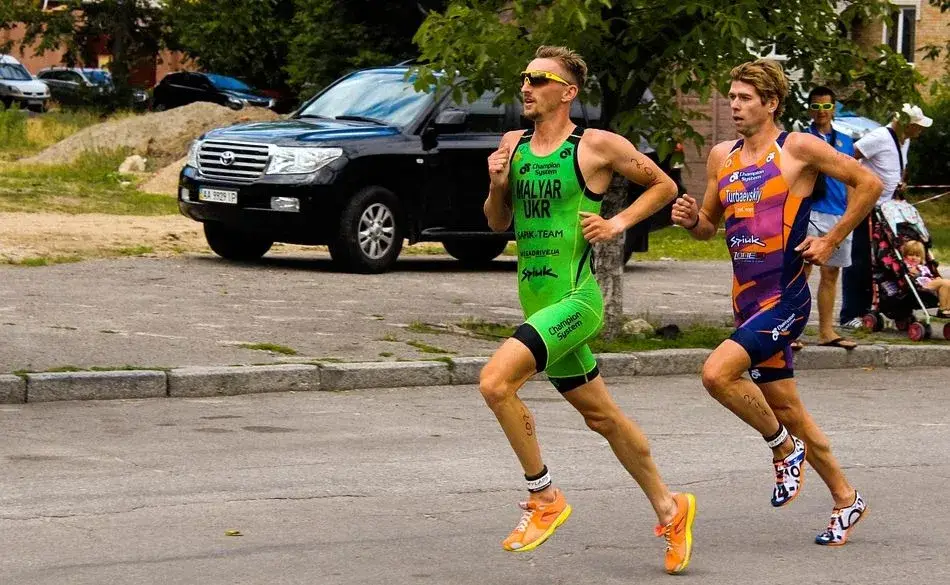
The brick session connects the fitness you build independently on the bike and run into race-specific execution. Its purpose isn’t speed — it’s teaching your body and brain how to manage the transition from 180 km of cycling to running a marathon.

Start with a steady endurance ride (3–5 hours depending on your training phase), then transition immediately into a run. The first 10–15 minutes of running will feel heavy, uncoordinated, and slow. That’s normal — and that’s the point. You’re training your neuromuscular system to adapt to the switch.

👉 Swipe to view full table

Brick TypeBikeRunFrequency
Short transition brick60–90 min easy15–20 min easyWeekly (low fatigue cost)
Long race-specific brick3–5 hrs with race-pace blocks30–45 min, first 15 min easy then Ironman marathon paceEvery 2–3 weeks
Peak brick5–6 hrs at race intensity45–60 min with 30 min at race pace2–3 times in entire build

Common mistake: turning the brick run into a tempo effort. The long brick is about fatigue management and pacing discipline, not speed. Treat nutrition as part of the session — bricks frequently expose fueling problems that are easier to fix in training than on race day. For broader pacing strategy across all three legs, see how to pace a triathlon properly.

5. Race-Pace Calibration Session

By mid-build, most athletes have the endurance. What’s often missing is precision. Many arrive at race day without a clear sense of what sustainable effort actually feels like over 4–6 hours on the bike. The race-pace calibration session fixes this.

This is a dedicated session — usually on the bike, sometimes on the run — where you hold planned Ironman race intensity for extended, uninterrupted blocks. The structure is simple: warm up, then sustain race-pace effort for 60–90 minutes, then cool down. The focus isn’t on hitting exact numbers — it’s on stability. Breathing, muscle tension, and perceived effort should remain even throughout.

👉 Swipe to view full table

DisciplineSession StructureKey Focus
Bike20 min warm-up → 60–90 min at Ironman race power/HR → 10 min cool-downCan you hold this effort without it creeping upward?
Run15 min warm-up → 40–60 min at Ironman marathon pace → 10 min cool-downDoes the pace feel repeatable, or are you hanging on?

One of the practical benefits is calibration. Athletes often discover their assumed race pace is either too aggressive or too conservative. Repeating this session over several weeks makes pacing feel familiar rather than uncertain — and that confidence matters enormously on race day. Even the fastest Ironman times in the world are built on controlled pacing, not sustained high-intensity effort.

6. Recovery-Weighted Mid-Week Quality Session

As an Ironman build progresses, accumulated fatigue becomes a bigger limiter than motivation. The mid-week quality session exists to deliver a training stimulus without creating fatigue that compromises the key sessions that follow.

Place this 48–72 hours after your long ride or brick. You’ll have some residual fatigue but enough function to produce controlled quality. The bike is the most reliable option — it delivers aerobic stimulus with less mechanical stress than running.

👉 Swipe to view full table

Session OptionDurationStructure
Bike (preferred)75–90 min15 min warm-up → 3 x 15 min at sub-threshold (85–90% FTP) with 5 min easy between → 10 min cool-down
Run (alternative)50–60 min15 min warm-up → 2 x 12 min at Ironman marathon pace with 4 min easy between → 10 min cool-down

The most common mistake is turning this into a test. If you push too hard, you compromise the next long session and the fatigue compounds across weeks. The real value is completing it well and arriving fresh for the weekend. This aligns with the broader principle of how often to train for a triathlon — sustainable frequency beats occasional heroics.

How These 6 Workouts Fit Into a Training Week

Here’s a sample weekly structure showing how these sessions work together. This assumes 12–15 hours per week during the build phase:

👉 Swipe to view full table

DaySessionWorkout Type
MondayRest or easy swim (30–40 min)Recovery
TuesdayMid-week quality bike (75–90 min)Workout 6
WednesdayLong continuous swim (60–75 min) + easy run (30 min)Workout 2
ThursdayRace-pace calibration on bike or runWorkout 5
FridayEasy swim (45 min) or restRecovery
SaturdayLong aerobic ride (4–6 hrs)Workout 1
SundayLong controlled run (90 min–2.5 hrs)Workout 3

The bike-run brick (Workout 4) replaces the Saturday ride + Sunday run every 2–3 weeks. On brick weekends, Sunday becomes a rest or easy swim day. For structured training plans that build these sessions into a complete programme, see our Ironman training plans.

FAQ: Ironman Workouts

How many hours a week should you train for an Ironman?

Most age-groupers train 10–15 hours per week during peak preparation. Beginners may start at 8–10 hours. Quality and consistency matter more than total volume.

What’s the most important Ironman workout?

The long aerobic ride. The bike is the longest leg, and how you ride it determines your marathon. Build pacing discipline and fuel efficiency on the bike and the run takes care of itself.

How often should you do brick sessions?

Long bricks every 2–3 weeks. Short transition runs (15–20 min) after regular rides can be done weekly with minimal fatigue cost.

Should Ironman training include high-intensity intervals?

Sparingly. About 80% of training should be at easy to moderate aerobic intensity. Sub-threshold and tempo work makes up the rest. VO2 max efforts have limited value for full-distance racing.

How long should the longest training ride be?

5–6 hours (140–180 km). Going beyond 6 hours adds diminishing returns and significant recovery cost. Build durability through repeated long rides, not one extreme effort.

Train Less Heroically, Race More Consistently

These six workouts cover the core demands of Ironman racing. None of them require you to destroy yourself. All of them require you to show up consistently and execute with discipline. The athletes who race well in October are the ones who trained steadily through January to September — not the ones who had the biggest single training week.

Want a Coach to Structure Your Ironman Build?

Understanding these workouts is one thing — placing them correctly across 24 weeks while managing fatigue, nutrition, and life is another. Our Triathlon Coaching builds a personalised Ironman plan around your experience, schedule, and target race.

Start Triathlon Coaching → Browse Ironman Plans →

Find Your Next Triathlon Race

Ready to put your training to the test? Here are some upcoming triathlon events matched to this article.

Graeme - Head Coach and Founder of SportCoaching

Graeme

Head Coach & Founder, SportCoaching

Graeme is the founder of SportCoaching and has coached more than 750 athletes from 20 countries, from beginners to Olympians, in cycling, running, triathlon, mountain biking, boxing, and skiing. His coaching philosophy and methods form the foundation of SportCoaching's training programs and resources.

750+
Athletes
20+
Countries
7
Sports
Olympic
Level

Start Your Fitness Journey with SportCoaching

No matter your goals, SportCoaching offers tailored training plans to suit your needs. Whether you’re preparing for a race, tackling long distances, or simply improving your fitness, our expert coaches provide structured guidance to help you reach your full potential.

  • Custom Training Plans: Designed to match your fitness level and goals.
  • Expert Coaching: Work with experienced coaches who understand endurance training.
  • Performance Monitoring: Track progress and adjust your plan for maximum improvement.
  • Flexible Coaching Options: Online and in-person coaching for all levels of athletes.
Learn More →

Choose Your Next Event

Browse upcoming Australian running, cycling, and triathlon events in one place. Filter by sport, check dates quickly, and plan your training around something real on the calendar.

View Event Calendar