What Science Says About Running and Knee Pain
Let’s start with the science. Most research shows that running itself doesn’t cause knee pain or long-term damage to your joints. In fact, several large studies found that recreational runners have lower rates of knee osteoarthritis compared to people who don’t run at all.
When you run, your body stimulates the production of synovial fluid, which helps lubricate and nourish cartilage. Think of it like oiling a hinge. The more regularly you move your knees through a full range of motion, the healthier that cartilage tends to remain.
However, the story changes when overuse injuries and poor mechanics come into play. If you increase your mileage too quickly or run with weak supporting muscles, stress can build up in the patellofemoral joint (the front of the knee). That’s when conditions like runner’s knee or iliotibial band syndrome can start showing up.
Interestingly, when scientists looked at impact forces at different speeds, they discovered something surprising. At slower paces, you take more steps over the same distance, meaning your knees experience more loading cycles. Each individual step may produce slightly less force, but because you take more of them, the total load on your knees can actually increase during slow running.
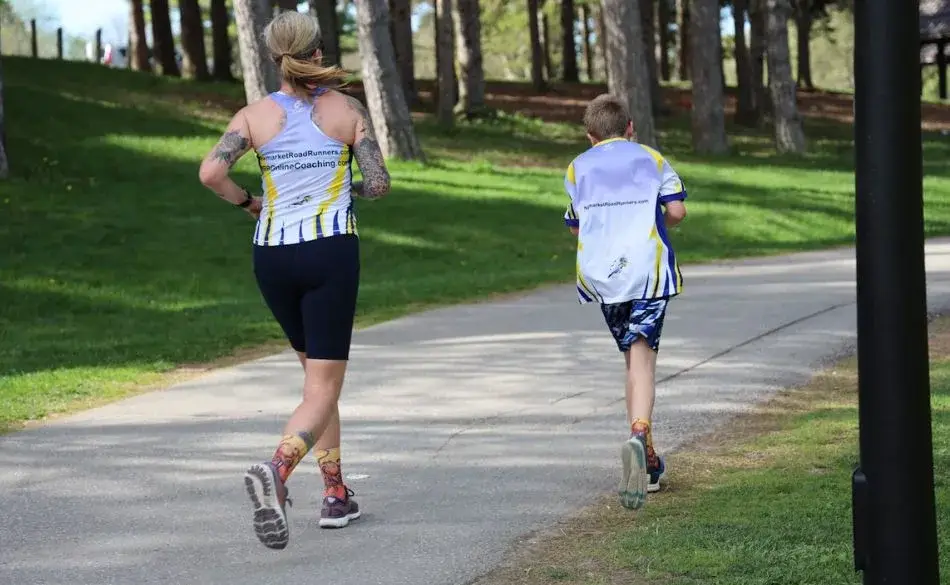
This doesn’t mean slow running is bad. It simply means form and recovery matter. If you run with proper alignment, maintain strong hips and quads, and give your body time to adapt, slow running can be an excellent tool for improving joint health and endurance without excessive stress.
So instead of asking if running hurts your knees, it’s better to ask: Are you training in a way that keeps them strong?
Learning how to run slower without pain takes more than patience - it takes the right plan. Our Running Coaching program gives you expert feedback on your technique, training load, and recovery so you can protect your knees, prevent injury, and enjoy every run with confidence.
- Form Support: guidance on stride, cadence, and pacing to reduce knee stress
- Smart Progression: weekly plans that balance easy runs with strength and recovery
- Injury Prevention: strategies to improve joint health and reduce overuse risk
- Motivation & Feedback: consistent support from an experienced running coach
Train smarter, protect your knees, and run stronger - every mile should feel good, not painful.
Start Personal Running Coaching →Is Slow Running Better or Worse for Your Knees?
Slow running can be an effective way to build endurance while caring for your joint health. Still, it isn’t automatically easier on your knees. The impact of running speed depends on how your body manages impact forces, the strength of supporting muscles, and how gradually your training progresses.
Research published in the Journal of Orthopaedic & Sports Physical Therapy (2015) found that slower running generally produces slightly lower ground-reaction forces per stride but requires more steps to cover a given distance. This means the total loading cycles on your knees can increase, even if each step feels lighter. The authors note that this higher cumulative load could contribute to fatigue or soreness if recovery, strength, or running form are lacking. Though it does not necessarily cause injury by itself.
Systematic reviews in the Journal of Science and Medicine in Sport (2022) and the Osteoarthritis and Cartilage journal report that recreational runners are not more likely to develop knee osteoarthritis than non-runners. Some evidence suggests that regular, moderate running (including slower paces) may help maintain cartilage health by promoting synovial-fluid exchange and keeping the surrounding muscles strong. However, these effects are based on correlations rather than long-term cause-and-effect trials.
Possible Benefits of Slow Running
- May reduce per-step impact force compared with faster speeds.
- Can encourage smoother movement and steadier cadence that support knee alignment.
- Allows connective tissues and cartilage time to adapt gradually to mechanical stress.
- Often useful for recovery runs or when returning after an overuse injury.
Potential Drawbacks to Consider
- Greater stride count may increase overall joint load across a full distance.
- If posture or focus declines, slower paces can sometimes lead to mild over-striding or less efficient form.
- Weak hip or quadriceps muscles can permit inward knee movement, stressing the patellofemoral joint.
- Training exclusively at slow speeds might limit muscular power and resilience over time.
If you experience knee pain when running slowly, it’s usually linked to form, surface, or muscle imbalance rather than the pace itself. Keeping strides compact, landing under your body, and strengthening the hips and quads can stabilize the iliotibial band and knee joint. Varying pace and terrain helps spread the load more evenly.
Multiple long-term studies have shown that recreational running, including slower paces, isn’t harmful to healthy knees. In fact, moderate running is associated with stronger cartilage and lower rates of osteoarthritis compared to a sedentary lifestyle. As Harvard Health explains, running may even promote joint resilience when supported by proper strength and recovery habits.
Overall, current research suggests slow running is not harmful to healthy knees when paired with strength work, gradual progression, and adequate recovery.
Comparing Slow, Moderate, and Fast Running for Knee Health
When it comes to your knees, speed is only one part of the story. What really matters is how your body handles impact forces and adapts to stress over time. Researchers have found that both very slow and very fast running can influence knee load differently, depending on stride mechanics, body mass, and muscle strength.
According to findings published in the Journal of Orthopaedic & Sports Physical Therapy (2015) and Sports Medicine Open (2023), slower running tends to lower peak impact forces per stride but increases total steps per kilometre. Faster running increases the force per step but requires fewer strides. That means your total load on the knees can stay similar across paces (it just gets distributed differently). The key takeaway is that form, strength, and recovery play a larger role in joint stress than speed alone.
👉 Swipe to view full table
| Running Pace | Approx. Stride Count per km | Peak Knee Impact Force (relative) | Knee Load Distribution |
|---|---|---|---|
| Slow (6:30–7:30 min/km) | ~1,200–1,400 | Lower per step | Higher total loading cycles |
| Moderate (5:00–6:00 min/km) | ~1,000–1,200 | Moderate per step | Balanced overall load |
| Fast (4:00–5:00 min/km) | ~900–1,000 | Higher per step | Lower total loading cycles |
This comparison highlights an important point: there’s no single “safe” pace for everyone. Some runners find that slow, easy sessions help manage fatigue, while others feel better mixing in moderate or faster runs. The best approach is to alternate intensities and monitor how your knees respond after each run.
If you’re prone to runner’s knee or patellofemoral pain, keeping your stride shorter and cadence steady can reduce stress on the joint. For healthy runners, a mix of speeds (paired with strength training) helps maintain strong, resilient knees over the long term.
How to Protect Your Knees During Slow Runs
If you love the steady rhythm of easy miles, you can absolutely keep slow running as part of your routine, just do it smartly. Protecting your knees isn’t about avoiding movement; it’s about running with awareness, balance, and strength. Research shows that simple adjustments in form and training load can significantly reduce the risk of runner’s knee and patellofemoral pain.
When you slow down, the way you move changes slightly. Your foot may stay on the ground longer, and your stride can extend forward more than you think. That combination sometimes raises impact forces on the knee joint. To offset that, focus on improving muscle control and maintaining a compact stride. A few targeted changes can make a big difference.
Key Tips to Keep Your Knees Healthy During Slow Runs
- Shorten your stride: Land with your foot under your body instead of ahead of it. This reduces braking forces that increase knee load.
- Strengthen your hips and quads: Research in Sports Health shows that hip abductor and quadriceps strength directly reduce pressure on the patellofemoral joint.
- Run on softer surfaces: Mixing in grass, trails, or a synthetic track can reduce repetitive impact by 10–20%, helping maintain joint health.
- Increase mileage gradually: Follow the 10% rule. Add no more than 10% weekly to allow your joints and tendons to adapt safely.
- Use proper footwear: Cushioned, supportive shoes that match your gait type can absorb a portion of the impact force that travels through your knees.
- Don’t skip strength training: Studies show runners who include lower-body strength work have fewer overuse injuries and greater joint resilience.
Finally, remember recovery. Your knees repair themselves between runs, not during them. Add rest days, sleep well, and use light mobility work or cycling to keep blood flowing without extra stress. With the right habits, slow running can strengthen (not strain) your knees, keeping you healthy for the miles ahead.
Form Cues That Reduce Knee Load At An Easy Pace
If you’ve ever wondered is slow running bad for knees, your running form might hold the answer. Small, intentional adjustments can lower impact forces on the patellofemoral joint and reduce the risk of knee pain when running. These cues come straight from gait research and are easy to apply to your next run.
Start with posture. Think tall through your spine, eyes level, and ribs stacked gently over your hips. This upright position keeps your joints aligned and helps your muscles share the workload evenly. A slight forward lean from the ankles (not the waist) can also help reduce braking and knee strain.
Next, shorten your stride just a little. Aim for your foot to land roughly under your body instead of reaching forward. Research shows that overstriding increases braking forces and stress on the knee. By keeping your step compact, you let your legs act more like natural shock absorbers.
Let cadence rise slightly. Many runners feel comfortable between 165 and 180 steps per minute. A small increase in cadence, even by 5–7%, can reduce time on the ground and lower knee loading. It’s one of the simplest ways to improve joint health without changing your entire technique.
Finally, focus on hip control. Imagine balancing a glass of water on each hip, if the glass would spill, your pelvis is tilting too much side to side. Strong, steady hips protect your knees from inward collapse and keep your stride smooth. Studies confirm that better hip stability directly reduces patellofemoral pain.
Quick Form Check Before Every Run
- Posture: Stand tall, slight forward lean from the ankles.
- Foot strike: Land under the body to minimize braking.
- Cadence: Keep steps quick and light, aiming for rhythm over speed.
- Stride length: Compact and efficient. Avoid reaching forward.
- Hip stability: Engage your core and glutes to stay level.
Focus on one cue per minute during your next slow run (posture, cadence, or hip stability). Over time, these habits can make your running feel smoother and lighter. When you combine good form with gradual training and recovery, slow running becomes one of the safest ways to build endurance and protect your knees.
Strength Training That Supports Knee-Friendly Running
Even the best running form can’t protect your knees without strong supporting muscles. Building strength in the hips, quads, and hamstrings helps absorb impact forces and stabilize the patellofemoral joint (the area most runners feel pain when their form or load slips). Strength training isn’t just cross-training; it’s one of the most effective tools for long-term joint health.
Research from the British Journal of Sports Medicine (2018) found that runners who regularly strength train have up to 50% fewer overuse injuries. That’s because stronger muscles reduce strain on the joints, improve coordination, and create more balanced movement patterns (especially during slow, steady runs).
Top Strength Exercises for Runners’ Knees
- Squats: Strengthen the quads, hamstrings, and glutes – key players in knee stability. Focus on controlled depth and alignment.
- Step-ups: Mimic the motion of running while teaching each leg to handle load evenly. Keep your knee tracking over your second toe.
- Single-leg bridges: Target glutes and hamstrings to support the hips and reduce stress on the knees.
- Side planks with leg lift: Build hip abductor strength to limit inward knee collapse during running.
- Wall sits: Great for endurance in the quadriceps and improved patellar tracking.
Consistency matters more than volume. Two or three short sessions each week (about 20 to 30 minutes) can transform how your body handles impact. Focus on slow, controlled movement, good form, and breathing. Over time, these simple exercises create a stronger, more stable foundation for every stride you take.
Consistent strength work doesn’t just improve performance – it reduces the chances of developing conditions like runner’s knee by keeping the muscles around your kneecap balanced and strong. And if you’re already managing mild discomfort, understanding recovery expectations can help you train smarter and return safely. Learn more in our in-depth guide on how long does runner’s knee last.
If you’ve been dealing with knee pain when running slowly, strength work often makes the biggest difference. Within weeks, many runners feel smoother strides and less post-run stiffness.
Another often-overlooked muscle that supports knee stability is the soleus. Strengthening it improves shock absorption and helps control how the knee tracks during landing and push-off. This small but powerful muscle plays a major role in preventing fatigue and overuse pain, especially during slow or long runs. To learn how to target it effectively, check out our guide on soleus exercises for runners and cyclists.
Mobility and Recovery Habits for Healthy Knees
Strength training builds protection, but mobility and recovery keep it. For most runners, knee comfort isn’t just about stronger muscles, it’s about how well the joints move and recover between runs. Simple routines that improve flexibility and reduce stiffness can make slow running smoother and more enjoyable while lowering the risk of overuse injury.
Running naturally tightens key muscle groups (the quads, hamstrings, calves, and hips). When those areas lose flexibility, the knee joint has to work harder to maintain range of motion. That extra strain can show up as soreness after easy runs or a feeling of stiffness when you first start moving in the morning. The good news? Regular mobility work restores balance quickly and helps maintain long-term joint health.
Mobility Exercises That Support Knee Health
- Foam rolling: Spend 30–60 seconds on the quads, IT band, and calves before and after runs to improve tissue elasticity.
- Dynamic leg swings: Loosen hip flexors and hamstrings before running; perform 10–15 per leg to improve range of motion.
- Kneeling hip flexor stretch: Opens the front of the hips and reduces anterior pull on the pelvis, easing pressure on the knees.
- Seated hamstring stretch: Helps maintain knee extension and balance muscle tension between the front and back of the leg.
- Calf stretch on wall: Prevents limited ankle mobility, which can otherwise increase patellofemoral joint load during slow running.
Recovery is the unsung hero of knee health. Gentle cycling or swimming boosts circulation without adding impact, while a warm bath or light massage helps muscles relax. Prioritize sleep and nutrition too (cartilage and tendons rebuild overnight, not during training).
Try scheduling one dedicated mobility session each week or a 10-minute post-run routine on your easy days. These small habits reduce stiffness, promote better alignment, and let your knees handle slow, steady runs comfortably for years to come.
Recovery and mobility aren’t just for current runners, they’re essential for anyone rebuilding knee strength after injury or surgery. Gentle stretching and controlled movement can help maintain range of motion and joint stability during rehabilitation. For those curious about safely returning to running post-surgery, our expert guide on running after knee replacement offers detailed advice on what to expect and how to rebuild confidence step by step.
Building strength and endurance doesn't mean pushing harder every day - it means training with purpose. A structured plan helps you balance slow runs, strength work, and recovery to protect your knees and stay consistent. Our Running Training Plans are designed to improve form, reduce injury risk, and keep you progressing without overloading your joints.
- Balanced progression: gentle mileage increases that respect your body's recovery needs
- Injury prevention: sessions that integrate mobility, strength, and running form drills
- Smart recovery: scheduled rest days and easy runs to prevent knee overuse
- Expert design: programs tailored for runners who want sustainable fitness, not burnout
A smart plan keeps you moving forward - stronger, healthier, and pain-free mile after mile.
Explore Running Training Plans →Running Surfaces and Shoe Choices That Matter
Even if your running form and strength are solid, where and what you run on can make a big difference to your knees. The surface beneath your feet and the shoes you wear both affect how your body absorbs impact forces and how the patellofemoral joint responds over time. Paying attention to these details can keep slow running comfortable and injury-free.
Every surface behaves differently. Hard pavement reflects more force back through the legs, while grass and trails absorb more shock but require greater stability from your hips and ankles. Research in Sports Medicine Open (2023) found that alternating surfaces (for example, mixing asphalt runs with trail or treadmill sessions) distributes loading stress more evenly across the body and helps maintain healthy joint mechanics.
How Different Surfaces Affect Knee Load
- Pavement: Stable and predictable, but higher rebound forces can increase overall knee load if you lack cushioning or form control.
- Trails or grass: Softer and more forgiving, yet uneven terrain challenges stabilizing muscles and improves balance when done carefully.
- Treadmill: Consistent surface that slightly reduces impact force, ideal for recovery runs or when dealing with mild knee pain when running.
- Track: Smooth and cushioned, excellent for technique or cadence-focused sessions, but repetitive turning may stress one leg if always running in the same direction.
Your footwear completes the equation. Modern running shoes vary in cushioning, heel drop, and stability design. All of which influence how force travels through your knees. A good fit matters more than trends: the right shoe feels comfortable from the start, supports your natural gait, and encourages midfoot or neutral landing rather than heavy heel strikes.
Switching between two pairs of shoes can also reduce repetitive stress by slightly changing your stride mechanics. Over 12–16 weeks, that variety adds up to meaningful relief for the joints. Whether you prefer minimalist trainers or cushioned road shoes, comfort and rotation are your best protection for sustainable knee health.
When to Slow Down or Seek Help for Knee Pain
Even experienced runners occasionally feel a twinge in the knee, especially after long or slow sessions. Most of the time, mild soreness is simply your body adapting to training stress. But knowing when to ease up (and when to seek professional advice) can save you from turning a small ache into a lingering overuse injury.
Start by listening to patterns. If your knee pain when running fades within 24 hours and doesn’t affect your form, it’s usually safe to continue with light activity. However, if the pain sharpens during a run, causes you to limp, or lingers for several days, that’s a sign your joint needs more recovery time.
When to Back Off or Get Checked
- Persistent swelling or stiffness: Could signal irritation in the joint capsule or patellofemoral joint.
- Pain that worsens going downstairs or downhill: Common in runner’s knee and worth addressing early with strength or form work.
- Sharp pain at the side of the knee: May indicate iliotibial band irritation, often caused by overuse or poor hip stability.
- Locking or catching sensations: Rare, but can suggest cartilage involvement. Seek a sports medicine evaluation.
- Pain that shifts from one side to the other: Often linked to gait asymmetry or worn-out shoes.
When in doubt, step back for a few days of rest or low-impact exercise such as cycling or swimming. Ice and light mobility work can reduce inflammation, but avoid masking pain with repeated painkillers (it’s better to solve the root cause). If pain continues after a week or interferes with daily life, consult a physiotherapist or sports doctor. Early assessment and simple gait corrections often get you back to comfortable slow running faster than pushing through discomfort ever will.
Many runners also notice discomfort on the inner side of the knee after longer or slower runs. This can be caused by tight hip muscles, poor alignment, or imbalanced foot mechanics. Learning how to identify and address these issues early can prevent chronic problems and keep you training consistently. You can explore practical strategies for easing this common issue in our guide on pain on inside of knee after running.
Remember, soreness that fades is feedback; pain that lingers is information. Use that insight to protect your knees, adjust your training, and keep moving well for the long run.
Conclusion: Slow Running Isn’t the Problem
After looking at the research and practical experience, one truth stands out: slow running isn’t bad for your knees. What matters most is how you train, recover, and care for your body along the way. A balanced mix of good form, smart load management, and strength training allows your knees to handle thousands of strides with ease.
Your knees aren’t fragile, they’re adaptable. Every slow run gives them a chance to grow stronger when supported by proper movement, recovery, and variety. By keeping your stride compact, strengthening your hips and quads, rotating surfaces, and staying consistent, you’re teaching your body to move efficiently and pain-free.
So, if you love those easy miles, keep them. Slow running is one of the best ways to build endurance, reduce mental stress, and reconnect with why you run in the first place. Treat it as a skill to refine, not a pace to fear. Your knees will thank you for every thoughtful step.
Find Your Next Running Race
Ready to put your training to the test? Here are some upcoming running events matched to this article.
Dimboola Dash Running Festival 2026
Maroondah Dam Trail Run 2026