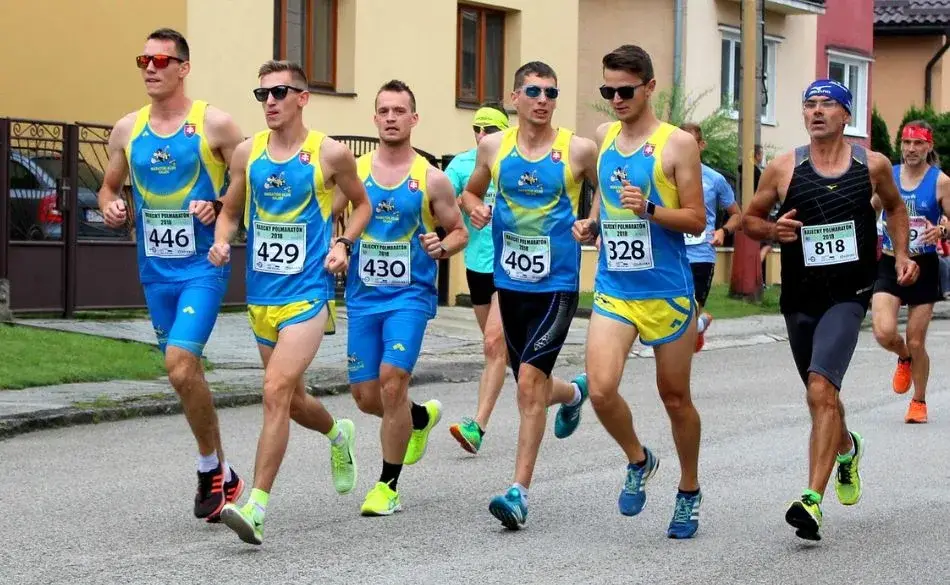
The Perfect 11-Week Half Marathon Training Schedule
To make the most of 11 weeks to train for a half marathon, you need structure, variety, and balance. The right half marathon training plan gradually increases distance and intensity while giving your body enough time to recover. A strong schedule blends long runs, tempo workouts, interval sessions, and easy days to develop both endurance and speed.
Below is an example of a weekly half marathon training schedule designed for runners with some base fitness. You can adjust distances to match your experience level, but the structure should stay consistent.
👉 Swipe to view full table
| Week | Focus | Long Run (km) | Key Workout | Notes |
|---|---|---|---|---|
| 1 | Base building | 8 | Easy run + strides | Focus on form and breathing |
| 2 | Endurance | 10 | Tempo 20 min | Maintain steady pace |
| 3 | Strength | 12 | Hill repeats | Build leg power |
| 4 | Recovery | 14 | Easy run | Reduce effort slightly |
| 5 | Progression | 16 | Fartlek run | Mix slow and fast paces |
| 6 | Threshold | 18 | 5 × 800 m intervals | Work on race rhythm |
| 7 | Consolidation | 16 | Tempo 25 min | Hold pace longer |
| 8 | Peak week | 20 | Long run at goal pace | Test nutrition plan |
| 9 | Maintenance | 18 | Short intervals | Stay sharp, avoid fatigue |
| 10 | Taper begins | 12 | Easy jog + strides | Reduce mileage |
| 11 | Race week | 21.1 | Short shakeout | Rest well and trust training |
This plan helps you steadily build your half marathon endurance while protecting against overtraining. If you’re wondering how to train for a half marathon effectively, remember: it’s not about running the farthest, it’s about training smart. Keep your effort controlled on easy days and push yourself on key sessions.
Cross-training, stretching, and strength work also play a role in preventing injuries and maintaining consistency. As you progress, the goal is to feel stronger each week, not more exhausted.
Finishing a half marathon after just eleven weeks of focused training proves what dedication can do. If you’re ready to keep improving, expert guidance can make all the difference. Our Running Coaching program gives you personalised structure, feedback, and motivation so you can train smarter, avoid injury, and reach your next goal—whether it’s a faster time or your first full marathon.
- Guidance: structured sessions tailored to your fitness and race goals
- Motivation: regular support that keeps your training on track
- Progress: customised feedback to help you improve each week
- Support: expert advice to reduce fatigue, prevent injuries, and build confidence
Coaching turns your 11-week foundation into lasting progress. Train smarter, race stronger, and enjoy every step of the journey.
Start Personal Running Coaching →

Building Strength, Speed, and Endurance in 11 Weeks
Once you’ve got your half marathon training schedule mapped out, the next step is building the three pillars that matter most: strength, speed, and endurance. Together, they create the foundation for running 21.1 km with confidence and control.
Strength Training for Runners
Strength training isn’t about bulking up, it’s about improving efficiency and preventing injuries. Including one or two short sessions per week can make your stride more powerful and help stabilize your joints. Focus on exercises that strengthen the hips, glutes, and core, as these areas support proper running form.
Try adding:
- Squats and lunges to improve leg drive.
- Planks and bridges for core control.
- Calf raises for ankle strength and push-off power.
Speed Work and Tempo Runs
Speed sessions, such as intervals or tempo runs, train your body to handle faster paces more comfortably. A tempo run should feel “comfortably hard”, you should be able to speak a few words but not hold a conversation. These sessions help increase lactate threshold, meaning you can run longer before fatigue sets in.
Include one speed workout weekly, alternating between intervals and tempo runs. Short intervals build top-end speed, while tempos simulate race pace endurance.
Endurance and the Long Run
The long run is your weekly cornerstone. It’s where you build aerobic capacity and mental resilience. Keep the pace slow enough to maintain a steady heart rate, typically 60–70% of your maximum. Gradually increase your distance by 1–2 km each week, peaking around 20 km before tapering.
Building endurance is as much about patience as it is about fitness. Trust the process, each kilometer strengthens not only your legs but also your confidence for race day.


Balancing Recovery, Nutrition, and Cross-Training
A successful 11-week half marathon training plan isn’t just about running. How you recover, fuel, and supplement your training with other activities can make or break your performance. The body adapts to training stress during rest, not while you’re pushing hard. Neglect recovery, and your progress will stall.
Recovery and Rest Days
During recovery, your muscles rebuild, glycogen stores refill, and the nervous system resets. Most runners need at least one full rest day per week and one light recovery day, such as a slow jog or gentle spin. Prioritize sleep and nutrition during this time, both speed up repair and reduce fatigue.
Simple recovery strategies that work include:
- Gentle stretching or yoga after runs to ease tightness.
- Rolling or massage to improve circulation.
- Contrast showers or light swimming to reduce inflammation.
Listen to your body. Persistent soreness or elevated heart rate on easy days is a sign to back off.
Fueling for Performance
Nutrition plays a massive role in your ability to sustain training. Aim for balanced meals that include carbohydrates for energy, lean protein for recovery, and healthy fats for endurance. Hydration also matters as dehydration of just 2% can impair performance.
Try to eat a small carbohydrate-rich snack within 30 minutes after long or intense sessions. Foods like oats, bananas, or yogurt with honey help replenish glycogen stores efficiently.
Cross-Training Benefits
Adding cross-training for runners boosts aerobic capacity without additional impact stress. Cycling, swimming, or rowing builds endurance while allowing sore muscles to recover. These sessions can replace one easy run each week if fatigue sets in.
Think of cross-training as active recovery, it keeps fitness levels high without risking injury. This balance of running, rest, and variety is what keeps your half marathon training schedule sustainable and enjoyable from start to finish.


Mastering Pacing and Race Strategy
A strong half marathon training plan teaches you more than how to log miles, it teaches you how to pace. Running 21.1 km isn’t about speed alone; it’s about even effort and controlled energy. By week 11, you should know how your body feels at different speeds and how long you can hold your target pace comfortably.
The key to pacing is starting conservatively. Many runners lose valuable minutes by going out too fast. During training, practice negative splits (run the second half slightly quicker than the first). This teaches discipline and builds confidence for race day.
During your tempo or long runs, simulate race conditions. Practice holding your goal pace for 3–5 km at the end of a long run when fatigue sets in. This mirrors the demands of the final stretch and prepares you mentally for discomfort.
To refine your race day strategy half marathon plan, break the course into manageable segments: the opening 5 km for settling in, the middle 10 km for rhythm, and the final 6 km for controlled aggression. Use landmarks or watch splits to stay on pace without overthinking every kilometer. Small pacing cues (like checking your effort against breathing rate) help you stay consistent even when the excitement builds.
Fuel timing is another part of pacing. Take small sips of fluid every 20 minutes and consume gels or carbohydrates roughly every 45 minutes. This ensures steady energy without spikes or crashes. Practicing this rhythm in training prevents surprises on race day.
If you’re unsure what a realistic pace or finish time might look like, exploring how different ability levels translate into race results can help. Check out our Half Marathon Time Chart for Beginners to compare pace targets and plan your next goal with confidence.
Once you’ve built consistency and want to aim for specific time goals, learn how to refine your pacing and improve speed with our in-depth guide on achieving a 1:45 Half Marathon Pace. It offers practical strategies to help you transition from steady completion to performance-focused racing.


Common Mistakes to Avoid in 11 Weeks
Training for a half marathon in just eleven weeks is possible, but it leaves little room for error. Many runners make simple mistakes that can derail progress or lead to injury. Recognizing them early will help you stay consistent and reach the start line healthy and confident.
One of the biggest pitfalls is doing too much, too soon. Adding mileage aggressively or pushing the pace every session doesn’t accelerate progress, it increases fatigue. Stick to your half marathon training plan and trust gradual improvement. Running harder is rarely the same as running smarter.
Skipping rest days is another common trap. Recovery is part of training, not a break from it. Without it, the body can’t adapt or rebuild. Over time, small aches and tightness can turn into full-blown injuries. Respect the schedule, especially during peak weeks when the temptation to “do more” is strongest.
Neglecting strength training is also a mistake. A few short sessions each week improve efficiency and prevent common running injuries. Exercises like squats, glute bridges, and planks keep your form solid when fatigue sets in late in a race.
Many runners also underestimate the importance of fueling and hydration. Forgetting gels or starting a run dehydrated can sap energy fast. During training, practice your nutrition strategy until it feels automatic. It’s one of the simplest ways to perform better on race day.
Finally, avoid comparing your progress to others. Every runner’s journey is different, shaped by lifestyle, fitness level, and recovery rate. Focus on your data, your body, and your plan. When you train within your limits, you build the consistency that defines long-term success in any half marathon training schedule.


Mindset and Motivation for the Final Push
The final phase of your 11-week half marathon training plan is as much mental as it is physical. You’ve put in the miles, built strength, and developed endurance, now it’s about maintaining focus and belief. Success on race day starts in the mind long before you cross the start line.
Training fatigue can test your confidence, especially in the last few weeks. It’s normal to feel doubt or tiredness when peak mileage hits. This is where mental resilience makes the difference. Visualize your race regularly: the start, the middle grind, the finish line. Picture how you’ll respond when things get tough. That preparation helps you stay calm when discomfort arrives during the run.
Motivation often fades when training feels repetitive. Keeping things fresh is key. Switch up routes, run with a group, or add music or podcasts that lift your mood. Remind yourself why you started this journey. Whether it’s to prove something to yourself, raise funds for a cause, or simply enjoy the challenge of improvement.
During long or difficult runs, break the distance into smaller goals. Focus on reaching the next kilometer, the next landmark, or the next song on your playlist. Achieving these micro targets keeps motivation high and makes large distances feel more manageable.
It’s also worth keeping your goals in perspective. Everyone defines success differently, and what feels like a great performance to one runner might be a comfortable effort for another. To better understand how your goals stack up, take a look at our What’s a Respectable Time for a Half Marathon guide. It breaks down finish times across different levels and helps you set realistic, motivating expectations.
Remember, your journey over these 11 weeks has already built discipline and strength far beyond running itself. When the final week arrives, trust that you’ve done enough. A focused, confident mindset is your most valuable tool for turning preparation into performance and crossing that finish line with pride.


The Final Two Weeks: Tapering and Race-Day Readiness
You’ve built the work, and now it’s time to protect it. The final two weeks are about fresh legs, calm nerves, and sharp rhythm. Think less, but better. Your half marathon training schedule should shift from mileage to recovery, allowing your body to absorb training and prepare for peak performance.
During taper, reduce your mileage gradually while keeping intensity steady. Cut to about 70–75% in week ten and 50–60% in race week. Keep two short workouts with light tempo segments or relaxed strides. These sessions remind your body how to move efficiently without adding fatigue. Hold easy runs easy, rest when needed, and aim for extra sleep. Keep strength work light and bodyweight only to maintain mobility.
Two weekends before race day, cap your long run around 12 km with the final kilometers at goal pace. One week out, run 8–10 km easy with a few short pick-ups to maintain rhythm. If you’ve followed 11 weeks to train for a half marathon, your foundation is solid. This phase ensures you reach the start line fresh, not fatigued.
Nutrition and hydration matter more than ever. Eat balanced meals with carbohydrates at every sitting and a little extra salt if you’re a heavy sweater. Practice your race-day breakfast and gel timing on shakeout runs so everything feels automatic. Hydrate consistently throughout the day rather than gulping large amounts at once.
For more detailed guidance on how to fuel correctly before race day, read our What to Eat the Night Before a Half Marathon guide. It covers meal timing, portion examples, and foods that boost glycogen stores without causing digestive discomfort.
In race week, organize small details that bring calm: lay out your kit, pin your bib early, charge your watch, and confirm your race day strategy half marathon splits. On race morning, follow your practiced routine (eat your usual breakfast, sip water, and warm up lightly). Start steady, settle into rhythm, and save your push for the final stretch. Arrive confident, not overworked, ready to enjoy the run you’ve earned.
Completing an 11-week half marathon training plan proves what focus and consistency can achieve. The best results come when you keep building on that progress. A structured plan removes the guesswork and helps you maintain fitness long after race day. Our Running Training Plans give you a clear roadmap to improve endurance, strengthen your body, and stay motivated through every new challenge.
- Structured mileage: gradual weekly progressions with the perfect balance of recovery
- Strength and speed: targeted sessions that enhance endurance and race-day performance
- Race preparation: workouts that mirror real event demands for better pacing and confidence
- Expert design: plans created for all fitness levels and running goals
A plan is not just a schedule, it is a partner that keeps you consistent, confident, and ready for whatever distance comes next.
Explore Running Training Plans →

Crossing the Finish Line
Reaching the end of your 11-week half marathon training plan is an accomplishment in itself. Whether you’re aiming for a personal best or simply to finish feeling strong, remember that success comes from consistency, not perfection. Every run, recovery session, and early morning you committed to built the endurance and mindset you need to cover 21.1 km with pride.
By following a structured half marathon training schedule, you’ve learned to balance hard work with rest, challenge with patience. You’ve discovered how tempo runs sharpen your rhythm, long runs strengthen your resolve, and recovery days rebuild your body. That balance is what allows runners to improve safely and sustainably over time.
As race day arrives, keep your goals realistic and your mindset positive. Some runners focus on pace, others on finishing upright and smiling. Whatever your aim, remember that running is about progress, not pressure.
After your race, give yourself time to recover properly. A few easy walks or light cycles can ease sore muscles. Reflect on what worked well in your training and what you’d adjust next time. Recovery isn’t just about resting your legs, it’s about celebrating your effort and resetting your goals for the next challenge ahead.
If you’re ready to keep improving with a structured approach, explore our Half Marathon Running Training Plan. It’s designed by expert coaches to help runners of all levels build endurance, pace efficiently, and achieve their next race goal with confidence.
If you’re looking to stay race-ready or challenge yourself again, you might enjoy trying a shorter build-up next time. Our 7 Weeks to Half Marathon Training Plan offers a faster, focused schedule for runners who already have a base and want to stay sharp between events.