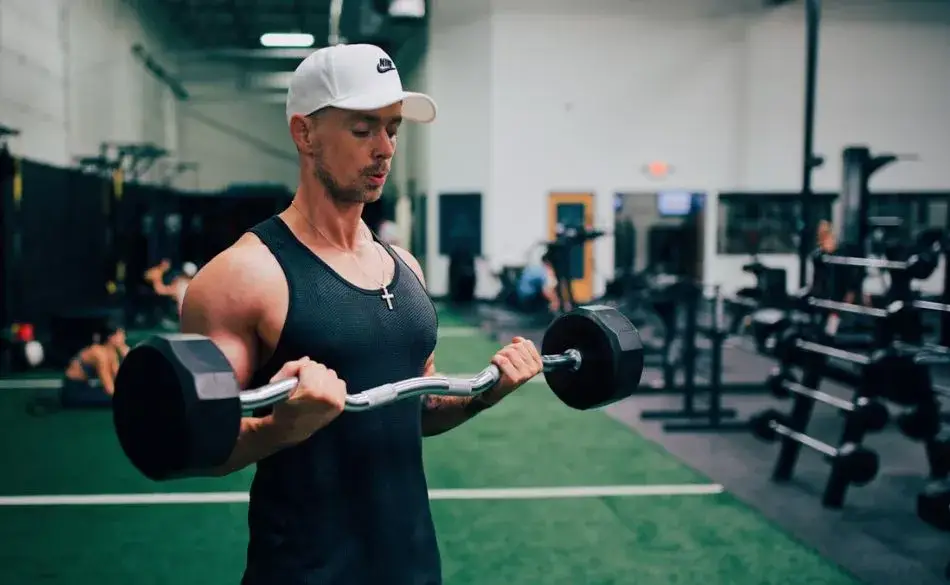
What Is the Brachialis and Why Should You Train It?
When most people talk about arm training, they jump straight to biceps curls. But the brachialis muscle doesn’t get nearly enough attention. Hidden beneath the biceps, this powerful muscle is responsible for elbow flexion (the simple act of bending your arm). It may not be as flashy, but building it through a smart brachialis muscle workout can completely change the look and strength of your arms.
The unique role of the brachialis sets it apart. While the biceps also rotate your wrist, the brachialis works in a more direct way. Its only job is to pull the forearm toward the upper arm. That means you can train it harder with grip variations that remove some of the biceps’ involvement. This is why exercises like hammer curls and reverse curls are staples for anyone serious about brachialis training.
Here’s the exciting part: growing your brachialis actually makes your arms look bigger even when your biceps aren’t flexed. The muscle sits underneath and literally pushes the biceps up, creating more arm thickness and density. If you’ve ever wondered why your biceps peak looks flat, it could be because you haven’t strengthened the muscle beneath it.
Think of the brachialis as the foundation of your upper arm. The biceps are the paint on the walls, but the brachialis is the framework holding everything in place. Without a strong foundation, the structure lacks depth. Adding brachialis exercises gives your arms that solid, three-dimensional look many lifters chase for years.
There’s also a performance benefit. Training this muscle helps with forearm strength and grip, which carries over into bigger lifts like rows, pull-ups, and deadlifts. So, while the brachialis might be small, its impact is anything but.
If you’ve been doing curls for months without much progress, it’s time to ask: are you only painting the surface, or are you building the base?
If you’re building a stronger upper body base to support arm growth, pairing this with a simple core routine helps posture and pulling power. This type of work keeps you stable when rows and curls get heavy.
Our Cycling Coaching Programs are designed to help you climb better, improve power, and reach your cycling goals—whether it's endurance training, time trials, or boosting your FTP.
- Customized weekly plans that adapt to your schedule and data
- Expert feedback on heart rate, power, and recovery
- Strength & mobility exercises to support performance and prevent injury
- Training delivered via TrainingPeaks for seamless tracking
- No lock-in contracts — flexible monthly membership
Ride smarter, train with support, and unlock your full cycling potential.
Start Cycling Coaching Today →How Do You Target the Brachialis With the Right Exercises?
To build a strong foundation, you need the right tools. A proper brachialis muscle workout isn’t about doing endless curls. It’s about adjusting your grip and exercise selection so the brachialis does the heavy lifting.
The easiest place to start is with hammer curls. Using a neutral grip (palms facing each other) you shift the effort away from the biceps and onto the brachialis. Keep your elbows tucked in, avoid swinging, and focus on a slow, steady squeeze. That’s when you’ll feel the burn right in the middle of your arm.
Another key movement is the reverse curl. This variation uses a pronated grip, palms facing down. It doesn’t just hit the brachialis, it also works the brachioradialis, a forearm muscle that adds even more arm thickness. Because this grip reduces leverage, you’ll likely need to use less weight than in a standard curl. That’s normal, it means the right muscles are working.
If you’re looking for variety, the Zottman curl is a great choice. You curl up with a standard underhand grip, then rotate your wrists at the top to a pronated grip before lowering. This combination allows you to lift heavier on the way up while targeting the brachialis on the way down. It’s a simple tweak that delivers big results.
If wrist discomfort ever gets in the way of reverse or hammer curls, focusing on forearm and tendon strength can make neutral and overhand grips feel stronger and more comfortable.
You can also lock your arms into position by using a preacher bench. Doing reverse curls here removes momentum and forces the brachialis to take control. You’ll notice how different the tension feels when the muscle can’t rely on body swing for help.
Think of it this way: underhand grips favor the biceps, while neutral and overhand grips bring the brachialis muscle into play. Switching grips might seem small, but it’s the difference between only polishing the surface and actually building the structure underneath.
When you start training with purpose, you’ll quickly see why the brachialis deserves its own spotlight.
What Are the Benefits Beyond Bigger Arms?
Most lifters chase bigger arms for the look, but a focused brachialis muscle workout delivers much more than appearance. The brachialis might be small compared to the biceps and triceps, yet its influence extends into strength, stability, and long-term performance.
One of the biggest benefits is how it improves pulling strength. Exercises like chin-ups, rows, and deadlifts all rely on elbow flexion. A stronger brachialis means a stronger pull, which keeps your technique solid when the weight gets heavy. You’ll notice cleaner reps and less strain on the wrists and shoulders.
There’s also a clear visual payoff. Because the brachialis muscle sits beneath the biceps, building it creates more arm thickness from the side view. Instead of just chasing a peak biceps curl, you’re adding depth and density that shows even when your arms are relaxed. It’s the kind of change that makes your upper body look athletic in a natural way.
A strong brachialis also supports the forearms. By sharing the workload with the biceps and brachioradialis, it reduces early fatigue and helps protect the elbows. This balance is especially important if you train often, since overusing the biceps alone can lead to aches or plateaus. Think of it as building joint armor, you’re strengthening the smaller links in the chain so the bigger ones can perform better.
Building stability isn’t just for the arms. You can add wobble board or balance drills to improve joint resilience from the ground up. It’s a simple way to support long-term strength.
One of my coaching clients, Sam, struggled to add weight to his pull-ups for months. We shifted his arm day to include hammer curls and reverse curls, with strict form and slow lowering phases. Within six weeks, not only did his pull-up numbers climb, but his elbow pain eased up too. That’s the real-world power of smart brachialis training.


Building the Perfect Brachialis Workout Routine
A smart brachialis muscle workout doesn’t need endless variety. What you really need is a small set of focused movements done consistently with good form. Keeping the structure simple makes it easier to track progress and avoid elbow strain.
Aim to train the brachialis two or three times per week. Keep the sessions short – 20 to 30 minutes is more than enough. Pair this work with your arm or back days so you’re fresh enough to handle the grip demands.
Stick to neutral and overhand grips. These shift effort away from the biceps and place the load directly on the brachialis muscle. Use moderate weights, 8–15 reps, and a controlled lowering phase to maximize muscle hypertrophy.
To support these arm workouts, adding dynamic runner mobility drills can free up tight joints and make your overall training smoother. Mobility complements strength by keeping the movement clean and pain-free.
Here’s a sample routine you can use as a template:
👉 Swipe to view full table
| Exercise | Grip | Sets | Reps | Tempo | Rest | Purpose |
|---|---|---|---|---|---|---|
| Hammer Curl | Neutral | 3 | 8–12 | 2 sec up / 3 sec down | 60–90 sec | Primary brachialis builder; adds arm thickness |
| Reverse Curl | Overhand | 3 | 10–15 | Controlled both ways | 60 sec | Targets brachialis & brachioradialis; boosts forearm strength |
| Zottman Curl | Underhand up / Overhand down | 2 | 10–12 | 1–2 sec up / 4 sec down | 75 sec | Combines heavy lift with slow eccentric for growth |
| Preacher Reverse Curl | Overhand | 2 | 12–15 | 2 sec up / 2 sec down | 60 sec | Locks elbow to isolate brachialis with strict form |
Progress should feel steady, not rushed. Add an extra rep before reaching for heavier dumbbells. Once you can complete the upper end of the rep range with control, move up in weight slightly. This small step keeps your joints safe while still driving growth.
Rotating grips across the week (neutral, overhand, and mixed) spreads the workload evenly. It builds grip strength without overstressing the wrists or elbows. That balance is what keeps your progress consistent over the long term.
When your routine is simple, structured, and repeatable, brachialis exercises become easy to stick with. That’s the kind of training that makes the brachialis grow and adds lasting thickness to your arms.


Tips to Maximize Brachialis Growth
Adding the right exercises is only half the story. To make your brachialis muscle workout truly effective, you need smart strategies that help the muscle grow without overloading your joints. These are the finer details most lifters miss.
First, focus on tempo. Slowing down the lowering phase puts the brachialis under more tension, which is where growth happens. Think of it like stretching a rubber band—more time under tension equals more potential energy. If you rush the movement, you’re throwing away free gains.
Second, vary the grip across the week. Using neutral, overhand, and mixed grips spreads the stress evenly between the brachialis, biceps, and brachioradialis. Not only does this create balance, but it also prevents overuse injuries that often show up in the elbows when you repeat the same pattern too often.
Third, don’t neglect recovery. The brachialis may be small, but it still needs time to repair and grow. Two or three focused sessions each week is enough. More isn’t better if it means sore elbows and weaker lifts.
One of my athletes, Ethan, used to train arms almost daily, thinking more curls meant more growth. He hit a wall (tight forearms, sore elbows, no progress). We scaled back to three short, structured sessions with a clear focus on the brachialis. Within two months, not only had his arms thickened up, but his pull-ups and rows felt stronger and smoother.
And for solid foundations that carry over into faster recovery and better posture, including a structured strength plan alongside your brachialis training can boost results across your whole program.
Here are tips you can apply right away:
- Slow down the eccentric (lowering phase) for maximum growth.
- Rotate grips weekly to train the brachialis from every angle.
- Train with moderate weights to avoid stressing the joints.
- Limit volume to 8–10 total sets per session for the brachialis.
- Stretch the forearms and biceps after each workout to aid recovery.
When you combine these strategies with consistent training, brachialis exercises stop being accessory work and start becoming the hidden key to real arm thickness and strength.
Our Running Coaching Programs give you everything you need to improve performance, avoid injuries, and train with confidence. Every plan is built to match your goals and lifestyle.
- Tailored sessions that fit your current fitness level
- Expert adjustments to keep progress steady and safe
- Guidance on pacing, recovery, and fueling for better results
- Delivered via TrainingPeaks with simple, structured workouts
- No lock-in contracts — flexible monthly coaching
Take the next step in your running journey with expert coaching support.
Start Your Coaching Today →
Common Mistakes to Avoid in Brachialis Training
A brachialis muscle workout is simple, but it’s also easy to get wrong if you rush or copy others in the gym. The brachialis is smaller than the biceps, so poor habits can hold back results and even cause joint discomfort.
One common mistake is using too much weight. Lifters often load up a bar for reverse curls and end up swinging through the motion. This shifts the work to the shoulders and back instead of isolating the brachialis. A lighter, controlled lift does far more for growth than jerking around heavy dumbbells.
Another mistake is ignoring grip variation. If you always curl with the same underhand grip, the biceps take over, leaving the brachialis undertrained. Remember: neutral and overhand grips are your best friends here. Skipping them means you’re only training part of the movement chain.
A third error is chasing volume over form. More sets don’t equal more growth if your technique collapses. For a muscle this small, quality beats quantity every time. Stick to 8–10 total sets of brachialis exercises each session and execute them with precision.
Finally, many people neglect recovery. Because the brachialis plays a role in almost every pulling motion, it’s easy to overwork without realizing it. If your elbows ache or your grip weakens, you may need to scale back frequency until strength catches up.
Think of your training like painting a detailed picture. Rushing with bold strokes might cover space, but you lose the sharp detail. Slow, clean repetitions are the fine brushwork that brings the brachialis to life.
When you avoid these mistakes, your brachialis training becomes more efficient, safer, and far more rewarding.


How to Balance Brachialis vs Biceps Training
It’s easy to view the brachialis muscle and biceps as rivals, but the truth is they work best together. A balanced arm routine brings out the strengths of both muscles while keeping your joints healthy.
The biceps shine when you use an underhand grip. They rotate the forearm and give you that “peak” look at the top of a curl. The brachialis, on the other hand, is strongest with neutral and overhand grips. It builds the density beneath the biceps that creates overall arm thickness.
If you focus only on the biceps, your arms may look peaked but flat from the side. If you train only the brachialis, you’ll miss out on the rounded shape people often admire. The best results come when you give both muscles their share of attention.
A good split is simple. Dedicate one or two arm days per week. Start with heavier biceps curls when you’re fresh, then move into targeted brachialis exercises like hammer curls or reverse curls. This sequence allows you to use strength for the biceps first, then refine your arms with precision work for the brachialis.
Over time, you’ll notice how this balance carries over to bigger lifts. Pull-ups feel steadier, deadlifts feel stronger, and even pressing movements benefit from more elbow stability.
The idea isn’t brachialis vs biceps, it’s brachialis and biceps. When you train them together, you build arms that are both functional and impressive.
Our Triathlon Coaching Programs provide the structure and support you need to balance swim, bike, and run. Every plan is built to manage intensity, recovery, and transitions so you perform at your best across all three disciplines.
- Custom-built triathlon plans tailored to your race goals
- Expert coaching on pacing, fueling, and recovery routines
- Transition-focused training to stay strong between disciplines
- Delivered via TrainingPeaks with feedback and easy tracking
- No contracts — flexible monthly coaching
Build endurance, sharpen transitions, and gain the confidence to race smarter with expert coaching.
Start Triathlon Coaching Today →

Current Trends in Brachialis Training
In recent years, more lifters and coaches have started highlighting the role of the brachialis. Social media has fueled interest in specialized workouts, with videos breaking down grips, tempos, and form tips. This focus has helped beginners see results faster and avoid years of wasted effort on biceps curls alone.
One growing trend is using tempo-based training. Lifters are slowing down the eccentric phase of hammer curls or adding pauses at the bottom of reverse curls. This keeps the brachialis under tension longer, which research shows is highly effective for growth.
Another trend is incorporating brachialis work into full-body routines. Instead of saving it for “arm day,” athletes add a couple of sets after pulling movements. This approach builds strength that carries directly into rows, pull-ups, and climbing.
There’s also more awareness about injury prevention. Coaches now emphasize how brachialis training protects the elbow by balancing stress across muscles. For lifters who’ve dealt with tendon pain, these exercises often feel like a relief rather than a burden.
Even competitive athletes are taking note. In powerlifting and CrossFit circles, grip and pulling strength are critical. Training the brachialis is no longer seen as “accessory work” but as a foundation for performance.
So while the brachialis used to be the forgotten muscle of the arm, it’s quickly becoming a training staple. And if you want your arms to look fuller and perform better, following these modern methods is one of the smartest moves you can make.


Conclusion - Unlocking the Power of the Brachialis
The journey to bigger, stronger arms isn’t just about the biceps. A focused brachialis muscle workout adds the depth, density, and pulling strength that most lifters miss. By using the right grips, controlling your tempo, and keeping your training structured, you can finally build the kind of arms that look powerful from every angle.
From hammer curls to reverse curls, these exercises don’t just change your appearance, they improve your performance in every pulling movement. My athletes who embraced this approach quickly noticed not only thicker arms, but stronger lifts and healthier elbows.
The takeaway is simple: don’t ignore the muscle that supports everything else. Train the brachialis with purpose, and you’ll unlock growth you didn’t think was possible. Your arms will look fuller, your grip will feel stronger, and your workouts will finally deliver the results you’ve been chasing.
So, next time you step into the gym, ask yourself: are you training just for show, or are you building true strength from the inside out? The brachialis is the hidden answer waiting to transform your progress.