


Quick Answer
Complete beginner: 8–16 weeks for a functional base. Returning athlete (6–12 months off): 4–8 weeks to restore previous base. Returning athlete (2+ years off): 8–12 weeks. Running base takes longer than cycling because tissue adaptation (tendons, bones) lags cardiovascular adaptation. What changes fast (2–4 weeks): cardiovascular efficiency, plasma volume, perceived effort at easy pace. What takes months: mitochondrial density, capillarisation, fat oxidation efficiency, connective tissue remodelling.

What Is Actually Changing When You Build a Cardio Base
A cardio base isn’t a single adaptation — it’s a package of physiological changes that accumulate over weeks and months of consistent aerobic training. Understanding what changes and when helps explain why the process can’t be compressed into a few weeks of effort.
Early adaptations (weeks 1–4): Plasma volume — the fluid component of blood — increases within days of starting aerobic training. More plasma means more blood, which improves oxygen delivery to working muscles and reduces the cardiovascular strain of a given effort. This is one of the main reasons easy sessions start to feel less difficult within the first few weeks. Cardiovascular efficiency also improves: the heart becomes better at pumping blood per beat, so heart rate at a given effort begins to drop. These early gains are real but don’t represent deep aerobic development — they’re the system getting familiar with regular demand.
Medium-term adaptations (weeks 4–12): Mitochondrial density begins increasing — more mitochondria per muscle cell means each cell can process more oxygen to produce energy. Capillarisation improves: the network of small blood vessels within muscles increases, improving oxygen delivery directly to where it’s used. These adaptations take consistent weekly training stimulus to develop and are the core of what makes aerobic training feel progressively easier.
Long-term adaptations (months 3–12+): Fat oxidation efficiency — the ability to use fat as a primary fuel at a given pace — improves significantly with extended base training. This is what separates athletes who can run or ride comfortably for hours from those who fatigue at 60–90 minutes. Connective tissue remodelling (tendons, ligaments, bones) continues for months after cardiovascular adaptation is well established — this is why injury risk remains elevated in runners long after their aerobic fitness seems solid. CTS (Carmichael Training Systems) identifies the deepest adaptations — structural changes to muscle fibre type, tendon and ligament remodelling — as occurring over many months and years.

Timelines by Starting Point
The most important variable in how long it takes to build a cardio base is not what you do — it’s where you start. Two athletes doing identical training programmes will experience dramatically different timelines based on their history.
| Starting point | Functional base (can do 45–60 min steady) | Deep base (supports race training) |
|---|---|---|
| Complete beginner (no recent training history) | 8–16 weeks | 4–6 months |
| Returning athlete (6–12 months inactive) | 4–8 weeks | 2–4 months |
| Returning athlete (2+ years inactive) | 8–12 weeks | 3–5 months |
| Cross-training (fit in one sport, new to another) | 4–8 weeks (cardio adapts faster, tissue slower) | 3–4 months (tissue adaptation limiting) |
| Fit athlete returning after 2–4 week break | 1–2 weeks | Already present — maintenance only |
The returning athlete timeline reflects “muscle memory” in aerobic terms — not literal muscle memory, but the fact that previous aerobic adaptations (mitochondrial density, capillarisation, cardiac efficiency) decay at a slower rate than they were built. Most research suggests aerobic fitness begins declining meaningfully after 10–28 days of inactivity, but structural adaptations built over years take much longer to fully de-train. An athlete returning after 6 months off will feel unfit but their cardiovascular system has retained more adaptation than a true beginner ever had, which is why rebuilding is faster than the original build. Our return to exercise guide covers the specific 50% volume rule and progression framework for returning athletes across all sports.

Running vs Cycling vs Swimming: Why Timelines Differ
The same cardiovascular system underlies all three sports, but the time it takes to build a sport-specific base varies significantly because each sport makes different demands on tissues and movement patterns beyond just the heart and lungs.
Running
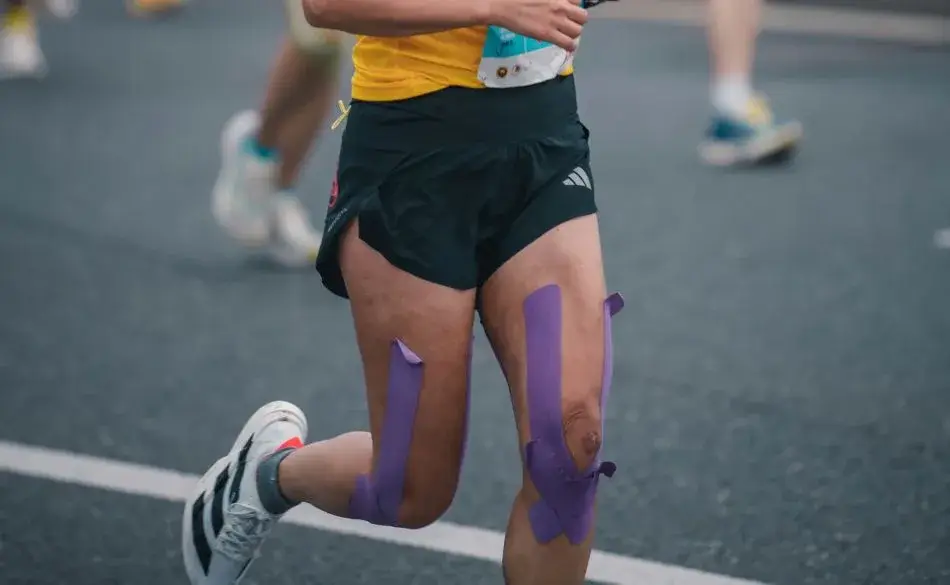
Running has the longest base-building timeline of the three common endurance sports, because it requires two simultaneous adaptation processes to complete rather than one. The first is cardiovascular: the heart, lungs, and aerobic metabolism adapting to sustained effort. The second is structural: tendons (particularly the Achilles and patellar), bones (shins, metatarsals), and connective tissue adapting to the repetitive impact load of running. Cardiovascular adaptation follows the 6–12 week timeline. Structural adaptation takes significantly longer — research consistently shows connective tissue remodels more slowly than cardiovascular fitness improves.
The practical consequence: a beginning runner will often feel aerobically capable of running further than their tendons and bones can safely tolerate. This is the mechanism behind most beginner running injuries — shins hurts, stress fractures, Achilles tendinopathy — which occur when cardiovascular fitness outpaces tissue capacity. The 10% weekly mileage increase rule exists specifically to pace structural adaptation, not cardiovascular adaptation. Our Zone 2 running guide covers the pace targets that allow cardiovascular development while keeping structural load manageable.
Typical functional running base timeline for a complete beginner: 10–16 weeks of consistent, mostly easy running (3–4 sessions per week, 20–40 minutes each) building to the ability to run 45–60 minutes continuously at a comfortable conversational pace.
Cycling
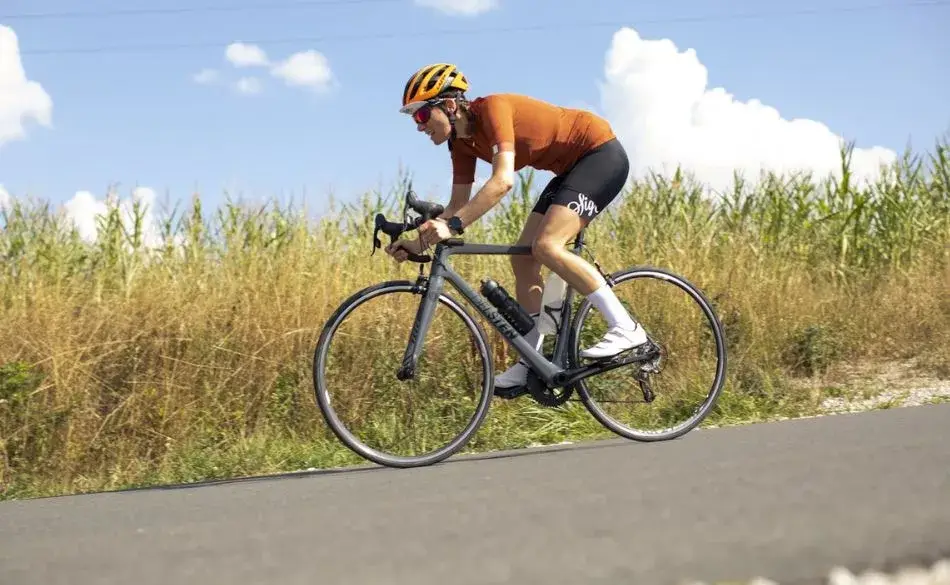
Cycling allows the cardiovascular system to be trained at higher volume with lower structural stress, because it is non-weight-bearing. There is no impact load on tendons and bones, which means the cardiovascular stimulus can be applied more aggressively without the same injury risk. This is why many athletes feel their “cardio” improves faster on the bike than running — the cardiovascular adaptation can proceed at its natural rate without the tissue adaptation bottleneck that limits running load.
JOIN Cycling’s research identifies 6–8 weeks as sufficient to establish a solid cycling aerobic base, with 3–4 months producing a robust foundation for race-specific training. TrainerRoad’s base training framework uses 6–12 weeks as the standard base phase length. Our dedicated cycling base training guide covers the Zone 2 session structures and progression methods specific to cycling. Riding 3–5 sessions per week with 80% of volume at Zone 2 (easy, conversational effort) maximises aerobic development across this period.
Typical functional cycling base timeline: 6–10 weeks for a returning cyclist, 8–14 weeks for a complete beginner, to reach the ability to ride steadily for 60–90 minutes without significant fatigue.
Swimming
Swimming base development is unique because it requires a third simultaneous adaptation process: technique. Swimming is a skill-dependent sport to a degree that running and cycling are not — an inefficient swimmer expends dramatically more energy for the same speed than an efficient one. This means that for most beginners, the limiting factor in early swim base development is not cardiovascular fitness or structural capacity, but technique — particularly breathing rhythm, body position, and stroke efficiency. A swimmer who cannot maintain relaxed breathing cannot sustain aerobic effort regardless of their cardiovascular fitness.
The practical consequence: swimming base development is highly individual. A fit runner who swims inefficiently may take 12–20 weeks to build a functional swim base — not because of cardiovascular limits but because technique takes time to engrain. An efficient recreational swimmer can build a solid base in 6–10 weeks because the technique bottleneck is already resolved. Swimming base development requires swim-specific volume — cycling and running fitness do not transfer technique.

How Often Do You Need to Train to Build a Base?
Frequency — sessions per week — is the most important training variable for base building, more important than session length or intensity. Aerobic adaptations respond to regular repeated stimulus. Three sessions per week provides enough frequency for meaningful adaptation; two sessions per week maintains fitness in experienced athletes but produces slow base development for beginners; four to five sessions per week accelerates adaptation if recovery supports it.
| Sessions/week | Expected timeline for functional base | Notes |
|---|---|---|
| 2 sessions/week | 16–24+ weeks | Sufficient for maintenance; slow for base building. Better than nothing, but progress is limited. |
| 3 sessions/week | 10–16 weeks | The minimum effective dose for meaningful base development. Produces reliable adaptation over 3–4 months. |
| 4–5 sessions/week | 7–12 weeks | Optimal frequency for most athletes. Allows enough stimulus with enough recovery between sessions. |
| 6+ sessions/week | 6–10 weeks | Only beneficial if recovery supports it. High frequency without adequate recovery produces fatigue, not adaptation. |
Our guide on whether two runs per week is enough covers the specific question of minimum effective dose for running — the answer depends on goal (maintenance vs base building vs race preparation) and is directly applicable to cyclists and swimmers adjusting training frequency around work and life demands.
Session length in the early base phase matters less than frequency. A 30-minute easy run four times per week produces more base adaptation than a 2-hour run once a week. The frequent short sessions accumulate aerobic stimulus with manageable recovery; the single long session often leaves beginners too fatigued to train for several days. LifeTime Fitness’s base training guidance recommends 30 minutes per session for beginners, 45 minutes for intermediate athletes, and 60+ minutes for conditioned athletes — with the progression being to add minutes over weeks, not to dramatically increase frequency.


Zone 2 Training: The Engine of Base Building
The vast majority of effective base training happens at Zone 2 intensity — a pace or effort where you can speak in full, comfortable sentences without pausing for breath. This is slower than most beginners and returning athletes naturally run or ride, which creates the most common mistake in base building: training too hard on easy days.
Zone 2 targets the aerobic energy system specifically — the metabolic pathway that produces energy using oxygen and fat. Training consistently at this intensity produces the mitochondrial density, capillarisation, and fat oxidation improvements that constitute a deep aerobic base. Training harder (Zones 3–4) uses a different energy pathway and produces different adaptations — useful for race preparation, but not the foundation of base fitness.
The 80/20 principle: 80% of weekly training volume at Zone 2 or below, 20% at harder efforts. This distribution is used by elite endurance athletes and supported by research on long-term aerobic development. Most recreational athletes do the opposite — they run at a “medium-hard” effort for most sessions, which is too hard to produce Zone 2 base adaptations and not hard enough to produce the speed adaptations of genuine intervals. Our Zone 2 guide covers exactly how to identify and maintain this effort level across different paces, heart rates, and conditions.
A practical session minimum: 150 minutes per week at Zone 1–2 intensity, building toward 300 minutes over the course of the base phase. LifeTime Fitness’s fat oxidation research identifies this range as the threshold above which meaningful metabolic base adaptations occur reliably.

What You Can and Can't Accelerate
The frustrating reality of base building is that some of it genuinely cannot be rushed. The physiological processes — capillarisation, mitochondrial density increases, connective tissue remodelling — operate on biological timelines that training volume and intensity cannot override.
What responds to training load: Cardiovascular efficiency improves in proportion to aerobic training stimulus. More Zone 2 volume, applied consistently, produces more rapid cardiovascular adaptation. An athlete who can train 5 days per week will build their cardiovascular base faster than one training 3 days per week, all else equal.
What has a fixed timeline: Connective tissue remodelling in runners cannot be accelerated beyond roughly 8–12 weeks for initial adaptation, regardless of how fit the athlete’s heart is. This is why running-specific base building is slower than cycling and why the 10% mileage rule exists — not because the cardiovascular system needs more time, but because the tendons and bones do. Athletes who push this boundary through eagerness — running significantly further or harder than their tissue age supports — are the ones who end up injured just as their cardiovascular fitness is peaking.
What prior training changes: Athletes with years of prior endurance training have structural and metabolic adaptations that persist even through extended inactivity. A runner who trained for 5 years, took 2 years off, and returns will rebuild their base significantly faster than the timelines above suggest — because many of the deeper structural adaptations are still present even if cardiovascular fitness has declined. This is the physiological basis for the common observation that experienced athletes “bounce back” from layoffs faster than beginners.
For runners who feel their progress has stalled or who are suddenly struggling despite consistent training, our guide on suddenly struggling to run covers the reasons — from overtraining to detraining signals — that performance can deteriorate even during a base-building phase. And our guide on why running improvement stalls addresses the plateau pattern that affects many consistent runners once the early base adaptations are complete.

Base Building Across the Age Spectrum
Base building timelines extend with age, primarily because recovery between sessions takes longer. An athlete in their 50s or 60s training three days per week may require 16–20 weeks to build the same functional base that a 30-year-old builds in 10–12 weeks, because the adaptation stimulus per session is similar but the recovery window is longer and training frequency is therefore lower.
The implication is not that older athletes can’t build a strong base — they absolutely can, and the underlying adaptations (mitochondrial density, capillarisation, fat oxidation) respond to training at any age. It is that the timeline needs to be longer and the patience needs to be commensurately greater. Our running over 60 guide covers the specific load management adjustments that protect older athletes during base building, and our guide on sprint training for older athletes covers how speed work can be safely introduced once the base is established.
For beginners of any age who want to understand what genuinely consistent, low-intensity training produces over time, our guide on running 3km every day covers a frequent question about daily short runs — and the answer is directly relevant to base building, because the cumulative aerobic stimulus of short daily runs is exactly how a base gets built.
Build Your Cardio Base With a Structured Plan
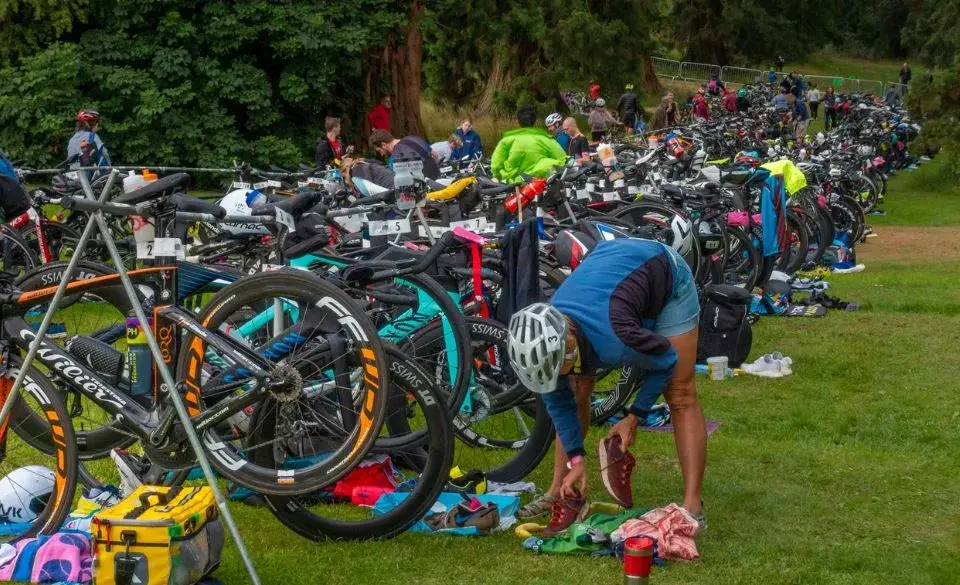
A coach or structured training plan ensures your base phase is built at the right intensity, right frequency, and right progression — so you're not undertrained, overtrained, or injured when you're ready to race. SportCoaching offers coaching and training plans for running, cycling, and triathlon.

FAQ: How Long Does It Take to Build a Cardio Base?
How long does it take to build a cardio base?
6–12 weeks for a functional base (can sustain 45–60 minutes of steady aerobic effort). 3–6 months for a deep base that supports race-specific training. Complete beginners take 8–16 weeks; returning athletes take 4–8 weeks. Running takes longer than cycling because tissue adaptation runs alongside cardiovascular adaptation.
How do I know if I have a good cardio base?
Practical signs: 45–60 minutes of easy aerobic effort feels genuinely manageable; heart rate at a given easy pace has dropped noticeably from where it started; easy sessions leave you feeling ready to train again the next day; resting heart rate is lower than when you started.
What is the best way to build a cardio base?
80% of training time at Zone 2 (conversational pace), 20% harder. Three to five sessions per week of 30–60 minutes each. Minimum 150 minutes per week at easy intensity, building toward 300 minutes. Frequency matters more than session length in the early phase.
Does cycling cardio transfer to running?
Cardiovascular fitness transfers partially. But running-specific tissue adaptation (tendons, bones) doesn’t transfer from cycling. A fit cyclist starting running will hit tissue limits before cardiovascular limits — running load must still be built conservatively regardless of cycling fitness.















