What Actually Makes a Marathon One of the Coldest in the World
When people hear the phrase coldest marathons in the world, they often picture a single race day with an unusually low temperature. In practice, however, coldest marathons are defined by patterns rather than one-off extremes. These are events that take place in climates where cold is a consistent and expected part of the race environment, not an anomaly.
Temperature is the most obvious factor, but it is not the only one that matters. Many of the coldest marathons regularly start well below freezing, sometimes at –10°C or colder. At those temperatures, the body behaves differently. Muscle elasticity drops, warm-up requirements increase, and small pacing errors early in the race are harder to correct later. This early stiffness is something many runners recognise from winter training, and we explain why it improves as the body warms in our article on
pain at the start of a run that improves as you warm up. Just as importantly, cold also changes how effort is perceived. Runners often feel “fine” early on because the cold masks discomfort, only to realise later that they have been running harder than planned.
Beyond temperature alone, environmental exposure plays a major role. Wind is one of the biggest contributors. A calm –10°C feels very different from –10°C with sustained wind. Several cold-weather marathons are held in open or remote environments where wind chill becomes a defining feature. This accelerates heat loss, affects hand function, and can even interfere with basic race tasks. Opening gels or adjusting layers may sound minor, but these actions become harder once dexterity starts to fade.
Surface conditions further separate cold marathons from standard winter races. Snow-packed roads, ice patches, or frozen gravel subtly change running mechanics. Even when courses are cleared, residual cold from the ground increases foot cooling over time. As sensation drops, stride control can deteriorate late in the race, adding to fatigue.
Finally, logistical factors complete the picture. Some of the coldest marathons take place during short winter days or in regions with limited daylight. This influences start times, visibility, and post-race recovery. In these settings, getting warm after finishing can be just as important as staying warm during the race itself.


The Coldest Marathons in the World and Where They Are Run
When runners look up the coldest marathons in the world, they are usually searching for races where cold conditions are expected rather than exceptional. In other words, these are not events defined by one unlucky weather forecast. Instead, they are held in climates where winter temperatures are stable enough to plan around, even though race-day conditions can still vary. What places them among the coldest is not a single temperature reading, but the likelihood that runners will face sustained sub-zero conditions throughout the event.
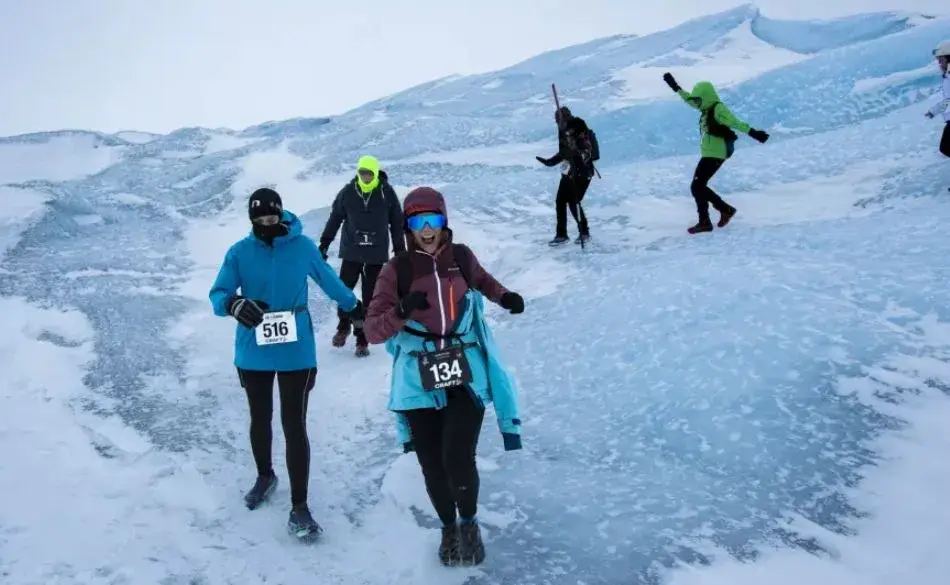
At the extreme end of the spectrum sits the Antarctica Marathon, held at Union Glacier. This is an expedition-style marathon run on compacted snow, with temperatures commonly ranging from around –10°C to –20°C. In addition to the cold itself, wind exposure and altitude add further stress, which is why the event operates under strict safety controls. Runners must be fully self-aware and well prepared, as the environment leaves little margin for error once the race begins.
By contrast, some of the coldest marathons take place on standard road courses. In the United States, the Eisenhower Marathon has recorded some notably cold editions. Run in February, it has experienced race mornings well below freezing, with wind chill often making conditions feel harsher than the temperature alone suggests. While it is not cold every year, its timing and location mean runners must arrive prepared for genuinely severe winter conditions.
Another North American example is the Frozen Assets Marathon, held in Anchorage, Alaska. Run in mid-winter, this event regularly takes place on snow- and ice-covered roads, with sub-zero temperatures common. While it is more accessible than expedition-style races, the combination of footing, cold air, and winter weather still places meaningful demands on pacing, layering, and fueling strategy throughout the race.
Moving north again, Northern Europe hosts one of the most consistently cold urban marathons in the Polar Night Marathon. This race takes place during the Arctic winter and is often run in darkness. Typical temperatures sit between –5°C and –15°C, and snow and ice are expected on the course. As a result, studded shoes are commonly used, and the lack of daylight adds an extra layer of complexity beyond the cold itself.
Russia’s Omsk Siberian International Marathon provides another example of how climate shapes the race experience. The region’s continental climate means sharp, dry cold is possible, and some editions have started in very low temperatures. Conditions vary year to year, but runners entering this event must still be prepared for cold that affects breathing, pacing, and fluid management.
👉 Swipe to view full table
| Event | Location | Typical Race Environment | Common Temperature Range | Surface Type | Key Cold Stress Factor |
|---|---|---|---|---|---|
| Antarctica Marathon | Union Glacier, Antarctica | Remote, expedition-style setting with no urban shelter | Approximately –10°C to –20°C | Compacted snow and ice | Continuous cold exposure with limited margin for error |
| Eisenhower Marathon | Kansas, United States | Rural road course exposed to winter wind | Below freezing in colder years | Road, sometimes affected by ice or frost | Wind chill amplifying cold stress early in the race |
| Frozen Assets Marathon | Anchorage, Alaska, United States | Urban winter course held in mid-winter conditions | Commonly below freezing | Snow- and ice-covered roads | Cold footing combined with sustained sub-zero exposure |
| Polar Night Marathon | Tromsø, Norway | Urban Arctic environment, often run in darkness | Approximately –5°C to –15°C | Snow- and ice-covered roads | Cold combined with darkness and reduced visual feedback |
| Omsk Siberian International Marathon | Omsk, Russia | Urban course influenced by continental climate | Variable; can be very cold in some editions | Road | Dry cold affecting breathing, pacing, and hydration |

How Extreme Cold Changes Pacing, Fueling, and Fatigue During a Marathon
Once temperatures drop well below freezing, the marathon becomes a different pacing problem altogether. In these conditions, your body spends more energy maintaining core temperature, even before accounting for running effort. As a result, the early stages of the race can feel deceptively manageable. Because cold dulls discomfort and often keeps heart rate slightly suppressed, many runners drift into a pace that feels controlled but is metabolically expensive. By the halfway point, the cost of that early effort usually shows up as rising fatigue rather than obvious breathlessness.
This makes warm-up and early pacing especially important. Muscles and tendons take longer to reach a functional temperature in the cold, which means aggressive early pace increases injury risk and accelerates stiffness later on. In very cold races, a conservative opening 5–10 kilometres often leads to a stronger overall performance, even if it feels frustratingly slow at the time.
Fueling also behaves differently once cold becomes a constant stressor. Appetite cues are reduced, and thirst is often blunted despite ongoing fluid loss through breathing and sweat trapped under layers. Cold, dry air increases respiratory water loss, while heavily layered clothing can still lead to meaningful sweating. Together, these factors mean dehydration and low energy availability can creep up without obvious warning signs. This is why having a structured approach matters more in cold races, as outlined in our guide to endurance hydration strategy, rather than relying on feel alone.
Another practical consideration is manual dexterity. As hands cool, opening gels, handling bottles, or adjusting layers becomes progressively harder. Small delays in fueling early can then compound later fatigue, particularly in races where aid stations are spaced farther apart due to remote locations or weather constraints.
Fatigue in extreme cold tends to arrive unevenly. Instead of a gradual decline, runners often experience sudden drops in coordination or pace once thermal stress accumulates. This is especially noticeable late in the race, when glycogen is lower and neuromuscular control is already under strain.
One athlete I’ve coached experienced this during a winter marathon in northern Europe. Despite feeling controlled through 25 kilometres, they underestimated early fueling because the cold masked hunger. Over the final 10 kilometres, pace fell sharply even though breathing and heart rate felt stable. In that case, the issue wasn’t fitness, but energy management under cold stress.
Taken together, success in cold marathons depends less on toughness and more on respecting how cold reshapes effort, fueling, and fatigue. Runners who plan for those changes tend to finish more evenly and recover more reliably afterward.

Comparing Coldest Marathons by Environment and Race Type
While all of the coldest marathons in the world involve low temperatures, they do not challenge runners in exactly the same way. In practice, the environment in which the race is held matters just as much as the thermometer reading. An organised winter marathon on cleared roads presents a very different set of demands compared to a remote or expedition-style race, where cold, surface conditions, and logistics shape nearly every decision.
In urban winter marathons, the setting is generally familiar. These races are held on standard road courses in cities or towns that experience severe winter weather. Roads are usually cleared, aid stations are well stocked, and medical support is close by. As a result, while the cold is still a major factor, the overall environment remains structured. Runners can plan pacing and fueling with greater confidence, knowing that external support is readily available if conditions deteriorate.
By comparison, remote or expedition-style cold marathons operate under far tighter constraints. These events take place in isolated environments where snow, ice, wind exposure, and limited infrastructure are part of the race by design. Aid stations are often fewer and farther apart, surfaces are rarely predictable, and safety planning becomes central rather than secondary. In these settings, cold stress accumulates not only through low temperatures but through prolonged exposure and a reduced margin for error.
The table below highlights how these two race environments typically differ. Rather than ranking one as harder than the other, it helps clarify how preparation priorities shift depending on where and how the marathon is run. Seen this way, the goal is not to compare toughness, but to match experience and preparation to the demands of the environment.
👉 Swipe to view full table
| Category | Cold Urban Road Marathon | Remote / Expedition Cold Marathon |
|---|---|---|
| Typical Surface | Cleared roads with possible ice patches or packed snow. | Compacted snow, ice, frozen gravel, or mixed unstable surfaces. |
| Temperature Exposure | Cold is significant but moderated by buildings, support, and shorter exposure after finishing. | Cold exposure is continuous, often amplified by wind and open terrain. |
| Fuel & Aid Access | Regular aid stations with predictable spacing and supplies. | Limited aid access; fueling often relies heavily on personal planning. |
| Pacing Risk | Early pacing errors still occur, but correction is usually possible. | Pacing mistakes compound quickly due to fatigue and limited recovery options. |
| Safety Margin | Medical support and shelter are readily available. | Strict safety protocols; self-management is critical throughout the race. |
| Post-Race Recovery | Rapid access to warmth, fluids, and transport. | Rewarming and recovery must be planned carefully and immediately. |
Taken together, these differences show that the coldest marathons are best understood as a spectrum of environments rather than a single category. Temperature sets the baseline, but surface conditions, exposure, and logistical support ultimately determine how demanding the race becomes. For runners considering these events, choosing a race that matches experience and preparation is far more important than chasing the lowest possible temperature number.
For runners preparing for snow-affected courses, adapting to unstable winter surfaces becomes just as important as aerobic fitness. Training the stabilising muscles and adjusting technique can reduce fatigue and improve control in cold conditions. We cover this in more detail in our guide on running in snow and winter conditions.
Who the Coldest Marathons Suit and When Caution Is Warranted
The coldest marathons in the world tend to attract a particular type of runner, though not always for the reasons people assume. In most cases, these races are not about chasing personal bests. Instead, they appeal to runners who value preparation, patience, and the ability to manage effort under conditions where temperature, surface, and logistics all play a role.
Generally, runners who cope best in extreme cold are those with a solid endurance base and some experience racing in adverse conditions. That does not necessarily mean elite athletes. Rather, it often means runners who understand their pacing well, are comfortable adjusting plans mid-race, and have spent time training in cold or variable weather. Familiarity with layered clothing, conservative starts, and fueling without strong hunger cues tends to reduce unnecessary stress on race day. This profile is similar to runners drawn to other demanding events shaped by environment rather than speed, such as those outlined in our guide to the hardest marathons in the US.
Alongside experience, preparation style matters. Cold-weather marathons reward planning more than instinct. Decisions about clothing, warm-up timing, and fueling schedules need to be made in advance and followed even when the body feels deceptively comfortable early on. Runners who rely heavily on feel alone often struggle when cold masks fatigue or appetite, particularly over the later stages of the race.
At the same time, there are situations where caution is warranted. Runners new to the marathon distance may find that extreme cold introduces too many variables at once. Similarly, those with a history of cold sensitivity, circulation issues, or repeated muscle strains during winter training should approach these events carefully. For practical guidance on recognising when conditions may tip from challenging to counterproductive, our article on when to skip a run in the cold outlines how to make safer decisions in harsh weather. In cold environments, especially remote ones, the margin for correcting mistakes is narrower.
Recovery considerations also deserve attention. Cold races can place additional stress on connective tissue and the immune system, particularly if rewarming and post-race care are delayed. For runners managing heavy training loads, travel, or limited recovery time, this can affect how quickly they return to normal training afterward.
Ultimately, the coldest marathons are not about proving toughness. They are about matching experience, preparation, and expectations to the demands of the environment. For the right runner, they can be deeply rewarding. For others, choosing a less extreme setting allows fitness to be expressed more fully and safely.


Putting the Coldest Marathons in Context
When you step back, the coldest marathons in the world are best understood as a set of environments rather than a single category. What makes them challenging isn’t just the temperature on the start line, but how cold influences pacing, fueling, surface conditions, and recovery over several hours. These races ask runners to think ahead, stay flexible, and respect small decisions that matter more when conditions are unforgiving.
For some runners, that challenge is appealing. For others, it highlights the importance of choosing races that match experience, preparation, and recovery capacity. Neither approach is better than the other. The key is understanding what the environment demands and being honest about what you’re ready to manage.
Cold-weather marathons don’t reward bravado. They reward preparation, patience, and good judgment. When those pieces are in place, running in extreme cold can be a memorable and satisfying experience rather than an avoidable struggle.
Races in extreme cold place different demands on pacing, fueling, layering, and recovery. Many runners train hard but struggle on race day because their preparation doesn’t reflect how cold reshapes effort and fatigue over long distances.
Our Running Coaching focuses on building plans that match the environment as well as the athlete — helping you manage effort early, fuel consistently in the cold, and arrive at race day prepared for the conditions you’ll actually face.
Learn About Coaching →