How Does Garmin Calculate VO2 Max?
Whether you’re a competitive athlete or an enthusiast, most likely you’ve heard of VO2 max. VO2 max refers to the highest volume of oxygen you can utilize during exercise. It’s generally used to measure aerobic endurance or the cardiovascular fitness of athletes during a training period.
Not many people can afford the luxury of being lab-tested, though. That is why brands like Garmin have developed a way to estimate or calculate VO2 max through their wearables.
Garmin uses their Firstbeat Fitness Test to calculate VO2 max for a variety of activities. You can see their patent on the technology here.
To calculate an athlete’s VO2 max, Garmin collects the following data from each user:
- Age and personal background
- Exercise is started, with data collected from heart rate and speed
- The data collected from the activity is segmented into different heart rate zones based on the user’s background information
- During the activity, reliability is measured based on continuous movement (e.g., no stopping)
- The most credible data segments are then used to estimate aerobic fitness through heart rate and speed data
Understanding your heart rate zones can further optimize your training. Utilize our Heart Rate Training Zones Calculator to personalize your workouts.

VO2 Max Calculation by Garmin
Speed data is taken from reliable segments and used to estimate a VO2 max score. This is calculated from 20–30 second periods using one of the following formulas:
- Walking and Pole Walking:
Theoretical VO2 (ml/kg/min) = 1.78 × speed × 16.67 [tan(inclination) + 0.073] - Running on Level Ground:
Theoretical VO2 (ml/kg/min) = 3.5 × speed - Running on Hilly Terrain:
Theoretical VO2 (ml/kg/min) = 3.33 × speed + 15 × tan(inclination) × speed + 3.5 - Cycling:
Theoretical VO2 (ml/kg/min) = (12.35 × power + 300) / person’s weight - Rowing (Indoor):
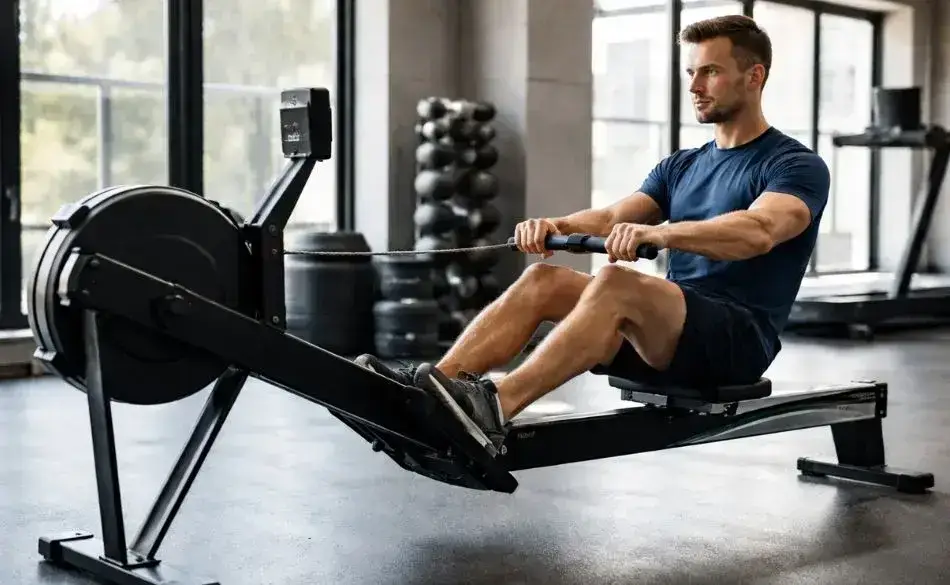
Theoretical VO2 (ml/kg/min) = (14.72 × power + 250.39) / person’s weight
Units:
- Speed = kilometers per hour (km/h)
- Inclination = degrees (°)
- Power = watts (W)
- Weight = kilograms (kg)
From these calculated values, heart rate is then used to define the effort level of each segment. After setting your heart rate training zones, Garmin uses them to determine the intensity you’re working at. That effort is then used to estimate VO2 as a percentage of your VO2 max.
How Accurate is Garmin’s VO2 Max?
Measuring data through wearables is one of sport’s greatest breakthroughs, helping us analyze training better than ever. But how accurate is Garmin’s VO2 max? And how does it compare to laboratory testing?
Firstbeat Analytics (a unit of Garmin Ltd.) carried out its own research to verify the technology and its effectiveness in determining VO2 max. The study used 2,690 runs from 79 different runners, each of whom had their VO2 max tested four times over a 6–9 month period. The results found that Garmin’s VO2 max estimation was 95% accurate, with an error margin of less than 3.5 ml/kg/min.
These results are quite accurate, considering that most submaximal testing methods have an error margin of 10–15%.
While this all sounds promising, there are some variables that can affect accuracy. If a user underestimates their HRmax by 15 beats per minute, the VO2 max reading can show an error of around 9%. Conversely, overestimating HRmax by 15 beats per minute can lead to a discrepancy of about 7%.
Although this might seem significant, if the athlete’s actual HRmax is known, the margin of error drops to around 5%.
Taking time off can impact your VO2 max levels. Learn how to bounce back effectively with our guide on Returning to 5K Running After Two Weeks Off.
How to Improve Your VO2 Max with Garmin
Knowing your VO2 max is one thing, but improving it takes consistent training. That is why Garmin provides some valuable data to estimate VO2 max—they also give you tools and insights to help increase it over time.
To help improve your VO2 max, Garmin provides tools like guided workouts, performance condition tracking, and recovery time. You can also track metrics like Training Load and Training Status. These all give you insight into whether you are improving, maintaining, or pushing too hard. With regular training and monitoring of these metrics, you’ll start to see your VO2 max increase as your aerobic capacity improves.
Keeping your training consistent and balanced with enough recovery is the key to improving your VO2. Pair these with focused workouts to target your VO2 max, and you should start to see your Garmin VO2 metrics improve.
Enhancing your running cadence can improve both efficiency and VO2 max. Discover practical techniques in our article on Running Cadence: How to Improve Step Rate & Efficiency.
| Method | Description | Example |
|---|---|---|
| High-Intensity Interval Training (HIIT) | Short bursts of intense effort followed by recovery. Stimulates heart and lung capacity. | 6 × 1-minute intervals at 90–95% max HR with 2-minute jogs |
| Threshold Training | Training at or near lactate threshold to improve aerobic efficiency. | 20-minute run at comfortably hard pace (80–85% max HR) |
| Long Slow Distance (LSD) | Low-intensity aerobic base building that increases endurance and fat utilization. | 60–90 minute run or ride at Zone 2 intensity |
| Cross-Training | Incorporate cycling, swimming, or rowing to reduce impact and stimulate VO2 max. | 30-minute interval cycling session with 3-minute hard efforts |
| Strength Training | Improves running economy and helps support higher training volumes. | 2 sessions per week with squats, lunges, deadlifts, and core work |
| Consistent Recovery | Prevents overtraining and allows for physiological adaptations to occur. | Include 1–2 rest or easy days per week, prioritize sleep |
Watches That Calculate V02 MAX
Garmin offers a variety of watches equipped with VO2 max estimation. Below is a list of some of the models provided by Garmin.
| Model | VO2 Max Tracking | Additional Features |
|---|---|---|
| Forerunner 45 | Yes | GPS, heart rate monitoring, activity tracking |
| Forerunner 55 | Yes | Daily suggested workouts, PacePro™, stress tracking |
| Forerunner 245 | Yes | Running dynamics, music, safety & tracking features |
| Forerunner 745 | Yes | Multisport, training load focus, recovery advisor |
| Forerunner 945 | Yes | Mapping, music, Garmin Pay™, performance monitoring |
| Fenix Series (e.g., 6, 7) | Yes | Multisport, TOPO maps, rugged design, Pulse Ox |
| Vivoactive 4 / Venu | Yes | Animated workouts, respiration tracking |
| Venu 3 / 3S | Yes | Sleep coach, nap detection, wheelchair mode |
Frequently Asked Questions
What is VO2 max?
Is Garmin's VO2 max accurate?
Can I improve my VO2 max using Garmin?
Do I need a chest strap for accurate VO2 max?
Does Garmin calculate VO2 max for cycling?
The Bottom Line
Keep your workout tracking and user information accurate. Doing so allows Firstbeat’s fitness test technology to provide a reliable estimate of your VO2 max. Make sure your heart rate zones are correctly set, your weight and age are up to date, and your workouts are consistent and uninterrupted when possible. The more reliable data you feed into your Garmin device, the more accurate and useful your VO2 max readings will be. Over time, this helps you track improvements, adjust training intensity, and better understand how your body is responding to your workouts.
References:
https://sites.udel.edu/coe-engex/2019/03/16/how-accurate-is-your-garmins-vo2max-estimate/