What’s the Right Training Volume for Every Triathlete?
When you’re trying to figure out how many hours should triathletes train, it helps to start with real-world data. Every triathlete is different, some come from a running or cycling background, others are new to endurance sports, but research gives us some useful averages.
Most age-group athletes train between 5 and 15 hours of triathlon training per week, depending on their distance and goals. Shorter events like the sprint or Olympic distance require far less total volume than a Half-Ironman or Ironman, where endurance and recovery take center stage.
👉 Swipe to view triathlon training hour comparisons
| Race Distance | Typical Weekly Hours (Average) | Peak Week Hours | Primary Focus |
|---|---|---|---|
| Sprint | 4–5 hours | 6–8 hours | Technique, aerobic conditioning |
| Olympic | 6–7.5 hours | 8–10 hours | Endurance and pacing control |
| Half-Ironman (70.3) | 8.5–11 hours | 11–14 hours | Long endurance sessions and brick workouts |
| Ironman (140.6) | 10.5–14 hours | 14.5–18.5 hours | Volume management, recovery, fueling practice |
These figures represent the sweet spot where most amateur triathletes build strong fitness without overtraining. Studies show that more volume doesn’t always equal better performance. Many Ironman athletes see no extra gains beyond 14 hours/week, while fatigue and injury risk climb sharply.
One of the athletes I coach, Emily, trained just 7 hours per week for her first Half Ironman-distance race. She focused on consistent swim sessions and steady bike miles instead of chasing huge weeks. By race day, she was rested, confident, and finished smiling. Proof that success isn’t about who trains the most, but who trains the smartest.
Ask yourself this: What’s the most training I can do and still recover well? That’s your true weekly target and it often leads to your best results.
If you’re starting from scratch or wondering how to build your first consistent routine, check out our Couch to Triathlon: Beginner’s Guide. It provides a clear pathway for new triathletes to build sustainable training hours and confidence.
Explore the full-distance triathlon world with the Ironman Training Plans, crafted for every experience level and designed to help you dial in your weekly training hours, optimise your triathlon training volume, and train smarter for your 140.6-mile goal.
Whether you're new to the full distance or aiming for a breakthrough time, these plans guide you through 20-30 weeks with structured hours per week, personalised coaching input, and pacing strategies that match your lifestyle and race ambition.
View Ironman Plans Now

How to Balance Training Hours with Real Life
Let’s be honest: not every triathlete has unlimited time. Most of you are balancing work, family, and recovery. So when you ask how many hours should triathletes train, the real question is how to make those hours count.
A consistent triathlon training volume doesn’t mean packing every free moment with workouts. It means finding a schedule that fits your lifestyle while keeping you healthy and motivated. Research on age-group athletes shows that most perform well on 8–11 hours of triathlon training per week, especially for half-distance races. Even Ironman athletes often average 10–14 hours, proving that moderation can still lead to strong results.
Here’s how experienced coaches help time-crunched triathletes get the most from limited hours:
- Prioritize key sessions. Your most valuable workouts (long rides, brick runs, and swim technique work) should come first. Supporting sessions can flex around them.
- Use recovery days wisely. Easy spins, relaxed swims, or short walks help your body adapt without adding fatigue.
- Match volume to your life stress. If work or family demands rise, trim training hours that week. Consistency beats overload.
- Build gradually. (Coaching guideline) Increase total hours by no more than about 10 percent weekly to stay injury-free.
- Plan recovery weeks. Every 3–4 weeks, cut your training volume by roughly 25 percent. This helps your body rebound and grow stronger.
“Find the most hours you can train and still wake up refreshed. Then cut one hour. That’s your sustainable limit.”
One analysis of amateur Ironman athletes found no added performance benefit beyond about 14 hours per week, while fatigue and injury risk climbed. So rather than chasing pro-level volume, focus on smart structure. You don’t need to train like a professional, you need to train like you.
For a deeper look at how to structure your weekly intensity and endurance work, read our guide on the 80/20 Triathlon Training Method. It explains how most successful triathletes keep roughly 80% of their sessions easy and 20% hard, a balance that fits perfectly with sustainable weekly training hours.


How to Divide Your Training Time Between Swim, Bike, and Run
Once you know roughly how many hours triathletes should train, the next question is how to divide those hours between the three disciplines. The right swim bike run training split helps you train efficiently while reducing fatigue and injury risk.
Triathlon isn’t about giving each sport equal time, it’s about matching your triathlon training volume to race demands and your personal strengths. Research in Frontiers in Physiology and Nature Scientific Reports shows that cycling and running have the strongest influence on overall performance for most triathlon distances. The bike leg usually takes up about half your total race time, which explains why most athletes dedicate more training hours to it.
Here’s a coaching guideline many age-groupers use to manage their weekly triathlon training hours per week:
- Bike – roughly 45–50% of total hours: Cycling builds endurance, power, and aerobic fitness with less impact stress.
- Run – around 25–30% of total hours: Running strengthens your aerobic base and muscular endurance but also adds more strain, so quality matters more than quantity.
- Swim – about 20–25% of total hours: Technique-focused swim sessions boost efficiency and confidence without adding excessive fatigue.
If you average 10 total hours weekly, this could look like:
- 5 hours cycling
- 3 hours running
- 2 hours swimming
For more tips on improving your run leg and pacing smarter during long-distance races, check out our guide on Ironman Triathlon Running Secrets. It explains how to conserve energy on the bike and unlock faster, stronger running off the bike on race day.
These numbers aren’t strict formulas, they’re starting points. If swimming is your weakness, shift an extra hour there. If you’re recovering from injury, lean on cycling or swimming for aerobic work.
Think of your training time as balancing a three-legged stool. The bike leg may be the largest, but each discipline supports the others. When all three are trained in the right proportions for you, performance and recovery work in harmony.
Check out our Half Ironman Training Plans, specifically designed to guide you through ideal weekly volumes, structured sessions, and race-specific preparation for the 70.3 distance.
From 12-14 hour peak weeks to smart recovery phases, each plan is built to help you manage your effort, strength, and stamina while still balancing life and work.
Explore Half Ironman Plans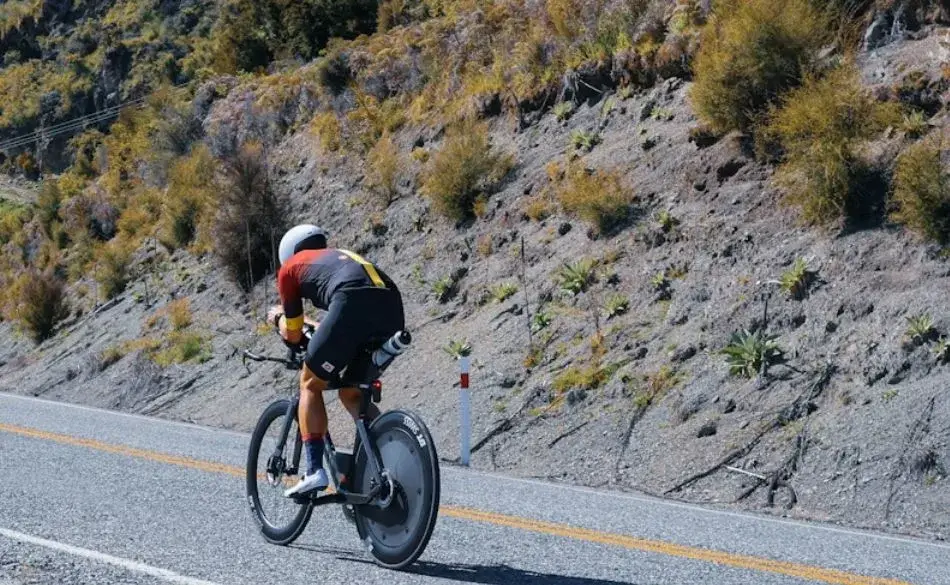
How Your Weekly Hours Should Change Across the Season
Your triathlon training hours per week don’t stay the same forever. As your fitness grows, so should the way you structure your season. New triathletes often ask how much time to add each year and the answer depends on your background, recovery, and race distance.
Training works best in waves. You start with a steady base phase to build aerobic fitness, then slowly increase your triathlon training volume during the build and peak phases. After the race, recovery and lighter training allow your body to adapt before starting another cycle.
Coaches often use progressive volume changes based on experience. Here’s a simple overview that helps age-group triathletes plan smarter across Sprint, Olympic, Half, and Ironman distances.
👉 Swipe to view triathlon training hour ranges by experience level
| Experience Level | Sprint | Olympic | Half Ironman (70.3) | Ironman (140.6) | Training Focus |
|---|---|---|---|---|---|
| Beginner | 4–6 h/week | 6–8 h/week | 8–10 h/week | 10–12 h/week | Technique, aerobic base, routine building |
| Intermediate | 6–8 h/week | 8–10 h/week | 10–12 h/week | 12–15 h/week | Endurance, pacing, strength sessions |
| Advanced | 8–10 h/week | 10–12 h/week | 12–14 h/week | 14–18 h/week | Race-specific simulation and refined fueling |
These ranges reflect what most age-group athletes can sustain across a full training block. Beginners should focus on consistency rather than total hours. Intermediate athletes can safely add volume and include more race-specific efforts. Advanced competitors reach higher weekly totals but rely on precise recovery to handle the load.
Whatever your level, remember: smart progress comes from small, repeatable steps. Your best season will come not from chasing more hours, but from mastering the rhythm of when to push and when to rest.

Should You Count Strength and Mobility as “Training Hours”?
When athletes ask how many hours should triathletes train, most think about swimming, cycling, and running. But the truth is, strength and mobility sessions deserve a place in that total too. They’re often the difference between steady progress and weeks lost to injury.
Research shows that adding regular strength training improves running and cycling efficiency, boosts muscular endurance, and supports long-term joint health. Studies also suggest that combining endurance and resistance training enhances overall movement economy and helps triathletes perform more efficiently. These findings are consistent across multiple endurance sports, even though exact guidelines (like the number of weekly sessions or total minutes) are still evolving.
As a coaching guideline, most age-groupers benefit from one to two short strength sessions per week, about 20–40 minutes each, along with 10–15 minutes of mobility or flexibility work on most days. These sessions don’t need to inflate your weekly hours; you can easily blend them into warm-ups or cooldowns. For time-crunched triathlon athletes, simple patterns like push, pull, squat, hinge, and carry build durability without draining energy for key workouts.
If you’re looking for a quick and effective strength routine to support upper-body power and swim stability, explore our guide on bodyweight chest exercises for triathletes. These simple movements help improve control and endurance without adding extra training hours.
Heavy lifting tends to fit best in the off-season or early base phase, when total triathlon training volume is lower. During build and race phases, shift to lighter, faster, and more functional movements. Think of strength work as an investment, you’re building the foundation that keeps you consistent across swim, bike, and run.
Whether you include these workouts in your total triathlon training hours per week depends on your intent. If a session directly enhances performance, recovery, or durability, count it. If it’s light mobility to stay loose, treat it as bonus maintenance.
While the research clearly supports the benefits of strength and mobility for triathletes, the exact prescription remains personal. What’s universal, though, is this: strong, mobile athletes recover faster, train longer, and race with more control when it matters most.
If you’re looking for a coach-led system that adapts your weekly hours, refines your swim, bike and run work, and helps you train smarter (not just harder) see why triathletes are choosing SportCoaching to maintain consistent progress and smarter volume choices.
Build confidence, structure, and long-term progress with personalized Triathlon Coaching from SportCoaching. Each program is designed around your goals, schedule, and current fitness level, helping you train smarter and race stronger across every distance.
You’ll receive tailored training blocks, detailed feedback, and ongoing support from experienced endurance coaches who know what it takes to perform on race day. Whether you’re preparing for your first event or aiming for a personal best, this coaching gives you the structure and accountability to reach your potential.
Start Your Coaching Journey

Finding Your Perfect Training Balance
So, how many hours should triathletes train? The answer isn’t fixed, it depends on your goals, your recovery, and your life outside sport. Research and coaching experience both show that most age-group athletes perform well on 8–11 hours of triathlon training per week, with Ironman competitors often averaging around 10.5–14 hours in typical weeks and peaking near 18 hours.
Some triathletes thrive on just 6 hours weekly for sprint or Olympic-distance events, while others successfully handle longer sessions for full-distance races. What matters most is how well your triathlon training volume supports adaptation, consistency, and enjoyment.
Here’s what decades of coaching and current data agree on:
- Consistency beats volume. Studies and real-world results show that regular, moderate training often outperforms sporadic, high-volume weeks.
- Quality trumps quantity. Focus on purposeful sessions (technique, endurance, or recovery) not filler miles.
- Recovery is training too. Sleep, nutrition, and downtime help convert effort into fitness.
If you’re still unsure, begin at the lower end of your race’s average range for triathlon training hours per week. Track how you feel after several weeks. Gradually add time only if your recovery, mood, and motivation stay steady.
Think of your program like tuning an instrument. You adjust each string (swim, bike, and run) until they harmonize. When your effort feels challenging but sustainable, and your body recovers easily, that’s your perfect balance.
So before your next block, ask yourself: “Does my plan build lasting fitness or just fill hours?”