What Are the Official Ironman 70.3 Cut Off Times?
Every Ironman 70.3 race has strict time limits for each discipline. These limits are in place to ensure safety, keep the race fair, and allow organizers to reopen roads on schedule. While exact rules can vary slightly depending on the event, the standard Ironman 70.3 cut off times look like this:
👉 Swipe to view full table
| Discipline | Distance | Cut Off Time | Notes |
|---|---|---|---|
| Swim | 1.9 km (1.2 miles) | 1 hour 10 minutes | From your personal start, not the pros |
| Bike | 90 km (56 miles) | 5 hours 30 minutes (including swim + T1) | Must be off the bike by this mark |
| Run | 21.1 km (13.1 miles) | 8 hours 30 minutes total race time | Entire race must be finished within this time |
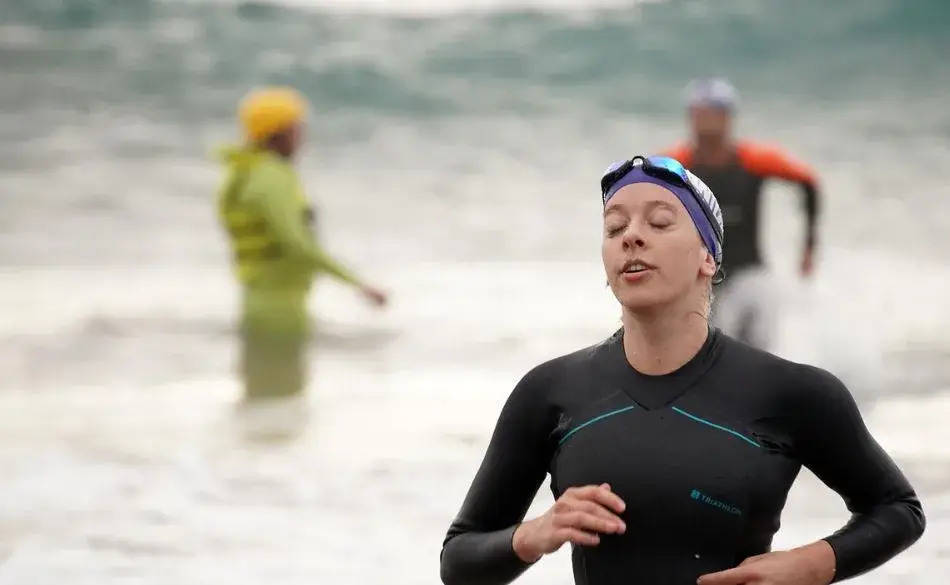
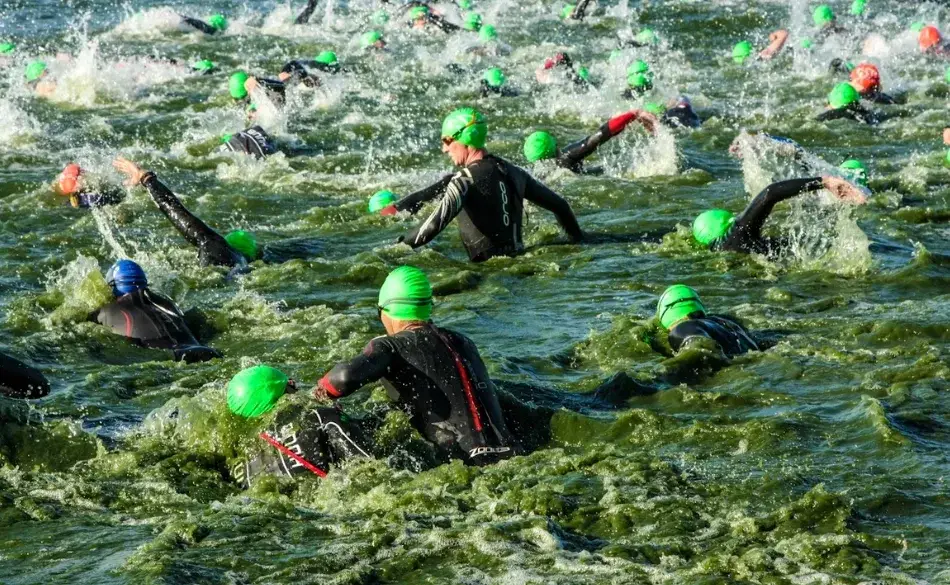
The first barrier is the swim cut off time. You have 1 hour 10 minutes to cover 1.9 kilometers in open water. That means you need to average just under 2:00 minutes per 100 meters, a pace that challenges many beginners. Miss this, and your race is over before it really begins.
If you’d like a deeper breakdown of what the Half Ironman swim really involves, including training insights and practical preparation tips, read our full guide: How Far Is the Half Ironman Swim?
Next comes the bike cut off. This one often surprises people because it isn’t just the bike leg. It includes your swim, transition one (T1), and the ride itself. For example, if you take 50 minutes for the swim and 10 minutes in transition, you’ll have about 4 hours 30 minutes left for the 90 km ride. That works out to an average speed of just under 20 km/h, depending on the course.
Finally, the run cut off time closes the day. You need to finish the half marathon within 8 hours 30 minutes of your personal start time. This is where pacing from earlier matters. Athletes who push too hard on the bike often arrive on the run with little left, and the clock doesn’t stop ticking.
Whether you’re racing in Ironman 70.3 Australia, Ironman 70.3 Swansea, or anywhere else, these cut off rules remain consistent. Understanding them is the first step to planning your race strategy with confidence.
Whether you’re chasing time, respecting cut-off limits, or dreaming big, you need more than just training—you need guidance. Our Triathlon Coaching gives you custom plans, pacing insights, and support to help you race smarter and finish stronger—no matter which course you're on.
- ✅ Custom training for sprint, Olympic, 70.3, and full Ironman distances
- ✅ Cut-off awareness and race pacing strategies for any course
- ✅ Personalized support for open water, climbs, nutrition, and race-day tactics
💡 Ideal if you’re preparing for bucket-list races like IRONMAN 70.3 Dubai, Challenge Roth, or emerging classics like IRONMAN 70.3 Lanzarote.
Get Personalized Coaching Today

Why Are Ironman 70.3 Cut Off Times So Strict?
At first glance, the Ironman 70.3 cut off times might feel harsh. Why not give everyone more breathing room? The truth is, these limits exist for reasons far beyond simply testing athletes.
The most important factor is safety. Athletes who are still on the course long after the majority have finished are at higher risk of dehydration, fatigue, and even medical emergencies. Having set swim, bike, and run cut off times allows medical teams to focus their attention where it’s needed most, instead of being spread across a course for 12 or more hours.
Logistics also play a huge role. Roads can’t stay closed indefinitely. In races like Ironman 70.3 Swansea, traffic management is a massive operation. Police, volunteers, and city staff all work within a schedule. If the event were to run several hours longer, it would impact local communities, emergency access, and the safety of both athletes and residents.
There’s also fairness. Triathlon is meant to be a test of endurance, but it’s also a race. Allowing unlimited time would change the nature of the event. Strict cut off rules keep every athlete competing under the same standards, whether you’re racing Ironman 70.3 Australia, Ironman 70.3 Bolton, or a smaller regional event.
Another reason cut offs are enforced so carefully is the domino effect of pacing. If you miss the swim limit, it means you’re not ready for the demands of the rest of the day. If you barely make the bike cut off, the odds of finishing the run in time are slim. These intermediate cut offs protect athletes from digging themselves into a dangerous state of exhaustion.
When you look at it this way, cut off times aren’t about shutting athletes out. They’re about keeping the race safe, fair, and sustainable. Knowing this helps you respect the clock and plan your strategy accordingly.


The real key to conquering the Ironman 70.3 cut off times, especially if you're new to the sport, is starting with a plan that matches your experience. Our Beginner Half Ironman Training Plan is designed to build your fitness safely, keep you focused, and help you cross the finish line within all the official cut off limits.
- ✅ A gentle introduction to structuring swim, bike, and run workouts
- ✅ Guidance on pacing, fueling, and recovery suited for newcomers
- ✅ Special attention to building confidence for open water, hills, and long-running efforts
💡 Ideal for first-timers preparing for events like Ironman 70.3 Nice, Ironman 70.3 Mallorca, or Ironman 70.3 St. George.
Get Your Beginner Plan NowWhat’s the Hardest Cut Off to Beat in Ironman 70.3?
Every athlete worries about a different part of the race, but when it comes to Ironman 70.3 cut off times, some stages are consistently tougher than others. The answer often depends on your background, strengths, and training focus.
For many first-time triathletes, the swim cut off time is the most intimidating. You have 1 hour 10 minutes to complete 1.9 kilometers, and if you’re not comfortable in open water, it can feel overwhelming. Unlike the bike or run, where you can slow down and still make progress, swimming has no easy gear. Missing the swim limit means your day ends before it really begins.
That said, the bike cut off is often called the “silent killer.” This is because it includes your total time from the start, not just the bike itself. Athletes who take longer on the swim and in transition suddenly have less time for the 90 km ride. For example, if you lose 15–20 minutes early, you’ll need to average a higher speed on the bike just to stay in contention. At events like Ironman 70.3 Australia and Ironman 70.3 Swansea, hilly courses make this even harder. Riders who aren’t prepared for climbing often miss this checkpoint.
The run cut off comes last, but it usually affects athletes who already burned too much energy. If you start the half marathon exhausted, keeping pace for 21.1 kilometers becomes a battle. By then, you’re racing the clock as much as the distance. Many athletes underestimate how crucial pacing is on the bike for protecting their run.
In reality, the hardest cut off isn’t the swim, bike, or run. It’s whichever leg you neglect in training. Balancing all three disciplines, plus transitions, is the best way to make sure you never hear the words, “Sorry, you’re out.”

How Can You Train to Beat Ironman 70.3 Cut Off Times?
Knowing the Ironman 70.3 cut off times is only half the battle. The real challenge is shaping your training so you arrive ready to race each leg within the limits. You don’t need to be a pro. You simply need to train with structure and consistency.
The first step is building a strong swim base. If the swim cut off time worries you, focus on steady endurance sessions in the pool and at least one weekly open water practice. Aim for a pace around two minutes per 100 meters. If you can swim that comfortably in training, you’ll have confidence to clear the 1:10 limit even in choppy conditions. Consider joining a masters swim group to sharpen technique, since efficiency is often more important than speed.
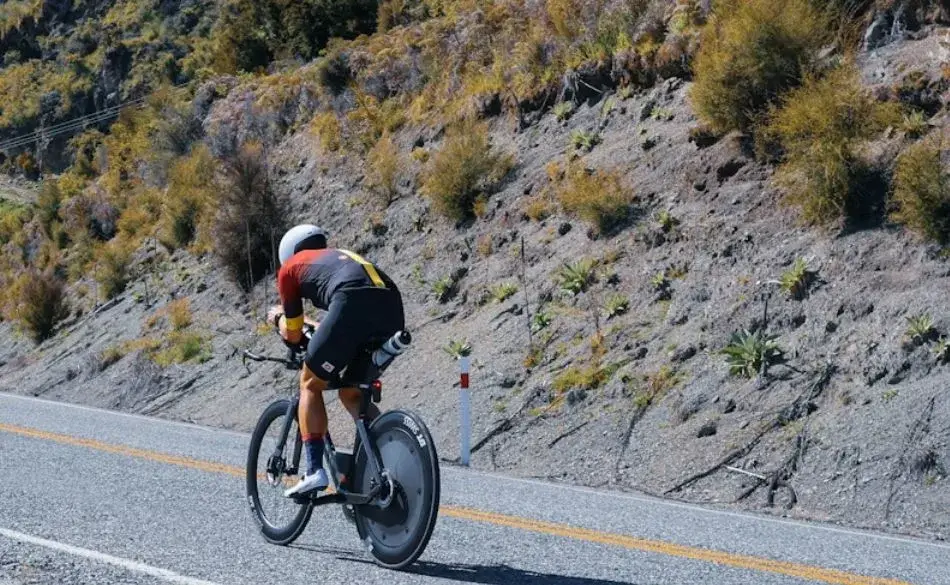
On the bike, your strategy should be about sustainable pacing. Remember, the bike cut off includes the swim and transition one. That means you can’t afford to burn energy early. Training sessions should mix long rides at 65–75% of your maximum effort with shorter interval work to improve climbing strength. Athletes at events like Ironman 70.3 Swansea face rolling terrain, so practice riding hills at a steady effort instead of surging. Consistency on the bike is what protects your run.
Finally, the run is where small mistakes show up. Training to finish strong requires brick sessions (running immediately after cycling). These workouts teach your legs to adapt to the heavy feeling that comes after 90 km on the bike. The run cut off time may seem generous, but if you’re starting on empty, 21.1 km can feel like forever. Training at your goal pace on tired legs is the best rehearsal for race day.
Most importantly, train transitions. Losing 5–10 minutes in T1 or T2 may not sound like much, but those minutes count against your overall 8:30 limit. Practicing smooth, fast transitions can be the difference between making the clock or missing it.
Want to beat the infamous Ironman 70.3 cut off times while cracking the 6-hour barrier? Our Sub-6 Hour Half Ironman Training Plan is specifically crafted to help you train with precision, swim smart, cycle stronger, and run faster—with efficiency and confidence.
- ✅ Structured workouts aimed at pushing your pace across swim, bike, and run
- ✅ Training strategies to sprint past cut offs with time to spare
- ✅ Guidance for mastering transitions, nutrition, and pacing on high-level race days
💡 Perfect if you’re targeting a fast 70.3 at races like IRONMAN 70.3 Oceanside, IRONMAN 70.3 Boulder, or IRONMAN 70.3 Calgary.
Snag Your Sub-6 Plan

How Strictly Are Ironman 70.3 Cut Off Times Enforced?
One of the biggest questions athletes ask is how strictly the Ironman 70.3 cut off times are enforced. The short answer: very strictly. Each discipline has timing checkpoints, and race officials monitor these closely to keep everyone on schedule.
The swim cut off time is usually enforced at the swim exit. If you’re not out of the water by 1 hour 10 minutes, you’ll be stopped and won’t be allowed to continue. At races like Ironman 70.3 Australia, marshals are positioned at the transition area to ensure no one slips through. This might feel tough, but it’s necessary for both safety and fairness.
On the bike, enforcement happens at multiple points. Most races, including Ironman 70.3 Swansea, have intermediate checkpoints. If you don’t reach these by a certain time, officials will pull you from the course. The main bike cut off of 5 hours 30 minutes includes the swim and T1, so there’s no flexibility. Riders who push too slowly risk missing this mark even if they feel capable of finishing the distance.
The run cut off time is final. Athletes must finish the half marathon within 8 hours 30 minutes of their personal start. Race staff often monitor lap points to ensure athletes are still on pace. If you’re behind schedule, you may be asked to stop before reaching the finish line. While some events allow a few seconds of grace, you should never rely on that. The majority of races apply the rules firmly.
It’s also important to understand what happens if you miss a checkpoint. Failing to meet any intermediate or final cut off results in a DNF (Did Not Finish). While disappointing, these rules keep the event safe and on time for everyone involved. Knowing this ahead of your race helps you plan pacing strategies that ensure you’re never in doubt of making the cut.


Strategy Tips to Stay Ahead of Ironman 70.3 Cut Off Times
Beating the Ironman 70.3 cut off times isn’t just about fitness, it’s about strategy. Even well-trained athletes can miss limits if they don’t pace or prepare correctly. By following a few proven tips, you can stay comfortably ahead of the clock on race day.
Start with realistic pacing. In the swim, avoid sprinting early. Find a rhythm that’s sustainable for the full 1.9 km. Many athletes who panic in open water burn unnecessary energy and risk missing the swim cut off time. Training with group swims or practicing sighting drills will help you maintain composure and efficiency.
On the bike, pacing becomes even more critical. Remember, the bike cut off includes your swim and transition. If you’re aiming to average around 28 km/h but blow up after 40 km, you could fall short. A steady, even effort is the key. For races like Ironman 70.3 Australia or Ironman 70.3 Swansea, study the course profile. If it’s hilly, practice climbing at a consistent effort instead of spiking your power output on every ascent.
Nutrition and hydration also make a huge difference. Many DNFs happen not because athletes lack fitness, but because they under-fuel. Set reminders to eat and drink regularly (every 20–30 minutes on the bike and during the run). Small mistakes here compound into fatigue that makes the run cut off time feel impossible. Check out our complete guide to what a 70.3 triathlon entails to align your strategy with real race-day realities.
Finally, manage transitions wisely. It’s tempting to take your time, but those minutes count against your overall 8:30. Practice moving efficiently from swim to bike and bike to run. Simple steps (like laying out gear in order or rehearsing your routine) save precious time.
By combining smart pacing, nutrition, and smooth transitions, you can turn cut off times from a looming threat into just another part of your race plan.
If you're chasing a sub-5 hour Ironman 70.3 while navigating the pressure of official cut off times, you need more than speed—you need precision. Our Sub-5 Hour Half Ironman Training Plan is engineered to sharpen every swim, bike, and run for performance under pressure.
- ✅ Advanced pacing drills aligned with swim, bike & run cut off zones
- ✅ Intensity-focused workouts that build speed and sustainability
- ✅ Strategies for transitions, nutrition, and maintaining momentum on race day
💡 Best suited for racers targeting elite70.3 courses like IRONMAN 70.3 Nice, IRONMAN 70.3 Mallorca, or IRONMAN 70.3 Boulder.
Grab Your Sub-5 Plan Now

Common Mistakes That Make Athletes Miss Ironman 70.3 Cut Off Times
Missing the Ironman 70.3 cut off times is rarely about one big failure. More often, it’s the result of small mistakes that build up throughout the day. By understanding the most common errors, you can avoid them and keep your race on track.
The first mistake happens in the water. Athletes who neglect open water practice often struggle with sighting, waves, and race-day nerves. Even if you’re fast in the pool, open water is different. Poor navigation or panic can cost valuable minutes, putting you dangerously close to the swim cut off time.
Another frequent issue is pacing on the bike. Some riders go out too aggressively in the first 30 km, only to slow dramatically later. Since the bike cut off includes swim and T1, an uneven effort almost guarantees trouble. At hilly races like Ironman 70.3 Swansea, pushing too hard on climbs drains energy needed to sustain pace across the full 90 km.
Nutrition mistakes are just as costly. Skipping gels, drinking too little, or waiting until fatigue sets in can cause a sudden energy crash. By the time athletes hit the run, they’re running on fumes. This makes the half marathon not just physically tough, but nearly impossible to finish before the run cut off time.
Transitions also catch people out. Spending 10–15 minutes between legs might feel comfortable, but it adds directly to your race clock. Small delays like struggling with gear or chatting with volunteers eat away at the overall 8:30 limit.
The final mistake is mental. Some athletes give up mentally when they see the clock getting close. Instead of adjusting pace or digging in, they accept a DNF too soon. Staying calm, adjusting your strategy mid-race, and focusing on forward progress often makes the difference between missing and making a cut off.
As you get serious about beating the Ironman 70.3 cut off times, remember that every course brings its own demands, whether it’s alpine climbs, coastal winds, or high-altitude stakes.
If you want to discover some of the most scenic and challenging triathlons on offer, check out our guide to the best triathlons in New Zealand. From the rugged beauty of Challenge Wanaka to the historic intensity of IRONMAN 70.3 Taupō, NZ races show just how course design and conditions shape strategy.
Worried about making the Ironman 70.3 cut off times for the swim, bike, or run? Our Half Ironman Triathlon Training Plans are built to help you train smarter, pace consistently, and cross the finish line within the official 8:30 time limit.
- ✅ Structured swim, bike, and run sessions designed to keep you ahead of cut offs
- ✅ Strategies for pacing, fueling, and recovery on race day
- ✅ Course-specific preparation for rolling hills, heat, and challenging conditions
💡 Perfect if you’re preparing for Ironman 70.3 Australia, Ironman 70.3 Swansea, or any bucket-list 70.3 around the world.
Get Your Half Ironman Plan TodayFinishing Strong Within the Ironman 70.3 Cut Off Times
At the heart of every Ironman 70.3 is the challenge of pushing your body and mind across swim, bike, and run. The Ironman 70.3 cut off times aren’t there to intimidate you, they’re there to ensure that every athlete has a safe, fair, and unforgettable experience. Understanding them allows you to race with confidence instead of fear.
Think of the cut offs not as obstacles, but as markers that shape your strategy. The swim cut off time encourages you to prepare properly for open water. The bike cut off teaches you to manage pacing and fuel wisely. The run cut off time reminds you that endurance is built on patience and discipline. Together, they make finishing more rewarding.
When you line up on race morning, you’ll know thousands of others around the world have faced the same clock. From Ironman 70.3 Australia to Ironman 70.3 Swansea, the rules are the same, and the challenge is universal. It’s what makes crossing the finish line so special. You’re not just completing 113 kilometers, you’re doing it within a world-class standard of endurance sport.
The key takeaway? Respect the time limits, but don’t let them dominate your mindset. Train consistently, pace intelligently, fuel wisely, and move efficiently through transitions. If you do those things, the cut off times will fade into the background. Instead of watching the clock nervously, you’ll be focused on every step, pedal stroke, and swim stroke carrying you toward the finish chute.
For insights into some of the most scenic and demanding events, check out our guide to the best triathlons in the UK. Races like IRONMAN 70.3 Staffordshire, Dorney Lake Triathlon, and the London T100 illustrate how course design (swim conditions, terrain, and logistics) can make or break your pacing and timing strategy.