

Quick Answer
Top of foot pain in runners is most commonly caused by extensor tendinopathy (inflammation of the tendons that run across the top of the foot) or a metatarsal stress fracture. Tendinopathy produces a diffuse ache that may ease with warm-up; a stress fracture causes very specific point tenderness over one bone and worsens consistently with activity. Tight shoe lacing is a frequently overlooked cause of extensor tendinopathy. Suspected stress fractures should be assessed before continuing to run.What Causes Pain on Top of the Foot When Running?
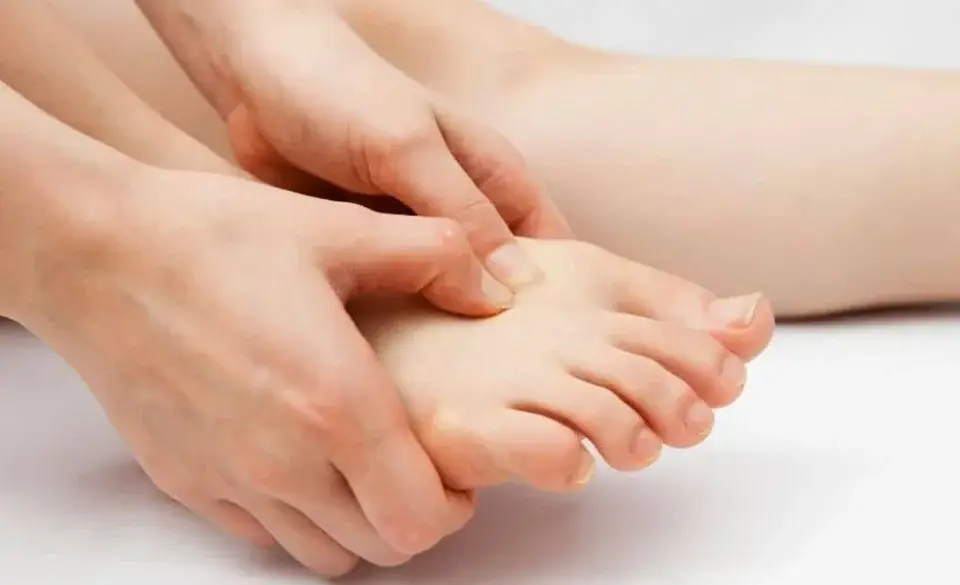
The top of the foot (the dorsum) is where the extensor tendons run from the lower leg muscles down to the toes. These tendons are responsible for lifting your foot and toes during the swing phase of running — an action repeated thousands of times per session. They sit very close to the surface of the skin, which makes them vulnerable to both overuse stress and direct pressure from ill-fitting footwear.
The most common causes of dorsal foot pain in runners, in rough order of frequency, are extensor tendinopathy, metatarsal stress fractures, ganglion cysts, and sinus tarsi syndrome. The first two account for the vast majority of cases and are worth understanding in detail, both because they are common and because confusing them leads to either undertreating an injury that needs rest (stress fracture) or overtreating a condition that tolerates modified activity (tendinopathy).
Extensor Tendinopathy: The Most Common Cause
Extensor tendinopathy is irritation and degeneration of the extensor tendons that cross the top of the foot. The tendons involved are the extensor hallucis longus (which lifts the big toe), the extensor digitorum longus (which lifts toes two through five), the tibialis anterior (which dorsiflexes the ankle), and the extensor hallucis and digitorum brevis muscles at the base of the foot. Any or all of these can be affected.
The pain typically develops gradually — a diffuse ache across the top of the foot, often in the midfoot region, that worsens with running and may ease slightly in the first few minutes of a session before returning and progressing. Curling the toes downward (plantarflexion) may reproduce the pain by stretching the tendons. There may be mild swelling visible across the top of the foot. Unlike a stress fracture, pressing on any individual metatarsal bone does not produce sharp, specific pain.
Why runners develop extensor tendinopathy. The most common culprits are a sudden increase in training load (more mileage, more hills, more treadmill incline), poorly fitting shoes or excessively tight lacing that compresses the tendons directly, a transition to lower-drop footwear that increases dorsiflexion demand, and underlying biomechanical factors such as high arches or flat feet that alter how load is distributed across the extensor tendons.
The lacing problem. Lacing running shoes too tightly is one of the most overlooked causes of extensor tendinopathy. The laces run directly over the extensor tendons, and if drawn too tightly they create continuous compressive stress with every step. The fix is simple: loosen your laces, especially over the midfoot, and consider a window lacing pattern — where you skip one eyelet at the point of maximum tenderness — to remove direct pressure from the affected area. This single change often produces immediate symptomatic relief.
Metatarsal Stress Fractures: The More Serious Diagnosis
A stress fracture is a small crack in a bone caused by repetitive loading over time. In runners, the metatarsals (the five long bones that form the top of the foot) are among the most common stress fracture sites, particularly the second and third metatarsals. Unlike acute fractures, stress fractures develop slowly — initially as bone inflammation, then progressing to a hairline crack if the loading continues without resolution.
The key distinguishing feature is very specific point tenderness. Press firmly along each metatarsal shaft — if you find one spot that produces sharp pain precisely when pressed, that is a stress fracture pattern until proven otherwise. A stress fracture typically does not ease with warm-up; instead, the pain consistently worsens the longer you run. Percussion tenderness (pain felt when tapping the bone or even the heel on the same foot) is also a clinical sign. Swelling may be present but is not always visible.
Stress fractures require imaging to confirm — X-rays are often negative in the early stages (the fracture is not yet visible), so MRI is the gold standard for diagnosis if clinical suspicion is high. If a stress fracture is suspected, stop running and seek assessment. Continuing to run on a stress fracture risks it progressing to a complete fracture, which has far more serious consequences for your training and recovery timeline.
Telling the Two Apart: Comparison Table
👉 Swipe to view full table
| Feature | Extensor Tendinopathy | Metatarsal Stress Fracture |
|---|---|---|
| Pain location | Diffuse across top of foot/midfoot | Very specific point, one metatarsal |
| Pain on pressing | General tenderness along tendon path | Sharp pain at exact bony spot |
| With warm-up | May ease slightly in first few km | Consistently worsens |
| Swelling | Possible, diffuse | Possible, localised |
| Curl toes test | Often reproduces pain | Less predictive |
| Can I run? | Easy running may be tolerated | Stop running — seek assessment |
| Imaging needed? | Usually not for initial management | MRI preferred; X-ray often negative early |
| Recovery | 2–12 weeks depending on severity | 6–8 weeks minimum rest from running |
Treatment: Extensor Tendinopathy
Immediate management. Reduce or stop the activities that aggravate the pain, particularly uphill running, treadmill incline work, and any session where the pain worsens during the run. Loosen your lacing immediately and try a window lacing pattern. Ice applied for 10–20 minutes, two to three times per day in the first week, helps reduce localised inflammation.
Load management rather than complete rest. Extensor tendinopathy responds better to modified loading than to complete rest. Switch from harder sessions to easy flat running or aqua jogging until symptoms settle. Completely removing load for extended periods can allow the tendon to become hypersensitive and more easily irritated on return. The goal is to find the level of activity that stays below the threshold of aggravation and gradually build from there.
Stretching and strengthening. Gentle calf stretches help indirectly by reducing the compensatory demand on the extensor tendons — tight calves force greater dorsiflexion effort from the extensor muscles. Towel toe curls, marble pickups, and gentle resisted dorsiflexion (pulling your foot up against light resistance) rebuild extensor tendon tolerance progressively. These should be pain-free — if they reproduce the top of foot pain, reduce the resistance.
Footwear review. Have your current running shoes assessed. Shoes with a very narrow toe box or rigid upper can create compressive stress on the dorsum. Worn-out shoes lose their midsole cushioning and structural support after 600–800 km, increasing the load transmitted to soft tissue structures including the extensor tendons. If you recently switched to a lower-drop shoe, the increased dorsiflexion demand may be a contributing factor — consider reviewing your footwear choices with a running specialist.
When to seek professional assessment. If symptoms are not improving after two to three weeks of conservative management, or if pain is severe enough to significantly alter your gait, see a sports physio. They can identify contributing biomechanical factors, prescribe a graduated rehabilitation program, and confirm the diagnosis via clinical testing. A podiatrist can assess whether orthotic support would help if flat feet or high arches are contributing to abnormal extensor loading.
Treatment: Metatarsal Stress Fractures
The cornerstone of stress fracture management is load reduction. Running must stop for a minimum of six to eight weeks to allow bone healing. During this period, low-impact cross-training that does not compress the metatarsals — swimming and upper body gym work — can maintain fitness. Cycling may be tolerated if it is pain-free, but monitor carefully as pedalling applies some forefoot load. A stiff-soled shoe or walking boot may be recommended to reduce bending stress on the affected bone during daily activity.
Nutrition matters more than many runners realise for stress fracture recovery. Adequate calcium (1,000–1,200 mg per day from food sources) and vitamin D (the best Australian estimate of optimal levels is serum 25-hydroxyvitamin D above 50 nmol/L) are essential for bone repair. Runners who are energy-deficient — particularly those eating less than their training demands — have significantly higher stress fracture risk. If you are experiencing recurring stress fractures, a sports dietitian review is warranted.
Return to running after a stress fracture should be gradual and symptom-guided. A typical protocol starts with walking, progresses to run-walk intervals, then easy running, over four to eight additional weeks after the initial healing period. Rushing this process risks reinjury to bone that has not yet fully remodelled. Our strength exercises for runners — particularly single-leg work that builds bone density in the lower leg — are important to include during and after stress fracture recovery.
Preventing Top of Foot Pain in Runners
👉 Swipe to view full table
| Prevention Strategy | Applies To | Key Action |
|---|---|---|
| Progressive load increases | Both conditions | No more than 10% mileage increase per week |
| Lacing check | Extensor tendinopathy | Loosen midfoot lacing; try window lacing |
| Shoe replacement | Both conditions | Replace at 600–800 km; alternate two pairs |
| Gradual drop transitions | Extensor tendinopathy | Alternate old and new shoes for 4–6 weeks |
| Foot and calf strength | Both conditions | Single-leg work, calf raises, toe exercises weekly |
| Adequate nutrition | Stress fractures | Sufficient energy intake; calcium and vitamin D |
If you are regularly dealing with top of foot pain, it is worth reviewing your overall training structure with a coach. A well-designed running training plan builds load progressively and includes adequate recovery, which is the most reliable protection against both tendinopathy and stress fractures. Our running coaching program can also identify biomechanical contributors — such as overstriding or excessive dorsiflexion demand — that increase extensor tendon and metatarsal stress with every stride.
Dealing with persistent foot pain or injury?
Our coaches can review your training load, footwear, and biomechanics to help you return to running pain-free and stay there.
Get Running Coaching → Browse Training Plans →FAQ: Top of Foot Pain From Running
What causes pain on the top of the foot when running?
The two most common causes are extensor tendinopathy and metatarsal stress fractures. Tendinopathy is a diffuse ache along the top of the foot caused by overloaded or compressed extensor tendons. A stress fracture causes very specific point tenderness over a single metatarsal bone and worsens consistently with activity.
How do I tell a stress fracture from tendinopathy?
Press firmly along each metatarsal bone. If you find one spot that produces sharp, localised pain when pressed, that pattern suggests a stress fracture. Tendinopathy produces more diffuse tenderness along the tendon rather than sharp pain at a single bony point. When in doubt, get it assessed — stress fractures need rest to heal safely.
Can I run with pain on top of my foot?
For mild extensor tendinopathy, easy flat running may be tolerated if it does not worsen the pain. If a stress fracture is suspected, stop running and seek assessment before continuing. Running through a stress fracture can turn a minor injury into a complete fracture.
Does shoe lacing cause top of foot pain?
Yes — lacing shoes too tightly is one of the most common causes of extensor tendinopathy in runners. The laces run directly over the extensor tendons, and tight lacing creates constant compression with every step. Loosening the midfoot lacing or using window lacing over the tender area often produces immediate relief.
How long does top of foot pain from running take to heal?
Mild extensor tendinopathy typically resolves in 2–6 weeks with proper management. Metatarsal stress fractures require a minimum of 6–8 weeks of reduced loading for bone healing, followed by a gradual return-to-run protocol. Chronic cases of either condition that have been ignored or undertreated can take considerably longer.
Find Your Next Running Race
Ready to put your training to the test? Here are some upcoming running events matched to this article.
Newcastle Cross Country 12: Botanic Gardens
Wondai Country Running Festival 2026