





As an Amazon Associate, SportCoaching earns from qualifying purchases.







Find Your Next Running Race
Ready to put your training to the test? Here are some upcoming running events matched to this article.
 Coach Graeme
Last updated:
Metatarsal pain — that burning, aching pressure in the ball of the foot — can derail training fast. The right shoes won't cure the underlying cause, but they can dramatically reduce pain during runs and prevent it from worsening while you address the root issue. This guide covers the specific shoe features that matter for metatarsalgia, how different brands approach forefoot protection, when orthotics are worth adding, and what exercises help fix the problem from the inside out.
Not sure where to start with training?
Tell us your goal and schedule, and we’ll give you clear direction.
No obligation. Quick, practical advice.
Explore our running fitness resources for more helpful articles and resources.
Metatarsalgia is inflammation and pain at the metatarsal heads — the rounded ends of the five metatarsal bones that connect to the toe bones and form the ball of the foot. Runners are particularly susceptible because the forefoot absorbs enormous repetitive force with every stride. Research estimates that each foot strike in running generates impact forces of 2–3 times body weight; over a 10 km run at moderate pace, each foot contacts the ground roughly 8,000 times.
Anything that concentrates pressure specifically on the metatarsal heads — rather than distributing it evenly across the forefoot — increases injury risk. Common culprits include shoes with a narrow toe box that compress the forefoot, high heel-to-toe drop that tilts weight forward, worn-out midsole cushioning, rapid mileage increases, high arches (which reduce the foot’s natural shock-absorbing function), and a forefoot-dominant stride.
It’s also worth noting that “metatarsalgia” is a symptom description, not a precise diagnosis. Conditions including Morton’s neuroma (nerve compression between metatarsal heads), sesamoiditis (inflammation of the sesamoid bones under the big toe joint), and stress fractures of the metatarsals can all produce similar pain. If forefoot pain is sharp, persistent, or associated with numbness or tingling in the toes, a podiatrist or sports physio assessment is worthwhile before assuming standard metatarsalgia and choosing footwear accordingly.
👉 Swipe to view full table
| Feature | Why It Helps | What to Look For |
|---|---|---|
| Forefoot cushioning | Absorbs impact at the metatarsal heads with each stride | High stack height in forefoot (30mm+); plush midsole foam |
| Wide toe box | Allows forefoot to spread naturally; reduces compression on metatarsal heads | Anatomically shaped or foot-shaped toe box; avoid taper-toe designs |
| Low heel-to-toe drop | Distributes pressure more evenly; reduces forward weight shift onto forefoot | 4–8mm drop for most runners; 0mm (Altra) for those already adapted |
| Forefoot rocker | Reduces stress during push-off by rolling the foot through rather than levering off the metatarsals | Look for late-stage or early-stage rocker geometry in the midsole |
| Arch support / metatarsal pad | Offloads pressure from metatarsal heads by redirecting it to the arch | Built-in arch support OR removable footbed to accommodate orthotics |
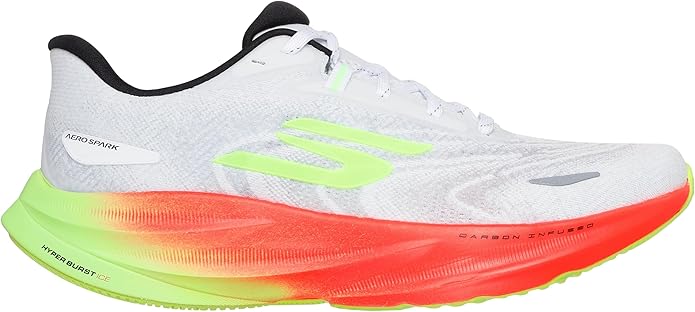
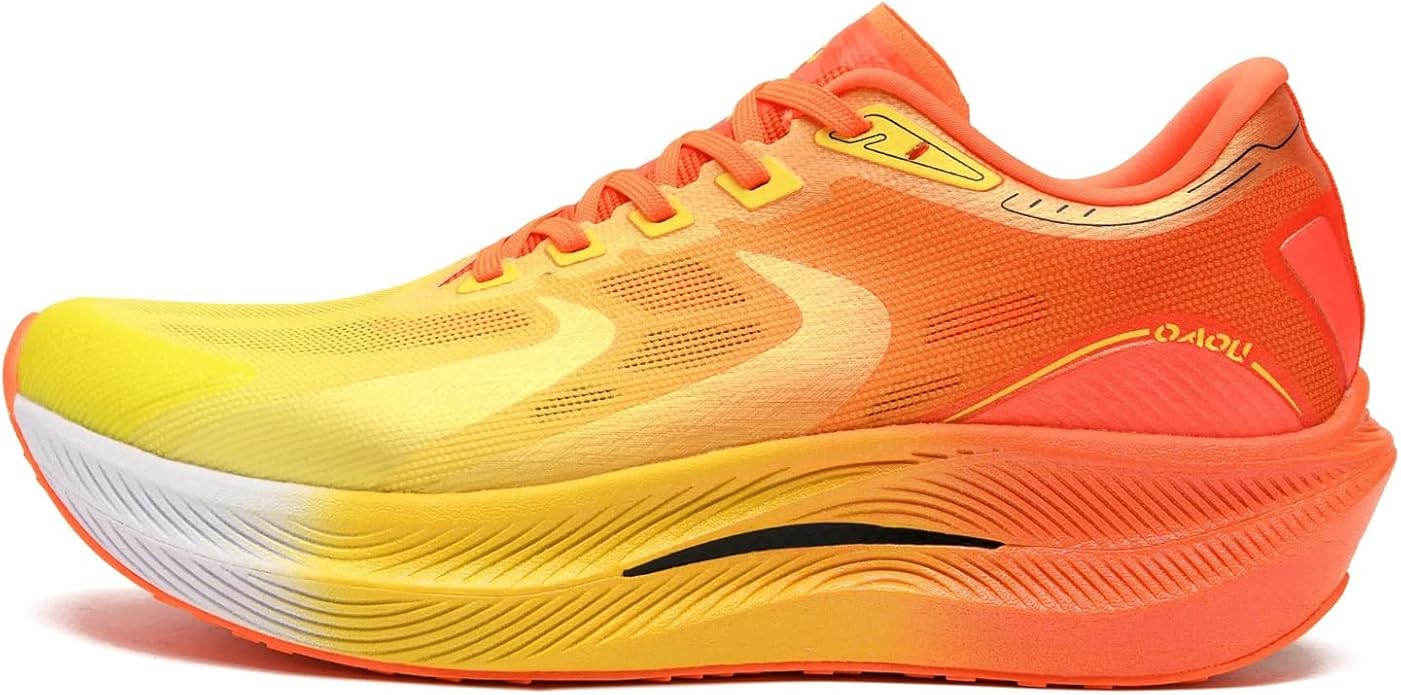
The following models are consistently recommended by podiatrists and running specialists for forefoot pain. Note that fit is individual — the best shoe for metatarsalgia is one with the right features that also fits your specific foot shape. Where possible, try before buying or use a retailer with a good return policy.
👉 Swipe to view full table
| Shoe | Drop | Forefoot Stack | Toe Box | Best For |
|---|---|---|---|---|
| Hoka Bondi 9 | 4mm | Very high | Wide | Max cushion, daily training, walking |
| Hoka Clifton 9 | 5mm | High | Moderate–wide | Lighter-feel max cushion, longer runs |
| Brooks Glycerin Max | 6mm | High (39mm) | Moderate | Plush forefoot cushion, recovery runs |
| New Balance 1080 v15 | 6mm | High | Wide options available | Long training runs, neutral stride |
| Asics Gel-Nimbus | 10mm | High | Moderate | High-mileage training, GEL forefoot |
| Saucony Triumph 22 | 10mm | High | Moderate | Responsive cushion, versatile trainer |
| Altra Paradigm / Via Olympus | 0mm | High | Very wide (foot-shaped) | Natural foot position, wide forefoot |
A note on Asics and Saucony: Both have 10mm drop, which is higher than ideal for metatarsalgia. However, their forefoot GEL and foam cushioning is substantial, and many runners with forefoot pain find them comfortable. If you’re currently in a high-drop shoe and switching to lower drop, do it gradually — too rapid a transition increases calf and Achilles load.
As an Amazon Associate, SportCoaching earns from qualifying purchases.
Drop (sometimes called “offset”) is the difference in stack height between the heel and the forefoot. A 12mm drop shoe has 12mm more material under the heel than the forefoot; a 4mm drop shoe is nearly flat. High drop tilts the foot forward in the shoe, which concentrates weight on the metatarsal heads — exactly the area metatarsalgia sufferers need to protect.
Switching to a lower-drop shoe can meaningfully reduce forefoot pressure, but the transition needs to be managed. Lower drop increases demand on the calves and Achilles tendon. Moving from a 12mm drop to a 4mm drop shoe too quickly is a reliable way to develop calf tightness or Achilles pain. A sensible transition takes 4–8 weeks: begin using the lower-drop shoe for 20–30% of your runs, gradually increasing over several weeks as your lower leg adapts. The Alfredson eccentric heel drop protocol is a useful reference for strengthening the calf-Achilles complex during this transition.
Shoe selection addresses extrinsic factors — the environment around the foot. Orthotics address intrinsic factors — the foot’s biomechanics. For many runners with metatarsalgia, the most effective treatment combines better footwear with a targeted orthotic intervention.
Metatarsal pad placement. A metatarsal dome pad placed just proximal to (behind) the metatarsal heads — not directly under the painful area — redistributes pressure away from the heads and onto the metatarsal shafts. This is one of the most evidence-supported conservative interventions for metatarsalgia and costs very little to try. Gel or foam pads are available at pharmacies and can be placed inside any running shoe.
Custom vs semi-custom orthotics. For persistent or severe metatarsalgia, custom orthotics from a podiatrist provide a tailored solution that accounts for your specific foot mechanics, arch height, and gait pattern. Semi-custom options (Superfeet, Currex, Sidas) provide a middle ground — more targeted than a generic insole, less expensive than custom. Most running shoes have removable insoles with enough room to accommodate aftermarket orthotics.
Shoes manage the symptoms; exercises address the biomechanical causes. Weak intrinsic foot muscles, tight calves, and reduced ankle mobility all contribute to forefoot overloading. The following exercises, done 3–4 times per week, complement footwear changes and significantly speed recovery.
Towel scrunches. Place a small towel on the floor and use only your toes to scrunch it toward you. This activates the intrinsic foot muscles that help distribute load across the forefoot. Three sets of 15 reps per foot.
Toe spreading. Sit barefoot and actively spread your toes as wide as possible, hold for 5 seconds, release. This counteracts the compression pattern of narrow shoes and improves forefoot proprioception. Three sets of 10 per foot.
Calf raises on a step. Stand on the edge of a step, lower your heel below the step level, then raise onto your toes. Eccentric (lowering) phase should be slow — 3 seconds down. This builds calf-Achilles strength that supports a lower-drop shoe transition. The eccentric heel drop protocol guide covers the full programme.
Ankle mobility work. Tight ankles force the foot to compensate during push-off, often increasing forefoot stress. Ankle circles, dorsiflexion stretches against a wall, and calf foam rolling are useful daily habits. The soleus exercises guide covers calf flexibility work that directly benefits forefoot mechanics.
Continuing to train through significant metatarsal pain — particularly if it worsens during runs — typically prolongs recovery. A practical approach is to reduce total running load by 30–50% while symptoms are acute, substituting with low-impact cross-training (swimming, cycling, pool running) to maintain aerobic fitness. The gym exercises for runners guide includes lower-body strength work that can be done while managing foot pain.
If pain is present at rest, worsens during the run (rather than improving after the first kilometre), or is localised to a very specific point on one metatarsal, get a medical assessment to rule out a stress fracture before continuing to train.
Footwear and orthotics manage extrinsic factors; running form influences how load is distributed with every stride. Small adjustments to gait can meaningfully reduce the stress placed on the metatarsal heads without requiring major technique overhaul.
Avoid overstriding. Landing with the foot too far in front of the body increases braking forces and concentrates impact on the forefoot. A higher cadence (steps per minute) naturally encourages a foot strike closer to directly below the centre of mass, reducing this effect. Increasing cadence by 5–10% from your natural rhythm is a practical starting point — most GPS watches now display running cadence in real time.
Reduce forefoot loading on downhills. Downhill running significantly increases forefoot pressure because of the forward lean required to control descent. Runners with metatarsalgia often notice pain worsens on descents. Shortening stride length on downhills and keeping the foot strike under the hips rather than out in front helps manage this.
Check your lacing. Shoes that are too tight across the midfoot and forefoot compress the metatarsal heads from above. Window lacing (leaving the lace loop loose over the metatarsal area) or skipping one lace row over the sensitive area can reduce compression pressure significantly without affecting heel security.
Most metatarsal pain responds well to the footwear, orthotics, and exercise interventions described above within 4–8 weeks. The following signs suggest a professional assessment is warranted before continuing to train through the discomfort.
Pain that is sharp, stabbing, or electric in nature — rather than the typical aching or burning of metatarsalgia — may indicate Morton’s neuroma (nerve compression between metatarsal heads). This responds differently to footwear changes and may require corticosteroid injection or other targeted treatment.
Pain localised to a single spot on one metatarsal shaft that worsens progressively over 2–4 weeks warrants an X-ray or MRI to rule out a stress fracture. Stress fractures of the second or third metatarsal are not uncommon in runners who have increased mileage rapidly. Running through a stress fracture converts a 6-week recovery into a 12-week one.
Numbness or tingling in the toes alongside forefoot pain is a nerve involvement signal that a sports physio or podiatrist should evaluate properly.
For runners managing multiple lower-limb issues simultaneously — metatarsal pain, Achilles tightness, and calf problems often cluster together — the soleus strengthening guide and Alfredson protocol provide a structured approach to calf-chain rehabilitation that benefits the entire lower limb.
Running With Foot Pain? Get a Plan That Works Around It
A running coach helps you modify load, choose the right footwear, and keep training moving forward while your foot recovers.
Get Running Coaching → Browse Training Plans →What are the best running shoes for metatarsal pain?
Look for high forefoot cushioning, a wide toe box, low heel-to-toe drop (4–8mm), and a forefoot rocker. Hoka Bondi and Clifton, Brooks Glycerin, New Balance 1080, and Altra models are consistently recommended by podiatrists and coaches for forefoot pain.
What causes metatarsal pain when running?
The most common causes are shoes with a narrow toe box or high drop that concentrate pressure on the metatarsal heads, worn-out cushioning, rapid mileage increases, high arches, and a forefoot-dominant stride. The metatarsal heads absorb significant repetitive impact — any imbalance in load distribution can trigger inflammation.
Does heel drop affect metatarsal pain?
Yes. High drop (10mm+) shifts weight onto the forefoot. Lower drop (4–8mm) distributes pressure more evenly. Transitioning too quickly to low-drop shoes can cause calf and Achilles problems, so make the change gradually over 4–8 weeks.
Can orthotics help with metatarsal pain when running?
Yes — a metatarsal dome pad placed just behind the ball of the foot is one of the most effective conservative treatments. Custom orthotics from a podiatrist provide more targeted relief for persistent or biomechanically complex cases.
How long does metatarsalgia take to heal in runners?
With appropriate footwear, load reduction, and exercises, most runners see significant improvement within 4–8 weeks. Persistent or worsening pain warrants a medical assessment to rule out stress fracture or Morton’s neuroma.
Ready to put your training to the test? Here are some upcoming running events matched to this article.



Head Coach & Founder, SportCoaching
Graeme is the founder of SportCoaching and has coached more than 750 athletes from 20 countries, from beginners to Olympians, in cycling, running, triathlon, mountain biking, boxing, and skiing. His coaching philosophy and methods form the foundation of SportCoaching's training programs and resources.
No matter your goals, SportCoaching offers tailored training plans to suit your needs. Whether you’re preparing for a race, tackling long distances, or simply improving your fitness, our expert coaches provide structured guidance to help you reach your full potential.
Smart, progressive training from 5km to marathon with weekly guidance.
What’s included
Choose your plan to get started with personalized training plans designed to help you reach your goals.


Minna Backman
When you’re new, feedback is especially important, and Graeme is highly skilled at both analyzing numbers and understanding the importance of mental strength.











