








Find Your Next Running Race
Ready to put your training to the test? Here are some upcoming running events matched to this article.
 Coach Graeme
Last updated:
Trail running is the fastest-growing segment of the running community in Australia. From weekend warriors discovering single track in their local national park to experienced road runners stepping up to their first ultra marathon, more people are heading off-road than ever before.
This guide covers everything you need to get started with trail running, how to progress from short trail runs to ultra distances, what gear you actually need, how to train for trail and ultra events, and where to find the best races across Australia.
Not sure where to start with training?
Tell us your goal and schedule, and we’ll give you clear direction.
No obligation. Quick, practical advice.
Explore our running advice and tips for more helpful articles and resources.
Trail running means running on any surface that is not paved — dirt paths, gravel fire trails, rocky single track, sand, and mountain terrain. The appeal is a combination of nature, physical challenge, and the mental reset that comes from being outdoors and away from traffic.
Compared to road running, trail running demands more from your body in different ways. The uneven surfaces work stabilising muscles in your ankles, knees, and hips that rarely activate on flat roads. Hills — both up and down — engage your quads, glutes, and calves differently to flat running. And the constant changes in terrain mean you rarely settle into the repetitive rhythm of a road run, which reduces some overuse injury risk while increasing the need for agility and concentration.
Pace is less important on trails. A five-minute-per-kilometre road runner might average seven or eight minutes per kilometre on a technical trail with significant elevation. Trail runners measure effort by time on feet and elevation gained rather than pace, which is a mindset shift for anyone coming from road running.
An ultra marathon is any race longer than the standard marathon distance of 42.2 kilometres. Ultra distances range from 50K to multi-day events covering hundreds of kilometres. For a deeper look at what each distance involves, read our guide on how far an ultra marathon really is.
👉 Swipe to view full table
| Distance | Typical Finish Time | Training Needed | Best For |
|---|---|---|---|
| 25K trail | 2–4 hours | 8–12 weeks | Road runners new to trails |
| 50K | 4–8 hours | 16–20 weeks | First-time ultra runners |
| 100K | 10–18 hours | 20–24 weeks | Experienced ultra runners |
| 100 miles (160K) | 20–30+ hours | 24–30 weeks | Seasoned ultra athletes |
The 50K is the most popular entry point to ultra running. It adds only about eight kilometres to a marathon, but the terrain, elevation, and aid station culture make it feel like a completely different sport. If you can run a half marathon on roads, a 50K trail ultra is within reach with four to five months of dedicated training.
You do not need to be an experienced runner to start trail running. If you can run or walk for 30 minutes continuously, you can start on easy trails.
Start on familiar terrain. Choose a trail you have walked before — a local park, fire trail, or national park path. This removes the navigation stress and lets you focus on adjusting to the uneven surface. Gravel paths and smooth dirt trails are ideal for your first few runs.
Slow down. Your trail pace will be significantly slower than your road pace, and that is perfectly normal. Run the flats, power hike the steep uphills, and take the downhills carefully until you develop confidence in your footing.
Build gradually. Increase your trail running time by 10 to 15 percent per week, just as you would with road running. Your ankles, knees, and stabilising muscles need time to adapt to the uneven surfaces. If you are completely new to running, start with a Couch to 5K plan on roads before transitioning to trails.
Run with others. Trail running groups and clubs exist in every Australian state. The Australian Ultra and Trail Runners Association (AUTRA) is a great starting point for finding events, endorsed coaches, and community. Running with experienced trail runners teaches you trail etiquette, navigation, and terrain reading skills that are hard to learn alone.
Trail and ultra training differs from road marathon training in several important ways.
Time on feet matters more than pace. Training for a 50K trail ultra is not about running 50 kilometres in a single session. It is about building the capacity to be on your feet for six to eight hours. Long training runs of three to five hours at easy effort — including walking on hills — prepare your body for the duration of ultra racing.
Elevation is king. Climbing and descending are the defining challenges of trail racing. If you live somewhere flat, use treadmill incline, stair repeats, or drive to the nearest hills to build vertical gain into your training. Aim to accumulate elevation in training that approaches what your target race will demand.
Back-to-back long runs build ultra fitness. Running a long effort on Saturday followed by another shorter long run on Sunday teaches your body to perform on tired legs — which is exactly what an ultra demands. These sessions are typically introduced two to three months before race day.
Strength training prevents trail injuries. Ankle stability, quad strength for descents, and hip stability for uneven surfaces are all essential for trail runners. Single-leg exercises like step-ups, Bulgarian split squats, and single-leg calf raises are particularly effective. Two sessions per week of 15 to 20 minutes is enough. Read our running injury prevention guide for more on keeping your body durable.
Walking is a tool, not a failure. In ultra racing, even elite athletes walk the steep climbs. Learning to power hike efficiently — upright posture, short steps, hands on thighs — is a legitimate training skill that saves enormous energy over long distances.
For a structured approach to your first trail race, our 25K trail race training plan provides a week-by-week schedule. For longer distances, our 100K ultra marathon training plan covers the full progression.
Trail running requires different gear to road running, but you do not need to spend a fortune to get started.
Trail shoes. The single most important purchase. Trail shoes have deeper lugs for grip on dirt and rock, a stiffer midsole for protection from stones, and a more secure fit for uneven terrain. Road shoes on wet or technical trails are a recipe for falls. Get fitted at a running store that stocks trail-specific options.
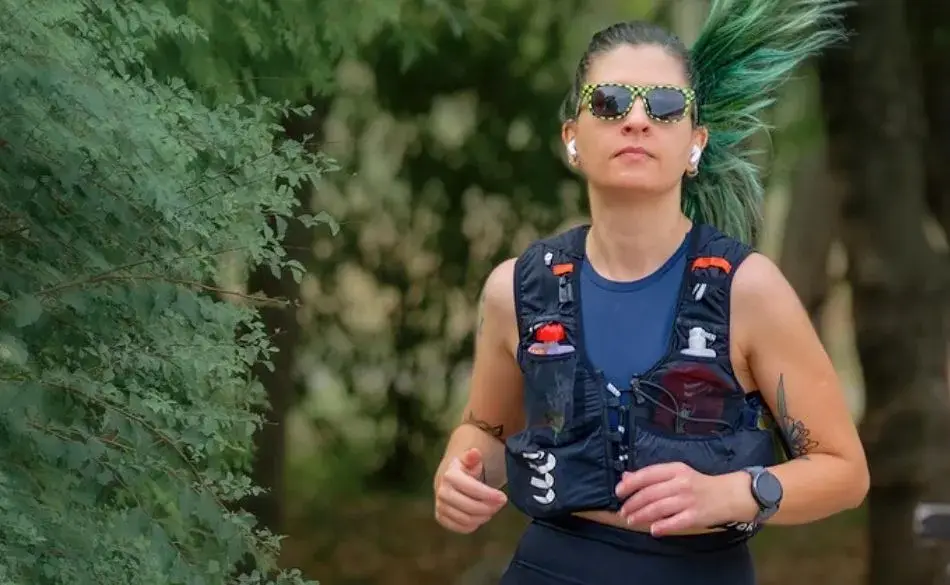
Hydration. For runs over 60 minutes, carry water. A handheld bottle works for shorter runs. For anything over 90 minutes or in hot conditions, a hydration vest with a bladder or soft flasks gives you hands-free carrying capacity plus storage for fuel, phone, and an emergency layer.
Navigation. Even on marked trails, carry your phone with a downloaded offline map. GPS watches with trail mapping features are helpful for longer or more remote runs. Always tell someone where you are going and when you expect to be back.
Sun protection. Australian trails mean Australian sun. Hat, sunscreen, and sunglasses are non-negotiable for daytime trail running, even in winter.
Australia has one of the best trail and ultra running calendars in the world, with events across every state and terrain type.
Ultra-Trail Australia (UTA) in the Blue Mountains, NSW, is Australia’s flagship trail event and part of the UTMB World Series. It offers distances from 11K to 100 miles and attracts thousands of runners every May.
Surf Coast Century along Victoria’s Great Ocean Road is a stunning 100K coastal ultra with accessible terrain that suits first-time ultra runners.
Blackall 100 in the Sunshine Coast hinterland, QLD, offers 21K, 50K, and 100K distances through lush rainforest on runnable trails — a favourite among beginners stepping up to ultra distance.
Six Foot Track Marathon from Katoomba to Jenolan Caves, NSW, is one of Australia’s most iconic 45K trail races with challenging terrain and a legendary reputation.
The Guzzler Ultra in Brisbane offers 50K and 100K distances on well-maintained trails with strong community support.
For a full list of events by state, read our guide to the best ultra marathons in Australia or browse the running events calendar.
Nutrition is the fourth discipline of ultra running. Get it right and you can run all day. Get it wrong and you will hit the wall regardless of your fitness.
For trail runs under 90 minutes, water is usually sufficient. Beyond 90 minutes, aim for 30 to 60 grams of carbohydrate per hour from a mix of gels, bars, real food, and sports drink. For ultra distances, push towards 60 to 90 grams per hour — your gut needs to be trained to absorb this, so practise on every long run.
Ultra aid stations typically offer real food — sandwiches, fruit, chips, lollies, soup, and cola. Many ultra runners alternate between gels and real food to manage flavour fatigue over long hours. Test everything in training so race day is not the first time you eat a vegemite sandwich at kilometre 60.
Electrolytes are critical in Australian heat. Sodium loss through sweat over many hours can cause cramps, nausea, and confusion. Use electrolyte tablets or capsules alongside your hydration strategy, especially for events over four hours.
Trail and ultra running involve more variables than road racing — terrain, elevation, nutrition timing, gear choices, and pacing strategy that changes with every course. A coach who understands these variables builds your plan around the specific demands of your target event rather than applying a generic road running template to trails.
At SportCoaching, we work with trail and ultra runners across Australia targeting events from their first 25K trail race to 100-mile finishes. Coach Graeme has over 20 years of experience coaching endurance athletes and understands how to balance the unique demands of off-road racing with the reality of training around work and life.
Our ultra running coaching includes personalised training plans delivered through TrainingPeaks, weekly adjustments based on your data, race-specific preparation for your target event, and 24/7 coach access via WhatsApp.
Whether you are running your first trail race or training for a 100K ultra, structured coaching takes the guesswork out of multi-terrain training. Every plan is built around your target event, your terrain, and your available time.
Start Ultra Running CoachingCan I start trail running with no experience?
Yes. If you can walk or run for 30 minutes, you can start on easy trails. Begin with well-maintained paths and build gradually. Many trail runners started with zero off-road experience and progressed to ultra distances over one to two years.
Do I need trail shoes or can I use road shoes?
Trail shoes are strongly recommended. Road shoes lack the grip and protection needed for dirt, rock, and wet surfaces. You can start on smooth gravel paths in road shoes, but for anything technical or muddy, trail shoes are essential for safety and comfort.
How do I train for my first ultra marathon?
Build a solid base of 40 to 50 kilometres per week over three to four months, then follow a 16 to 20-week ultra-specific plan. Focus on long runs, elevation, back-to-back weekend sessions, and nutrition practice. You do not need to run the full race distance in training — most plans peak at 50 to 80 percent of race distance.
Is walking allowed in ultra marathons?
Yes, and it is expected. Even elite ultra runners walk steep climbs to conserve energy. Power hiking uphill and running the flats and downhills is standard race strategy at every level. Walking is a tool, not a weakness.
What are the best trail and ultra events for beginners in Australia?
Ultra-Trail Australia (UTA) 22K in the Blue Mountains, the Blackall 100 21K or 50K in Queensland, and the Surf Coast Century shorter distances in Victoria are all beginner-friendly options with strong event support and well-marked courses.
Ready to put your training to the test? Here are some upcoming running events matched to this article.

Head Coach & Founder, SportCoaching
Graeme is the founder of SportCoaching and has coached more than 750 athletes from 20 countries, from beginners to Olympians, in cycling, running, triathlon, mountain biking, boxing, and skiing. His coaching philosophy and methods form the foundation of SportCoaching's training programs and resources.
No matter your goals, SportCoaching offers tailored training plans to suit your needs. Whether you’re preparing for a race, tackling long distances, or simply improving your fitness, our expert coaches provide structured guidance to help you reach your full potential.
Smart, progressive training from 5km to marathon with weekly guidance.
What’s included
Browse upcoming Australian running, cycling, and triathlon events in one place. Filter by sport, check dates quickly, and plan your training around something real on the calendar.
Choose your plan to get started with personalized training plans designed to help you reach your goals.


Minna Backman
When you’re new, feedback is especially important, and Graeme is highly skilled at both analyzing numbers and understanding the importance of mental strength.