








Find Your Next Running Race
Ready to put your training to the test? Here are some upcoming running events matched to this article.
 Coach Graeme
Last updated:
A 5K is 3.1 miles. That's 5,000 metres, or 12.5 laps of a standard 400-metre track. It's the most popular race distance in the world — short enough for a complete beginner to train for in 6–8 weeks, and fast enough at race pace to give an experienced runner a genuine workout.
If you're wondering how long it takes, what pace you need, or how to prepare for your first one, this guide covers all of it.
Not sure where to start with training?
Tell us your goal and schedule, and we’ll give you clear direction.
No obligation. Quick, practical advice.
Explore our running training resources for more helpful articles and resources.
One kilometre equals 0.621 miles. Multiply that by five and you get 3.107 miles — which is why a 5K is universally described as 3.1 miles. Here’s how the 5K compares to other common running distances:
👉 Swipe to view full table
| Distance | Kilometres | Miles | Track laps (400m) |
|---|---|---|---|
| 1K | 1 km | 0.62 miles | 2.5 laps |
| 5K | 5 km | 3.1 miles | 12.5 laps |
| 10K | 10 km | 6.2 miles | 25 laps |
| Half marathon | 21.1 km | 13.1 miles | 52.75 laps |
| Marathon | 42.2 km | 26.2 miles | 105.5 laps |
In everyday terms: if you normally walk a 1-mile loop around your neighbourhood, a 5K is doing that just over three times. Most people can walk a 5K in under an hour, and run it comfortably within a few months of consistent training.
How long does it take to run a 5K? That depends on your age, fitness, and experience. Here are realistic benchmarks:
👉 Swipe to view full table
| Level | Men | Women | Pace per km |
|---|---|---|---|
| First-timer / beginner | 35–45 min | 40–50 min | 7:00–9:00/km |
| Recreational runner | 25–35 min | 28–38 min | 5:36–7:00/km |
| Club / competitive | 20–25 min | 22–28 min | 4:00–5:00/km |
| Advanced / sub-20 | Under 20 min | Under 22 min | Under 4:00/km |
| Elite | Under 14 min | Under 15 min | Under 2:48/km |
The overall median finish time across all 5K participants — including walkers and run/walkers — sits around 32–36 minutes. That means if you finish in 30 minutes, you’re ahead of the majority of participants at most community events. Don’t benchmark against competitive club runners; benchmark against where you were last month.
For more specific time targets, see our guides to running a 28-minute 5K and breaking 24 minutes for the 5K.
Use this table to find the pace you need to hit your goal time. All paces shown per kilometre and per mile. Use our running pace calculator for custom calculations.
👉 Swipe to view full table
| Goal finish time | Pace per km | Pace per mile |
|---|---|---|
| 20:00 | 4:00/km | 6:26/mile |
| 24:00 | 4:48/km | 7:43/mile |
| 28:00 | 5:36/km | 9:00/mile |
| 30:00 | 6:00/km | 9:39/mile |
| 35:00 | 7:00/km | 11:15/mile |
| 40:00 | 8:00/km | 12:52/mile |
| 45:00 | 9:00/km | 14:29/mile |
Starting from zero. If you’ve never run before, a Couch to 5K programme is the most reliable path. These plans use walk-run intervals that gradually reduce walking time over 6–8 weeks until you can run the full 5 km without stopping. Our Couch to 5K plan covers the full 8-week schedule with weekly progressions and beginner tips. Most sessions are 20–30 minutes, three days per week — under 90 minutes of training per week total. That’s it.
Already active but new to running. If you cycle, swim, or train at the gym regularly, your aerobic base will carry over. You may only need 4–6 weeks of run-specific training before comfortably finishing a 5K. The biggest adjustment is getting your legs and joints used to impact — so ease in with shorter sessions and build gradually. See our guide on how to start running for practical advice on the first few weeks.
Already running, want to get faster. If you can finish a 5K comfortably but want a faster time, you need to add structured speed work. One tempo run and one interval session per week — on top of easy running — can take 2–4 minutes off your 5K time within 8 weeks. See our guide to interval training for runners for sessions you can use immediately.
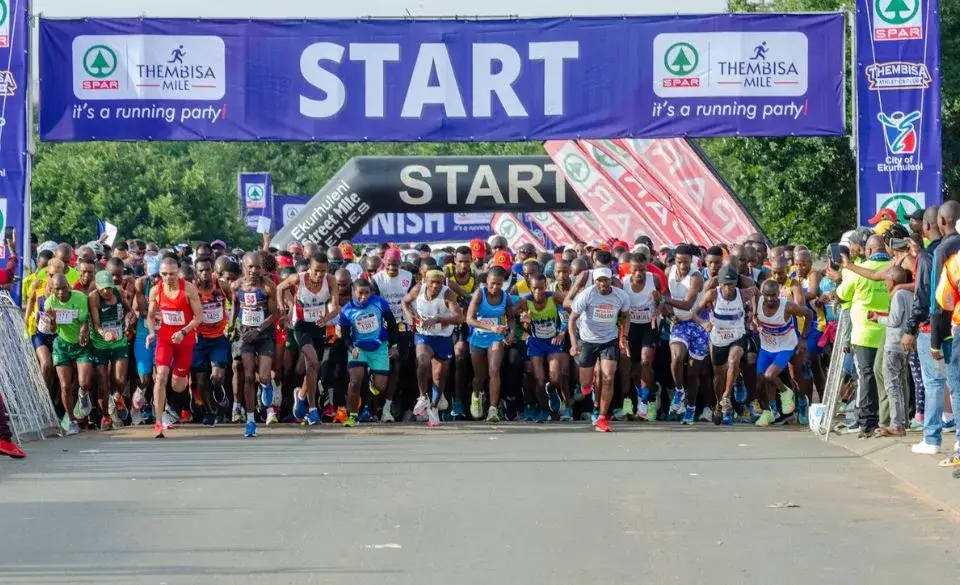
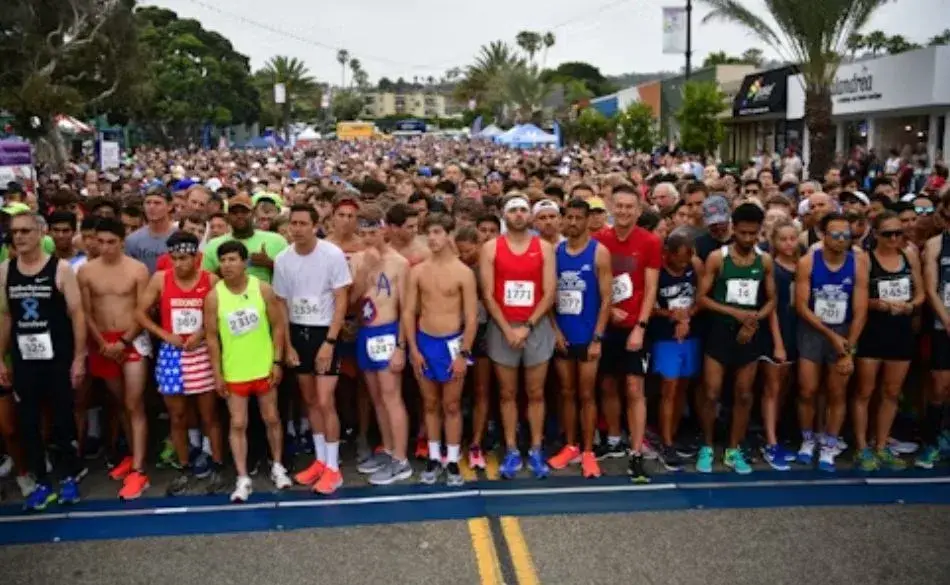
Most 5K events are welcoming to all abilities — runners, joggers, and walkers. Here’s what the experience typically looks like:
Before the race. You’ll collect a race bib at registration. Many events use chip timing attached to your bib or shoe, which means your time starts when you cross the start line — not when the gun fires. Arrive early, do a short warm-up, and line up with runners of a similar pace.
On the course. The most common mistake at a 5K is starting too fast. Adrenaline and the crowd will push you to go out harder than your training pace — resist it. Start at the pace you’ve been training at and let the first kilometre feel easy. You can push in the final kilometre if you feel good, but you can’t recover from going out too hard in the first 500 metres.
Finish time. Most 5K events finish in under an hour for everyone, which means you can race in the morning and still have the rest of your day free. In Australia, parkrun offers free, timed 5K events every Saturday morning at hundreds of locations nationwide — an ideal first race for new runners.
Once you’ve run a 5K, the natural next step is the 10K — exactly twice the distance at 6.2 miles. Most runners who can comfortably finish a 5K can train for a 10K in 6–10 additional weeks. See our guide on how long it takes to run 10 km for realistic time expectations.
Beyond 10K, the half marathon (21.1 km / 13.1 miles) and full marathon (42.2 km / 26.2 miles) each require significantly more training time — typically 12–16 weeks from a solid running base. If that’s your goal, our guide to typical marathon times for beginners gives a realistic picture of what to expect.
Ready to run your first 5K — or get faster at one you've already done?
Our training plans and coaching are built around your pace, schedule, and goals — so every session has a purpose and you arrive at race day ready.
Get Running Coaching View Training PlansHow many miles is a 5K?
A 5K is 3.1 miles. More precisely, 5 kilometres equals 3.107 miles. On a standard 400-metre outdoor track, that is 12.5 laps.
How long does it take to run a 5K?
Most recreational runners finish in 25–35 minutes. Beginners typically take 35–45 minutes. Competitive club runners aim for under 25 minutes, and elite runners can finish in under 14 minutes.
How many laps of a track is a 5K?
A 5K is exactly 12.5 laps of a standard 400-metre outdoor track. On an indoor 200-metre track, it is 25 laps.
How long does it take to train for a 5K?
Beginners can train for a first 5K in 6–8 weeks using a Couch to 5K programme. If you’re already active, 4 weeks of run-specific preparation is often enough. Experienced runners targeting a time goal typically need 8–12 weeks of structured training.
Is a 5K a good first race?
Yes — it’s the most popular race distance in the world and the ideal starting point for new runners. In Australia, parkrun offers free weekly 5K events every Saturday morning at hundreds of locations.
Ready to put your training to the test? Here are some upcoming running events matched to this article.

Head Coach & Founder, SportCoaching
Graeme is the founder of SportCoaching and has coached more than 750 athletes from 20 countries, from beginners to Olympians, in cycling, running, triathlon, mountain biking, boxing, and skiing. His coaching philosophy and methods form the foundation of SportCoaching's training programs and resources.
No matter your goals, SportCoaching offers tailored training plans to suit your needs. Whether you’re preparing for a race, tackling long distances, or simply improving your fitness, our expert coaches provide structured guidance to help you reach your full potential.
Smart, progressive training from 5km to marathon with weekly guidance.
What’s included
Browse upcoming Australian running, cycling, and triathlon events in one place. Filter by sport, check dates quickly, and plan your training around something real on the calendar.
Choose your plan to get started with personalized training plans designed to help you reach your goals.


Minna Backman
When you’re new, feedback is especially important, and Graeme is highly skilled at both analyzing numbers and understanding the importance of mental strength.











