





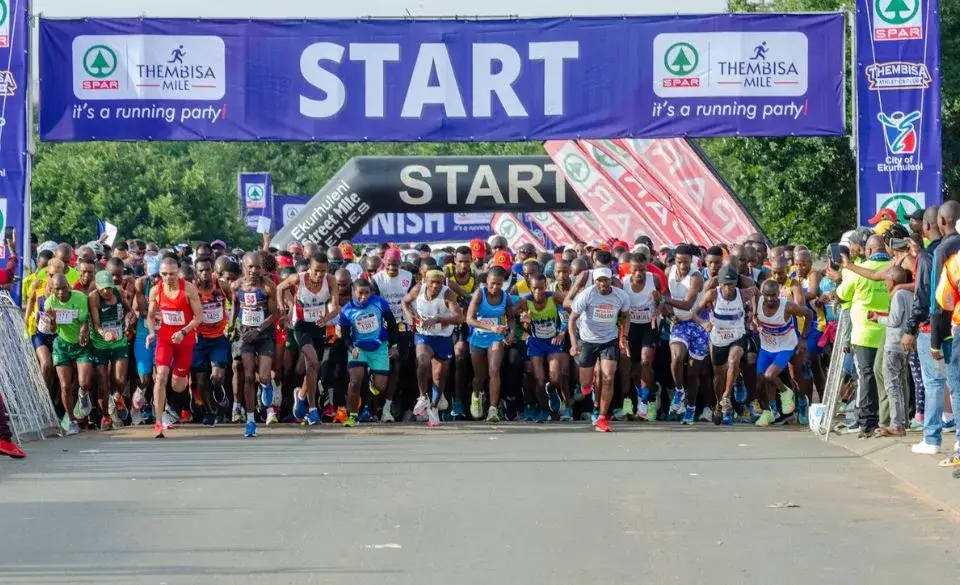
Find Your Next Running Race
Ready to put your training to the test? Here are some upcoming running events matched to this article.
 Coach Graeme

Last updated:
Your abs didn't get sore because you did something wrong. They got sore because they did their job. Every stride you take requires your core muscles to stabilise your pelvis, control trunk rotation, and absorb impact. That's thousands of contractions over a single run — and when your core works harder than it's used to, the result is soreness.
Not sure where to start with training?
Tell us your goal and schedule, and we’ll give you clear direction.
No obligation. Quick, practical advice.
Explore our running training advice for more helpful articles and resources.
Running engages all four layers of your abdominal muscles with every step:
Your rectus abdominis (the “six-pack” muscle) controls forward trunk flexion and absorbs the impact of landing. Your obliques (internal and external) control the rotation that naturally occurs as your opposite arm and leg move together. Your transverse abdominis (the deepest layer) acts like a corset, compressing and stabilising your entire trunk.
These muscles contract eccentrically — lengthening under tension — with each foot strike. This type of contraction is particularly effective at causing micro-tears in muscle fibres, which is why DOMS (delayed onset muscle soreness) develops 24–48 hours later.
The soreness is most noticeable after runs that demand more from your core than usual: hill sessions (where your trunk leans forward more), intervals (where acceleration and deceleration increase rotational forces), long runs (where fatigue causes form to deteriorate and the core works harder to compensate), and runs on uneven terrain.
👉 Swipe to view full table
| Normal DOMS | Possible Strain or Issue | |
|---|---|---|
| When it starts | 24–48 hours after the run | During the run or immediately after |
| How it feels | Dull, tight, achey | Sharp, stabbing, or localised to one point |
| Movement | Improves with light activity | Gets worse with movement or doesn't improve |
| Duration | Fades within 2–3 days | Persists beyond 4–5 days |
| Other signs | None | Swelling, bruising, difficulty breathing, or visible bulge |
| What to do | Normal recovery — light movement, hydration, time | Rest and see a doctor if symptoms persist |
If you experience sharp pain during a run — especially a sudden, localised pain on one side — stop and walk. This could be a muscle strain, a side stitch (exercise-related transient abdominal pain), or in rare cases something that needs medical attention. Soreness that appears the day after and fades with gentle movement is almost always normal DOMS.
Several factors increase the likelihood and severity of post-run ab soreness:
Weak core muscles. If your core isn’t strong enough relative to your running volume, it works harder to compensate — leading to more micro-damage and more soreness.
Poor running posture. Slouching or leaning too far forward shifts the stabilisation burden onto your abs and hip flexors instead of distributing it across the entire core.
Shallow breathing. Chest breathing rather than diaphragmatic breathing increases tension in the upper abdominals and intercostal muscles. Deep belly breaths during easy runs reduce unnecessary abdominal tension.
Sudden increases in distance or intensity. Your core adapts gradually, just like your legs. Jumping from 5 km to 10 km or adding hill repeats without progression gives your abs a stimulus they aren’t prepared for.
Strengthen your core. This is the single most effective fix. Two to three sessions per week of planks, dead bugs, bird dogs, and Pallof presses build the stability your core needs to handle running without excessive soreness. For specific exercises, see our core workouts for runners guide.
Increase training gradually. Follow the 10% rule — don’t increase weekly distance or intensity by more than 10% per week. This gives your core time to adapt alongside your legs and cardiovascular system.
Focus on posture. Run tall with a slight forward lean from the ankles (not the waist). Keep your shoulders relaxed and avoid clenching your stomach muscles. A relaxed but engaged core is more efficient than a tensed one.
Breathe from your diaphragm. Practise belly breathing during easy runs — your stomach should expand as you inhale, not just your chest. This reduces unnecessary tension in the upper abs and intercostals.
Recover properly. Light movement the day after a hard run (walking, gentle stretching) helps flush metabolic byproducts and speeds DOMS recovery. Foam rolling the hip flexors and lower back can also relieve tension that contributes to abdominal discomfort.
Why are my abs sore after running?
Your core contracts with every stride to stabilise your pelvis, control rotation, and absorb impact. This causes micro-tears and DOMS 24–48 hours later. It’s most noticeable after hills, intervals, or long runs.
Is it normal for abs to hurt after running?
Yes. Mild to moderate soreness that appears 24–48 hours after a run and fades within 2–3 days is standard DOMS — a sign your core was working.
When should I worry about ab pain after running?
If the pain is sharp during the run, localised to one point, doesn’t improve within 3–4 days, or is accompanied by swelling or difficulty breathing, see a doctor.
How do I prevent abs getting sore after running?
Strengthen your core 2–3 times per week (planks, dead bugs, bird dogs), increase training gradually, maintain good posture, and breathe diaphragmatically.
Does ab soreness mean my core is weak?
Not necessarily. Even strong runners get DOMS after hard sessions. But if your abs are sore after every run, targeted core work will help.
Ab soreness after running is your body telling you that your core was working. It’s a normal part of the adaptation process — especially when you’re increasing distance, tackling hills, or pushing pace. With consistent core training and gradual progression, the soreness becomes less frequent and less intense over time.
If it happens after every run, your core likely needs more dedicated strengthening. If it only happens after unusually hard sessions, it’s simply your body adapting to a new stimulus. Either way, it’s not something to worry about — it’s something to train for.
Our running coaching programmes include core strengthening alongside your run training — so your whole body develops together, not just your legs.
Ready to put your training to the test? Here are some upcoming running events matched to this article.

Head Coach & Founder, SportCoaching
Graeme is the founder of SportCoaching and has coached more than 750 athletes from 20 countries, from beginners to Olympians, in cycling, running, triathlon, mountain biking, boxing, and skiing. His coaching philosophy and methods form the foundation of SportCoaching's training programs and resources.
No matter your goals, SportCoaching offers tailored training plans to suit your needs. Whether you’re preparing for a race, tackling long distances, or simply improving your fitness, our expert coaches provide structured guidance to help you reach your full potential.
Smart, progressive training from 5km to marathon with weekly guidance.
What’s included
Choose your plan to get started with personalized training plans designed to help you reach your goals.


Minna Backman
When you’re new, feedback is especially important, and Graeme is highly skilled at both analyzing numbers and understanding the importance of mental strength.











