Want help turning consistency into progress? Coaching keeps your training simple, structured, and sustainable.
Start Coaching →
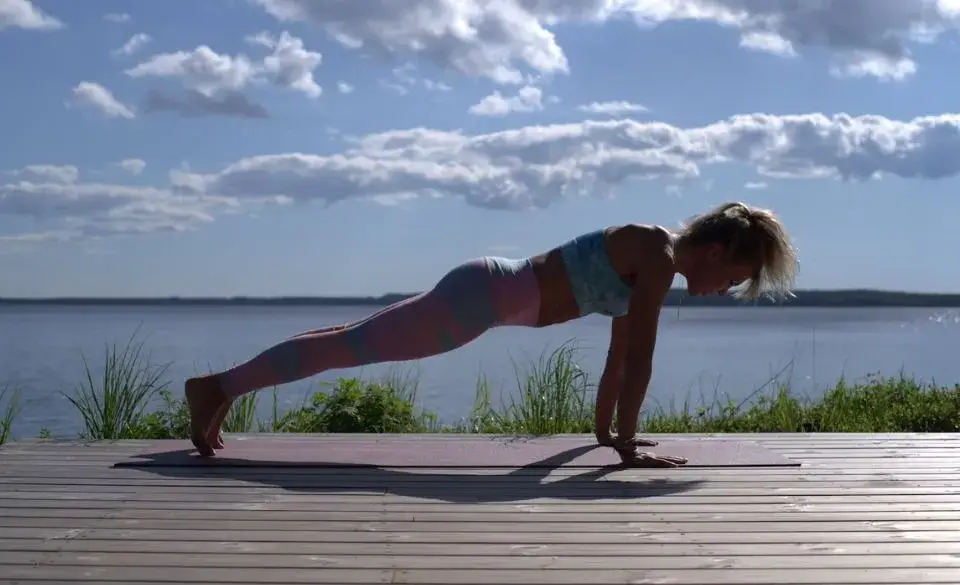
Runner performing plank outdoors near water as part of the best core exercises for runners

Last updated:

Best Core Exercises for Runners: 10 Evidence-Based Moves

The core exercises that matter most for runners are not the ones most runners do. Crunches and sit-ups train spinal flexion — a movement pattern that running doesn't require as a stability demand. What running actually requires is the opposite: the ability to resist flexion, resist extension, resist rotation, and resist lateral bending — tens of thousands of times, under fatigue, over long distances.

This guide covers the ten exercises that address these specific demands, why each is selected over alternatives, a complete 10-minute routine you can use immediately, and how to fit it into your training week without it competing for the recovery that running itself requires.

Chat with a SportCoaching coach

Not sure where to start with training?

Tell us your goal and schedule, and we’ll give you clear direction.

No obligation. Quick, practical advice.

Article Categories:

Explore our running fitness resources for more helpful articles and resources.

Quick Answer

The evidence-based Big 3: bird dog (extensor challenge), side bridge/plank (frontal plane), and curl-up/dead bug (flexor challenge) — from PMC injury prevention research. Add: front plank, glute bridge, hollow hold, Pallof press. Skip: crunches, sit-ups — they train flexion, not the anti-movement stability running requires. Frequency: 2 sessions/week, 10–15 minutes each, on easy/rest days.

What the Core Actually Needs to Do for Running

The core is not the abs. It’s the entire cylinder of muscle surrounding the lumbar spine and pelvis: the transversus abdominis at the front, the multifidus and erector spinae at the back, the obliques at the sides, the diaphragm at the top, and the pelvic floor at the base. During running, this cylinder performs four stabilising functions with every single stride:

Anti-extension: preventing the lower back from arching under the pull of tight hip flexors. The transversus abdominis and deep abdominals brace against this extension, keeping the pelvis neutral. When this fails under fatigue, the characteristic lower back arch and anterior pelvic tilt develops — the form breakdown that causes late-run lower back pain.

Anti-rotation: preventing the torso from twisting as the arms and legs alternate. As the right leg drives forward, the left arm swings back, creating a rotational force. The obliques and deep spinal muscles resist this twist. When they fatigue, the characteristic side-to-side torso sway wastes energy and loads the spine asymmetrically.

Anti-lateral-flexion: preventing the trunk from bending sideways during single-leg stance. Every step of running is a brief moment of single-leg balance. The quadratus lumborum and lateral obliques hold the trunk upright. When they fatigue, the torso lists toward each supporting foot — the “side-to-side waddle” visible in runners breaking down in a long race.

Force transfer: channelling leg power into forward momentum. A stiff, well-controlled core transmits force efficiently. A loose one leaks energy sideways and upward. This is why core training improves running economy: better force transfer means the same pace requires less oxygen.

This framework explains why crunches miss the target. Crunches train spinal flexion — the curling of the spine under load. Running doesn’t need the core to flex the spine; it needs the core to prevent unwanted spinal movement in all four directions. Our guide on whether running strengthens your core covers this distinction in depth and explains why running alone doesn’t progressively overload these anti-movement functions.

The Evidence-Based Big 3 — and Why They Work

A PMC systematic review of core stability training for injury prevention identified “the Big 3” as the most widely incorporated exercises in evidence-based programmes: the curl-up (flexor challenge), the side bridge (frontal plane challenge), and the bird dog (extensor challenge). These three exercises cover all three planes of movement that the core must stabilise and have the most consistent research support.

A separate ultrasound study (PMC) measured actual muscle thickness during seven popular core exercises and found that the bird dog and side plank with a hollowing maneuver produced the greatest increase in transversus abdominis, internal oblique, and lumbar multifidus thickness — the three muscle groups most directly involved in spinal stability during dynamic activity. These findings support prioritising the bird dog and side plank as the highest-value exercises for functional core stability.

The dead bug, while not always named in older literature, is now widely recommended by physiotherapists and coaches as a superior alternative to crunches and sit-ups: it trains the same anterior core muscles but in an anti-extension pattern, without spinal compression or the flexion loading that aggravates lower back issues. Research confirms it targets the rectus abdominis, internal and external obliques, transversus abdominis, multifidus, erector spinae, and pelvic floor simultaneously.

The 10 Exercises — Mapped to Running Function

👉 Swipe to view full table
ExerciseCore functionSets / DurationPriority
1. Dead bugAnti-rotation + anti-extension; alternating limb movement mirrors running stride3 × 6–10 each side; 3-sec lower✓ Highest
2. Bird dogAnti-rotation + anti-extension; weight-bearing version with glute activation; highest TrA and multifidus activation per research3 × 10 each side; 2-sec hold✓ Highest
3. Side plankAnti-lateral-flexion; obliques + quadratus lumborum + glute medius3 × 20–45 sec each side✓ Highest
4. Front plankAnti-extension; transversus abdominis + erector spinae + shoulders3 × 30–60 sec✓ High
5. Glute bridgePosterior chain activation; hip extension + anti-extension from below3 × 15–20✓ High
6. Hollow body holdAnti-extension; deep anterior core; spinal stiffness pattern3 × 20–40 sec✓ High
7. Pallof pressAnti-rotation under resistance; highest anti-rotation training stimulus3 × 10–12 each sideHigh (with band/cable)
8. Side plank with top leg raiseAnti-lateral-flexion + glute medius; most demanding lateral core exercise without equipment3 × 30 sec each side✓ High (progression)
9. Mountain climbersDynamic anti-extension + anti-rotation; cardiovascular demand; running-specific arm-leg alternation3 × 20–30 secMedium — metabolic + core
10. Single-leg glute bridgeAnti-extension + anti-lateral-flexion + hip extension; single-leg loading mirrors running3 × 12–15 each leg✓ High (progression)

The Exercises in Detail

1. Dead Bug

The dead bug is the most running-specific core exercise because it trains the core to resist rotation while alternating opposite arm and leg — the exact functional demand of running, where the left arm swings as the right leg drives, and vice versa. Research confirms it activates all layers of the anterior core simultaneously, without the spinal compression or flexion loading of crunches.

How to do it: lie on your back, arms straight toward the ceiling, knees bent at 90 degrees with shins parallel to the floor (tabletop). Press the lower back gently into the floor. Slowly extend the right arm overhead toward the floor and the left leg straight toward the floor simultaneously. Return and repeat with the left arm and right leg. Use a 3-second lowering phase. The lower back must not lift from the floor at any point — if it does, reduce the range of the arm or leg. 6–10 reps each side, 3 sets.

Progression: straighten arms fully overhead (more lever arm); use a stability ball between the raised knee and opposite arm; add a light dumbbell to the extending arm.

Running connection: this is the exercise that Brooks Running coach Janet Hamilton specifically recommends for runners: “train the core to stay stable as the arms and legs move.” The dead bug is the purest expression of this principle. Our back exercises guide covers the dead bug alongside the bird-dog in the context of posterior chain development.

2. Bird Dog

The bird dog is the weight-bearing counterpart to the dead bug: same alternating limb demand, but from a quadruped position. The PMC ultrasound study found the bird dog produces the greatest increase in transversus abdominis and lumbar multifidus thickness of any core exercise tested. The multifidus — the deep spinal stabiliser — is the muscle most associated with spinal stability and lower back pain prevention in runners.

How to do it: on hands and knees, hands under shoulders, knees under hips, neutral spine. Engage the core — the spine should not move during the exercise. Extend the right arm forward and the left leg back simultaneously, reaching long in both directions. Hold 2 seconds, return slowly, alternate sides. The hips must not rotate and the lower back must not arch. 10 each side, 3 sets.

Key cue: “imagine balancing a glass of water on your lower back — it shouldn’t tip.” If the hips rotate or the spine arches, reduce range until the control is there. Control matters more than reach.

Progression: longer hold (3–4 seconds); add a resistance band around the wrists; perform on an unstable surface (balance board or airex pad).

3. Side Plank

The side plank is the primary exercise for anti-lateral-flexion — the lateral trunk strength that prevents the side-to-side sway of a fatigued runner. It also trains the quadratus lumborum and lateral obliques in the same single-leg stabilisation pattern they use during every running stride. The PMC ultrasound research confirms it is among the highest-activating exercises for the internal oblique and lateral core musculature.

How to do it: lie on your side, forearm under shoulder, hips stacked. Lift the hips so the body forms a straight line from head to feet. Hold for 20–45 seconds. Progress from knees on floor → full side plank → top leg raised (exercise 8 below). 3 sets each side.

Progression sequence: side plank from knees (beginners) → full side plank (intermediate) → side plank with top leg raised (advanced — significantly increases glute medius demand alongside the lateral core). The top-leg-raised version is one of the highest-activating exercises for the glute medius and lateral hip — making it doubly valuable for runners who also have lateral hip instability.

4. Front Plank

The front plank trains anti-extension — the ability to prevent the lower back from arching under load. It engages the transversus abdominis, rectus abdominis, erector spinae, and shoulder stabilisers. For runners, the most useful progression is the plank with leg lift: from a front plank position, alternate lifting each leg 5–10cm off the floor. This adds the anti-rotation demand that running requires on top of the basic anti-extension stimulus.

How to do it: forearms on the floor, elbows under shoulders, body in a straight line from head to heels. Brace the core — “pull the navel toward the spine and squeeze the glutes slightly.” Don’t allow the hips to sag or rise. 30–60 seconds, 3 sets. Progress to leg lifts once 60 seconds is stable.

Warning: many runners hold the plank with a hyperextended lower back (hips too high) or a sagging lower back (hips too low). The effective position is a perfectly neutral line. If you’re unsure, video yourself from the side — the hips should be neither elevated nor dropped relative to the shoulders and heels.

5. Glute Bridge

The glute bridge is included here as both a core exercise and a glute activation exercise — because the glutes are part of the posterior core system that holds the pelvis stable from below. The bridge activates the gluteus maximus (primary hip extensor) and trains the core in anti-extension from the posterior side. It also serves as the most accessible pre-run activation exercise: 1 set of 15 reps before a run pre-activates the posterior chain for the session. Our warm-up and cool-down guide covers how this fits into the pre-run routine.

How to do it: lie on your back, knees bent, feet flat on the floor hip-width apart. Drive through the heels to push the hips upward until a straight line from knees to shoulders is achieved. Squeeze glutes at the top for 1–2 seconds. Lower with control. Progress to single-leg bridge (exercise 10 below). 15–20 reps, 3 sets.

6. Hollow Body Hold

The hollow body hold is an isometric anti-extension exercise that produces high anterior core activation with the spine in a position that transfers well to athletic movement. It’s the foundation of gymnastics conditioning and trains the deep abdominals to maintain spinal stiffness — the key quality for efficient force transfer during running.

How to do it: lie on your back, arms overhead, legs straight. Press the lower back firmly into the floor. Raise the arms, head, and shoulders slightly off the floor, and raise the legs to approximately 30–45 degrees. The body forms a slight “banana” curve — the lower back must remain in contact with the floor throughout. Hold 20–40 seconds. If the lower back lifts, bend the knees or raise the legs higher to reduce the lever arm. 3 sets.

7. Pallof Press

The Pallof press is the best dedicated anti-rotation exercise and deserves a place in any serious runner’s core programme. With a resistance band anchored to a fixed point at chest height (door frame, post, or cable machine), standing sideways to the anchor, you press the band from the chest outward and return. The resistance tries to rotate you toward the anchor; the core resists. This is the most direct training of the anti-rotation function that running demands of the obliques.

How to do it: anchor a resistance band at chest height. Stand sideways to the anchor, holding the band at your chest with both hands. Press the band straight out from the chest until the arms are extended, hold 2 seconds, return. The torso must not rotate — the resistance will try to pull it. 10–12 reps each side, 3 sets. Progress by stepping farther from the anchor or using a stronger band.

8. Side Plank with Top Leg Raised

This progression of the standard side plank adds significant glute medius demand to the lateral core challenge, making it simultaneously one of the best anti-lateral-flexion exercises and one of the best hip abductor exercises for runners. Our glute minimus exercises guide covers this alongside other lateral hip exercises — the side plank top-leg-raise is the most efficient single exercise for training both the lateral core and the lateral hip stabilisers simultaneously.

How to do it: from a full side plank position (feet stacked, body straight), raise the top leg to approximately 30–45 degrees and hold. The body must not rotate as the leg lifts — keep the hip of the top leg neutral (not rotating forward or backward). 30 seconds each side, 3 sets.

9. Mountain Climbers

Mountain climbers bring a dynamic, metabolic element to core training — the only exercise in this list that produces meaningful cardiovascular demand alongside the core stimulus. From a front plank position, alternate driving the knees toward the chest in a running-like motion. The core must resist the alternating leg forces from below while maintaining the plank position. This closely approximates the anti-rotation and anti-extension demand of actual running.

How to do it: start in a front plank position on the hands (not forearms). Drive the right knee toward the chest as quickly as controlled movement allows, then return and drive the left knee. The hips must stay level — don’t let them rise or rotate with each knee drive. 20–30 seconds, 3 sets. Progress by increasing speed within controlled form.

10. Single-Leg Glute Bridge

The single-leg glute bridge is the highest-demand progression in this list — training hip extension, anti-lateral-flexion, and anti-rotation simultaneously in a single-leg loaded position. It directly mirrors the stance-phase demands of running. When the left foot is on the floor and the right leg is raised, the right hip must not drop — the same stability demand as every running stride.

How to do it: from the standard glute bridge set-up, extend one leg straight (parallel to the floor). Drive through the planted heel to lift the hips. The extended leg must stay level — neither dropping nor rising. Hips stay square. 12–15 reps each leg, 3 sets. The hip drop on the extended side when fatigued is the sign to stop — this indicates the glute medius has failed.

For runners dealing with hip drop or pelvic instability during running, this exercise is particularly valuable. Our hip strengthening guide covers how single-leg loaded exercises address the Trendelenburg pattern that causes IT band syndrome and runner’s knee.

A Complete 10-Minute Runner's Core Routine

These exercises combined into a single structured session:

Activation (2 min): glute bridge, 1 × 15 reps, moving slowly to feel each muscle group activating. This primes the posterior chain before the more demanding exercises.

Stability block (5 min): dead bug 2 × 8 each side (rest 30 sec between sets), then bird dog 2 × 10 each side (rest 30 sec). These two exercises cover anti-rotation and anti-extension in both supine and quadruped positions.

Lateral block (3 min): side plank 2 × 30 sec each side (rest 15 sec between sides). Once this is comfortable, progress to side plank with top leg raised.

Total: 10 minutes. This covers the three most evidence-supported directions (anti-extension via dead bug, anti-rotation via bird dog, anti-lateral-flexion via side plank) in a session that fits after any easy run without meaningful recovery cost. Two sessions of this per week — consistently, over 6–8 weeks — produces the core endurance improvements that translate to maintained running form in the final kilometres of long runs.

For runners who want a longer session (15–20 minutes), add the front plank (3 × 45 sec) and Pallof press (3 × 10 each side) to the above routine. This extends the anti-extension and anti-rotation training with higher-load variations. Our pre-run guide covers how the glute bridge and a quick bird-dog can also serve as 90-second activation before runs rather than saving all core work for dedicated sessions.


How to Schedule Core Work Into a Running Week

Twice a week is sufficient. Place sessions on easy run or rest days — not before long runs or interval sessions. Core fatigue before quality running reduces neuromuscular output and risks form degradation during the session that matters most.

The practical sequence for a typical 4–5 day running week: run first on any combined day, then do core immediately after. The small amount of core fatigue from a 15-minute session doesn’t meaningfully affect subsequent easy runs, but it does mean the core exercises themselves are performed with slightly fatigued muscles — which makes the stability challenge more realistic and may improve the transfer to form maintenance under fatigue during actual running.

For runners building toward longer distances, consistent core work becomes increasingly important as mileage climbs. Our guide on building marathon mileage safely covers how the form collapse that develops in high-mileage weeks — often appearing first as lower back tightness or late-run postural breakdown — is largely preventable through the same core exercises covered here. Our long distance running form guide connects this core work directly to the specific form elements that break down under fatigue: the torso lean, the arm crossing, the cadence drop.

For runners also doing speed work, core training has a direct performance connection: a stronger, stiffer core transmits leg power more efficiently to forward momentum. A 2009 study found 6 weeks of core training significantly improved 5000m run times. Our speed work guide covers how core stability supports the mechanics of interval training — the anti-rotation demand on the obliques is highest at faster paces, making core work particularly valuable for runners targeting sub-threshold and VO2max efforts.

Run Stronger from the Centre Out

SportCoaching's running plans integrate targeted core work alongside your weekly running — scheduled on the right days, with the right exercises for your current level, so form holds in the kilometres that matter most.

FAQ: Core Exercises for Runners

What are the best core exercises for runners?
The evidence-based Big 3: bird dog (highest TrA and multifidus activation per ultrasound research), side bridge/plank (frontal plane), and dead bug (anti-extension with alternating limb movement mirroring running). Add front plank, glute bridge, hollow body hold, and Pallof press for a complete programme covering all four running core demands.

Why aren’t crunches and sit-ups on the list?
They train spinal flexion — a movement pattern running doesn’t require as a stability demand. Running needs anti-flexion, anti-extension, anti-rotation, and anti-lateral-flexion. Crunches build strength in a pattern runners don’t use and may reinforce the forward trunk lean that is the most common form breakdown under fatigue.

How often should runners do core exercises?
Twice a week, 10–20 minutes each session, on easy run or rest days. A glute bridge and bird dog before any run takes 90 seconds and serves as activation without competing for recovery. Consistent training over 6–8 weeks produces measurable form and performance improvements.

Do core exercises improve running speed?
Yes. A 2009 J Strength Cond Res study found 6 weeks of core training significantly improved 5000m run times. A 2019 PLOS One study found improved running economy. Better core stability transmits leg power forward more efficiently rather than losing it through a flexible midsection.

What’s the difference between core strength and core stability for runners?
Runners need stability more than strength: the core must maintain position across tens of thousands of strides, not produce large forces. The dead bug and bird dog — which train stability under movement — are more running-relevant than exercises that maximise core force output. Quality of position always takes priority over load or duration.

Find Your Next Running Race

Ready to put your training to the test? Here are some upcoming running events matched to this article.

Graeme - Head Coach and Founder of SportCoaching

Graeme

Head Coach & Founder, SportCoaching

Graeme is the founder of SportCoaching and has coached more than 750 athletes from 20 countries, from beginners to Olympians, in cycling, running, triathlon, mountain biking, boxing, and skiing. His coaching philosophy and methods form the foundation of SportCoaching's training programs and resources.

750+
Athletes
20+
Countries
7
Sports
Olympic
Level

Start Your Fitness Journey with SportCoaching

No matter your goals, SportCoaching offers tailored training plans to suit your needs. Whether you’re preparing for a race, tackling long distances, or simply improving your fitness, our expert coaches provide structured guidance to help you reach your full potential.

  • Custom Training Plans: Designed to match your fitness level and goals.
  • Expert Coaching: Work with experienced coaches who understand endurance training.
  • Performance Monitoring: Track progress and adjust your plan for maximum improvement.
  • Flexible Coaching Options: Online and in-person coaching for all levels of athletes.
Learn More →

Choose Your Next Event

Browse upcoming Australian running, cycling, and triathlon events in one place. Filter by sport, check dates quickly, and plan your training around something real on the calendar.

View Event Calendar