







Find Your Next Running Race
Ready to put your training to the test? Here are some upcoming running events matched to this article.
 Coach Graeme
Last updated:
The answer isn't a simple yes or no — it depends entirely on the type of massage you had, how deep the therapist went, and what your next training session looks like. Get the timing wrong and you either undo the benefits of the massage or go into a hard session on compromised tissue. Here's what actually matters.
Not sure where to start with training?
Tell us your goal and schedule, and we’ll give you clear direction.
No obligation. Quick, practical advice.
Explore our running training articles for more helpful articles and resources.
After a Swedish or light relaxation massage: easy running the same day is fine. After a sports massage: an easy run the following day is generally safe. After a deep tissue, trigger point, or ART massage: wait 24–48 hours before running hard. Never do a deep tissue massage the day before a race.
Most advice you’ll find online treats “massage” as one thing. For runners, it isn’t. A light Swedish massage before a race is completely different from a deep tissue session targeting a tight hamstring mid-training block — and they require completely different post-massage protocols.
The key mechanism is what massage therapists call the thixotropic effect: sustained pressure on connective tissue temporarily makes it more pliable and gel-like. This state lasts roughly 24 hours. If you run hard during this window after a deep massage, you risk pulling tissue back into old compensation patterns or, worse, creating new strain. After a lighter massage, the tissues haven’t been manipulated deeply enough for this to be a meaningful concern.
Think of a deep tissue massage the same way you’d think of a hard training session — it’s a stimulus your body needs to recover from before the next load.
👉 Swipe to view full table
| Massage Type | Same Day | Next Day | Hard Session | Notes |
|---|---|---|---|---|
| Swedish / relaxation | ✅ Easy run OK | ✅ Normal training | ✅ Next day fine | Light strokes, no deep tissue manipulation |
| Sports massage (moderate) | ⚠️ Easy walk only | ✅ Easy run OK | ✅ 48 hrs fine | Schedule after a hard workout, not before |
| Deep tissue | ❌ Rest or light walk | ⚠️ Easy run only | ✅ After 48 hrs | May feel sore for 1–2 days — that's normal |
| Trigger point / ART | ❌ Rest | ⚠️ Easy run only | ✅ After 48 hrs | Targeted work — treat like a hard session |
| Pre-race (light) | ✅ Light movement | ✅ Race warm-up | ✅ Race day | Must be 1–2 days out; no deep work |
| Post-race / post-marathon | ❌ Too soon | ❌ Too soon | ❌ Wait 3–5 days | Let inflammation settle first |
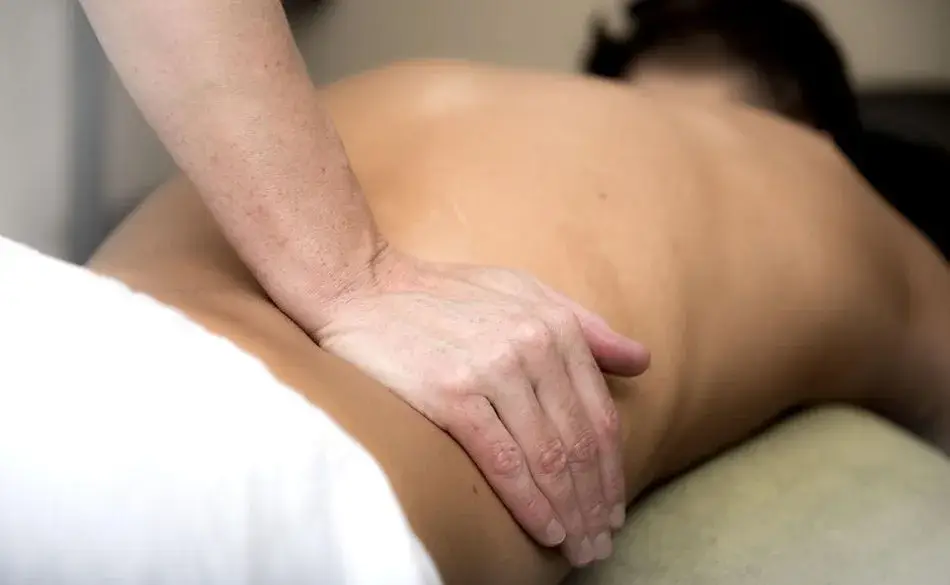
Deep tissue massage is the most common type runners get during a training block, and it has the longest recovery requirement. The therapist works into the deeper layers of muscle and connective tissue, breaking up adhesions and releasing chronic tension — which is valuable, but it leaves muscles temporarily fatigued in a similar way to a hard workout.
Day of the massage: Rest or walk only. Your muscles are in a softened, vulnerable state. Running — even easily — risks disrupting the work the therapist has just done.
The next day: An easy 20–30 minute jog is fine for most runners. Keep it conversational pace, no intervals, no tempo. If your legs feel heavy or sore, that’s normal — it typically resolves within 48 hours and many runners find they feel noticeably better on day two.
Hard sessions: Wait 48 hours minimum before any speed work, long runs, or race-pace efforts. Schedule deep tissue massage after your last hard session of the week, with easy days following it, so the timing works with your training plan rather than against it.
Sports massage varies more in intensity than most runners realise. A light sports massage focusing on circulation and muscle flushing is closer to a Swedish massage in terms of recovery demand. A deep, targeted sports massage working on specific injury sites or chronic tightness can approach deep tissue territory.
The general rule: treat it relative to how it felt. If the therapist worked deep and it was uncomfortable in places, give yourself 24–48 hours before hard running. If it was moderate pressure and you left feeling loose rather than sore, an easy run the next morning is fine.
The best timing for a sports massage in a training week is the evening after a hard workout or long run. This gives your body the maximum recovery window before your next key session and lets the massage work with your recovery, not against your training.
Swedish massage uses long, flowing strokes at light to moderate pressure. It improves circulation and promotes relaxation but doesn’t manipulate deep tissue or create the thixotropic softening that requires a recovery window. For runners, this is the safest pre-run and pre-race massage option.
You can run the same day after a Swedish massage without any meaningful risk, though your legs may feel unusually relaxed or slightly heavy for an hour or two. If you have a race in the next 1–2 days, a light Swedish massage can actually help — it reduces pre-race muscle tension and nervousness without compromising your legs for race day.
👉 Swipe to view full table
| Timing | Massage Type | Safe? | Reason |
|---|---|---|---|
| 7+ days before race | Deep tissue / sports | ✅ Yes | Full recovery window before race |
| 3–5 days before race | Light sports massage | ✅ Yes | Enough time to process and recover |
| 1–2 days before race | Swedish / light only | ⚠️ Light only | No deep work — risk of leaving legs heavy |
| Day before race | Any deep work | ❌ No | Muscles need to be fresh, not recovering |
| Race day | Any | ❌ No | Can overstimulate or leave legs flat |
| Day after a marathon | Any | ❌ Too soon | Significant muscle damage and inflammation |
| 3–5 days post-marathon | Light sports / Swedish | ✅ Yes | Inflammation has settled, massage aids recovery |
| 5–7 days post-marathon | Deep tissue | ✅ Yes | Safe to go deeper as muscles have begun repair |
A common mistake runners make is booking a massage too close to race day. The release of metabolic waste products during a deep massage — and the mild soreness that can follow — needs time to clear. Schedule deep work at least 5–7 days out from a target race, and if you want a pre-race massage in the final days, keep it light.
Similarly, don’t rush a post-marathon massage. A race of that distance causes real muscular damage and inflammation. A gentle massage 3–5 days post-race can speed recovery, but getting on a table the day after is too soon — let your body’s natural repair process begin first.
If you return to hard running before you’ve recovered from a massage, your body will usually tell you. Watch for these signals:
Heavy, flat legs. If your legs feel unusually dead during an easy run 24 hours after a massage, back off and give them another day. This is the thixotropic effect still in play — the tissue hasn’t fully returned to its normal state.
New soreness in unusual spots. Some post-massage soreness in areas the therapist worked is normal. But if you develop new tightness or soreness after a run following a massage, you’ve likely loaded tissue that wasn’t ready. Ease off and apply ice or a cold compress.
Reduced power or coordination. Deep massage temporarily reduces the neuromuscular firing of muscles in treated areas. Running speed work when your legs aren’t firing properly isn’t just ineffective — it increases injury risk. If you feel off, delay the hard session.
There’s no universal answer, but here’s a practical framework based on training load:
Base training (lower volume): Once every 2–3 weeks is adequate for most runners. Focus on maintenance and addressing any developing tightness before it becomes a problem.
Peak training (high volume or intensity): Weekly sports massage can meaningfully support recovery, improve range of motion, and catch injury precursors early. If weekly massage isn’t feasible, prioritise it after your biggest training weeks.
Injury management: Follow your therapist’s guidance — this varies significantly by injury type and severity.
Pairing regular massage with good recovery habits — adequate sleep, hydration, and structured easy days — gives you far more return than massage alone. The athletes who benefit most from regular massage are those who also manage their training load intelligently rather than relying on bodywork to compensate for poor recovery habits.
The rule is simple: match your post-massage activity to the depth of the work. Light massage — run freely. Deep work — give it 24–48 hours. Schedule massage to follow hard sessions, not precede them. And when a race is on the horizon, plan your last deep tissue session at least a week out so you arrive at the start line with fresh, recovered legs rather than ones still processing a heavy massage.
If you want to build massage and recovery properly into a structured training plan, our running coaching programme includes recovery guidance alongside every training block — so you’re always training and recovering at the right time, not guessing.
Our coaches schedule easy days, massage windows, and recovery weeks into every training plan — so your body gets the work and the rest it needs to improve consistently.
Can you run after a massage?
Yes, but it depends on the type. After a Swedish massage, easy running the same day is fine. After a sports massage, an easy run the next day is safe. After deep tissue or trigger point work, wait 24–48 hours before running hard.
How long should you wait to run after a deep tissue massage?
At least 24 hours before easy running, and 48 hours before hard sessions. Deep tissue work leaves connective tissue temporarily softened — loading it too soon risks undoing the benefits or causing new strain.
Should you run before or after a massage?
After, for training purposes. Schedule your massage following a hard workout or long run, not before. This lets the massage support recovery without compromising your training quality.
Is it bad to run the day after a sports massage?
No — an easy run is fine and often helps. Keep it conversational pace for 30–45 minutes. Avoid speed work or long runs until 48 hours have passed.
When should runners get a massage before a race?
At least 3–5 days before for a sports or deep tissue massage. A light Swedish massage can be done 1–2 days out. Never get deep work the day before or day of a race.
Ready to put your training to the test? Here are some upcoming running events matched to this article.



Head Coach & Founder, SportCoaching
Graeme is the founder of SportCoaching and has coached more than 750 athletes from 20 countries, from beginners to Olympians, in cycling, running, triathlon, mountain biking, boxing, and skiing. His coaching philosophy and methods form the foundation of SportCoaching's training programs and resources.
No matter your goals, SportCoaching offers tailored training plans to suit your needs. Whether you’re preparing for a race, tackling long distances, or simply improving your fitness, our expert coaches provide structured guidance to help you reach your full potential.
Smart, progressive training from 5km to marathon with weekly guidance.
What’s included
Browse upcoming Australian running, cycling, and triathlon events in one place. Filter by sport, check dates quickly, and plan your training around something real on the calendar.
Choose your plan to get started with personalized training plans designed to help you reach your goals.


Minna Backman
When you’re new, feedback is especially important, and Graeme is highly skilled at both analyzing numbers and understanding the importance of mental strength.











