







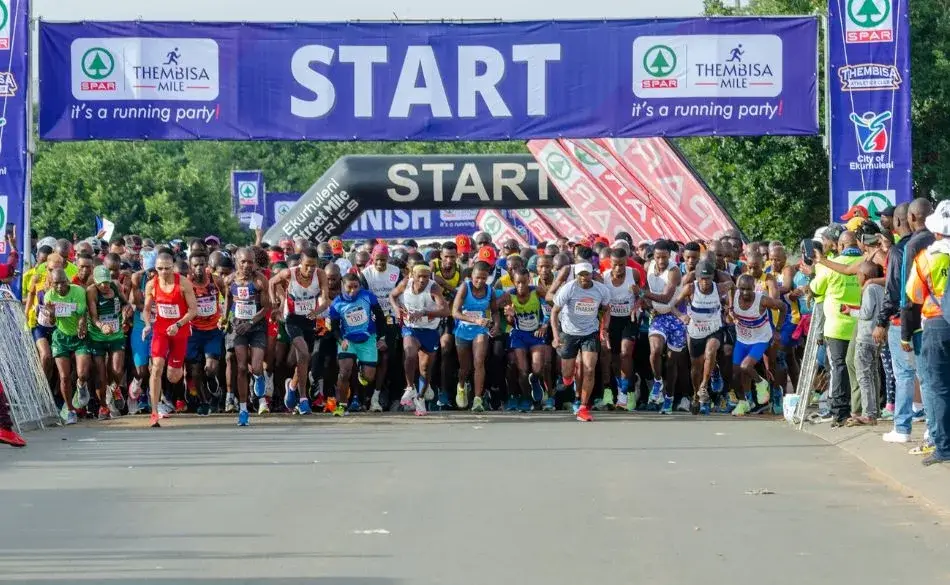


Find Your Next Running Race
Ready to put your training to the test? Here are some upcoming running events matched to this article.
 Coach Graeme

Last updated:
The most common mistake beginner runners make with shoes is buying on looks, brand reputation, or a generic "best of" list — and ending up with a pair that does not suit their foot type, their gait, or the surfaces they run on. The wrong shoe does not necessarily cause injury on day one, but it creates subtle problems that compound over weeks of training.
This guide takes a different approach. Rather than recommending specific models (which change every season and which we have not personally tested on you), it explains the framework a coach uses to match a beginner runner to the right shoe category. Once you understand the four key decisions, narrowing down your choices takes about five minutes — and you will know exactly what to ask for at the running store.
Not sure where to start with training?
Tell us your goal and schedule, and we’ll give you clear direction.
No obligation. Quick, practical advice.
Explore our running advice and tips for more helpful articles and resources.
Every other detail — brand, colourway, tech marketing language — is secondary to these four. Get these right and almost any quality shoe in that category will work for you as a beginner.
The decisions are: neutral vs stability, cushioning level, heel drop, and surface type. Each one is addressed below with a simple rule of thumb to guide your choice.
This is the most important decision for beginners. It is determined by your foot type — specifically, how much your foot rolls inward (pronates) when you run.
The easiest way to check at home is the wet footprint test. Wet your foot and step onto a dark piece of cardboard or paper. A normal arch leaves a clear curve on the inside of the footprint. A flat foot leaves almost no curve — a full print from heel to toe. A high arch leaves a very narrow strip connecting the heel and forefoot.
👉 Swipe to view full table
| Foot Type | Pronation Pattern | Shoe Type | What to Look For |
|---|---|---|---|
| Normal arch | Neutral | Neutral trainer | Balanced midsole foam, no inner post |
| High arch | Underpronation (supination) | Neutral trainer with extra cushion | Soft, flexible midsole; avoid firm medial post |
| Flat foot / low arch | Overpronation | Mild stability trainer | Guide rail, medial post, or denser inner foam |
| Severe flat foot | Significant overpronation | Motion control shoe | Firm, structured midsole; best chosen with gait analysis |
If you have had recurring knee pain, shin splints, or foot pain on previous runs, it is worth getting a proper gait analysis at a specialty running store before buying. Most stores in Australia offer this for free. See our guide to best running shoes for flat feet and underpronation in runners for more detail on each foot type.
Cushioning is measured by midsole stack height — the thickness of foam under the heel and forefoot. For beginners, this matters because your legs are not yet conditioned to absorb repetitive impact, and more cushioning generally means more protection during the early weeks.
The tradeoff is that very high-stack shoes (often called “maximalist” shoes) can feel unstable and reduce ground feel, which some new runners find disorienting. A moderate to high cushion level — not the absolute maximum — is the sweet spot for most beginners.
👉 Swipe to view full table
| Cushion Level | Heel Stack Height | Best For | Beginner Suitability |
|---|---|---|---|
| Minimal | <20mm | Experienced runners, strength work | Not recommended for beginners |
| Moderate | 20–30mm | Versatile daily training, shorter runs | Good — responsive and grounded |
| High | 30–38mm | Long runs, high weekly mileage | Excellent — most beginner daily trainers sit here |
| Maximalist | 38mm+ | Recovery runs, heavy runners | OK but may feel unstable; try before buying |
For most beginners running up to 5km per session, a high-cushion daily trainer (30–38mm stack) is ideal. If you are heavier or running on hard concrete surfaces in an Australian city, leaning toward the higher end of that range makes sense.
Heel drop (also called heel-to-toe offset) is the difference in stack height between the heel and forefoot. A higher drop encourages heel striking — a natural motion for many beginners. A lower drop encourages a more midfoot or forefoot strike and places more load on the Achilles and calves.
For beginners, a heel drop of 8–12mm is generally the safest starting point. It does not force a gait change, it suits heel strikers, and it reduces Achilles load compared to lower-drop shoes. Zero-drop or minimalist shoes require a slow, deliberate transition and are not suitable for someone just starting out.
If you decide later that you want to experiment with a lower drop, reduce it by no more than 4mm at a time and allow 6–8 weeks of adaptation before another reduction.
Most beginners run primarily on roads, paths, or treadmills — and that is what most daily trainers are designed for. If you run on sealed roads and occasionally loose gravel, a road shoe is what you need. If you regularly run on dirt trails with rocks, roots, and uneven ground, a trail shoe with a grippy outsole and rock plate is a better choice.
👉 Swipe to view full table
| Surface | Shoe Type | Key Features to Look For | Avoid |
|---|---|---|---|
| Road / footpath / treadmill | Road daily trainer | Smooth outsole, cushioned midsole | Aggressive trail lugs (wear unevenly on roads) |
| Mixed road and light trail | Road-to-trail hybrid | Light lug pattern, moderate rock protection | Pure road shoes (poor grip on loose surfaces) |
| Technical trail | Trail shoe with rock plate | Aggressive lugs, stiff rock plate, reinforced upper | Road shoes (can cause foot bruising on rocky ground) |
| Treadmill only | Road daily trainer | Same as road — comfort and cushion | Trail shoes (unnecessary tread wears the belt) |
For most beginners running up to 5km per session, a high-cushion daily trainer (30–38mm stack) is ideal. If you are heavier or running on hard concrete surfaces in an Australian city, leaning toward the higher end of that range makes sense.
Shoe marketing is full of technical language that is largely irrelevant for beginner runners. Here is what you can safely ignore at this stage:
Carbon plates. Carbon plate running shoes are designed for experienced runners chasing time goals in races. They are stiff, expensive (AU$300–$500+), and designed to work efficiently at paces faster than most beginners run. They provide no benefit and some injury risk for new runners whose form and strength are still developing. See our guide to carbon plate running shoes for a full breakdown.
Foam brand names. ZoomX, DNA Loft, PWRRUN, Flytefoam — every brand has its own foam technology marketing. What matters is how the shoe feels when you jog in it, not the name of the foam. If a shoe feels comfortable and responsive on a 60-second test jog in the store, that tells you more than any foam specification.
Weight. Lightweight shoes are designed for performance and often sacrifice cushioning and durability. As a beginner, you want durability and protection over low weight. A shoe that weighs 30g more will not slow you down at beginner paces, but it may last 200km longer. Our guide on how much running shoes weigh explains the tradeoffs in more detail.
Race-day specific shoes. These are optimised for one race at peak fitness, not for months of everyday training. As a beginner, everything you do is training — you do not need (or benefit from) a race shoe yet.
Running shoe prices have increased significantly in recent years, partly due to the rise of expensive “super shoes.” Here is a realistic breakdown of what your budget gets you in the Australian market.
👉 Swipe to view full table
| Budget (AUD) | What You Get | Examples of Shoe Category | Verdict |
|---|---|---|---|
| Under $100 | Basic foam, limited durability, often lifestyle shoes relabelled as "running" | Department store brands, Amazon generics | Not recommended — midsole breaks down too quickly |
| $100–$149 | Entry-level from major brands — reasonable foam but older tech | Previous-season models on sale | Acceptable if buying last season's quality trainer on clearance |
| $150–$200 | Quality daily trainer, proper midsole foam, 600–800km durability | ASICS Gel Kayano, Brooks Ghost, Saucony Ride, Nike Pegasus equivalents | Ideal range for beginners — best value |
| $200–$280 | Premium daily trainer, latest foam tech, better energy return | Hoka Clifton, New Balance Fresh Foam 1080, ASICS Novablast equivalents | Worth it if budget allows — noticeably more comfortable on longer runs |
| $300+ | Carbon plate race shoes, maximalist trainers — performance-focused | Nike Alphafly, Adidas Adizero, Hoka Rocket equivalents | Not necessary for beginners — spend the difference on coaching or a training plan |
One practical tip for the Australian market: specialty running stores like Running Warehouse Australia, The Running Company, and Athlete’s Foot often stock previous-season models at 20–40% discount. The foam technology is nearly identical to the current version, and a last-year’s model in the right category is a much better buy than a current-year model from a cheaper brand.
Most runners spend too little time in the shoe before buying. A 10-second stand does not tell you anything. Here is a process that does:
Start by bringing the socks you plan to run in. Shoe fit changes noticeably depending on sock thickness. Try the shoe on in the afternoon or after a short walk — your foot naturally expands slightly through the day, which more closely mimics how it swells during a run.
Check the toe box first. There should be roughly a thumb’s width of space between your longest toe and the end of the shoe. Your toes should not feel compressed across the ball of the foot. Many beginners buy shoes that are too short, which causes black toenails and blisters on longer runs. See our guide on how to not get blisters when running for more on fit-related blister prevention.
Then jog — actually jog, not shuffle — in the shoe for at least 60 seconds on the store’s try surface or out the door. The shoe should feel immediately comfortable. Modern running shoes from quality brands should not require a “break-in period.” If a shoe feels uncomfortable in the store, it will not improve on a 5km run.
Finally, check heel lockdown. Your heel should not slip or lift when you push off your toes. If it does, try a different lacing pattern or a narrower model.
Most beginner running shoes last 600–800km. For someone running 20–30km per week, that is roughly 5–8 months. The common mistake is waiting until the outsole looks worn — by that point, the midsole foam has usually compressed significantly and is no longer providing the protection it was designed for.
Signs it is time to replace your shoes include: legs feeling heavier than usual on easy runs, more joint soreness after equivalent sessions, or visible heel compression when you press the midsole foam with your thumb. You can track mileage in Strava or Garmin Connect by tagging shoes to each run, which removes the guesswork. Our full guide on when to replace your running shoes covers the signs in more detail.
One useful strategy for beginners is to rotate between two pairs — alternating shoes between sessions. This extends the life of both pairs by giving the foam 24–48 hours to decompress between runs, and it also gives your feet slightly different sensory input which can reduce repetitive strain.
Shoes are one piece of the puzzle. A new runner also needs a structured approach to building mileage gradually to avoid the overuse injuries that end most beginner running attempts in the first 6–8 weeks. Our guide to how to start running covers the full beginner process — including walk-run intervals, weekly progression, and common mistakes to avoid.
If your goal is a specific event — a 5km, 10km, or your first half marathon — a structured training plan gives your running a purpose and a timeline. Pairing the right shoes with the right plan is what actually produces consistent results. Explore our running coaching options if you want a plan built around your specific goal, schedule, and current fitness.
The right shoes get you started. The right training plan keeps you consistent. Our running coaching programs are designed for beginners through to experienced runners — structured, progressive, and built around your life.
Explore Running CoachingWhat type of running shoes should a beginner buy?
Most beginners do best with a cushioned daily trainer — either neutral or mild stability depending on foot type — with 8–12mm heel drop and a roomy toe box. Budget AU$150–$200 for the best value range.
Do I need a gait analysis before buying running shoes?
Not essential, but helpful. A wet footprint test at home tells you your arch type, which is enough to choose neutral vs stability. If you have had recurring injuries, a proper gait analysis at a specialty running store is worth the time.
How much should I spend on beginner running shoes?
AU$150–$200 is the ideal range for a beginner in Australia. This gets you a proper daily trainer from a reputable brand with genuine midsole technology and 600–800km of durability.
What is the difference between neutral and stability running shoes?
Neutral shoes have even foam density on both sides and suit normal to high arches. Stability shoes have denser foam or guide rails on the inner edge to reduce overpronation and suit flat feet or low arches.
How long do beginner running shoes last?
Quality running shoes last 600–800km. For a beginner running 20–30km per week, that is roughly 5–8 months. Track shoe mileage in Strava or Garmin to know when to replace them.
Ready to put your training to the test? Here are some upcoming running events matched to this article.

Head Coach & Founder, SportCoaching
Graeme is the founder of SportCoaching and has coached more than 750 athletes from 20 countries, from beginners to Olympians, in cycling, running, triathlon, mountain biking, boxing, and skiing. His coaching philosophy and methods form the foundation of SportCoaching's training programs and resources.
No matter your goals, SportCoaching offers tailored training plans to suit your needs. Whether you’re preparing for a race, tackling long distances, or simply improving your fitness, our expert coaches provide structured guidance to help you reach your full potential.
Smart, progressive training from 5km to marathon with weekly guidance.
What’s included
Browse upcoming Australian running, cycling, and triathlon events in one place. Filter by sport, check dates quickly, and plan your training around something real on the calendar.
Choose your plan to get started with personalized training plans designed to help you reach your goals.


Minna Backman
When you’re new, feedback is especially important, and Graeme is highly skilled at both analyzing numbers and understanding the importance of mental strength.











