Why Swimming Builds Muscle in a Different Way
Swimming isn’t like pumping iron at the gym. But that doesn’t mean it’s any less effective. In fact, the way swimming builds muscle is unique and surprisingly powerful.
Think of water as a natural resistance band. Every time you move through it, you’re pushing against a force that slows you down. This resistance is constant and all-encompassing. Whether you’re pulling during freestyle or kicking hard in butterfly, your muscles are under tension the entire time. That’s a key factor in muscle growth.
And here’s something many people miss: swimming doesn’t isolate muscles. It works your whole body in one coordinated effort. You’re not just using your arms or legs, you’re using your core, your shoulders, your glutes, and more. This full-body effort mimics the effects of compound exercises in strength training, which are known to build more muscle than isolation movements.
Muscle groups worked when swimming:
- Freestyle (front crawl): shoulders, back, triceps, core, glutes
- Breaststroke: chest, biceps, inner thighs, hamstrings
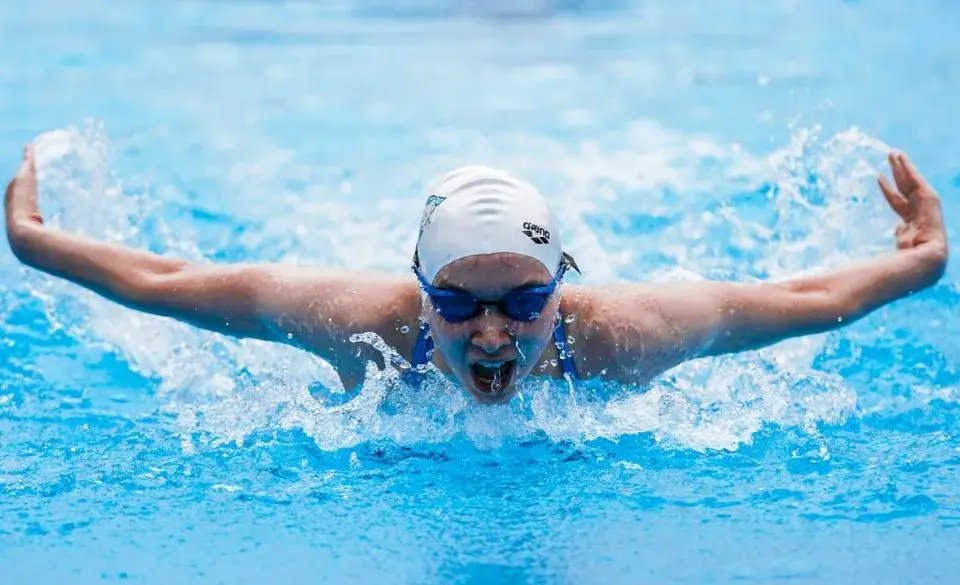
- Butterfly: lats, chest, shoulders, abs, quads
- Backstroke: upper back, hamstrings, glutes
This variety matters. Changing up strokes keeps your muscles adapting and growing.
Another big plus? Swimming builds muscular endurance and strength at the same time. While you won’t bulk up like a bodybuilder, you’ll develop swimming for lean muscle growth that’s functional and balanced.
If you’ve ever seen an Olympic swimmer’s body (think broad shoulders, powerful legs, and sculpted backs) you’ve already seen what’s possible.
What Muscles Does Swimming Target the Most?
Swimming may feel smooth, but don’t let that fool you. It’s a serious workout. When done correctly, it activates nearly every major muscle in your body. If you’re aiming to get stronger and more defined, knowing exactly what’s being worked can help you swim smarter.
Let’s break it down.
Each stroke uses a combination of upper body, lower body, and core muscles. But certain strokes hit specific areas harder.
- Freestyle (front crawl): shoulders, triceps, back, core, glutes
- Breaststroke: chest, biceps, inner thighs, hamstrings
- Butterfly: lats, shoulders, chest, abs, quads
- Backstroke: upper back, glutes, hamstrings
That means swimming doesn’t just build one muscle group. It develops a balanced, athletic frame from top to bottom. You’ll notice better posture, a stronger core, and increased muscle tone, especially if you’re swimming with purpose and intensity.
Now here’s something not everyone talks about: the eccentric phase in swimming. That’s the part of a movement where muscles lengthen under tension. In swimming, your muscles don’t just contract, they stretch and pull through water resistance. That creates excellent conditions for swimming for lean muscle growth, especially in the shoulders, lats, and core.
You also train stabilizer muscles you might overlook in the gym. For example:
- Your rotator cuff stabilizes the shoulder in freestyle and backstroke.
- Your hip flexors help drive strong kicks.
- Your deep core keeps you aligned in the water.
And because swimming is non-weight bearing, you can train these muscles often without overloading your joints.
Whether you're pacing toward your first 5K or aiming to smash a marathon PR, check out our Running Training Plans. These structured plans are designed to match your goal, experience level, and available training time.
- ✅ Goal-specific plans for distances like 5K, 10K, half marathon, marathon
- ✅ Balanced weekly progression with recovery and intensity built-in
- ✅ Pacing advice, nutrition guidance, and taper strategy included
💡 Ideal for runners at all levels who want a clear, no‑guesswork path to race day success.
Explore Plans & Start Running Stronger →

Which Swim Strokes Build the Most Muscle?
Not all swim strokes are created equal. If you’re swimming to build strength and definition, choosing the right strokes matters a lot.
Here’s the thing: each stroke activates different muscles and requires a unique movement pattern. That means the best stroke for muscle gain depends on what areas you want to target most.
Let’s compare.
- Butterfly stroke is by far the most intense. It requires explosive power from your upper body, especially the shoulders, chest, and back. It also activates your abs and quads with every dolphin kick. If you’re after a full-body challenge, butterfly delivers.
- Freestyle (front crawl) is the most commonly used stroke and a solid choice for overall muscle development. It works your triceps, lats, glutes, and core consistently. Because it’s efficient and sustainable, it’s ideal for building lean muscle mass over time.
- Breaststroke might feel gentler, but don’t underestimate it. It targets your inner thighs, hamstrings, and chest while improving control and timing. It’s great for building lower-body tone and upper chest definition.
- Backstroke emphasizes your upper back, glutes, and hamstrings. It also improves posture and core stability while giving your shoulders a break from the intense front-facing strokes.
So, which stroke is best?
If your goal is to build muscle evenly across your body, vary your strokes. Mixing in butterfly, freestyle, and backstroke can give you maximum coverage. Aim to include at least two different strokes in each swim session.
For beginners, freestyle is the most manageable place to start. As you build skill and endurance, add short sets of butterfly or breaststroke to your routine. Over time, this variety improves your muscle tone and overall swimming performance.
If you’re looking to strengthen key muscles and prevent shoulder strain while increasing power, dive into our article on Shoulder Exercises for Swimmers. A swimmer-focused strength guide to build support and endurance.
Looking for faster results? Look for a swimming workout plan for muscle gain that alternate between power-focused sets and technique drills.


How Often Should You Swim to Build Muscle?
Here’s the question almost every swimmer asks at some point: How many times a week do I need to swim to see muscle gains?
The answer depends on your goals, experience, and intensity. However, there are clear guidelines that work for most people.
If you’re aiming to build muscle mass, consistency matters more than volume. Swimming 3 to 4 times per week is ideal for results without burnout. This gives your body enough time to recover while still challenging muscles regularly with water resistance.
Each session should be 30 to 60 minutes of purposeful training. That means:
- Using strokes that target different muscle groups
- Including drills that focus on power and form
- Swimming at moderate to high intensity for at least part of the workout
One of the most effective ways to build muscle in the water is to use interval training. For example:
- 4×100 meters freestyle at high effort, with 30 seconds rest between
- Kickboard sets to isolate and challenge your legs
- Pull buoy sets to focus on upper body power
These are simple, effective, and don’t require extra gear beyond what most pools already offer.
Want to speed up progress? Add resistance tools like paddles, drag shorts, or ankle bands. These increase tension and force your muscles to work harder without adding impact on your joints.
Now let’s talk recovery. Muscles grow when they rest, not just when they work. That’s why you shouldn’t swim hard every day. Schedule at least one full rest day or an easy swim focused on technique and mobility.
If you’re just starting out, ease in with 2 sessions a week and build from there. As your body adapts, swimming more frequently will feel natural, not exhausting.

Can Swimming Replace the Gym for Muscle Building?
Let’s settle a popular debate: can swimming replace gym workouts if your goal is to build muscle?
The honest answer? Yes—to a point.
Swimming is a powerful tool for building lean, athletic muscle, especially for your upper body, core, and posterior chain. If you swim regularly with proper form and intensity, you’ll gain strength and muscle definition, particularly in areas like your shoulders, back, arms, and legs.
But here’s the catch: swimming doesn’t provide the same progressive overload that weightlifting does. In the gym, you can gradually increase resistance by adding weight. In the pool, resistance comes from water and drag. Both of which are constant unless you add tools like paddles, resistance bands, or increase speed.
This means if your main goal is hypertrophy (big muscle gains), swimming alone won’t get you there. However, if you’re after functional muscle, increased endurance, and a strong, toned physique. Swimming is more than enough.
Here are a few pros of replacing gym time with pool time:
- Lower impact on joints (great for injury prevention)
- Works multiple muscle groups at once
- Improves mobility, posture, and core strength
- Builds both muscle and cardiovascular fitness together
Now for the cons:
- Limited lower-body overload without gym support
- Harder to isolate specific muscles
- Slower hypertrophy response compared to strength training
The best approach? Combine the two. Swim for full-body resistance and endurance. Lift weights to target specific areas, boost bone density, and apply progressive overload.
If you don’t enjoy the gym, that’s okay. Many people build muscle and stay fit with just bodyweight exercises and swimming. The key is staying consistent and challenging your body in different ways.
You don’t have to choose one or the other. Blend both for the best of strength, flexibility, and stamina.
Curious about applying the principle of progressive overload while swimming? Check out our in-depth guide on Overload in Fitness: What Does It Really Mean? for strategies that work whether you’re in the pool or on land.


Sample Weekly Swimming Plan for Muscle Gain
You don’t need to swim every day to build muscle. What you do need is structure. A smart weekly plan that includes stroke variety, intervals, and recovery will help you gain lean muscle while avoiding burnout.
Below is a sample swimming workout plan for muscle gain. You can adjust the intensity, distance, or rest intervals based on your current fitness level.
👉 Swipe to view full table
| Day | Focus | Main Set | Muscles Targeted |
|---|---|---|---|
| Monday | Upper Body Strength | 6x100m freestyle at moderate to hard pace using pull buoy. 30s rest between sets. | Shoulders, lats, triceps, core |
| Tuesday | Lower Body Power | 8x50m kickboard sprints. Focus on explosive kicks. 45s rest between efforts. | Glutes, hamstrings, calves, hip flexors |
| Wednesday | Recovery & Technique | 20-minute continuous swim using mixed strokes. Focus on relaxed form and breathing. | Full-body light activation and recovery |
| Thursday | Full Body Endurance | 3x200m alternating butterfly and freestyle. Rest 1 min between rounds. | Back, shoulders, core, quads, chest |
| Friday | Core & Stroke Drills | Drill work + 6x25m underwater dolphin kicks with fins. Emphasize body control. | Abs, hip flexors, obliques, spine stabilizers |
| Saturday | Optional Open Swim | Swim 1,000–1,500m at your own pace. Mix strokes and include a few fast intervals. | Varies—ideal for stroke balance and active recovery |
| Sunday | Rest Day | No swim session. Focus on hydration, mobility, and rest. | Muscle repair and full recovery |
This kind of weekly structure helps balance high-effort swim sets with active recovery. It also ensures that every major muscle group gets targeted and trained.
To get the most from a plan like this:
- Track your rest times and pace
- Add resistance tools 1–2 times a week
- Focus on good form and consistent effort
Even small changes, like increasing stroke tempo or adding intervals, can help break plateaus and spark new muscle growth. Rotate in different strokes each week to keep challenging your body in fresh ways.
Whether you're aiming for your first Ironman finish or chasing a new personal best, check out our Ironman Triathlon Training Plans. These comprehensive, goal-specific plans are crafted by expert coaches to guide your swim–bike–run journey with structure and clarity.
- ✅ Phased training covering swim, bike, and run progression
- ✅ Built-in recovery, taper strategies, and race‑day readiness
- ✅ Nutrition and pacing guidance tailored to full-distance endurance
💡 Perfect for triathletes at any level looking for a structured, fully integrated Ironman training solution.
Explore Plans & Start Your Ironman Journey →

How Swimming Changes Your Body Composition
You might not notice it at first, but after a few weeks in the pool, your body starts to shift. And no, it’s not just about losing fat. Swimming improves body composition by increasing muscle tone while reducing excess weight, especially around the midsection and upper back.
The resistance from water forces your muscles to work harder than they would on land. Over time, this builds denser, more functional muscle, not bulky mass. You’ll look leaner, feel tighter, and move with more strength and control.
One big advantage? Swimming works both fast-twitch and slow-twitch muscle fibers. The fast ones are used in powerful strokes and sprints—great for strength. The slow ones kick in during long, steady swims (great for endurance and fat-burning). This combo helps improve your overall muscle quality and metabolism.
Another benefit: swimming doesn’t just change how you look. It changes how you move. As your muscles become more balanced, your posture improves. Your shoulders open up. Your core stabilizes your spine. Your back straightens. These physical changes help prevent injury and support better performance in other sports or daily life.
Here’s what consistent swimming can do:
- Reduces body fat, especially around the belly and hips
- Improves lean muscle mass without joint strain
- Increases flexibility and range of motion
- Boosts metabolism by training multiple systems at once
- Improves posture by strengthening back and core muscles
So if you’ve been wondering, “Can swimming tone your body?”absolutely. With regular sessions and smart training, swimming can reshape your body from head to toe.
To learn more about overall fitness benefits like improved lung function and endurance, see our post on 35 Benefits of Exercise, which highlights how swimming supports cardiovascular health and stamina while reshaping your body.
Want to understand how swimming boosts overall fitness, like strength, endurance, mobility, and posture? Check out our guide on 10 Components of Physical Fitness Explained Simply for a clear breakdown of how each element works together to support muscle tone and body shape.


Final Thoughts: Muscle, Movement, and the Power of the Pool
Here’s the truth: You don’t need to lift weights to get strong. The water is its own gym. It resists, it supports, and it challenges you in ways that dry land never can.
If you’re consistent, focused, and intentional, swimming can absolutely build muscle mass, improve your posture, and reshape your body from the inside out. It offers a full-body workout that strengthens not just your muscles, but your mind and lungs too.
You might start swimming to tone up. But along the way, you’ll notice more—confidence, control, and even a little peace. There’s something powerful about moving through water with purpose.
So whether you’re replacing the gym, supplementing it, or just dipping your toe into something new, know this:
- You can build strength.
- You can change your body.
- And yes, you can do it through swimming.