






Find Your Next Running Race
Ready to put your training to the test? Here are some upcoming running events matched to this article.
 Coach Graeme

Last updated:
You do not need to be fit to start running. You just need a plan that meets you where you are. The Couch to 5K running plan is the most proven way for complete beginners to go from no running at all to completing 5 kilometres in about 8 weeks.
This guide gives you a full 8-week plan with walk/run intervals, practical tips for getting started, advice for running when you are overweight, and a clear path forward once you hit 5K. Whether you have never run a step or you are returning after years away, this plan is built for you.
Not sure where to start with training?
Tell us your goal and schedule, and we’ll give you clear direction.
No obligation. Quick, practical advice.
Explore our running fitness resources for more helpful articles and resources.
Yes. The whole point of the Couch to 5K program is that it starts where you are, not where you think you should be. It was originally designed in 1996 by Josh Clark specifically to help people who had never run before ease into it without burnout or injury.
If you can walk for 20 to 30 minutes, you can start this plan. The first week involves more walking than running, and the running intervals are just 60 seconds long. You build up gradually from there.
It does not matter how old you are, how heavy you are, or how long it has been since you last exercised. Thousands of people in their 40s, 50s, 60s, and beyond have completed Couch to 5K. The plan works because it respects your body’s need to adapt slowly rather than throwing you into the deep end.
The only thing that matters is consistency. Three sessions a week. Show up, follow the plan, and trust the process. You will surprise yourself.
One of the best things about running is how little you need to get going. Do not let gear or preparation become a barrier.
Comfortable shoes. You do not need expensive running shoes to start. Any comfortable, supportive pair of trainers or sneakers will do for the first few weeks. Once you know you enjoy running and plan to continue, investing in a proper pair of running shoes fitted at a specialist store is worthwhile.
A route. Your neighbourhood footpaths, a local park, an oval, or even a treadmill. Anywhere flat and safe to walk and run is fine. You do not need a track or a trail.
Comfortable clothing. Whatever you can move freely in. Avoid cotton if possible as it holds sweat and can cause chafing. Moisture-wicking fabrics are more comfortable but not essential to start.
A way to track time. A phone, a basic watch, or a free Couch to 5K app. You need to time your walk and run intervals but you do not need a GPS watch or heart rate monitor.
That is it. No gym membership, no equipment, no special fitness level. Just the decision to start.
This plan has three sessions per week with at least one rest day between each session. Every session starts with a 5-minute brisk walk to warm up and ends with a 5-minute walk to cool down. The times listed below are for the main workout only.
👉 Swipe to view full table
| Week | Session Structure | Total Running Time |
|---|---|---|
| 1 | Alternate 1 min run / 2 min walk × 8 | 8 minutes |
| 2 | Alternate 90 sec run / 90 sec walk × 8 | 12 minutes |
| 3 | Alternate 2 min run / 1 min walk × 8 | 16 minutes |
| 4 | Alternate 3 min run / 1 min walk × 6 | 18 minutes |
| 5 | Alternate 5 min run / 1 min walk × 4 | 20 minutes |
| 6 | Alternate 8 min run / 1 min walk × 3 | 24 minutes |
| 7 | Run 15 min, walk 1 min, run 10 min | 25 minutes |
| 8 | Run 30 minutes continuously | 30 minutes (approx. 5K) |
Important: Run at a conversational pace. If you are gasping for air, you are going too fast. Slow down. It should feel like a gentle jog, not a sprint. Most beginners run too fast in the early weeks and then feel exhausted and discouraged. Slower is smarter.
If a week feels too hard, repeat it. There is absolutely no shame in spending two weeks on the same stage. The plan is a guide, not a test. Listen to your body and progress when you feel ready, not when the calendar says so.
Coach’s tip: The run/walk method is not a crutch. It is a legitimate training tool used by runners at every level, including marathon runners. The walking intervals allow your body to recover between efforts, which means you can run for a longer total time without breaking down. Trust the process.
The first few weeks of running can feel awkward, uncomfortable, and slow. That is completely normal. Here is what will help you stick with it.
Slow down more than you think you need to. Your running pace should feel embarrassingly slow. If someone walked past you quickly, that is fine. Speed comes later. Right now you are building the habit and teaching your body to handle the impact of running.
Do not compare yourself to anyone. Not to other runners in the park, not to your friend who runs 10K, not to the version of yourself that was fitter ten years ago. You are starting from where you are today and that is enough.
Consistency beats intensity every single time. Three easy sessions per week will do more for your fitness than one hard session followed by a week on the couch. Showing up regularly is the most important thing you can do.
Rest days are not optional. Your body gets stronger during rest, not during the run. Running every day as a beginner is a fast track to injury and burnout. Respect the rest days in the plan.
Expect some discomfort. Mild muscle soreness in your calves, quads, or shins after your first few sessions is normal. Sharp pain that gets worse as you run is not. If something hurts beyond normal soreness, take an extra rest day. If it persists, see a physiotherapist before pushing through it. Read more in our injury prevention guides.
Warm up every time. The 5-minute brisk walk at the start of each session is not optional. It gets blood flowing to your muscles and prepares your joints for the impact of running. Skipping the warm-up is one of the most common causes of early injury in new runners.
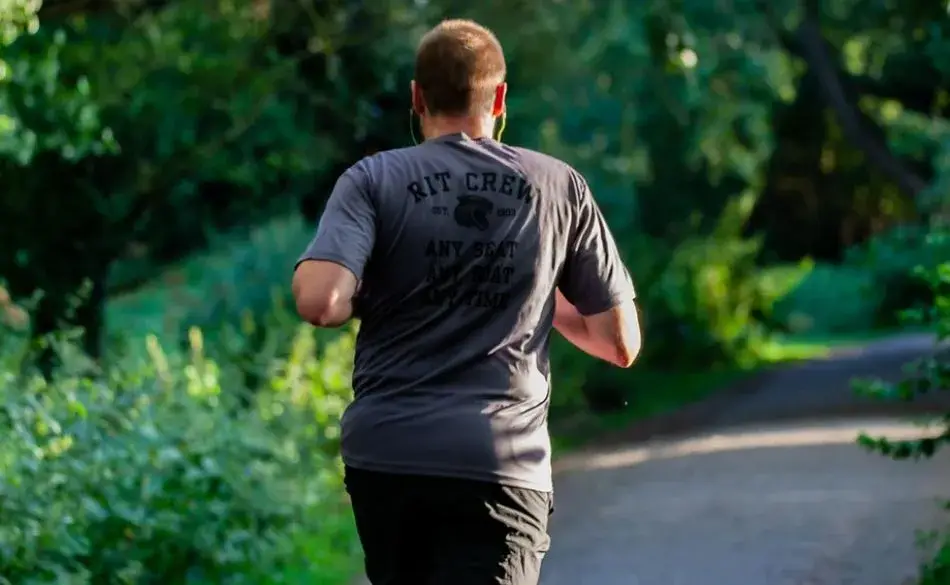
If you are carrying extra weight and thinking about starting to run, you are not alone, and you are absolutely able to do this. Many of the most inspiring Couch to 5K stories come from people who started their journey above their ideal weight.
There are a few adjustments that can make the process more comfortable and safer:
Start with more walking. If the week one intervals feel too hard, begin with just walking for two to three weeks. Build up to brisk 30-minute walks before introducing any running intervals. There is no rush.
Extend the plan. Instead of 8 weeks, give yourself 10 or 12 weeks. Repeat any week that feels challenging. Slower progression means less stress on your joints and a lower risk of injury.
Pay attention to your knees and ankles. Carrying extra weight puts more load on your joints during running. If you feel joint pain rather than muscle soreness, add more walking intervals or take an extra rest day. Strengthening exercises for your glutes, quads, and calves can also help support your joints.
Choose soft surfaces when possible. Grass, trails, or a treadmill are easier on your joints than concrete footpaths. If a treadmill feels more comfortable and private, that is a perfectly valid place to do the entire plan.
Invest in good shoes early. Supportive shoes make a bigger difference when you are carrying more weight. Visit a running shoe specialist for a fitting if you can.
Focus on the achievement, not the pace. You are running. That is what matters. Your pace will naturally improve as your fitness builds and your weight changes. For now, just keep showing up.
Coach’s tip: Working with a running coach is especially valuable if you are starting from a higher weight. A coach can adjust your plan week by week based on how your body responds, manage your progression safely, and give you the confidence that you are doing the right things at the right time.
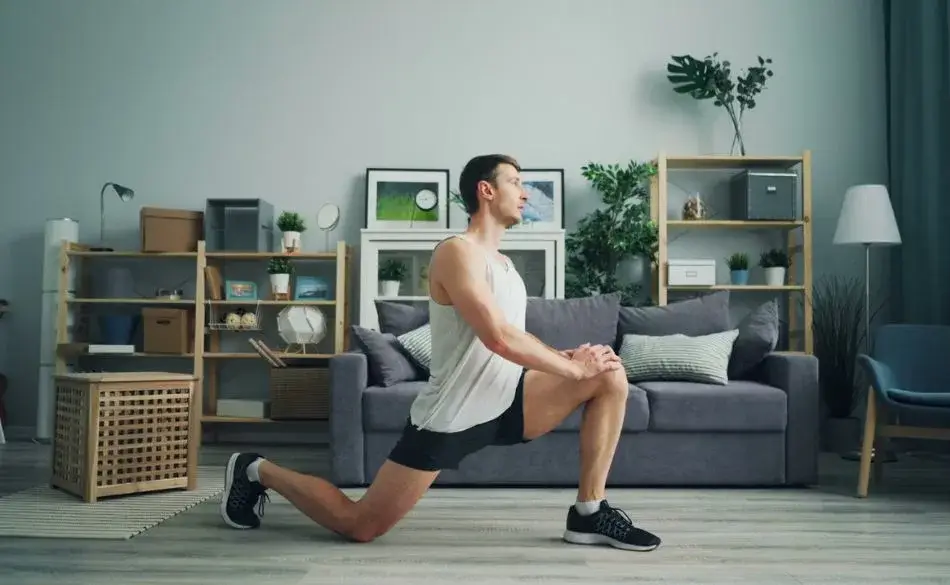
Adding two short strength sessions per week alongside your Couch to 5K plan helps prevent injury and makes running feel easier faster. This does not mean joining a gym. Bodyweight exercises at home are enough.
Focus on: squats, lunges, glute bridges, calf raises, and planks. These strengthen the muscles that support your knees, hips, and ankles during running. Fifteen minutes, twice a week, is all you need.
Strength work is especially important for new runners because your cardiovascular fitness often improves faster than your muscles, tendons, and joints can keep up. Building strength alongside your running gives your body the support it needs to handle the increasing demands of the plan.
Completing Couch to 5K is a genuine milestone. You went from not running to covering 5 kilometres. That deserves to be celebrated. But it is also just the beginning of what running can offer you.
Try a parkrun. Parkrun is a free, weekly, timed 5K event held every Saturday morning at hundreds of locations across Australia. It is welcoming to all abilities, from walkers to competitive runners. It is the perfect first event after finishing Couch to 5K and a great way to become part of the running community.
Build towards a 10K. If you enjoyed the structure of Couch to 5K and want to keep progressing, a 10K training plan is the natural next step. The jump from 5K to 10K uses the same gradual approach you have already experienced.
Keep running three times a week. Even if you do not have a race or a goal, maintaining three runs a week keeps your fitness, your mental health benefits, and your running habit intact. Easy running with no pressure is still valuable running.
Consider a running coach. If you enjoyed the structure of the Couch to 5K plan and want someone to build your next training block around your life, your goals, and your body, a running coach takes all the guesswork out of what comes next.
You might think coaching is only for fast or competitive runners. It is not. In fact, beginners are often the runners who benefit the most from coaching because the early months are when habits form, mistakes happen, and injuries are most likely.
A running coach gives you:
Accountability. Someone who checks in on your progress and adjusts your plan when life gets in the way. This alone keeps more beginners running than any app or generic plan.
Personalised progression. A generic Couch to 5K plan is the same for everyone. A coach adjusts your plan based on how your body responds, your schedule, your fitness level, and your goals. If a week was too hard, they scale it back. If you are flying, they progress you faster.
Injury prevention. New runners make predictable mistakes: too much too soon, no rest days, poor form. A coach catches these before they become problems.
Confidence. Knowing that your plan was built specifically for you and that someone experienced is guiding you makes a real difference to how you feel about running. You stop wondering if you are doing it right and just focus on showing up.
The hardest part of running is starting. At SportCoaching, we build beginner running plans around your fitness level, your schedule, and your goals. Every week is adjusted based on how your body responds, so you progress at exactly the right pace. No lock-in contracts. No guesswork. Just a plan that works for you.
If you want personalised support from day one, running coaching provides structured training, ongoing guidance, and the accountability to help you go from the couch to the finish line.
Get your Couch to 5K planHow long does Couch to 5K take?
The standard plan takes 8 weeks with three sessions per week. However, many runners take 10 to 12 weeks by repeating weeks that feel challenging. There is no set deadline. Take the time your body needs and progress when you feel ready.
Is Couch to 5K good for weight loss?
Running burns calories and builds fitness, which can support weight loss when combined with a balanced diet. However, exercise alone is often not enough to lose weight significantly. The biggest benefits of Couch to 5K for most people are improved energy, mood, sleep, and cardiovascular health. Weight loss may follow as a bonus, but it should not be the only reason you start.
Can I do Couch to 5K on a treadmill?
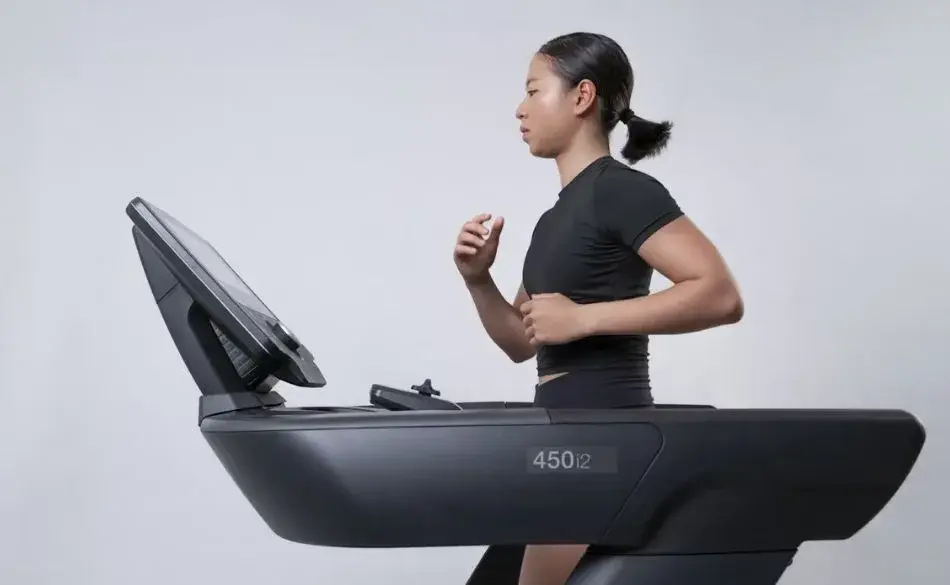
Yes. Treadmill running is a perfectly valid way to complete the plan. It offers a controlled, weather-proof environment and lets you set your pace precisely. Set the incline to 1 percent to better simulate outdoor running. If your goal is to eventually run outdoors or at a parkrun, try to include at least one outdoor session per week in the later weeks of the plan.
What if I cannot run for 60 seconds in week one?
Start with walking only. Build up to brisk 30-minute walks three times a week, then try the week one intervals. If 60 seconds of running is too much, try 30 seconds of running with longer walking breaks. There is no wrong starting point. The plan adapts to you.
Do I need to run the full 5K before race day?
No. Most Couch to 5K plans peak at about 30 minutes of continuous running, which is roughly 4 to 5 kilometres depending on your pace. The adrenaline and atmosphere of a race or parkrun will carry you the rest of the way. You do not need to prove you can do it in training first.
Ready to put your training to the test? Here are some upcoming running events matched to this article.
Head Coach & Founder, SportCoaching
Graeme is the founder of SportCoaching and has coached more than 750 athletes from 20 countries, from beginners to Olympians, in cycling, running, triathlon, mountain biking, boxing, and skiing. His coaching philosophy and methods form the foundation of SportCoaching's training programs and resources.
No matter your goals, SportCoaching offers tailored training plans to suit your needs. Whether you’re preparing for a race, tackling long distances, or simply improving your fitness, our expert coaches provide structured guidance to help you reach your full potential.
Smart, progressive training from 5km to marathon with weekly guidance.
What’s included
Browse upcoming Australian running, cycling, and triathlon events in one place. Filter by sport, check dates quickly, and plan your training around something real on the calendar.
Choose your plan to get started with personalized training plans designed to help you reach your goals.
Get consistent feedback, ongoing plan adjustments, and direct support from a coach who understands your training, your data, and your goals.
Prefer to chat? Talk with a coach now →


Minna Backman
When you’re new, feedback is especially important, and Graeme is highly skilled at both analyzing numbers and understanding the importance of mental strength.