

Want help turning consistency into progress? Coaching keeps your training simple, structured, and sustainable.
Start Coaching →
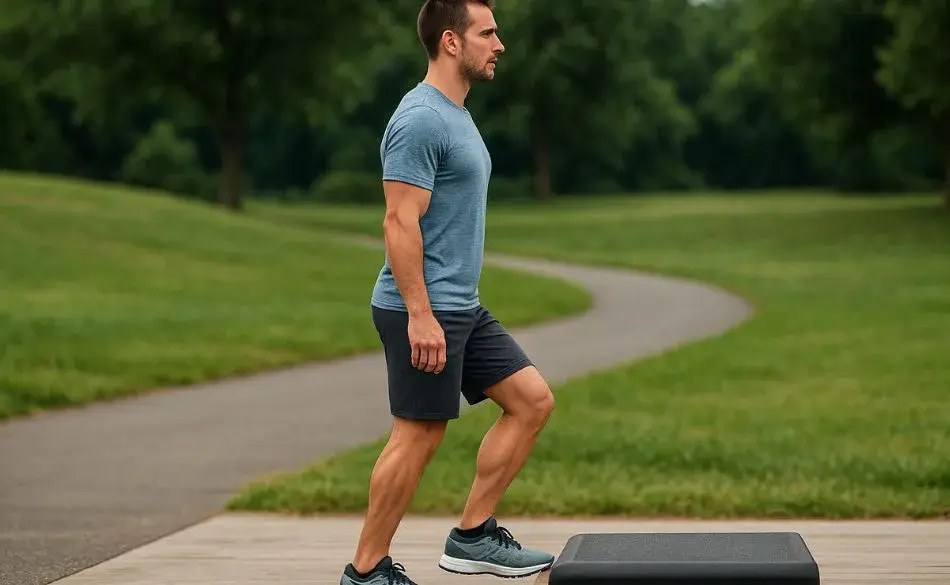
A running doing eccentric heel drops outside before heading out for a run.

Last updated:

Eccentric Heel Drops for Runners: Technique, Protocol & Progression

If your Achilles aches in the morning, tightens during runs, or has been stopping you from training altogether, eccentric heel drops are likely the first thing a physio will prescribe — and for good reason. This single exercise has more research behind it than almost any other tendon rehabilitation method.

This guide covers why eccentric heel drops work, how to perform them correctly, the full Alfredson protocol, how to progress safely, and how to use them for long-term injury prevention — not just rehab.

Chat with a SportCoaching coach

Not sure where to start with training?

Tell us your goal and schedule, and we’ll give you clear direction.

No obligation. Quick, practical advice.

Article Categories:

Explore our running training articles for more helpful articles and resources.

Quick Answer

Eccentric heel drops are the most evidence-backed exercise for treating and preventing Achilles tendinopathy in runners. Stand on a step, rise on both feet, then slowly lower on one foot over 3–5 seconds. The standard Alfredson protocol is 3×15 reps, twice daily, for 12 weeks — both straight-knee and bent-knee versions. Most runners see significant pain reduction by weeks 6–8 and can return to running with a gradual walk-run protocol.

Why Eccentric Heel Drops Work

When you slowly lower your heel below a step, your Achilles tendon and calf muscles work under tension while lengthening. This is called eccentric loading — and it’s fundamentally different from a standard calf raise, where the muscle shortens under load (concentric).

Eccentric loading triggers a process called collagen remodelling. The disorganised tendon fibres that cause pain and stiffness gradually realign into stronger, more organised structures. Over weeks of consistent loading, the tendon becomes better at absorbing and releasing energy — which is exactly what it needs to do with every running stride.

Research supports this strongly. A study published in PeerJ found that after performing eccentric heel drops, Achilles tendon stiffness and gastrocnemius muscle stiffness increased significantly — demonstrating how mechanical load immediately changes tissue properties.

You’ll feel the work primarily in the gastrocnemius (the larger calf muscle, targeted with a straight knee) and the soleus (the deeper calf muscle, targeted with a bent knee). Both attach into the Achilles, and both need to be strong for healthy running.

How Tendon Adaptation Progresses

👉 Swipe to view full table

Phase What's Happening What You'll Notice
Weeks 1–2 Increased blood flow, early tendon stimulus Mild soreness after sessions, some morning stiffness
Weeks 3–6 Collagen fibres begin realigning Pain reduces, load tolerance improves
Weeks 7–12 Tendon stiffness and elasticity increase Stronger push-off, less post-run discomfort
Weeks 12+ Mature remodelling, improved force transfer Return to full training, better running economy

How to Do Eccentric Heel Drops Correctly

The movement looks simple, but the details matter. Rushing the lowering phase, bouncing at the bottom, or using momentum removes the eccentric benefit and can irritate the tendon.

Step-by-Step Technique

Stand on the edge of a step with your heels hanging off the back. Hold a wall or railing for balance. Rise up on both feet so your heels are lifted (this is the concentric phase — use both legs to make it easy). Shift your weight onto the working leg. Slowly lower your heel below the step over 3–5 seconds — this is the eccentric phase, and it’s the part that matters most. Use your other foot to help you rise back up. Repeat.

Straight-Knee Version (Gastrocnemius)

Keep your working leg straight throughout the lowering phase. This targets the gastrocnemius — the larger calf muscle responsible for explosive push-off during running.

Bent-Knee Version (Soleus)

Bend your working knee slightly (about 20–30 degrees) as you lower. This shifts the load onto the soleus — the deeper calf muscle that provides endurance support during sustained running effort.

Both versions should be performed in each session. The exercise should feel like a stretch with mild discomfort — not sharp pain. If you feel a stabbing sensation, reduce the range of motion or perform the movement on flat ground instead of a step.

The Alfredson Protocol: The Gold Standard

The eccentric heel drop protocol was developed by Swedish researcher Håkan Alfredson in 1998. His landmark study used 30 recreational runners with chronic mid-portion Achilles tendinopathy — all of whom had failed to improve with rest, anti-inflammatories, physio, and orthotics. The results were striking: the eccentric exercise group returned to activity at the same level as the surgical group, without going under the knife.

The Protocol

3 sets of 15 reps, straight-knee (gastrocnemius). 3 sets of 15 reps, bent-knee (soleus). Twice daily — morning and evening. For 12 weeks. That’s 180 heel drops per day. It sounds like a lot, and it is — but the principle is steady, repeatable stimulus. Tendons respond best to consistent loading rather than occasional heavy sessions.

Does Everyone Need 180 Reps?

Not necessarily. The Alfredson protocol was designed for research consistency. In practice, many physios and coaches (myself included) start runners at lower volumes — 2×10 per leg, once daily — and build up based on tolerance. A marathon runner with years of training history may need more volume than a recreational jogger. The principle stays the same: controlled eccentric loading, progressed gradually.

Mid-Portion vs Insertional Achilles Tendinopathy

The original Alfredson protocol was designed for mid-portion tendinopathy (pain in the middle of the tendon, 2–6cm above the heel). For insertional tendinopathy (pain at the heel bone), the standard heel drop over a step can compress the tendon against the bone and make things worse.

The modification for insertional tendinopathy: perform the heel drops on flat ground rather than over a step. Lower only to floor level — don’t drop below it. This avoids the compression that aggravates the insertion point. Research shows a lower success rate for insertional cases (around 32% vs 80%+ for mid-portion), so patience and sometimes additional treatment are needed.

Common Mistakes to Avoid

Lowering too fast. The eccentric phase should take 3–5 seconds. If you drop quickly, you lose the loading benefit entirely. Slow, controlled movement is what drives tendon adaptation.

Bouncing at the bottom. This adds unnecessary stress and breaks the smooth tension needed for remodelling. Lower to the bottom, pause briefly, then use both feet to rise.

Doing too much too soon. Starting with the full Alfredson volume on day one often causes a flare-up. Begin with lower reps, assess your pain response over 24–48 hours, and increase gradually.

Skipping the bent-knee version. Many runners only do straight-knee heel drops, which misses the soleus. Both muscles need loading for complete Achilles rehabilitation.

Stopping when the pain goes away. This is the most common mistake I see in runners I coach. The pain often resolves before the tendon is fully remodelled. Stopping at week 6 because you feel fine leaves you vulnerable to re-injury when training load increases.

Ignoring sharp pain. Mild discomfort during the exercise is expected. Sharp, stabbing pain is not. If you experience it, reduce range of motion, drop to flat ground, or consult a physio.

Progressing Beyond Bodyweight

Once you can complete the protocol pain-free with bodyweight for two consecutive weeks, it’s time to add load. Progressive overload is how tendons get stronger — the same principle that drives running fitness.

Start with a small dumbbell or a backpack with a few kilograms. Increase load by roughly 5–10% per week, provided pain stays below a 3/10 on a simple pain scale. Reduce reps as load increases — quality matters more than volume at this stage.

One of my athletes, Sam, started with bodyweight heel drops and couldn’t jog without pain. After four weeks of consistent loading, we added 5kg via a backpack. By week 10, he was doing weighted single-leg drops with 12kg and had returned to easy running. Three months later, he completed a half marathon pain-free. The key was patience — he never rushed a single phase.

Progression Sequence

Bodyweight double-leg rise, single-leg lower (weeks 1–4). Add light load — 3–5kg (weeks 5–8). Increase load to 8–15kg, reduce reps to 2×10 (weeks 9–12). Introduce single-leg eccentric calf raises for advanced loading. Add plyometrics (hopping, bounding) only once pain-free under load for 2+ weeks.

Returning to Running

Heel drops rebuild tendon strength, but returning to running requires its own progression. Starting too soon or too fast is the most common reason runners re-aggravate Achilles pain after rehab.

A safe return-to-running protocol starts with walk-run intervals on flat ground. For example: 1 minute run, 2 minutes walk, repeated for 20 minutes. If pain stays below 3/10 during and in the 24 hours after, increase the run intervals by 30 seconds per session every 3–4 days.

Avoid hills, speedwork, and long runs until you can comfortably run 30 minutes continuously without pain. Add these back one at a time — hills first, then tempo efforts, then longer distances. Most runners reach full training capacity by weeks 12–16 from starting the heel drop protocol, depending on severity.

For a broader look at what causes Achilles pain during running and how to address it, see our guide on why your Achilles hurts when you run.

Performance Benefits for Healthy Runners

Eccentric heel drops aren’t just for injured runners. For healthy athletes, they’re one of the most underrated tools for improving running economy and preventing future problems.

Your Achilles tendon stores and releases energy like a spring with every stride. The stiffer and stronger that spring, the less energy you waste during push-off. Runners who consistently perform eccentric calf work often report lighter foot strikes, smoother acceleration on hills, and less fatigue in the final kilometres of long runs.

Many elite coaches now include eccentric work during base and strength phases — not as rehab, but as performance programming. Even 2–3 sets of 10–15 reps, twice per week, can improve force transfer efficiency and reduce your risk of Achilles, calf, and plantar fascia issues.

For more ways to strengthen your lower legs, see our guides on best calf exercises for runners and leg exercises for runners. For mobility work that supports healthy ankles and calves, try our 10 mobility exercises for runners.

Long-Term Maintenance

Once you’re pain-free and back to full training, don’t stop. The runners who stay injury-free are the ones who keep eccentric work in their routine permanently.

A simple maintenance programme: 2–3 sets of 10–15 slow reps, twice per week, after an easy run or during a strength session. Vary between straight-knee and bent-knee. Add light load periodically to maintain the stimulus. This takes less than five minutes and protects against the gradual tendon weakening that comes with high training volume.

Think of it like brushing your teeth — small, consistent, non-negotiable. Many of the athletes I coach who’ve had Achilles issues in the past haven’t had a recurrence since making heel drops a permanent habit.

If calf tightness or soreness is still an issue during runs, read our article on calf pain when running for additional causes and solutions.

FAQ: Eccentric Heel Drops for Runners

How many eccentric heel drops should I do per day?

The standard Alfredson protocol prescribes 3 sets of 15 reps for both straight-knee and bent-knee versions, twice daily — totalling 180 reps per day. However, many runners start with lower volumes (2 sets of 10, once daily) and build up based on pain response. The key is consistent daily loading rather than hitting a specific number from day one.

Should eccentric heel drops hurt?

Mild discomfort during the exercise is normal and expected — it’s part of the tendon remodelling process. Pain up to about 3 out of 10 is generally acceptable. Sharp, stabbing pain is not normal and means you should reduce range of motion, switch to the flat-ground version, or consult a physiotherapist before continuing.

How long before eccentric heel drops work?

Most runners notice reduced pain by weeks 4–6 and significant improvement by weeks 8–12. Full tendon remodelling takes 12 weeks or longer. Stopping early because pain has reduced is the most common reason for relapse. Complete the full 12-week protocol even if you feel better sooner.

Can I run while doing eccentric heel drops?

In many cases yes, provided your Achilles pain stays below 3 out of 10 during and after running. Reduce your running volume and intensity, avoid hills and speedwork, and monitor pain in the 24 hours after each run. If pain increases, scale back running until the tendon tolerates more load from the heel drops.

What is the difference between mid-portion and insertional Achilles tendinopathy?

Mid-portion tendinopathy causes pain in the middle of the tendon, roughly 2–6cm above the heel bone. Insertional tendinopathy causes pain right at the heel bone where the tendon attaches. The standard heel drop over a step works well for mid-portion issues but can aggravate insertional problems. For insertional tendinopathy, perform heel drops on flat ground without lowering below floor level.

Need Help Getting Back to Pain-Free Running?

Our Running Coaching includes injury-informed training plans, return-to-running protocols, and weekly feedback from a coach who understands how to rebuild safely.

View Coaching →

Every Slow Rep Builds a Stronger Stride

Eccentric heel drops are simple, proven, and effective — whether you’re rehabbing an Achilles injury or preventing one. The protocol takes patience, but the payoff is a tendon that handles load, absorbs impact, and powers every stride with more confidence. Make them a permanent part of your routine and your Achilles will thank you for it.

Find Your Next Running Race

Ready to put your training to the test? Here are some upcoming running events matched to this article.

Graeme - Head Coach and Founder of SportCoaching

Graeme

Head Coach & Founder, SportCoaching

Graeme is the founder of SportCoaching and has coached more than 750 athletes from 20 countries, from beginners to Olympians, in cycling, running, triathlon, mountain biking, boxing, and skiing. His coaching philosophy and methods form the foundation of SportCoaching's training programs and resources.

750+
Athletes
20+
Countries
7
Sports
Olympic
Level

Start Your Fitness Journey with SportCoaching

No matter your goals, SportCoaching offers tailored training plans to suit your needs. Whether you’re preparing for a race, tackling long distances, or simply improving your fitness, our expert coaches provide structured guidance to help you reach your full potential.

  • Custom Training Plans: Designed to match your fitness level and goals.
  • Expert Coaching: Work with experienced coaches who understand endurance training.
  • Performance Monitoring: Track progress and adjust your plan for maximum improvement.
  • Flexible Coaching Options: Online and in-person coaching for all levels of athletes.
Learn More →

Choose Your Next Event

Browse upcoming Australian running, cycling, and triathlon events in one place. Filter by sport, check dates quickly, and plan your training around something real on the calendar.

View Event Calendar