



Find Your Next Running Race
Ready to put your training to the test? Here are some upcoming running events matched to this article.
 Coach Graeme

Last updated:
Underpronation — also called supination — is when the foot rolls outward during running rather than completing the normal slight inward roll after heel contact. It's significantly less common than overpronation, which means most shoe store advice and many online guides are written for overpronators. Underpronators have a different injury profile, different shoe needs, and different exercise priorities.
The most commonly repeated advice — buy "supination shoes" or "underpronation-specific footwear" — is also inaccurate. There are no shoes specifically designed for underpronators. They wear neutral running shoes. This guide covers what underpronation actually is, what causes it, the specific injuries it produces, the right approach to footwear, and the exercises that address the underlying causes rather than just the symptoms.
Not sure where to start with training?
Tell us your goal and schedule, and we’ll give you clear direction.
No obligation. Quick, practical advice.
Explore our running training resources for more helpful articles and resources.
Pronation is not a flaw — it’s a normal and necessary part of the running gait cycle. When the foot contacts the ground after the heel strike, the arch naturally compresses slightly and the ankle rolls inward. This inward roll distributes impact forces across a larger area, absorbs shock, and positions the foot for efficient push-off. Without adequate pronation, the foot is more rigid and impact is absorbed less effectively.
Underpronation means this inward roll is insufficient. Instead of distributing force across the mid-foot and eventually through the ball of the foot, the force remains concentrated on the outer (lateral) edge — the outer heel at contact, then tracking along the outer foot through push-off. The foot functions more as a rigid lever than a flexible shock absorber.
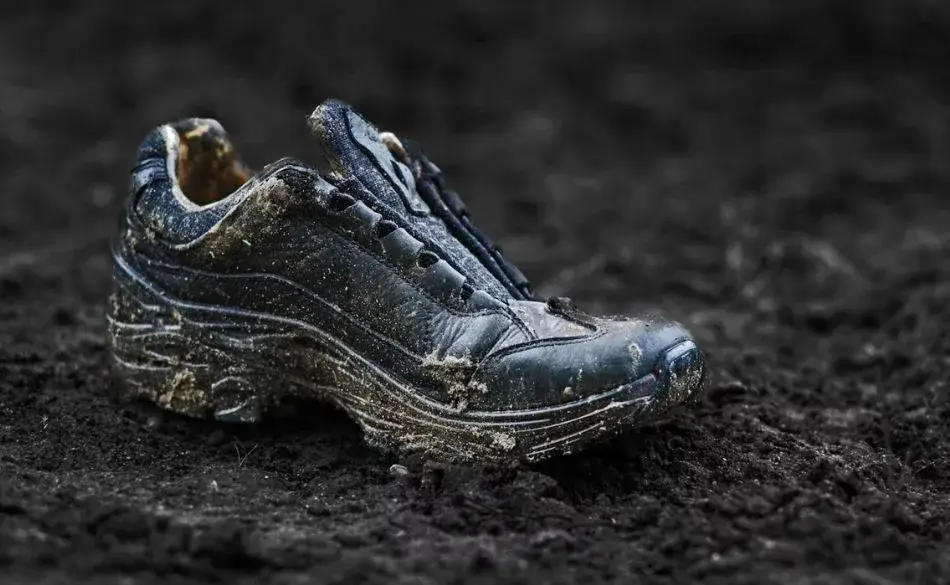
Some lateral loading at initial contact is completely normal — the outside of the heel contacts the ground first for most runners regardless of pronation type. The issue with underpronation is what happens after that initial contact: the normal inward roll is reduced or absent, so force never distributes efficiently across the foot. Shoe wear on the outer heel and outer forefoot — particularly under the 4th and 5th toes — is the most visible evidence of a supinated gait pattern.
A quick self-check: place your running shoes on a flat surface. If they tilt outward (the outer edge sits lower than the inner edge), underpronation is likely contributing to the wear pattern. This is the opposite of the inward tilt that overpronating shoes show. Underpronation is confirmed most accurately through gait analysis at a specialist running store or podiatry clinic, which assesses the actual movement pattern rather than inferring from shoe wear alone.
High arches — the primary structural cause. A high-arched foot is inherently more rigid than a lower-arched foot. The arch functions as a spring: when it compresses on contact, it absorbs energy; when it springs back, it assists propulsion. A high, rigid arch compresses less, which means the foot doesn’t flex enough to produce the normal inward roll after contact. Force stays on the outer edge because the arch doesn’t have the mobility to distribute it medially. High arches are largely structural — inherited foot anatomy — which means the arch itself can’t be meaningfully changed. The management strategy is compensating for reduced shock absorption through cushioning and strengthening the muscles that support the foot’s range of motion.
Tight calves and Achilles tendon. The Achilles tendon and calf complex control ankle dorsiflexion — the backward bending of the foot during the mid-stance phase of running. When these are tight, dorsiflexion is restricted, which limits how far the ankle can flex forward as the body passes over the foot. This restriction can force the foot to compensate by supinating — rolling outward — to get through the stride. Runner’s World notes the relationship is bidirectional: tight Achilles tendons can cause supination, and sustained supination increases tightness in the calves and Achilles over time. Breaking this cycle requires addressing the tightness directly through consistent stretching. Our calf exercises guide covers both the soleus and gastrocnemius stretching and strengthening that addresses this pattern.
Previous ankle sprains. Lateral ankle sprains — the common inversion injury where the foot rolls outward — leave behind ligament laxity, scar tissue, and altered proprioceptive function. A runner whose lateral ankle ligaments have been previously stretched or torn often develops a supinated gait pattern as the foot settles into the position of reduced resistance. This is one reason underpronation sometimes develops gradually in runners who previously had neutral mechanics.
Calf and ankle muscle weakness. The muscles responsible for controlling pronation — the tibialis posterior, peroneals, and calf complex — need adequate strength to guide the foot through the normal inward roll after contact. When these muscles are weak, the foot’s structural tendency (which in high-arched feet is to stay supinated) isn’t adequately overridden by active muscular control. Strengthening these muscles is one of the most direct interventions available.
Worn running shoes. Once the outer edge of a running shoe is worn down, it creates a lateral tilt that reinforces supination with every stride. Worn shoes actively worsen the pattern they developed from. Replacing running shoes before significant outer-edge wear develops — typically every 600–800km — prevents this reinforcement cycle.
The injury pattern from underpronation directly reflects the concentration of load on the outer foot and lateral lower leg. Each injury has a mechanical explanation:
| Injury | Mechanism in underpronators | Location |
|---|---|---|
| 4th/5th metatarsal stress fractures | Push-off stays on outer toes rather than distributing across the forefoot; repetitive loading on these small bones exceeds their remodelling capacity | Outer mid-foot, connecting 4th and 5th toes to foot |
| Fibula stress fracture | Lateral foot loading transmits force up the outer lower leg bone rather than through the tibia; less common but specific to supinators | Outer lower leg |
| Lateral ankle sprains | Supinated foot positioning places the ankle at greater inversion angle — closer to the sprain threshold with every stride; reduced ligament stability from prior sprains compounds this | Outer ankle |
| Anterior shin splints | Lateral leg muscles work harder to control the supinated foot pattern; the tibialis anterior and outer shin muscles accumulate stress | Outer front of lower leg |
| Plantar fasciitis | High arch means the plantar fascia is under chronic tension; lateral loading concentrates strain on the outer heel attachment; reduced shock absorption increases overall fascia load | Heel and arch of foot |
| IT band syndrome | Lateral chain tightness from supinated gait — the IT band is part of the same lateral fascial system that underpronation overloads | Outer knee |
| Achilles tendinitis | Tight calves and Achilles are both cause and consequence of supination; chronic tightness combined with lateral loading increases tendon strain | Posterior heel/lower calf |
A 2018 case-control study (cited by Joggo) found that high supination significantly increases foot injury risk in novice runners compared to neutral foot posture — placing it alongside high pronation as a meaningful injury risk factor. Runners who recognise their supination pattern early can address it before the injury accumulation that typically forces the issue. Our guide on building marathon mileage safely covers how increasing training volume on an unmanaged gait pattern is one of the most common routes to the overuse injuries listed above.
The most widely repeated advice for underpronators — “buy supination shoes” or shoes specifically designed for underpronators — is inaccurate. RunRepeat’s comprehensive pronation analysis is explicit: there are no shoes specifically for underpronators. They wear neutral running shoes, the same category worn by runners with neutral pronation.
Stability shoes and motion control shoes — designed to resist excessive inward roll — are counterproductive for underpronators. These shoes add medial (inner) support that further restricts the inward roll that underpronators already lack. The last thing a supinator needs is a shoe that makes pronation harder.
What underpronators should prioritise in a neutral shoe:
Cushioning: because high arches and lateral loading reduce the foot’s natural shock absorption, more cushioning from the shoe compensates for what the foot isn’t doing. Maximal cushioning shoes (thicker stack height, softer midsole) are often well-suited to underpronators. The cushioning distributes impact across the midsole, reducing the concentration of force that would otherwise travel up the outer kinetic chain.
Flexibility: a flexible sole allows the foot to move through its natural range of motion rather than being held rigidly. Underpronators don’t need added structure — they need freedom of movement.
Fit: shoes should have adequate toe box width. Supinators with high arches often have a narrower contact profile at the arch but need sufficient room at the forefoot where the outer toes bear load. Tight toe boxes increase the stress on the 4th and 5th metatarsals.
Carl Todd Clinic notes that shoe manufacturers have largely moved away from mechanical correction for both supination and overpronation, focusing instead on comfort as the primary guide: “If your shoes and any insoles are comfortable and supportive, your body is telling you they are doing a good job.” For underpronators, comfort in a neutral cushioned shoe is a reliable signal.
On orthotics: custom orthotics can be useful for underpronators, but their role differs from overpronation orthotics. Runner’s World cites Dr. Goolsby: “The insert would be less corrective, but would focus more on providing cushioning and a comfortable surface area for your foot.” The goal is pressure distribution and cushioning — not mechanical correction of the angle. Over-the-counter orthotics with cushioning may help; custom fitting by a podiatrist is recommended for persistent pain.
If you’re experiencing recurring lateral foot pain, stress fracture symptoms (point-specific bone pain that worsens with activity and is relieved by rest), or frequent ankle sprains: see a sports medicine physician or podiatrist before increasing training load. Stress fractures require diagnosis and rest — not more running with better shoes.Exercise addresses underpronation at two levels: improving the flexibility of the structures that restrict pronation (tight calves and Achilles), and strengthening the muscles that actively guide the foot through the normal inward roll. A 2020 study (cited by Joggo) found a 9-week programme of foot muscle and core strengthening improved foot posture in runners — two 40-minute sessions per week over 9 weeks produced measurable changes.
The most important immediate intervention for tight calves causing supination. Two versions are needed: the standing calf stretch (straight knee, targeting gastrocnemius) and the bent-knee calf stretch (targeting soleus, the deeper muscle that is often the primary restrictor of ankle dorsiflexion in runners). Both should be held for 30–45 seconds, 2–3 times per side, after running when the muscles are warm.
The bent-knee version: stand facing a wall, place both hands on the wall. Step one foot back, bend that knee slightly (around 30 degrees), keep the heel on the floor, and lean the body forward until a deep stretch is felt in the lower calf and Achilles. This specifically targets the soleus — the muscle whose tightness most commonly restricts ankle dorsiflexion in runners. Our pre-run stretching guide covers dynamic calf preparations before running, and our warm-up and cool-down guide covers the full post-run stretching sequence where static calf and Achilles stretching belongs.
The small intrinsic muscles of the foot — the muscles entirely contained within the foot itself — control the foot’s arch stability and fine motor control during the gait cycle. Strengthening these builds the active stability that compensates for structural high-arch rigidity.
Towel curls: sit with a towel flat on the floor, foot resting on it. Use the toes to scrunch and pull the towel toward you. 3 sets of 20 curls per foot. Progressively use a thicker or heavier towel.
Short-foot exercise: sitting or standing, try to shorten the foot (pull the ball of the foot toward the heel without curling the toes) to raise the arch. Hold for 10 seconds. 10 reps each foot. This activates the intrinsic muscles specifically responsible for arch support without relying on the calf muscles.
Marble pick-ups: use the toes to pick up marbles or small objects from the floor and place them in a bowl. Develops independent toe control and intrinsic foot muscle coordination. 2–3 minutes per foot.
The peroneals (outer lower leg muscles) and tibialis posterior (inner arch-supporting muscle) both contribute to controlling pronation. Strengthening both improves the active muscular control of foot position during the gait cycle.
Resistance band ankle eversion: sit with a resistance band looped around the foot. With the leg held still, press the foot outward against the band resistance, then return slowly. 3 × 15 reps each foot. This directly trains the peroneals — the muscles that stabilise the lateral ankle and guide eversion.
Resistance band ankle inversion: same set-up, but press the foot inward against the band. 3 × 15 reps each foot. Trains the tibialis posterior and inner ankle stabilisers.
Single-leg balance: stand on one leg for 30–60 seconds. Progress to standing on an uneven surface (folded towel, balance board). This develops proprioception — the ankle’s position sense — that is often reduced in runners with a history of ankle sprains. Poor proprioception is one of the mechanisms by which past sprains lead to a supinated gait pattern. Our hip strengthening guide covers how hip stability also contributes to the lateral loading pattern — hip weakness can cause the knee and foot to track laterally, reinforcing a supinated contact pattern from above.
High arches mean the plantar fascia is under chronic tension. Gentle mobilisation — rolling the foot over a tennis ball or frozen water bottle for 2–3 minutes — increases fascial mobility and reduces the baseline tension that predisposes to plantar fasciitis. This is most effective immediately before and after running, when the fascia has been loaded and is most receptive to mobilisation.
Two form changes reduce the impact of underpronation during running without requiring complete gait overhaul:
Increase cadence. At lower cadences, the foot contact time is longer and the landing force is higher per step. Increasing cadence (targeting 170–180 steps per minute) reduces contact time and peak landing forces, which reduces the concentration of lateral impact per stride. Our running technique and cadence guide covers the specific protocol for gradually increasing cadence without disrupting the whole gait pattern.
Soft surfaces when possible. Running on grass, trails, or track rather than asphalt and concrete reduces the absolute impact force that the foot’s reduced shock absorption must manage. The lateral force concentration doesn’t disappear on soft surfaces, but the total magnitude is lower, reducing injury risk per session.
Some runners and physiotherapists suggest barefoot or minimalist shoe running as a training tool — not as primary running footwear — because it builds intrinsic foot strength and encourages a more central foot strike pattern. Our barefoot running guide covers the specific transition protocol and the research on what barefoot running does and doesn’t achieve. For underpronators, any barefoot or minimalist running should be introduced extremely gradually — the reduced cushioning on an already under-cushioned foot contact pattern increases stress fracture risk if progressed too quickly.
For beginner runners who haven’t yet established consistent gait patterns, addressing underpronation early prevents the injury accumulation that interrupts training. Our beginner running guide covers the overall approach to establishing healthy training habits — gait awareness and appropriate shoe selection are among the most important early decisions.
Train Consistently Without the Injuries That Keep Interrupting You
SportCoaching's running plans are built around your current fitness and goals — with the progressive structure that lets your body adapt to training load rather than breaking down under it.
What is underpronation (supination) in running?
When the foot rolls outward rather than completing the normal slight inward roll after heel contact. Force stays concentrated on the outer edge of the foot rather than distributing across the arch and forefoot. Less common than overpronation. Confirmed by outer-edge shoe wear and gait analysis.
What shoes should underpronators wear for running?
Neutral running shoes with good cushioning and flexibility — not stability or motion control shoes. There are no “supination-specific” shoes. The goal is cushioning to compensate for reduced shock absorption and flexibility to allow natural foot movement. Orthotics, if used, are cushioning-focused rather than corrective.
What injuries does underpronation cause in runners?
4th and 5th metatarsal stress fractures, fibula stress fractures, lateral ankle sprains, anterior shin splints, plantar fasciitis, IT band syndrome, and Achilles tendinitis. All reflect concentration of load on the outer foot and lateral lower leg. A 2018 case-control study found high supination significantly increases foot injury risk in novice runners.
What causes underpronation in runners?
High arches (primary structural cause — rigid arch doesn’t flex to allow normal inward roll), tight calves and Achilles (restricts ankle dorsiflexion and forces lateral compensation), previous ankle sprains (reduced ligament stability and proprioception), and calf/ankle muscle weakness. Worn shoes with outer-edge breakdown reinforce the pattern.
What exercises help underpronation in runners?
Calf and Achilles stretching (both straight-knee and bent-knee versions for gastrocnemius and soleus), intrinsic foot strengthening (towel curls, short-foot exercise, marble pick-ups), ankle stability work (resistance band eversion and inversion, single-leg balance), and plantar fascia mobilisation. A 2020 study found 9 weeks of foot muscle and core strengthening improved foot posture in runners.
Ready to put your training to the test? Here are some upcoming running events matched to this article.



Head Coach & Founder, SportCoaching
Graeme is the founder of SportCoaching and has coached more than 750 athletes from 20 countries, from beginners to Olympians, in cycling, running, triathlon, mountain biking, boxing, and skiing. His coaching philosophy and methods form the foundation of SportCoaching's training programs and resources.
No matter your goals, SportCoaching offers tailored training plans to suit your needs. Whether you’re preparing for a race, tackling long distances, or simply improving your fitness, our expert coaches provide structured guidance to help you reach your full potential.
Smart, progressive training from 5km to marathon with weekly guidance.
What’s included
Browse upcoming Australian running, cycling, and triathlon events in one place. Filter by sport, check dates quickly, and plan your training around something real on the calendar.
Choose your plan to get started with personalized training plans designed to help you reach your goals.


Minna Backman
When you’re new, feedback is especially important, and Graeme is highly skilled at both analyzing numbers and understanding the importance of mental strength.











