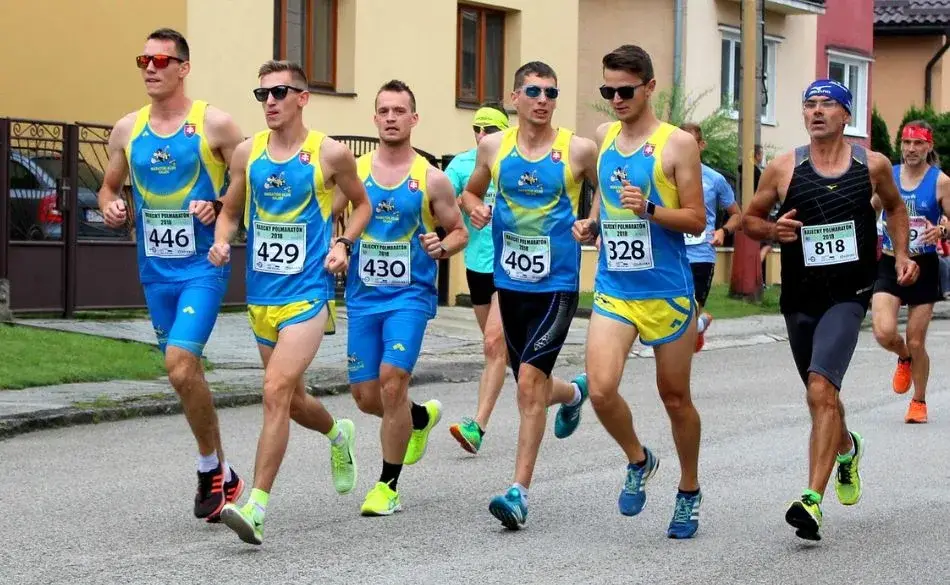
What Is Marathon Run Pace and Why It Matters More Than You Think
Your marathon run pace is the average speed you can maintain for the full 42.195 kilometers (26.2 miles). It determines how efficiently you use your energy and how close you’ll get to your goal marathon time. According to research from Medicine & Science in Sports & Exercise (2014), runners who hold an even pace or slight negative split (running the second half a little faster) are more likely to meet or exceed their target times.
In practical terms, most trained runners complete a marathon at 75 to 85 percent of their maximum heart rate. That’s typically 15–25 seconds per kilometer slower than their tempo pace. This effort level allows the body to conserve glycogen and delay fatigue. Starting faster than this range can lead to early glycogen depletion and a sharp drop in performance, commonly known as “hitting the wall.”
Even pacing also helps regulate body temperature and heart rate, especially in warm conditions. Studies by World Athletics show that maintaining a consistent pace per kilometer reduces the energy cost of running by up to 3 percent. A small number that can save minutes over the full race distance.
The best marathoners (like Eliud Kipchoge) train for years to lock in that rhythm. Their splits often vary by less than 1 percent per 5 kilometers. For recreational runners, learning to manage pace is just as important. Using data from your long runs, heart-rate zones, and recent races can help predict your average marathon pace before race day.
Understanding your marathon run pace is more than knowing a number on your watch. It’s the foundation of smart pacing, efficient energy use, and ultimately a stronger, more confident finish.
Perfecting your marathon run pace takes more than guesswork—it takes structure, accountability, and expert insight. Our Running Coaching program helps you pace smarter, train efficiently, and reach your goal marathon time without the burnout. Whether you’re running your first marathon or chasing a new PB, we’ll guide you every step of the way.
- Personalised Pacing Plans: weekly training built around your fitness, goals, and ideal race pace
- Race Strategy Coaching: learn to execute negative splits and maintain consistent pace per kilometer
- Progress Monitoring: feedback and data tracking to fine-tune your pacing and recovery balance
- Expert Guidance: one-on-one support from coaches who understand endurance performance
Learn your perfect pace, build confidence in your training, and run your strongest marathon yet with expert coaching.
Learn More About Running Coaching →

How To Calculate Your Marathon Run Pace Like A Pro
Before you can master your marathon run pace, you need to know how to calculate it correctly. Your pace is the time it takes to cover one kilometer or mile during a marathon. The formula is simple:
Pace = Total Time ÷ Distance
For example, if your goal marathon time is 4 hours, you divide 240 minutes by 42.195 kilometers. That equals about 5 minutes and 41 seconds per kilometer, or 9 minutes and 9 seconds per mile.
To simplify the math, you can use our Running Pace Calculator to convert your goal marathon time into pace per kilometer or mile instantly.
Using a marathon pace chart makes this process easier, especially if you’re targeting a specific finish time. Here’s a sample reference table to help visualize pacing differences:
👉 Swipe to view full table
| Goal Marathon Time | Pace per Kilometer | Pace per Mile |
|---|---|---|
| 3:00 | 4:16 | 6:52 |
| 3:30 | 4:59 | 8:01 |
| 4:00 | 5:41 | 9:09 |
| 4:30 | 6:24 | 10:18 |
| 5:00 | 7:06 | 11:27 |
Small adjustments in your pace per kilometer can dramatically change your finishing time. For example, running just 10 seconds faster per kilometer can improve your marathon result by about seven minutes.
When you use a marathon pace chart or pace calculator, double-check that it reflects your most recent fitness data, not just your target time. Many runners overestimate early in training, leading to burnout. Instead, base your pace on your average marathon pace during long runs and threshold workouts.
Understanding your pace mathematically gives you control. Once you know your numbers, you can train smarter, predict splits, and race with confidence.
If you’re building a base or transitioning from shorter distances, take a look at our 11-Week Half Marathon Training Plan to sharpen your aerobic foundation before you tackle full marathon pacing.


Pacing Strategies That Actually Work on Race Day
Even the best-trained runners can fall apart without the right pacing strategy. Knowing your marathon run pace is one thing; managing it for 42.195 kilometers is another. Successful pacing comes down to preparation, awareness, and discipline.
Before race day, practice your target pace during long runs. If your average marathon pace is 5:40 per kilometer, you should know exactly how that feels (your breathing rhythm, footstrike, and perceived effort). This familiarity helps you recognize when adrenaline pushes you too fast in the early miles.
On race day, pacing is about patience. The first 5 kilometers should feel controlled, even slightly easy. Studies show runners who start conservatively finish stronger, often achieving faster overall times due to reduced glycogen depletion and lower body temperature rise.
Here’s a breakdown of key strategies that work for both new and experienced marathoners:
- Start 3–5% Slower Than Target Pace: This allows your body to warm up and reduces early fatigue. For a 4-hour marathoner, that’s about 10 seconds per kilometer slower for the first 5K.
- Hold Even Splits Mid-Race: Maintain consistent pace per kilometer through the middle 20K. This stabilizes heart rate and preserves glycogen.
- Use a Negative Split Strategy: Aim to run the second half 1–2 minutes faster than the first. Research from Medicine & Science in Sports & Exercise confirms this method correlates with higher success rates.
- Plan for Course Changes: Hills, heat, or wind can shift your pace temporarily. Adjust effort, not speed, to stay within your energy range.
- Monitor Hydration and Fuel: Every 30–45 minutes, take in small carbs and fluids to sustain pace and prevent “the wall.”
Mastering your pacing strategy takes time. The goal isn’t just to finish but to finish strong, steady, composed, and knowing you ran your smartest race yet.


How to Train for Your Marathon Run Pace Without Burning Out
Training for your marathon run pace is about building endurance and teaching your body to sustain effort efficiently, not about running hard every day. The right structure balances effort, recovery, and pacing workouts to improve performance without risking injury or fatigue.
Start by dividing your training into specific zones. Your training pace should include easy runs for aerobic development, tempo sessions to raise your lactate threshold, and long runs that mimic your average marathon pace. These workouts teach you how your body feels at different intensities, so your goal pace becomes second nature.
Here are the key elements of a smart training approach:
- Long Runs: Include segments at or near your goal marathon pace every 2–3 weeks. For example, run the final 8–10 km of a 30 km session at target pace to simulate fatigue.
- Tempo Workouts: Run 20–40 minutes at your tempo pace, which is typically 15–25 seconds faster per kilometer than marathon pace. This improves aerobic strength and stamina.
- Recovery Runs: Keep these easy (about 90 seconds slower than marathon pace per kilometer). They promote blood flow and muscle repair.
- Intervals: Short efforts (e.g., 6 × 1 km) slightly faster than marathon pace improve running economy and mental focus under stress.
To explore more speed workouts and pace-boosting drills, see our How To Run Faster guide for proven strategies to increase speed and efficiency.
- Rest and Recovery: Plan at least one full rest day per week. Your fitness grows during recovery, not training.
A well-balanced plan typically includes three key runs per week (long, tempo, and interval) plus cross-training or strength sessions to support durability.
Training too fast too often leads to burnout and plateauing. Elite athletes rarely run all-out; they control their effort meticulously. When you learn to train within your limits, your marathon run pace feels easier, more sustainable, and far more powerful on race day.
To dive deeper into detailed periodization, weekly structure, and race-week protocols, check out our Marathon Race Training Guide for a step-by-step blueprint.


Real-World Lessons from Coaching Athletes on Marathon Pacing
Over the years of coaching runners toward their goal marathon time, one thing has become crystal clear, success isn’t just about fitness. It’s about how well you understand and trust your marathon run pace. No training plan works if you can’t control your effort on race day.
One of my athletes, Brendan, came to me after struggling to finish under four hours in three consecutive marathons. He trained hard but always went out too fast, driven by excitement in the first 10 kilometers. We focused on dialing in his average marathon pace through weekly controlled long runs and midweek tempo sessions. I had him practice holding back during the first half of his long runs, then gradually building into pace in the second half (a classic negative split strategy).
When race day arrived, Brendan stuck to the plan. He started 10 seconds per kilometer slower than target, kept his pace per kilometer consistent through the middle, and saved his energy for the final stretch. His result? 3:56 a personal best by over 10 minutes and his most comfortable finish yet.
That experience reinforced something I see in nearly every athlete I coach: pacing isn’t just about numbers. It’s about self-control, discipline, and trust. Your body gives you clues (breathing, muscle tension, heart rate) but you have to listen.
If you’re training for a marathon, remember these takeaways:
- Don’t chase speed in the first half. Consistency beats adrenaline.
- Practice your marathon pace under fatigue during long runs.
- Adjust pace based on effort, not the watch, when terrain or heat shifts.
- Trust your training. Your pace will hold if your plan is balanced.


The Final 10 Kilometers Where Marathon Pace Meets Mindset
Every marathoner eventually reaches that point – the final 10 kilometers where your legs feel heavy, your breathing sharpens, and holding your marathon run pace becomes a mental battle. This is where discipline and training meet mindset.
Physiologically, fatigue in the late stages of a marathon often comes from glycogen depletion, muscle microdamage, and rising core temperature. According to Sports Medicine (2020), these changes can cause your pace per kilometer to slow by 5–10% in the final stretch. That’s why your pacing and fueling earlier in the race matter so much, they set the stage for how you finish.
When fatigue sets in, your mind becomes the deciding factor. Small mental cues can help keep your stride and rhythm intact:
- Focus on Form: Keep your head up, arms relaxed, and cadence steady. Good posture helps efficiency even when tired.
- Break the Distance Mentally: Think one kilometer or one landmark at a time instead of the distance left.
- Use Positive Self-Talk: Replace “I’m exhausted” with “I’ve trained for this.” It may sound simple, but studies from Frontiers in Psychology (2018) confirm that motivational self-talk delays perceived fatigue.
- Draw Energy From the Crowd: Look up, smile, and feed off the atmosphere, it resets your breathing and distracts from discomfort.
If your pace starts slipping, avoid panic. Instead, focus on maintaining effort, not numbers. Runners who stay calm and consistent often lose less time than those who push too hard trying to “make up” seconds.
By this point, your training takes over. Trust it. Every long run, every steady tempo, every practice kilometer has prepared you for this exact stretch. When you hit the final 2 kilometers, lift your head, drive your knees, and run proud, you’ve earned every stride.
If you’re already dreaming about your next big challenge, check out The Best Marathons in Australia to find your next starting line.


Conclusion – Bringing Your Marathon Run Pace Together
Reaching the finish line of a marathon isn’t just a physical achievement, it’s proof of balance, discipline, and trust in your plan. Mastering your marathon run pace is what allows you to run strong from the first step to the last, no matter your experience level.
When you look back on your training, every long run, tempo session, and easy recovery day had a purpose. They weren’t just workouts, they were lessons in patience, rhythm, and control. That’s what pacing really is: knowing when to hold back, when to push, and when to let your training carry you through the final kilometers.
If you’re still chasing your goal marathon time, remember this: your best race isn’t always your fastest. It’s the one where you run within yourself, stay present, and finish feeling proud, not broken. Your perfect marathon pace will come when you’ve trained your mind to stay calm under fatigue and your body to move efficiently even when tired.
Every runner, from first-timers to Boston qualifiers, faces the same challenge – how to keep their effort consistent when everything starts to hurt. That’s the beauty of the marathon. It tests more than your legs; it tests your resolve.
So next time you lace up for a long run, don’t just chase distance or numbers. Focus on rhythm, breathing, and how your pace feels. You’ll know you’ve nailed it when your effort feels smooth, your confidence steady, and every kilometer feels like part of a story you’re writing one stride at a time.
Running a great marathon isn’t just about effort—it’s about pacing, recovery, and structured progress. Our Running Training Plans help you find your perfect rhythm, recover stronger, and stay consistent through every stage of training.
- Smart pacing: workouts designed around your individual marathon run pace and current fitness level
- Balanced recovery: structured rest and active recovery sessions to prevent burnout
- Performance tracking: data-driven feedback to refine your goal marathon time
- Expert coaching: plans built by experienced coaches who understand endurance performance
Smarter pacing and recovery mean faster running, fewer setbacks, and more confident marathon finishes.
Explore Running Training Plans →