Want help turning consistency into progress? Coaching keeps your training simple, structured, and sustainable.
Start Coaching →
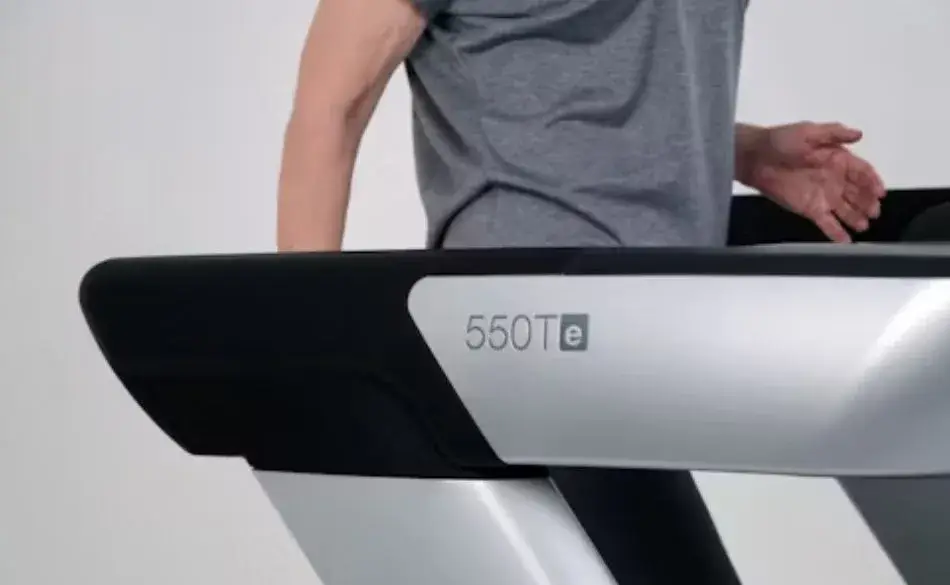
Person walking on treadmill during incline walking vs running workout

Last updated:

Incline Walking vs Running: Which Burns More Calories and Gets Better Results?

Running gets all the credit. It's fast, intense, and most people assume it's the gold standard for cardio. But crank a treadmill to 10% incline and you're suddenly working a lot harder than a flat jog — with far less stress on your joints. So which approach is actually better?

The answer depends entirely on your goals, fitness level, and how much time you have. Here's how the two stack up across calories, muscle activation, joint impact, and long-term results.

Chat with a SportCoaching coach

Not sure where to start with training?

Tell us your goal and schedule, and we’ll give you clear direction.

No obligation. Quick, practical advice.

Article Categories:

Explore our fitness training articles for more helpful articles and resources.

Quick Answer

Running burns more calories per minute — a 70 kg person burns around 720 cal/hr jogging at 10 km/h. But steep incline walking (10–12%) comes close, at 588–625 cal/hr, with significantly less joint impact. If you can run comfortably, running is the more time-efficient calorie burner. If you have joint concerns, are returning from injury, or simply want a longer sustainable session, incline walking is an excellent alternative — not a consolation prize.

Calories Burned: Incline Walking vs Running

The biggest variable in this comparison is gradient. Flat walking burns roughly 257 cal/hr for a 70 kg person. Add a 5% incline and that jumps to 441 cal/hr — a 72% increase. At 10%, it reaches 588 cal/hr, nearly matching a moderate jog. Research from Healthline cited a study showing metabolic energy cost increased by 22.9% at 10% gradient and 44.2% at 16% gradient compared to flat walking. MET values from the 2011 Compendium of Physical Activities underpin all figures in the table below.

👉 Swipe to view full table

Activity MET Cal/hr (70 kg) Cal/hr (80 kg)
Flat walking 4.8 km/h3.5257294
Incline walk 5% at 4.8 km/h6.0441504
Incline walk 8% at 4.8 km/h7.0514588
Incline walk 10% at 4.8 km/h8.0588672
Incline walk 12% at 4.8 km/h8.5625714
Running 8 km/h8.3610697
Running 10 km/h9.8720823
Running 12 km/h11.0808924

The key takeaway: a 12% incline walk (625 cal/hr) burns roughly the same as jogging at 8 km/h (610 cal/hr). Running faster pulls ahead, but the gap is smaller than most people expect.

Muscles Worked: Where Each Exercise Has the Edge

Both activities target the lower body, but they load different muscles with different emphasis.

Incline walking and the posterior chain. The steeper the gradient, the harder your glutes, hamstrings, and calves have to work to push you upward against gravity. At high inclines this starts to resemble resistance training — your posterior chain is under sustained load for the full session duration. This is one reason incline walking is often recommended for people who want to build or maintain lower body strength without heavy barbell work.

Running and dynamic quad engagement. Running involves a flight phase where you leave the ground entirely and land with impact forces roughly 2–3 times bodyweight. This recruits the quads, hip flexors, and core more dynamically than walking does. The faster you run, the more your core and upper body contribute to maintaining posture and driving forward momentum.

Calves and incline stress. One thing both activities share at steep gradients: your calves take on considerably more load. If you have Achilles or plantar fascia issues, build incline gradually. Switching too quickly from flat to steep can cause anterior tibialis soreness, particularly in the front of the lower leg.

👉 Swipe to view full table

Muscle Incline Walking Running
Glutes★★★★★ — high posterior chain load★★★ — moderate engagement
Hamstrings★★★★★ — primary uphill driver★★★ — swing phase activation
Calves★★★★ — sustained push-off demand★★★★ — high at faster speeds
Quads★★★ — stabilising role★★★★★ — landing and push-off
Hip flexors★★ — limited range of motion★★★★★ — driving knee lift
Core★★★ — postural stability★★★★ — rotational control

Joint Impact: A Clear Win for Incline Walking

Walking always keeps one foot in contact with the ground. There’s no flight phase, no landing forces, no repeated impact shock through the knee and hip. This makes incline walking a genuinely low-impact form of cardio even at high heart rates and high calorie burn — a combination that’s hard to find.

Running is a high-impact activity by definition. Every footstrike generates ground reaction forces roughly 2–3 times bodyweight, and over a 45-minute run that adds up to thousands of impacts. For healthy runners this is generally fine — high-impact training also strengthens bone density through Wolff’s Law. But for anyone managing knee pain, hip issues, shin splints, or returning from injury, incline walking lets you keep training hard without aggravating the problem.

One nuance: very steep inclines (above 12–15%) add load to the lower back and hips. If you have lumbar pain, cap your gradient at 8–10% and build slowly.

The 12-3-30 Workout: Is the Viral Treadmill Session Worth It?

The 12-3-30 method — 30 minutes at 12% incline and 4.8 km/h — became popular because it’s accessible and delivers genuine results. A 70 kg person burns approximately 312 calories per session. That’s comparable to a 30-minute jog at moderate pace, with zero impact stress.


Its main limitation is monotony. Thirty minutes at exactly the same speed and gradient every day doesn’t provide progressive overload. If you’re using incline walking as your primary cardio, vary the sessions: increase duration, alternate gradients, or add short intervals at higher speeds. Our treadmill incline guide covers how to structure this more effectively.

Which Is Better for Fat Loss?

Running burns more calories per minute, which gives it the mathematical edge if you’re comparing identical session lengths. However, total weekly calorie burn matters more than per-session intensity, and that’s where the picture becomes more nuanced.

Running burns faster but costs more recovery. A hard 45-minute run may require a rest day to recover adequately, limiting how many sessions you can do per week. Incline walking is easier to repeat daily without accumulating fatigue or injury risk.

Incline walking uses more fat as fuel. At lower intensities your body relies on a higher percentage of fat oxidation. Running draws more heavily on carbohydrate stores. Importantly, total calories burned still drives fat loss outcomes — but incline walking’s fuel source profile is relevant if you’re training fasted or have specific body composition goals.

Consistency decides. The best cardio modality is the one you’ll actually do repeatedly over months. For many people — particularly beginners, older adults, or anyone with joint concerns — incline walking is far more sustainable long-term than running. Sustained moderate-intensity training outperforms sporadic high-intensity sessions every time.

Who Should Choose Incline Walking, and Who Should Run?

Choose incline walking if you’re managing a lower-body injury or joint pain, you’re a beginner building a base, you want a daily session without accumulating fatigue, or you want to focus on glute and hamstring strength alongside your cardio.

Choose running if you’re training for a running event, you want to maximise calorie burn in limited time, you’re already injury-free and adapted to impact, or you want to build bone density from weight-bearing high-impact exercise.

Use both if you want variety, cross-training resilience, or you’re recovering between hard running sessions. Our treadmill workouts guide outlines how to mix incline and speed work across the week.

Practical Tips for Getting the Most from Incline Walking

Don’t hold the handrails. Gripping the treadmill side rails dramatically reduces calorie burn and disengages the core. Hold your arms naturally or at your sides.

Build incline progressively. Start at 3–5% for the first two weeks before pushing to 8–12%. Your calves, Achilles, and tibialis anterior need time to adapt.

Stay upright. Leaning forward at steep inclines shifts load off the glutes onto the lower back. Keep your chest tall and shoulders back.

Use 1% as your flat baseline. If you also run on a treadmill, setting 1% incline better reflects outdoor effort — treadmill running at 0% is slightly easier than road running due to the absence of wind resistance. See our guide on whether treadmill running is easier for more detail.

Combine with strength work. Incline walking builds endurance and some posterior chain strength, but it doesn’t replace dedicated leg exercises for runners. Pair two incline sessions per week with one or two strength sessions for the best overall outcome.

Incline Walking vs Running: The Bottom Line

Running is more calorie-dense per minute and trains sport-specific fitness. Incline walking matches it for calorie burn at high gradients, targets the posterior chain more effectively, and eliminates joint impact entirely. They’re not rivals — they’re different tools for different days and different goals. If you can only do one, pick the one you’ll stick with for months, not weeks.

Ready to build a training plan that uses both smartly?

Our running coaches design programs that balance incline work, easy runs, and structured intervals to build fitness without grinding you down.

Explore Running Coaching → View Training Plans →

FAQ: Incline Walking vs Running

Does incline walking burn as many calories as running?
At 10–12% gradient, incline walking burns 588–625 cal/hr for a 70 kg person — similar to jogging at 8 km/h (610 cal/hr). Running faster pulls further ahead, but steep incline walking is competitive with moderate jogging.

Is incline walking better than running for weight loss?
Running burns more per minute. But incline walking is lower impact, easier to sustain daily, and uses a higher proportion of fat for fuel. For long-term weight loss, consistency matters most — choose the option you’ll do regularly.

What muscles does incline walking work that running doesn’t?
Steep incline walking loads the glutes and hamstrings more heavily than flat running, functioning almost like a resistance exercise for the posterior chain. Running hits the quads and hip flexors more dynamically.

Is incline walking low impact?
Yes. One foot always stays on the ground, so there’s no flight phase and no landing forces. This makes it much easier on the knees, hips, and ankles than running, even at high intensities.

How many calories does the 12-3-30 workout burn?
A 70 kg person burns approximately 312 calories in a 30-minute 12-3-30 session (12% incline, 4.8 km/h). This is comparable to a moderate-paced jog of the same duration.

Graeme - Head Coach and Founder of SportCoaching

Graeme

Head Coach & Founder, SportCoaching

Graeme is the founder of SportCoaching and has coached more than 750 athletes from 20 countries, from beginners to Olympians, in cycling, running, triathlon, mountain biking, boxing, and skiing. His coaching philosophy and methods form the foundation of SportCoaching's training programs and resources.

750+
Athletes
20+
Countries
7
Sports
Olympic
Level

Start Your Fitness Journey with SportCoaching

No matter your goals, SportCoaching offers tailored training plans to suit your needs. Whether you’re preparing for a race, tackling long distances, or simply improving your fitness, our expert coaches provide structured guidance to help you reach your full potential.

  • Custom Training Plans: Designed to match your fitness level and goals.
  • Expert Coaching: Work with experienced coaches who understand endurance training.
  • Performance Monitoring: Track progress and adjust your plan for maximum improvement.
  • Flexible Coaching Options: Online and in-person coaching for all levels of athletes.
Learn More →

Choose Your Next Event

Browse upcoming Australian running, cycling, and triathlon events in one place. Filter by sport, check dates quickly, and plan your training around something real on the calendar.

View Event Calendar