











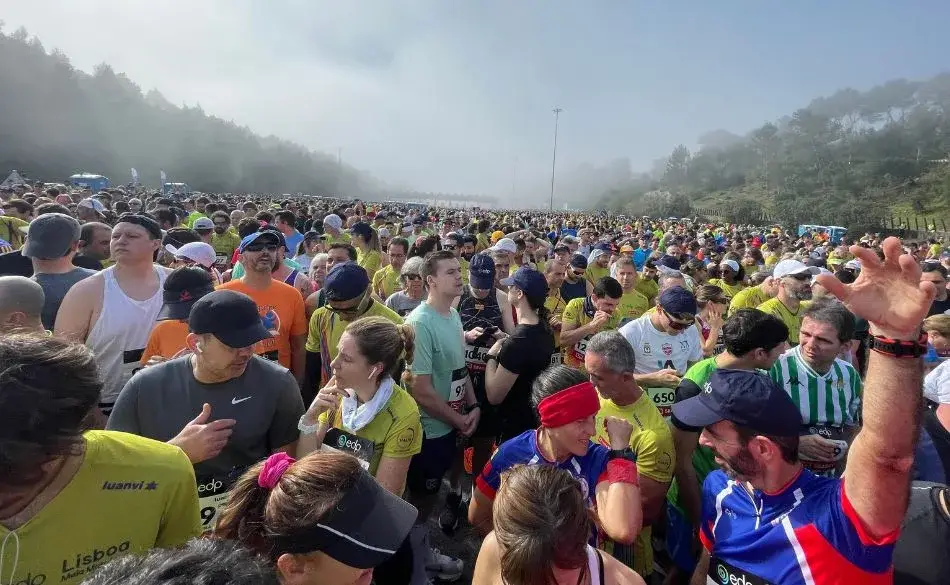

Find Your Next Running Race
Ready to put your training to the test? Here are some upcoming running events matched to this article.
 Coach Graeme

Last updated:
Most runners who stop mid-run aren't unfit — they're going too fast, breathing wrong, or following no plan at all. Building the ability to run continuously is a skill, and like any skill, it responds to the right training stimulus. Whether your goal is to jog one kilometre or run 30 minutes non-stop, the principles are the same: start slower than feels necessary, build weekly mileage gradually, and train your breathing alongside your legs. This guide covers everything — pacing, a progressive run/walk schedule, breathing technique, mindset, and the weekly structure that turns walk breaks into a distant memory.
Not sure where to start with training?
Tell us your goal and schedule, and we’ll give you clear direction.
No obligation. Quick, practical advice.
Explore our running training articles for more helpful articles and resources.
Before fixing the problem, it helps to understand what’s actually happening when your body forces you to walk.
Starting pace is too fast. This is by far the most common culprit. Most beginners run their first kilometre at close to their maximum aerobic effort. Within 60–90 seconds, lactate accumulates faster than the body can clear it, breathing becomes ragged, and the legs feel like concrete. The fix is not more fitness — it’s less speed at the start.
Breathing is shallow and reactive. When you breathe from your chest rather than your diaphragm, you get less oxygen per breath and your body interprets the shortfall as a stress signal. This drives up perceived effort even when the pace is moderate. Chest breathers consistently feel harder running than their fitness level would suggest.
No progressive base has been built. Running continuously for 20+ minutes requires a minimum aerobic foundation. Without structured progression, asking your cardiovascular system to sustain effort for that long is like asking your shoulders to bench-press a weight you’ve never trained with.
Mental fragmentation. Many runners stop not because the body gives out, but because the mind fixates on the finish line and concludes it’s too far away. Breaking the run into small mental segments — the next corner, the next 2 minutes, the next lamp post — dramatically extends how long the body will cooperate.
Heart rate monitors are useful, but for runners learning to go non-stop, the talk test is more immediate and just as accurate. The rule is simple: at the right training pace, you should be able to speak a sentence of 5–7 words without gasping. Not comfortably sing, not whisper — just speak.
👉 Swipe to view full table
| Breathing Feel | What It Means | What to Do |
|---|---|---|
| Can speak easily in full sentences | Too easy — Zone 1 | Pick up pace slightly |
| Can speak in short sentences (5–7 words) | Ideal — conversational Zone 2 | Stay here for all easy runs |
| Can say 2–3 words before needing a breath | Tempo effort — Zone 3 | Too hard for non-stop beginner runs; slow down |
| Can barely speak | Hard effort — Zone 4–5 | Slow immediately; you'll stop within minutes |
For most beginners, the correct non-stop running pace falls between 7:00–9:00 per km. That feels very slow at first. It should. The goal right now is not speed — it’s teaching your aerobic system to sustain effort over time. Speed is a later conversation. For a deeper understanding of the science behind this, the Zone 2 running pace guide explains exactly how easy aerobic effort builds your endurance engine.
Run/walk intervals are not a compromise — they’re the most evidence-supported method for building non-stop running ability. Each session, three times per week, should feel manageable. If a week feels hard, repeat it before moving on. The 10% rule applies: don’t increase running time by more than 10% week on week.
👉 Swipe to view full table
| Week | Run Interval | Walk Interval | Repeats | Total Run Time | Sessions/Week |
|---|---|---|---|---|---|
| 1 | 1 min | 2 min | 7× | 7 min | 3 |
| 2 | 2 min | 2 min | 6× | 12 min | 3 |
| 3 | 3 min | 2 min | 5× | 15 min | 3 |
| 4 | 5 min | 2 min | 4× | 20 min | 3 |
| 5 | 8 min | 2 min | 3× | 24 min | 3 |
| 6 | 10 min | 1 min | 2× | 20 min + 1 continuous run attempt | 3 |
| 7 | 20 min continuous | Walk only if needed | 1× | 20 min | 3 |
| 8 | 30 min continuous | None | 1× | 30 min | 3 |
Between running days, rest or cross-train — swimming, cycling, or a yoga session are ideal because they maintain aerobic fitness without adding impact stress to your legs. If you’re also ready to take on a structured race goal alongside this program, the complete beginner’s guide to running maps out the full progression from first session to first 5K.
Breathing is the one physiological variable you can actively control mid-run, and it has an outsized effect on perceived effort. Runners who master their breathing almost always feel like running got easier, even before their fitness improved significantly.
Chest breathing is shallow — it uses only the top third of your lung capacity. Belly breathing (diaphragmatic breathing) draws air deeper, engaging the diaphragm and allowing you to take in more oxygen per breath. To practice it: place one hand on your stomach. When you inhale, your hand should rise. If only your chest rises, you’re breathing too shallow. Most runners can switch to belly breathing within a week of deliberate practice during easy runs.
Matching your breath to your footfalls keeps breathing regular and reduces the body’s stress response. A 3:2 pattern — inhale for 3 footfalls, exhale for 2 — works well at easy to moderate effort. At harder paces, switch to a 2:1 pattern. The rhythmic quality matters more than the exact count. Once it becomes automatic, you’ll notice your pace smooths out and your upper body stays relaxed. The best breathing techniques for running guide goes deeper on nose vs mouth breathing and patterns for different intensities.
Starting a run with an elevated heart rate and shallow breathing sets you up to stop early. Two minutes of box breathing before you set off resets your nervous system: inhale for 4 seconds, hold for 4, exhale for 4, hold for 4. Repeat 4–5 times. Runners who do this consistently report the first kilometre feeling much more controlled.
Research into endurance performance consistently finds that the decision to stop running comes from the brain before the body reaches its physiological limit. The brain’s job is to protect you from catastrophic failure, so it sends “stop” signals early — often well before you’re actually out of fuel or oxygen.
The segmenting strategy. Instead of thinking “I need to run for 20 more minutes,” break the run into tiny targets: the next street corner, the next 60 seconds, the next song on your playlist. Each small achievement resets the mental clock and delays the “this is too hard” signal.
Reframe effort cues. Burning legs and heavy breathing are normal running sensations — they don’t mean you’re failing. Train yourself to interpret these cues as signs the training is working rather than signs to stop. A simple internal cue like “this is just effort, not danger” can extend a run significantly.
Distraction vs focus. For beginner runners, distraction (music, podcasts, scenic routes) works well to push through early discomfort. As you advance, internal focus — monitoring pace, breathing, and form — becomes more productive. Most new runners benefit from distraction for the first 4–6 weeks.
Three sessions per week is enough to build continuous running ability for a beginner. More isn’t better — your aerobic system adapts during recovery, not during the run itself. Here’s how to structure the week around your run/walk program.
👉 Swipe to view full table
| Day | Session | Effort Level | Notes |
|---|---|---|---|
| Monday | Run/walk session (per week's plan) | Easy — conversational | The main training stimulus |
| Tuesday | Rest or light walk (20–30 min) | Very easy | Active recovery, not a workout |
| Wednesday | Run/walk session (per week's plan) | Easy — conversational | Same session as Monday |
| Thursday | Cross-train: swim, cycle, yoga | Easy to moderate | Aerobic base without impact |
| Friday | Rest | Off | Full recovery |
| Saturday | Run/walk session (per week's plan) | Easy — conversational | Third session of the week |
| Sunday | Rest or gentle walk | Very easy | Prepare for next week |
Adding strength work once or twice a week accelerates this process. Stronger glutes, calves, and hip flexors reduce the energy cost of each stride and delay the neuromuscular fatigue that often causes runners to stop. The best gym exercises for runners covers which movements give the most return for beginner runners.
Skipping the warm-up. Starting a run cold — especially in cooler Australian mornings — means your muscles take the first kilometre to reach working temperature. Run the first 5 minutes at a deliberately easy pace or walk briskly for 5 minutes before you start the clock. This alone can prevent many early stops.
Ignoring recovery between sessions. Two hard sessions back to back without adequate rest accumulates fatigue faster than it builds fitness. Sleep 7–9 hours. If your legs feel heavy going into a session, take an extra rest day — that’s adaptation happening, not weakness.
Comparing your pace to others. Seeing other runners glide past at what looks like an easy pace is discouraging if you’re gasping. Everyone builds from a different starting point. Your Zone 2 pace is yours alone. Focus on your own breathing and progress.
Skipping nutrition and hydration. For runs under 30 minutes, water is usually enough. But starting a morning run completely fasted without any fuel on board can lead to early fatigue and stopping. A small snack — banana, slice of toast — 30–60 minutes before a run provides the glycogen your muscles need. For more on fuelling around training, the running on an empty stomach guide lays out when fasted running helps and when it hurts.
Increasing distance too fast. The 10% rule exists for a reason. Runners who jump from 15 minutes to 30 minutes in one week frequently hit a wall — not a fitness wall, but a neuromuscular one. The tendons, bones, and connective tissue adapt more slowly than cardiovascular fitness. Patience here prevents the injuries that force weeks off.
For many runners, the first milestone is running a continuous kilometre, then a mile (approximately 1.6 km), and then 5 km. Each has a slightly different approach.
Your first continuous kilometre. Target a pace of 8:00–10:00 per km. Walk the first 5 minutes to warm up, then run at a pace where you feel like you could keep going indefinitely. Most people who have completed 2–3 weeks of the run/walk program above can do this by week 3. The how to run a mile without stopping guide has a detailed breakdown of form cues that make this easier.
Your first continuous 5K. With 6–8 weeks of consistent run/walk training, running 5 km non-stop is achievable for most beginners. The key is not speed — aim to run it 60–90 seconds per km slower than you feel capable of. Crossing the finish line with energy left is more useful at this stage than crossing it spent.
Your first 30-minute non-stop run. This is the most common goal and the benchmark of solid beginner fitness. At an easy pace, 30 minutes covers roughly 3.5–5 km depending on your speed. Focus on time, not distance, and let pace take care of itself. By week 8 of the program above, the majority of runners reach this.
The transition from run/walk to fully continuous running happens naturally if you follow the progression — but there are a few signals that confirm you’re ready to run your full session without planned walk breaks.
Your walk breaks feel unnecessary. If you hit the scheduled walk break and feel like you didn’t really need it, that’s the clearest signal your aerobic system has caught up. Try extending the next run interval by 2–3 minutes before taking the break.
Your breathing recovers quickly during walks. In early weeks, walk breaks are needed to bring your heart rate and breathing back to manageable levels. When recovery during a 1-minute walk feels nearly instant, your aerobic base is strong enough to sustain the run.
You’ve completed week 6 without repeating any weeks. If you’ve moved steadily through the 8-week plan, you’re physiologically ready — even if it doesn’t feel like it. Trust the process and attempt the continuous runs in weeks 7 and 8.
Once you can run continuously, you’re ready to start building toward race-specific goals. The guide to running long distance covers how to extend beyond 30 minutes without breaking down, and the interval running guide explains how to introduce speed work once your base is established.
Not all stopping is failure. Some stops are important. Know the difference between normal discomfort and signals that warrant ending a run early.
👉 Swipe to view full table
| Sensation | Likely Cause | What to Do |
|---|---|---|
| General fatigue, heavy legs | Normal training stimulus | Slow down but continue if pace is conversational |
| Side stitch (sharp flank pain) | Diaphragm cramp, often from breathing pattern | Slow down, exhale forcefully, press on the stitch |
| Sharp knee or ankle pain | Possible overuse or acute injury | Stop immediately; do not run through joint pain |
| Dizziness or lightheadedness | Dehydration, low blood sugar, or overheating | Stop, sit down, hydrate; seek help if it persists |
| Chest tightness or pain | Cardiac or respiratory — requires evaluation | Stop immediately; seek medical attention |
| Nausea that worsens while running | GI distress, overheating, or poor fuelling | Walk, hydrate; review timing of pre-run meals |
Pain is not the same as discomfort. Muscle fatigue, a burning sensation in your lungs, and the general difficulty of sustained effort are normal. Sharp, localised joint pain is not. When in doubt, stop and assess. Missing one run is far less costly than an injury that sidelines you for 6 weeks.
Ready to Run Consistently Without Stopping?
A structured training plan takes the guesswork out of building non-stop running — showing you exactly what to run, when to rest, and how to progress safely each week.
Get Running Coaching → Browse Training Plans →Why can’t I run without stopping?
The most common reason is starting too fast. When pace exceeds your current aerobic capacity, lactate builds up quickly and the body forces a stop. Slow down to a pace where you can speak in short sentences and most runners find they can go much longer.
How long does it take to run without stopping?
Most beginners reach 20–30 minutes of continuous running within 6–8 weeks using a structured run/walk progression. The key is consistency — three sessions per week with no more than a 10% increase in running time each week.
What pace should I run to avoid stopping?
For beginners, 7:00–9:00 per km is typically the right zone. Use the talk test: if you can’t say a sentence without gasping, slow down. Speed is irrelevant at this stage — the goal is time on feet at an aerobic effort.
Is it okay to walk during a run?
Absolutely. Walk breaks are a legitimate training tool, especially in the early weeks. Used strategically, they let you accumulate more total running time with less injury risk. Gradually extend your run intervals and the walk breaks become unnecessary on their own.
How do I breathe properly when running?
Breathe from your belly, not your chest. A 3:2 step pattern — inhale for 3 footfalls, exhale for 2 — keeps breathing rhythmic at easy effort. If you’re gasping, it’s almost always a pacing issue, not a breathing issue. Slow down first, then work on technique.
Ready to put your training to the test? Here are some upcoming running events matched to this article.


Head Coach & Founder, SportCoaching
Graeme is the founder of SportCoaching and has coached more than 750 athletes from 20 countries, from beginners to Olympians, in cycling, running, triathlon, mountain biking, boxing, and skiing. His coaching philosophy and methods form the foundation of SportCoaching's training programs and resources.
No matter your goals, SportCoaching offers tailored training plans to suit your needs. Whether you’re preparing for a race, tackling long distances, or simply improving your fitness, our expert coaches provide structured guidance to help you reach your full potential.
Smart, progressive training from 5km to marathon with weekly guidance.
What’s included
Browse upcoming Australian running, cycling, and triathlon events in one place. Filter by sport, check dates quickly, and plan your training around something real on the calendar.
Choose your plan to get started with personalized training plans designed to help you reach your goals.


Minna Backman
When you’re new, feedback is especially important, and Graeme is highly skilled at both analyzing numbers and understanding the importance of mental strength.











