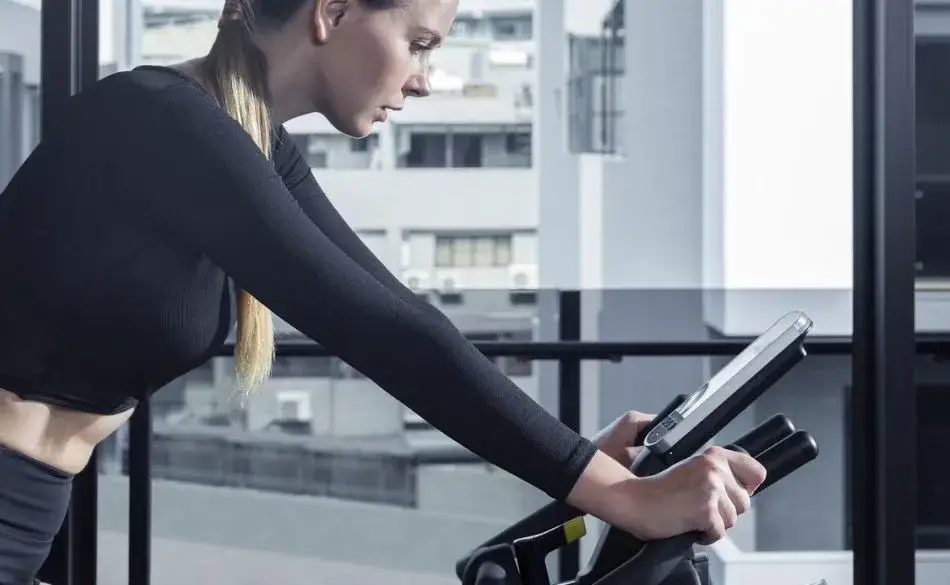
Calorie Burn and Energy Output - Which Machine Works Harder?
When it comes to burning calories, both machines deliver impressive results, but the treadmill usually takes a slight edge. Running requires your entire body to work together (legs, core, and even upper body) which increases overall energy demand. The bike, on the other hand, focuses mainly on your lower body, making it a little more efficient but slightly less intense overall.
According to studies, a treadmill workout at a moderate pace can burn anywhere between 600–800 calories per hour, depending on speed, incline, and body weight. A stationary bike workout averages around 400–700 calories per hour, depending on resistance and cadence. That means the treadmill vs bike difference in calorie burn can vary by more than 100 calories in a single session.
Here’s a quick calorie burn comparison based on average data for a 70kg person:
👉 Swipe to view full table
| Exercise Type | Duration | Intensity | Estimated Calories Burned |
|---|---|---|---|
| Treadmill walking (5 km/h) | 60 min | Low | 280 |
| Treadmill running (9 km/h) | 60 min | Moderate | 600 |
| Treadmill incline training (5% incline) | 60 min | Moderate-High | 700 |
| Stationary cycling (moderate) | 60 min | Moderate | 550 |
| Stationary cycling (high resistance) | 60 min | High | 700 |
The takeaway? For weight loss cardio, the treadmill burns slightly more, but the bike offers better sustainability. You can train longer, recover faster, and keep up consistency. Three factors that matter more than a single workout’s calorie count.


Impact on Joints and Recovery - Which Is Kinder to Your Body?
If your knees or hips often ache after a run, this section will matter most. The treadmill vs bike comparison shifts here because while both can build fitness, the way they stress (or spare) your joints is very different.
The treadmill, though designed with cushioning, still involves repeated impact with every stride. Each step can create forces up to three times your body weight, especially during running or incline treadmill training. Over time, that can irritate joints or tendons if your form, shoes, or recovery aren’t spot-on.
Cycling, by contrast, offers low-impact cardio that keeps pressure off your knees, hips, and spine. The bike’s smooth circular motion removes the pounding, making it one of the best joint-friendly exercises available. That’s why it’s often prescribed for people recovering from knee injuries or managing arthritis.
But there’s a catch: while the bike protects your joints, it doesn’t strengthen bone density the same way running does. Treadmill workouts stimulate bone-building hormones through that same impact cyclists avoid.
So, which is better for recovery and longevity? It depends on your goals:
- Choose the bike for active recovery or if you struggle with chronic pain or stiffness.
- Stick with the treadmill if you’re focused on improving bone health and maintaining running performance.
- Mix both for balanced joint strength and endurance.
Ultimately, if you’re training smart, alternating between both machines offers the perfect combination cardio that challenges your body without breaking it down.
For a deeper dive into how indoor treadmill training stacks up against running outside, see this helpful comparison on treadmill vs outdoor running that adds context to your cardio decisions.
Every runner, from beginner to elite, benefits from structure and balance. Our Running Coaching programs are designed to help you train smarter, recover better, and perform stronger. Each plan is built around your fitness level, goals, and lifestyle. Giving you the right mix of intensity and rest to keep improving safely.
- Personalized training structure: sessions tailored to your pace, distance, and recovery needs
- Smart recovery planning: reduce fatigue and prevent injury through data-driven rest strategies
- Performance development: improve speed, endurance, and efficiency with proven running methods
- Ongoing expert feedback: continuous support from professional running coaches to keep you progressing
Run with purpose, recover with intent, and reach your next personal best with a structured coaching plan built for you.
Start Running Coaching →

Which Builds More Strength and Power?
If your goal is to build stronger legs and better endurance, knowing how each machine recruits your muscles is key. In the treadmill vs bike comparison, both improve lower-body conditioning, but they do it in very different ways.
Running on a treadmill activates your quadriceps, hamstrings, glutes, calves, and even your core. The upright posture demands stability through your midsection, which subtly strengthens your abs and lower back. The arms also play a small role in maintaining rhythm and drive, giving treadmill workouts a full-body edge.
Meanwhile, cycling (especially during spin bike training or uphill intervals) focuses more directly on the quads and glutes. The consistent resistance builds leg strength and power over time, particularly when you increase the resistance levels or alternate between seated and standing efforts. The bike isolates muscles more than the treadmill, which can make it perfect for improving leg endurance without extra impact.
Here’s the bottom line:
- The treadmill works more muscles overall, improving balance and coordination.
- The bike strengthens your lower body and enhances cardiovascular endurance more efficiently through sustained resistance.
- Mixing both helps balance power and efficiency. The treadmill for movement control, the bike for muscle endurance and power.
So, when deciding between the two, think of it like this: the treadmill teaches your muscles to move better, while the bike teaches them to push harder. Together, they form a powerful combo for performance and strength.


Weight Loss and Fat-Burning Efficiency - Which Delivers Faster Results?
If your goal is to lose weight, both the treadmill and the bike can help you get there. But when comparing treadmill vs bike, the difference lies in how your body burns calories and how long you can maintain the effort.
The treadmill tends to have a slightly higher calorie burn because running demands full-body movement. A fast jog or HIIT on treadmill uses more oxygen and recruits more muscle fibers, especially at higher speeds or inclines. That means more energy spent in less time.
The bike, however, makes it easier to sustain long sessions. While you might burn fewer calories per minute, you can ride longer without fatigue or joint strain. Over time, that consistency makes it a powerful tool for weight loss cardio. Especially when paired with healthy nutrition.
Here’s how to maximize fat burn on each:
- Treadmill: Use interval bursts (for example, 30 seconds sprint / 90 seconds walk). This boosts post-exercise calorie burn for hours.
- Bike: Focus on progressive overload. Gradually increase resistance or cadence to raise heart rate while maintaining endurance.
- Mix it up: Alternate between running days and cycling days to avoid burnout and keep your metabolism active.
For pure fat-burning efficiency, the treadmill wins for intensity, but the bike wins for sustainability. If you combine both, you’ll achieve faster results without overloading your body. A balance that keeps motivation high and progress steady.
If you’re looking to add structured speed sessions to your treadmill training, check out this detailed guide on the treadmill sprint workout that will make you faster to help boost performance and calorie burn even further. Also, if you’re ready to take your cycling to the next level, this Bike Erg workouts guide offers structured routines and tips to increase power, efficiency, and results.
Every strong cyclist knows performance is built on structure, not guesswork. Our Cycling Coaching programs are designed for riders who want to train smarter, recover faster, and reach peak fitness with personalized, data-driven plans. Whether you’re targeting a race, a long-distance event, or all-around improvement, our coaching brings clarity and focus to your training.
- Structured power development: targeted sessions to increase FTP and endurance strength
- Custom performance analytics: track progress with professional training data reviews
- Recovery optimization: tailored workloads that balance fatigue and adaptation
- Ongoing expert support: direct feedback from experienced cycling coaches
Train with purpose, master your power, and unlock your best performances with personalized cycling coaching.
Start Cycling Coaching →
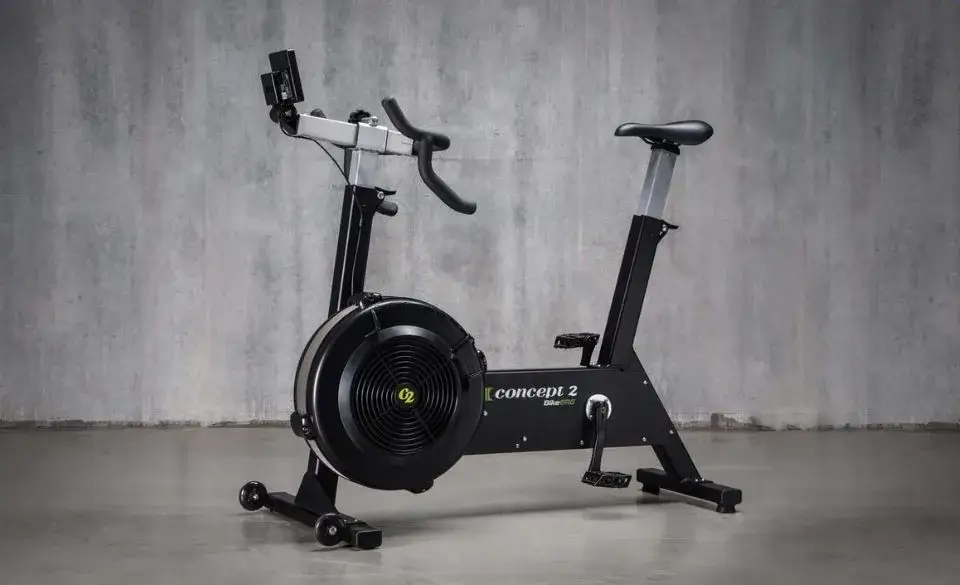
Which Machine Improves Endurance and Performance Faster?
Your goals decide the winner. When you compare treadmill vs bike, think about the kind of fitness you need most. If you want strong race carryover to running, the treadmill is hard to beat. It mirrors running mechanics and teaches rhythm, stride, and posture. Add incline treadmill training to build uphill strength and breathing control without leaving the gym.
If your goal is longer sessions with steady heart rates, the bike shines. An indoor cycling workout lets you sit in the aerobic zone for 45–90 minutes with less fatigue. That’s prime time for building cardiovascular endurance while protecting your joints.
For pure performance, the bike gives you precise control. You can dial resistance levels bike up or down in seconds. That makes structured intervals simple and repeatable. Want threshold work or VO₂ boosts? Short hard bouts with equal recovery are easy to measure and progress.
Runners who only run can hit a wall. Cross-training on the bike adds volume without extra pounding. You keep your weekly minutes high while your legs stay fresher for key run days. That’s a win for both fitness and consistency.
Cyclists who only ride can miss impact-specific gains. Short treadmill sessions build bone strength and foot stability. Even 15–20 minutes after a ride can improve gait control and posture.
So which improves endurance faster? It depends.
- Choose the treadmill if you need specific running carryover and hill strength.
- Choose the bike if you need longer, low-impact sessions to boost weekly volume.
- Use both to stack benefits: treadmill for mechanics and impact tolerance, bike for aerobic depth and power control.
Think of it like gears. The treadmill is your form and force gear. The bike is your volume and engine gear. Use both, and your fitness climbs with fewer stalls.


Which Should You Choose for Your Lifestyle and Goals?
The right choice between the treadmill and bike often comes down to what fits your lifestyle best. Both can transform your health, but the key is finding the one you’ll actually enjoy and stick with.
If you love variety and being on your feet, the treadmill might suit you. It’s perfect if you want workouts that feel closer to running outside, improve cardiovascular endurance, and burn serious calories in a short time. Plus, with features like incline treadmill training, you can simulate hill runs or power walks that challenge every muscle group.
The bike, on the other hand, fits easily into almost any routine. Whether it’s a low-impact cardio session at home or a high-energy indoor cycling workout, it’s easy to get on and go (no warm-up commute or weather concerns). It’s also ideal if you’re juggling work, recovery days, or simply prefer to train without heavy joint loading.
If your main goal is improving speed and calorie burn, the treadmill is the better match. It offers dynamic movement, builds impact tolerance, and supports runners or triathletes aiming for race performance. If you want a joint-friendly, efficient workout that allows longer sessions and smoother recovery, the bike is the smarter choice. And if you’re chasing overall fitness, blending both creates balance – treadmill sessions for pace and muscle activation, and bike workouts for stamina and recovery.
In the end, the best machine is the one that keeps you consistent. Pick the one you’ll look forward to using, not just the one that burns the most calories. When fitness feels sustainable, results follow naturally.
If you’re curious how incline treadmill workouts compare to stair training for strength and endurance, check out this in-depth guide on the Stairmaster vs Incline Treadmill to see which one better fits your goals.


Practical Tips to Get the Most Out of Each Workout
Understanding the differences between the treadmill and the bike is important, but knowing how to use each one effectively is what really determines your results. The smartest approach is to train with purpose, focus on quality, and adjust intensity based on your goals.
On the treadmill, consistency is everything. Warm up at an easy pace before increasing your speed or incline. Short bursts of effort, such as intervals or HIIT on treadmill, help boost calorie burn and improve aerobic capacity. You can also vary your workouts by alternating between flat runs for endurance and incline walks for strength. This keeps your muscles challenged and prevents your progress from stalling.
With the bike, precision and posture matter most. Maintain a slight bend in your knees at the bottom of each pedal stroke and keep your back relaxed. Use resistance wisely, too little and your muscles won’t adapt, too much and your form will suffer. For best results, include both steady rides for endurance and shorter high-resistance sessions for power. Over time, this mix builds stronger legs and enhances cardiovascular endurance.
Most importantly, listen to your body. Alternate between the two machines if you feel sore, or use the bike for recovery days when you need a low-impact cardio session. Small adjustments in resistance, incline, or duration can completely change how your body responds. When you balance effort and recovery, you get the benefits of both worlds (endurance from the bike and power from the treadmill) without overtraining.
Whether you’re preparing for your first sprint event or chasing a new personal best, professional guidance can transform your training. Our Triathlon Coaching programs are designed to help athletes build speed, efficiency, and resilience across swim, bike, and run disciplines. Every plan is personalized around your goals, schedule, and ability level.
- Structured endurance training: improve aerobic capacity and pacing for all race distances
- Power and strength development: enhance performance through efficient, sport-specific conditioning
- Smart recovery programming: balance training load to reduce fatigue and prevent overtraining
- Expert feedback and analytics: get data-driven guidance to fine-tune technique and performance
Work with a dedicated triathlon coach to build the fitness, form, and confidence needed to perform at your best in every leg of the race.
Start Triathlon Coaching →

Common Mistakes to Avoid When Using the Treadmill or Bike
Even with the best plan, small mistakes can limit your progress on both machines. Paying attention to form, intensity, and recovery helps you avoid injuries and keep your workouts productive for the long term.
- Overstriding on the treadmill: When your feet land too far in front of your body, it increases joint stress and wastes energy. Aim for a midfoot strike with a light, quick rhythm to reduce impact and improve efficiency.
- Holding onto the rails: Gripping the treadmill rails changes your posture and decreases calorie burn. Keep your hands free and let your arms move naturally to engage your core and improve balance.
- Excessive incline use: High inclines build strength but can overload your calves and hips if done too often. Mix incline runs with flat sessions to keep your muscles balanced and avoid strain.
- Incorrect seat height on the bike: A saddle that’s too low or too high causes knee or hip pain. Adjust the seat so your knee has a slight bend at the bottom of each pedal stroke for optimal comfort and power.
- Too little resistance: Riding with low resistance may feel easy, but it limits strength gains. Maintain steady resistance levels to develop leg power and boost cardiovascular endurance.
- Skipping warm-ups and cooldowns: Starting or stopping abruptly increases the risk of muscle strain. Spend a few minutes easing in and out of your session to improve recovery and performance.
Remember, progress comes from training smart, not just training hard. A balanced mix of treadmill and bike sessions, combined with proper recovery, helps you stay consistent and injury-free for the long term.
If you want a complete, structured indoor cycling plan to boost your bike workouts, explore this guide on the ultimate stationary bike workout that can help you ride smarter and harder.


The Final Verdict - Finding Your Perfect Balance
By now, it’s clear that neither the treadmill nor the bike is truly “better.” They both shine in different areas, and together they can build a complete fitness foundation. The treadmill challenges your muscles, bones, and heart through impact and movement. The bike provides smooth, low-impact cardio that strengthens your legs while keeping stress off your joints.
If you’re short on time, the treadmill might help you get more done in fewer minutes. If you’re recovering from an injury, the bike helps you stay active without setbacks. Many athletes combine both for the best of both worlds (one for strength and bone health, the other for stamina and recovery).
Below is a quick breakdown comparing how each machine performs across key areas:
👉 Swipe to view full table
| Feature | Treadmill | Stationary Bike |
|---|---|---|
| Calorie Burn (per hour) | 600–800 (depending on speed and incline) | 400–700 (depending on resistance and cadence) |
| Impact Level | Moderate to High | Low (joint-friendly) |
| Primary Muscles Worked | Glutes, Quads, Hamstrings, Core | Quads, Glutes, Calves |
| Bone Density Benefits | Improves bone strength through impact | Minimal effect |
| Best For | Speed, fat loss, running endurance | Recovery, stamina, low-impact training |
| Injury Risk | Higher if overused or poor form | Lower, safer for long-term consistency |
| Workout Variety | Incline, intervals, tempo runs | Resistance intervals, cadence work, endurance rides |
In the end, you don’t need to choose one forever. Alternate between the two depending on your mood, goals, or recovery level. Some days demand the power and challenge of a treadmill run. Others call for the calm focus of a long indoor cycling workout. When you master both, your body gains balance, strength, and the ability to adapt to anything.