



Find Your Next Cycling Race
Ready to put your training to the test? Here are some upcoming cycling events matched to this article.
 Coach Graeme
Last updated:
Not sure where to start with training?
Tell us your goal and schedule, and we’ll give you clear direction.
No obligation. Quick, practical advice.
Explore our cycling advice and tips for more helpful articles and resources.
Whether you’re a seasoned cyclist looking to sharpen your power output or a complete beginner trying to boost cardio fitness, bike erg workouts offer a low-impact, high-reward solution. And trust me, they’re anything but boring if you know how to structure them.
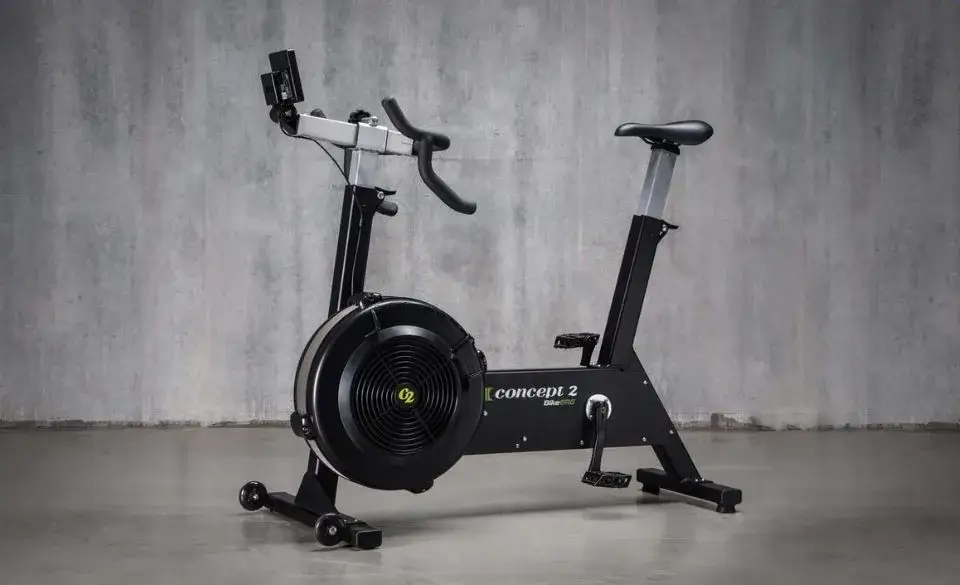
If you’ve seen those sleek machines in the corner of your gym or watched CrossFit athletes sweating buckets on them, you’ve already met the bike erg. Technically called a Concept2 BikeErg, this machine mimics the resistance and feel of cycling while giving you full control over intensity.
But why choose a bike erg over a traditional spin bike or treadmill?
I once used a bike erg exclusively during a six-week metatarsal injury recovery. Not only did it keep my cardio base intact, but my FTP (Functional Threshold Power) actually improved!
Let’s break this down. The bike erg helps you develop:
What’s unique about the bike erg is the accurate feedback. You’re not guessing your effort—you can see it right there on the screen in real time.
Question for You: When’s the last time you finished a workout knowing exactly how many watts you averaged and how that compared to your last session?
This one’s a burner but that’s why it works.
This workout trains your body to recover quickly between high-intensity efforts. Perfect if you’re preparing for criteriums or short, punchy rides.
Short on time but still want a highly effective workout? Check out these Cycling Tabata Intervals they’re a fast-track to building power and boosting speed in just a few minutes.
Warm-up: 10 minutes easy spin
Main Set:
This is great for building VO2 max. Your body’s maximum oxygen consumption rate. It also keeps your mind engaged because you’re always switching it up.
Boring? Not if you combine it with a good playlist or podcast. This is essential for improving your endurance and burning fat efficiently.
Looking to push beyond your current limits? A structured program like the Cycling Threshold Training Plan can help you steadily improve your power output and endurance over time.
Main Set:
If you want to work on explosive power and sharpen that top-end speed, this one’s for you.
Ever wonder how you’re actually progressing? Try this:
Use your 20-minute average power to estimate your Functional Threshold Power (FTP):
FTP ≈ 20-minute average watts x 0.95
This number is your personal benchmark and helps set training zones for future workouts.
Adding some variety to your bike erg sessions keeps things interesting and challenges new muscle groups. Try incorporating workouts from our cycling intervals for hill climbing guide to simulate those tough uphill efforts, even while indoors.
| Day | Workout Type | Focus | Session Goal | Example Workout |
|---|---|---|---|---|
| Monday | Recovery Ride or Rest | Active Recovery | Flush out soreness and promote recovery | 30 mins at 50–60% Max HR, light effort |
| Tuesday | Interval Training | Speed & Power | Boost anaerobic capacity and explosive power | 8 x 30 sec max effort / 90 sec easy spin |
| Wednesday | Steady-State Ride | Aerobic Endurance | Develop endurance and improve fat metabolism | 60 mins at 60–70% Max HR, steady pace |
| Thursday | Sprint Intervals | VO2 Max & Power | Increase top-end power and improve oxygen uptake | Sprint Ladder: 10s/50s, 20s/40s, 30s/30s, repeat 3x |
| Friday | Rest or Easy Spin | Recovery | Low effort to keep legs loose without fatigue | 30–45 mins at 50–60% Max HR, relaxed pace |
| Saturday | Long Endurance Ride | Fat Utilization & Base Fitness | Build endurance and train aerobic capacity | 90 mins at 65–70% Max HR, include 4 x 5 min tempo efforts |
| Sunday | FTP Test or Tempo Ride | Threshold Training | Assess progress or build sustained power | FTP Test: 20 min max effort OR 3 x 10 min tempo @ 85% Max HR |
If you’re also running or lifting, adjust accordingly.
You can also stack your harder workouts on days you’re already doing strength training. This keeps recovery days truly restful.
If you’re looking to spice up your long, steady rides with fresh ideas, check out these 8 Endurance Bike Erg Workouts. They’re specifically designed to keep your endurance sessions challenging and engaging, even when you’re indoors.
If you’re serious about making progress with your bike erg workouts, knowing your Functional Threshold Power (FTP) is a game-changer. Think of FTP as the maximum power you can sustain for one hour. This number helps you train smarter, not harder, by setting precise intensity zones for every workout.
Most riders perform a 20-minute all-out test to estimate FTP. It’s toughbut incredibly effective. After the test, multiply your 20-minute average wattage by 0.95 to estimate your true FTP.
Example:
Once you have your FTP, use it to structure your workouts like a pro.
If you’re unsure how to convert your new FTP number into real-world pacing, try using this handy cycling pacing calculator. It takes the guesswork out of structuring your workouts and ensures you’re always training in the correct zone.
| Zone | % of FTP | Training Purpose |
|---|---|---|
| Zone 1 | Less than 55% | Active Recovery – Easy spins to promote recovery |
| Zone 2 | 56–75% | Endurance – Build aerobic base and fat metabolism |
| Zone 3 | 76–90% | Tempo – Improve muscular endurance and stamina |
| Zone 4 | 91–105% | Threshold – Boost sustainable race pace and FTP |
| Zone 5 | 106–120% | VO2 Max – Improve high-intensity capacity |
| Zone 6 | 121%+ | Anaerobic – Short sprints and explosive power |
Using these zones ensures every workout has a clear purpose. You’ll avoid wasting time in that “gray zone” where you’re working hard but not making specific improvements.
Re-test your FTP every 6–8 weeks to measure progress and adjust your training zones. Trust me, few things feel better than seeing those numbers climb!
Yes! It builds both cardiovascular fitness and leg strength, directly translating to better endurance and power on the road.
If you’re serious about improving your endurance, building leg strength, or simply staying consistent regardless of weather or injuries, the bike erg might just become your new favorite tool.
It’s efficient. It’s data-driven. And it’s a lot more versatile than most people realize.
So next time you’re dreading the wind, rain, or a mechanical mid-ride disaster, remember you can get the same (or even better) workout done indoors. Fast. Efficient. Powerful.
Ready to put your training to the test? Here are some upcoming cycling events matched to this article.
Head Coach & Founder, SportCoaching
Graeme is the founder of SportCoaching and has coached more than 750 athletes from 20 countries, from beginners to Olympians, in cycling, running, triathlon, mountain biking, boxing, and skiing. His coaching philosophy and methods form the foundation of SportCoaching's training programs and resources.
No matter your goals, SportCoaching offers tailored training plans to suit your needs. Whether you’re preparing for a race, tackling long distances, or simply improving your fitness, our expert coaches provide structured guidance to help you reach your full potential.
Structured cycling coaching to build power, endurance, and speed.
What’s included
Browse upcoming Australian running, cycling, and triathlon events in one place. Filter by sport, check dates quickly, and plan your training around something real on the calendar.
Choose your plan to get started with personalized training plans designed to help you reach your goals.


Minna Backman
When you’re new, feedback is especially important, and Graeme is highly skilled at both analyzing numbers and understanding the importance of mental strength.