Quick Answer
A beginner triathlon training plan typically covers 8 to 16 weeks and includes six sessions per week — two swims, two rides, and two runs — plus one rest day. Start with a sprint triathlon (750m swim, 20km bike, 5km run) and train four to six hours per week. The swim is usually the biggest challenge for beginners, so start practising early.Triathlon Distances Explained
Before you start training, you need to know what you are training for. Triathlon comes in several standard distances, each with very different time and training demands.
👉 Swipe to view full table
| Distance | Swim | Bike | Run | Typical Finish Time |
|---|---|---|---|---|
| Sprint | 750 m | 20 km | 5 km | 1:00 – 1:45 |
| Olympic | 1,500 m | 40 km | 10 km | 2:00 – 3:30 |
| Half Ironman (70.3) | 1,900 m | 90 km | 21.1 km | 4:30 – 7:00 |
| Ironman | 3,800 m | 180 km | 42.2 km | 9:00 – 17:00 |
For your first triathlon, a sprint is the best starting point. The distances are achievable for most people with 8 to 12 weeks of consistent training. If you are starting from zero fitness, our couch to triathlon guide covers how to build from nothing to race-ready.
If you already have a running or cycling base and want more of a challenge, an Olympic distance triathlon is a rewarding step up that typically requires 12 to 16 weeks of preparation.
How Triathlon Training Differs from Single-Sport Training
The biggest adjustment for beginners is managing three sports in one training week without burning out. You cannot train for triathlon the way you would train for a standalone running race or cycling event.
Volume is spread, not stacked. Instead of running five days a week, you might run twice, ride twice, and swim twice. Each session is shorter than it would be in a single-sport plan, but the total weekly training load is similar or higher.
Recovery is harder to manage. Your legs do not get a full rest day between bike and run sessions the way they would in a running-only plan. Learning to manage fatigue across disciplines is one of the most important skills in triathlon training.
Your weakest sport needs the most attention. Most beginners come from a running or cycling background and treat swimming as an afterthought. This is a mistake. The swim is the most technical discipline, and improving your technique early saves enormous energy on race day. If you are a weak swimmer, prioritise the pool in the first month of training.
Brick workouts are essential. A brick workout is a bike session immediately followed by a run. The purpose is to train your body to handle the transition from cycling to running, which feels strange and heavy the first few times. One brick session per week from about halfway through your plan is enough to prepare you.
What a Beginner Triathlon Training Week Looks Like
Here is an example training week for a beginner preparing for a sprint triathlon, training about five to six hours per week.
👉 Swipe to view full table
| Day | Session | Duration |
|---|---|---|
| Monday | Rest day | — |
| Tuesday | Swim — technique and endurance | 30–45 min |
| Wednesday | Run — easy pace | 30–40 min |
| Thursday | Bike — steady endurance | 45–60 min |
| Friday | Swim — intervals and drills | 30–45 min |
| Saturday | Bike + run brick | 60–75 min total |
| Sunday | Run — longer easy effort | 35–50 min |
This structure gives you two sessions in each discipline per week, one brick workout, and one full rest day. As your fitness builds, sessions get slightly longer and intensity increases, but the overall structure stays the same.
For a detailed sprint-specific schedule, read our beginner sprint triathlon plan or our more advanced sprint tri training plan.
Training for Each Discipline
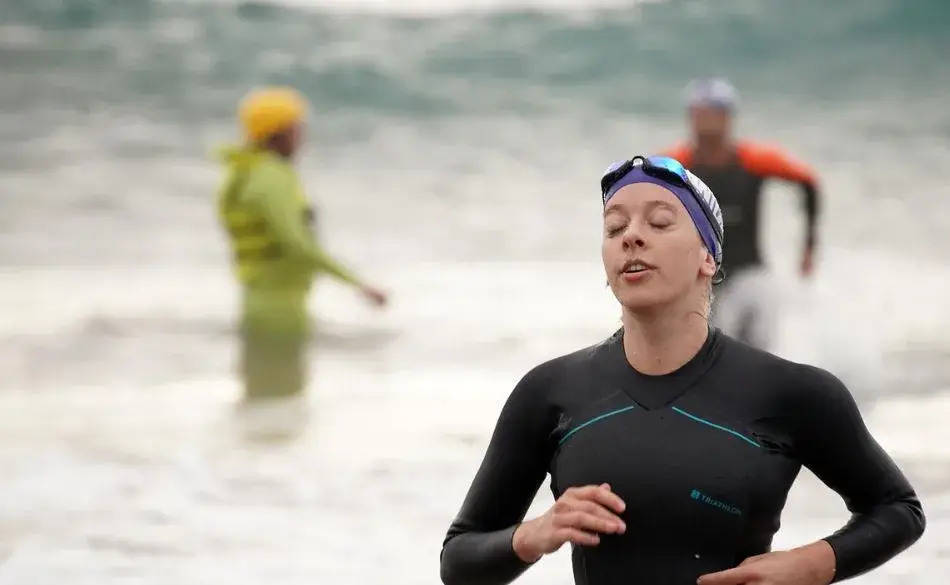
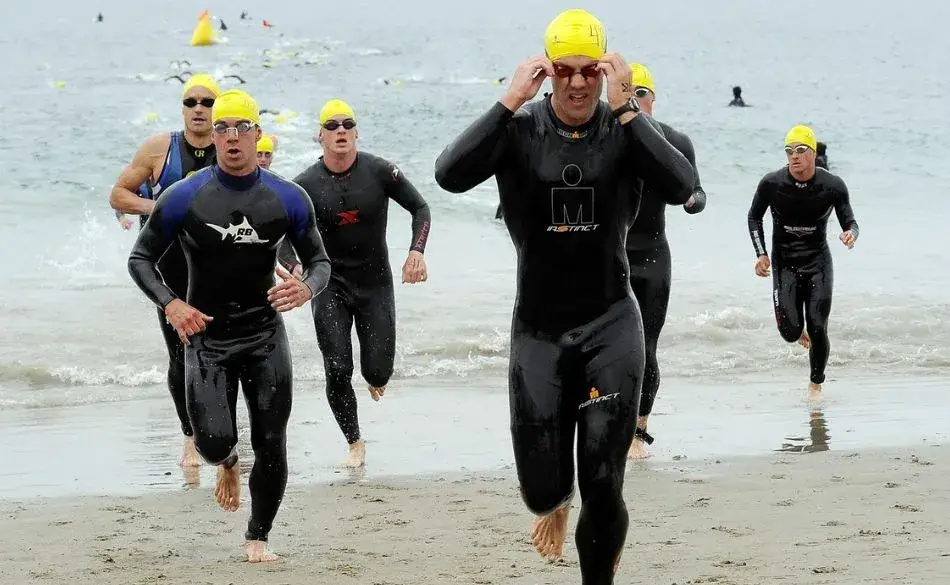
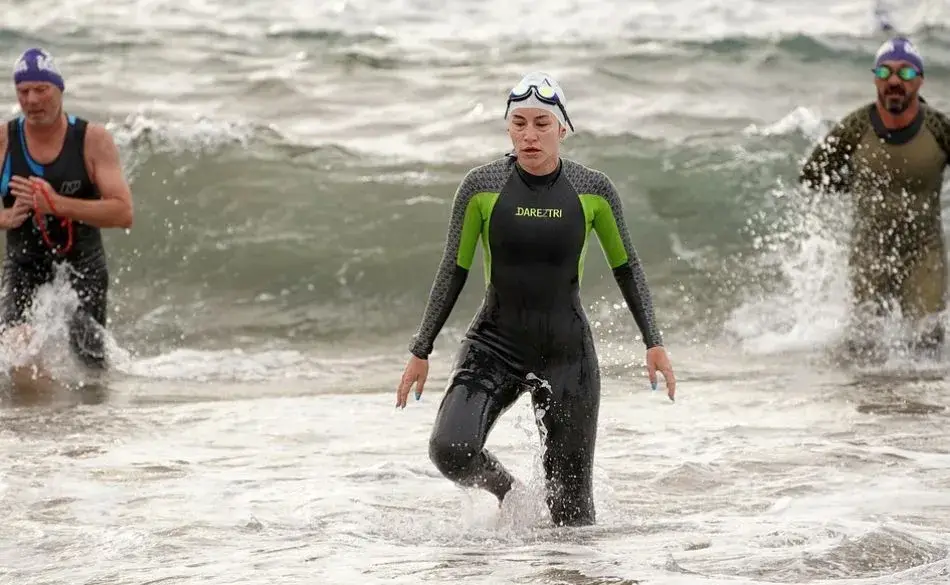
Swimming. For most beginners, swimming is the discipline that causes the most anxiety. The good news is that technique improvements in the pool produce bigger gains than in any other sport. Focus on body position, breathing rhythm, and a relaxed stroke before worrying about speed. Two pool sessions per week is enough for a sprint triathlon. If your race is in open water, practise at least two or three open water swims before race day to get comfortable with the different conditions.
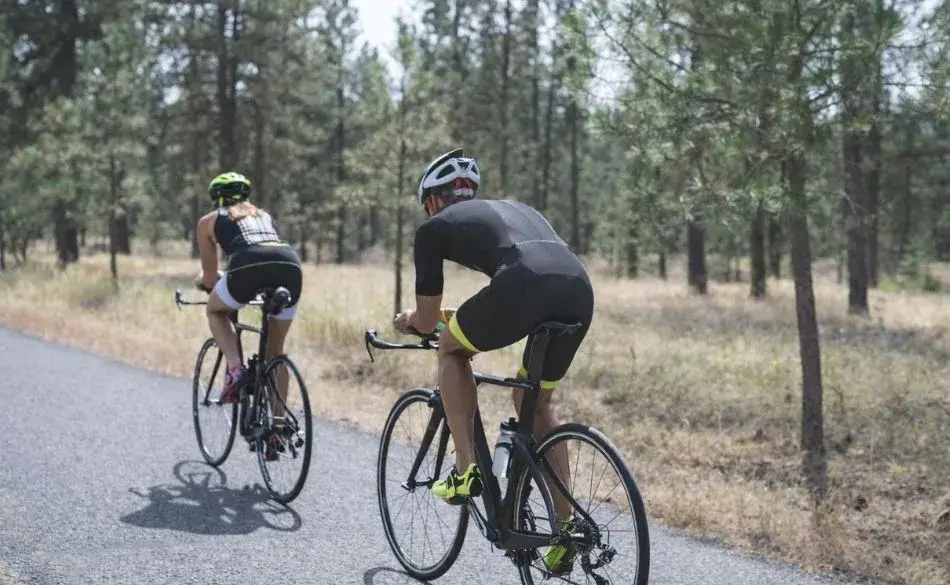
Cycling. Cycling is typically the longest leg of any triathlon, which means it has the biggest impact on your overall finish time. For beginners, the priority is building comfort on the bike and developing an efficient pedalling cadence of 80 to 90 revolutions per minute. You do not need an expensive triathlon bike — a well-maintained road bike is perfectly fine for your first race. Our cycling training plan guide covers structured cycling training in more detail.
Running. If you come from a running background, this will be your strongest discipline. If not, follow the same gradual build approach as a standalone running plan. The key difference in triathlon is that you run after cycling, which means your legs will feel heavy and your stride will feel awkward for the first kilometre or two. Brick workouts prepare you for this. If you are new to running entirely, start with our Couch to 5K plan to build a running base before adding the other disciplines.
Transitions — The Fourth Discipline
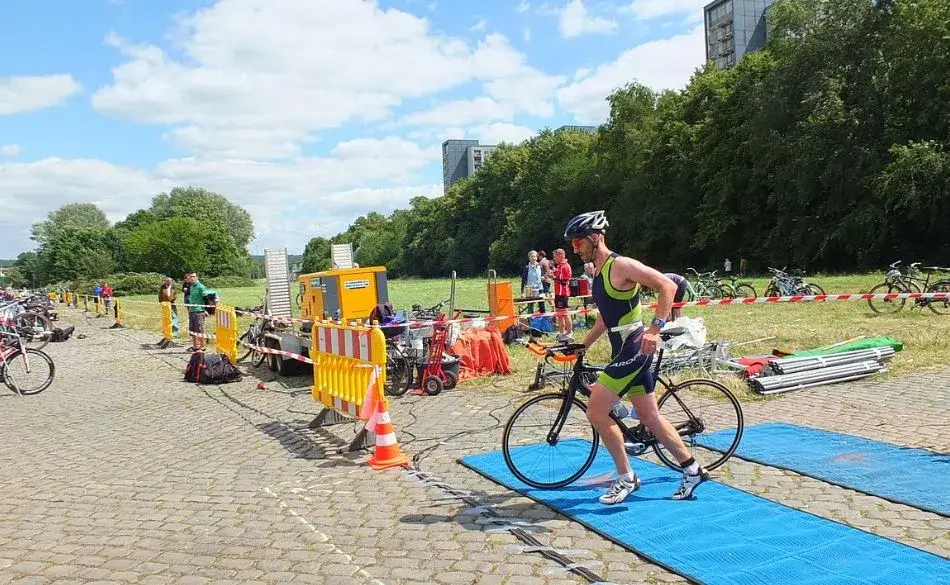
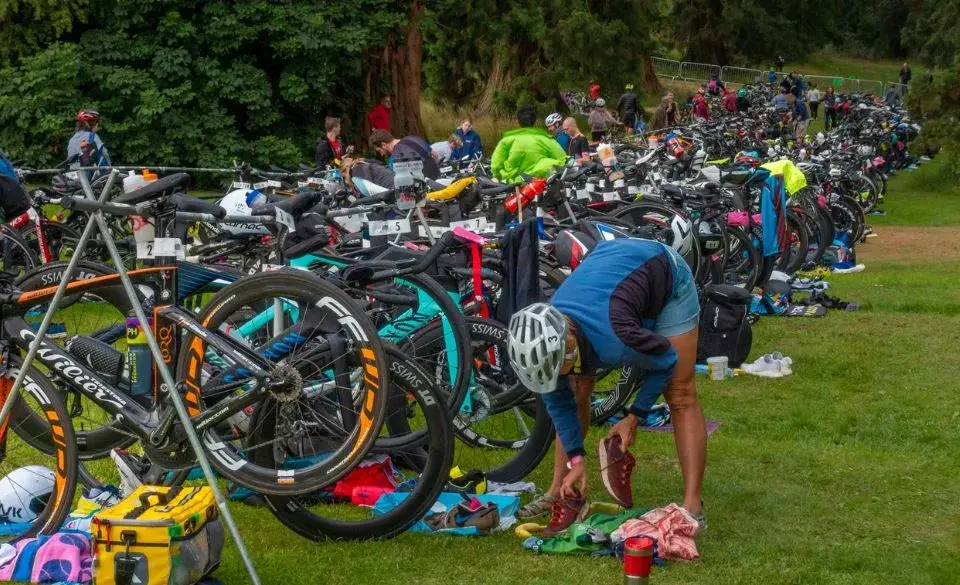
Triathlon has two transitions: T1 (swim to bike) and T2 (bike to run). Beginners often lose five to ten minutes in transitions that could be cut in half with practice.
The key to fast transitions is preparation and simplicity. Lay out your gear the night before in the order you will need it. Practise the sequence at home: wetsuit off, helmet on, shoes on, go. The less you have to think on race day, the smoother your transitions will be.
For your first race, do not stress about transition speed. Focus on not forgetting anything — helmet before you touch your bike, bike racked before you run. Speed comes with experience.
Essential Gear for Your First Triathlon
You do not need to spend thousands on gear for your first triathlon. Here is what you actually need versus what can wait.
Essential: goggles, a swimsuit or tri suit, a road bike in good working order, a helmet, running shoes, and a water bottle. If your race is in open water, a wetsuit is highly recommended for buoyancy and warmth.
Helpful but not essential: a tri suit (so you do not need to change between legs), clipless pedals and cycling shoes, a GPS watch, and elastic laces for your running shoes to speed up T2.
Can wait: a triathlon-specific bike, aero bars, a power meter, race wheels. These make a difference for experienced athletes but are unnecessary for your first race.
Nutrition for Triathlon Training and Race Day
Fuelling for triathlon is more complex than for a single sport because you are exercising for longer and across different intensities.
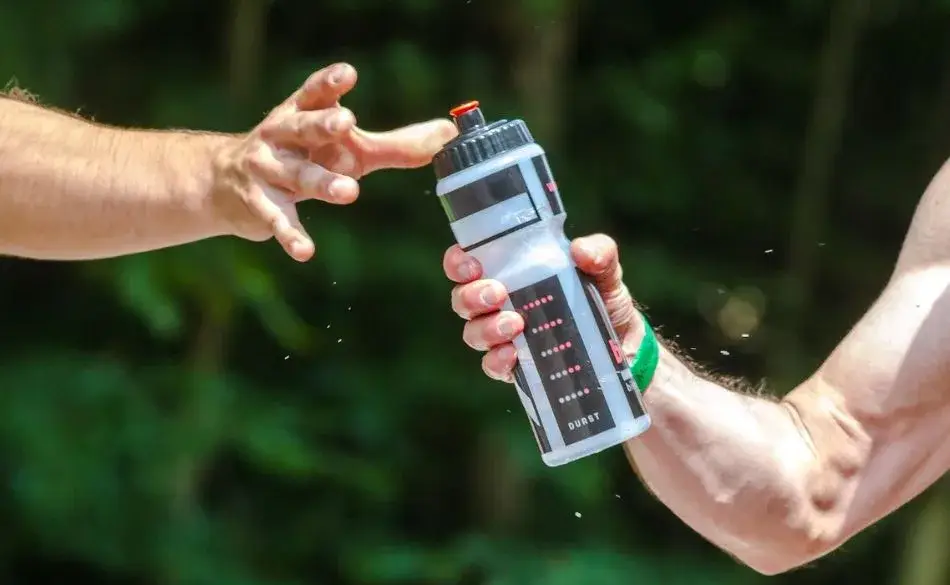
For a sprint triathlon, most beginners can get through the race on water alone with a good pre-race breakfast. The total race time is usually one to two hours, which is within the range your body can manage without mid-race fuelling.
For Olympic distance and beyond, practise taking on 60 to 90 grams of carbohydrate per hour during the bike leg using gels, bars, or sports drink. The bike is the easiest place to eat and drink because your hands are free and your stomach is under less stress than during running. Avoid trying new nutrition products on race day — test everything in training first.
In hot Australian conditions, electrolytes become important from the start. Practise your hydration strategy on long training sessions so you know what works for your body.
Triathlon in Australia — Events and Where to Start
Australia has one of the strongest triathlon cultures in the world, with events running from October through to April across every state.
Popular beginner-friendly events include the Noosa Triathlon (Olympic distance, Queensland), the Nepean Triathlon (Sydney), TriPink (women’s sprint series in multiple states), the Glenelg Triathlon (Adelaide), and countless local club sprint races run by state triathlon associations. Most capital cities have a local triathlon club that offers coached sessions and a pathway into racing.
If you are targeting longer distances, Australian Ironman events include Ironman Cairns, Ironman Western Australia (Busselton), and Ironman 70.3 Geelong. These events sell out quickly, so register early and allow six to nine months of training. Browse our Australian triathlon events calendar for upcoming races across Australia.
From Sprint to Ironman — The Progression Path
Most triathletes follow a natural progression through the distances over months or years. There is no rush to move up — many experienced triathletes race sprint and Olympic distance their entire career and love it.
A typical progression looks like this: sprint → Olympic → Half Ironman (70.3) → Ironman. Each step up roughly doubles the training volume and commitment. Moving from sprint to Olympic is manageable for most people within a season. Moving from Olympic to 70.3 typically requires a dedicated training block of 16 to 20 weeks. The step to full Ironman is the biggest and usually requires six to nine months of structured preparation.
We have dedicated guides for each level: beginner sprint plan, Olympic distance guide, and Ironman training plan.
Why Coaching Matters More in Triathlon
Triathlon is the endurance sport where coaching makes the biggest difference. Managing three disciplines, balancing training load, building technique in the weakest sport, timing your taper, and executing race day nutrition and pacing — there are more variables to get right than in running or cycling alone.
A triathlon coach builds your plan around your available time, your strengths and weaknesses across the three sports, and your target event. They adjust weekly based on how you are responding, which prevents the overtraining that is so common in multi-sport athletes trying to do everything at once.
At SportCoaching, we have coached triathletes across Australia and internationally, from first-time sprint racers to Ironman finishers. Coach Graeme has over 20 years of experience in triathlon coaching and understands how to balance the demands of three sports within the reality of a busy life.
Coach’s tip: The most common beginner triathlon mistake is neglecting the swim and over-training the run. If you can already run 5K, your run fitness is probably adequate for a sprint triathlon. Spend the extra time in the pool instead — that is where the biggest gains are waiting.
Triathlon training is more complex than single-sport training, which is exactly why coaching makes such a difference. At SportCoaching, we build your swim, bike, and run plan around your schedule, your strengths, and your target event — then adjust it every week.
Start Triathlon CoachingFAQ: Triathlon Training for Beginners
How long does it take to train for a first triathlon?
For a sprint triathlon, 8 to 12 weeks of consistent training is enough for most beginners with a basic level of fitness. If you are starting from scratch, allow 12 to 16 weeks or start with a base-building phase first. For an Olympic distance, plan for 12 to 16 weeks minimum.
Do I need to be a strong swimmer to do a triathlon?
No. You need to be able to swim the distance without stopping, but speed is not important for your first race. Many beginners use breaststroke or a mix of freestyle and breaststroke. If you cannot swim 200 metres continuously, start with swim lessons or a learn-to-swim program before beginning triathlon training.
How many hours per week does triathlon training take?
For a sprint triathlon, four to six hours per week is typical. An Olympic distance requires six to eight hours. A Half Ironman needs eight to twelve hours, and a full Ironman requires ten to fifteen hours or more. These are averages — your schedule can be adjusted based on your available time.
Do I need a triathlon bike?
No. A well-maintained road bike is perfectly fine for sprint and Olympic distance races. A triathlon-specific bike offers aerodynamic advantages but is not necessary until you are racing competitively or tackling longer distances where time savings on the bike become significant.
What is a brick workout and why is it important?
A brick workout combines two disciplines back-to-back, most commonly a bike ride followed immediately by a run. The purpose is to train your body for the transition between cycling and running, which feels heavy and awkward the first few times. One brick session per week from the midpoint of your plan is enough to prepare you for race day.
Find Your Next Triathlon Race
Ready to put your training to the test? Here are some upcoming triathlon events matched to this article.
Hell of the West 2026
Karri Valley Triathlon 2026