
How to Build Your Sprint Tri Training Plan Like a Pro
When you start your sprint tri training plan, the goal isn’t to hammer every session, it’s to train smart and steady. A sprint triathlon combines three disciplines: a 750 m swim, 20 km bike, and 5 km run (ITU & USAT standard). Each discipline stresses the body differently, so your plan must balance aerobic development, technique, and recovery.
For most athletes, the ideal sprint triathlon plan spans 8–12 weeks. This length aligns with recommendations from USA Triathlon coaches for building endurance, technique, and confidence while avoiding overtraining. Expect to train 5–6 days per week with one full rest or active-recovery day. The golden rule: consistency beats intensity.
A well-rounded weekly structure generally includes:
- Swim (2 sessions): Focus on efficient breathing, stroke mechanics, and pacing. Include one endurance-focused session (steady 1,000–1,500 m) and one with shorter intervals for speed.
- Bike (2–3 sessions): Alternate between aerobic rides at 60–75 % of max HR and one harder session at tempo or hill effort to build leg strength and cadence control.
- Run (2–3 sessions): Mix easy aerobic runs with one faster run at threshold or race pace to improve efficiency and pacing.
- Brick workout (1 session): Practice transitioning from bike to run to condition your legs and simulate race fatigue.
- Rest day: Incorporate stretching, yoga, or a 20–30 minute walk to support recovery.
Progress gradually, either increase duration or intensity, not both in the same week. Most endurance programs follow a 3:1 build-to-recovery ratio, which allows adaptation and reduces injury risk (supported by USAT coaching guidelines and TrainingPeaks methodology).
One of my coached athletes, Tara, trimmed nearly six minutes off her sprint-tri time after adding a short weekly brick session and honoring recovery weeks.
If you’re ready to bring structure and focus to your training, our Sprint Distance Triathlon Training Plan is built for you. Designed by professional coaches, it blends targeted swim, bike, and run sessions with strategic recovery to help you perform your best with no guesswork and no wasted effort.
- ✔ Structured 8–12 week plan tailored for beginners and developing triathletes
- ✔ Includes brick sessions, pacing guidance, and recovery protocols
- ✔ Balanced training that fits around work, family, and real-life schedules
Build endurance, master transitions, and approach race day with confidence. Start your journey with SportCoaching.com.au.
View Sprint Triathlon PlanThe Perfect 8–12 Week Sprint Triathlon Schedule
To get the most out of your sprint tri training plan, structure matters. An organized schedule helps you balance intensity, endurance, and recovery so you’re never running on empty. Whether you’re using an 8 week sprint triathlon plan or stretching it to 12 weeks, the key is progression. Each phase should prepare you for the next while reducing the chance of overtraining.
Below is a sample 8-week framework. Adjust distances and durations to match your current fitness level or time available:
👉 Swipe to view full table
| Week | Swim | Bike | Run | Focus |
|---|---|---|---|---|
| 1–2 | 2 × 500–750 m (technique + breathing drills) | 2 × 40 min (easy aerobic rides, cadence focus) | 2 × 20–25 min (easy jogs, relaxed form) | Base endurance and comfort across all three sports |
| 3–4 | 2 × 800 m (steady pace + short 50 m sprints) | 2–3 rides (add light hills and 1 tempo session) | 2 × 25–30 min (include 4 × 30 sec strides) | Develop aerobic strength and begin light intensity work |
| 5–6 | 1 × 1,000–1,200 m (steady) + 1 interval swim (8 × 100 m) | 1 long ride (60–75 min) + 1 brick workout (bike/run combo) | 1 threshold run (20–25 min at race pace) + 1 recovery run | Race-specific fitness and transition practice |
| 7 | 1 × 800 m technique + 1 light endurance swim | 2 shorter rides (30–45 min, easy effort) | 1 easy run (20–25 min) + strides | Reduced volume (~60%) for recovery and adaptation |
| 8 (Race Week) | 1 light swim (400–600 m with drills) | 1 short spin (30 min, include 2 × 2 min at race pace) | 2 short runs (15–20 min with relaxed effort) | Taper week – reduce fatigue and sharpen for race day |
This schedule blends volume and recovery for optimal progression. You’ll gradually increase intensity while maintaining low-effort sessions to protect your aerobic base. Each week builds toward a race-ready body, strong, efficient, and confident in every discipline. For more guidance on how to tailor this schedule if you’re just starting out, check out our Beginner Sprint Triathlon Plan Guide which explains how to adapt training sessions based on your current fitness and experience.
Key Sprint Triathlon Workouts That Build Speed and Endurance
The foundation of every great sprint tri training plan is a mix of focused, high-quality workouts that build endurance, strength, and race-day efficiency. You’re juggling three disciplines (swim, bike, and run) so the key is training smart, not just training more. Each sprint triathlon workout should have a purpose, whether that’s developing aerobic base, sharpening race pace, or improving technique.
Most athletes thrive on a pattern of 2–3 quality sessions per discipline each week. That might sound like a lot, but when structured correctly, it’s completely manageable even with a busy schedule. Your goal is to touch each system every week: long endurance sessions to improve stamina, threshold work to raise performance ceilings, and short, powerful intervals for speed.
Here’s how to structure your key sessions:
- Endurance sessions: 45–60-minute rides or 25–40-minute steady runs at an easy, conversational pace. These improve your aerobic base and help your body burn fuel efficiently.
- Speed workouts: Short, high-intensity efforts with controlled rest. Try 8 × 100 m swim intervals with 15 seconds rest, or 5 × 3 minutes on the bike at 90 % effort, focusing on smooth pedaling.
- Brick workouts: The signature of sprint triathlon training. Combine a 40-minute bike ride followed immediately by a 10–15-minute run. It teaches your body to transition smoothly and reduces that heavy-leg feeling.
- Technique drills: Dedicate one session per week to refining form. Catch-up drills in swimming, single-leg pedaling for cycling, or cadence work for running.
As your fitness improves, progress by adding time or intensity gradually (no more than 10 % per week). If you’re newer to triathlon, keep your total training time between 5–8 hours weekly. Intermediate athletes can stretch to 9–10 hours with one harder session per discipline.
When each session has purpose, your training becomes more effective. These core workouts form the engine of any successful sprint triathlon plan, helping you develop speed, endurance, and confidence heading into race day.
Whether you’re eyeing an Olympic, Half, or Full distance race, our Other Triathlon Training Plans page offers a variety of structured programs. Each is crafted to blend swim, bike, and run work with smart recovery and pacing strategies. Ideal for triathletes at every level.
- ✔ Plan options for Olympic and longer distances built by SportCoaching pros
- ✔ Training that scales for commitment, available time, and experience
- ✔ Balanced sessions covering transitions, strength, and endurance work
Ready to go beyond the sprint? Find the plan that fits your next triathlon challenge at SportCoaching.com.au.
View Other Triathon PlansUnderstanding Training Zones and How to Use Them
Every effective sprint tri training plan relies on training zones. These zones define your effort level, helping you target the right intensity for each workout. Instead of guessing what “easy” or “hard” means, you’ll know exactly how much effort to give. Whether that’s a recovery spin or a race-pace interval.
Training zones can be based on heart rate, pace, or power. If you’ve done an FTP test on the bike or a threshold run, you can calculate your zones precisely. For swimmers, pace-based zones (like CSS – Critical Swim Speed) are just as useful. Don’t worry if you don’t have fancy tools; perceived exertion (RPE) works too. The goal is consistency and awareness of effort.
Most sprint triathlon training plans use five basic zones:
- Zone 1 – Recovery: Very light effort. Easy spinning or gentle swimming. Promotes blood flow and recovery between hard sessions.
- Zone 2 – Endurance: Comfortable pace where you can talk easily. Builds aerobic capacity. The foundation of all endurance sports.
- Zone 3 – Tempo: Moderate effort. Great for sustained sessions like long bike rides or steady runs that challenge your comfort zone.
- Zone 4 – Threshold: Hard but controlled. This is your race pace for most sprint triathlons and develops fatigue resistance.
- Zone 5 – VO₂ Max: Very hard, short bursts (hill sprints, fast intervals, or all-out efforts lasting less than 3 minutes).
For most athletes, 70–80% of total training should stay in Zones 1–2, with 15–20% in Zones 3–4, and a small amount in Zone 5. This approach (called polarized training) maximizes endurance without burnout.
Once you understand your training zones, you’ll train smarter. Every workout becomes more intentional, and over time, you’ll see faster paces at lower effort levels. A clear sign that your fitness is improving.
Mastering Transition Training for Sprint Triathlons
Transition training is often called the “fourth discipline” of triathlon and for good reason. Even in a short event, efficient transitions can save up to one or two minutes. In a sprint tri training plan, that’s the difference between finishing mid-pack and setting a personal best. The goal is simple: move from one leg of the race to the next with precision and calm under pressure.
There are two main transitions: T1 (swim to bike) and T2 (bike to run). Each one requires coordination, organization, and muscle memory. The best way to build those skills is through practice. Not just once, but regularly during your sprint triathlon training plan.
Here’s how to include transition training into your week:
- Simulate race conditions: After a swim, run straight to your bike and practice quickly removing your cap and goggles while putting on your helmet and shoes. Repeat several times until it feels automatic.
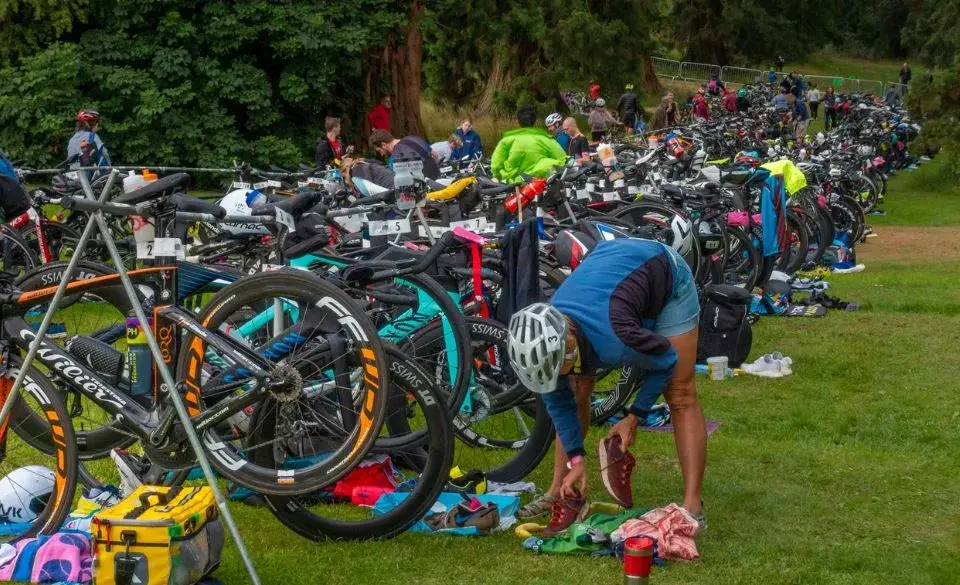
- Set up your transition area: Lay out your equipment in order. Helmet first, sunglasses inside, shoes pointed toward you, and race belt on top. Small adjustments can save big time.
- Brick workouts with focus on T2: Ride 30–45 minutes at moderate intensity, rack your bike, and head straight into a short 10-minute run. Focus on quick cadence and relaxed breathing.
- Limit clutter: Keep only what you’ll use in your zone. Simplicity reduces confusion and mistakes under fatigue.
Once a week, dedicate 15–20 minutes to transition practice (even during easier training phases). Over time, your movements will become smoother and faster without extra effort. This isn’t just about shaving seconds; it’s about building confidence and rhythm across the entire race. Efficient transitions keep your heart rate stable, your focus sharp, and your overall performance consistent. If you’re preparing for your first event, you can also read our First Triathlon Tips You Should Know for practical race-day advice and setup strategies that make your debut smoother and more enjoyable.
If you want personalized guidance, feedback, and accountability, our Triathlon Coaching service connects you with expert coaches who tailor plans based on your fitness, goals, and schedule. You’ll get more than a template—you’ll get a coach who sees *you*.
- ✔ Regular feedback and plan adjustments based on your progress
- ✔ Technique analysis for swim, bike, and run via video or live sessions
- ✔ One-on-one support to help you overcome training slumps or plateaus
Whether you’re chasing your first sprint finish or aiming for your next PR, get the support you need with SportCoaching.com.au.
Explore Triathlon CoachingBuilding Strength and Power for Sprint Triathlon Performance
Adding functional strength to your sprint tri training plan doesn’t mean spending hours in the gym. It means targeting movements that make your swim, bike, and run stronger and more efficient. Strength training enhances muscular endurance, improves posture, and helps prevent injuries that can derail training.
When integrated correctly, strength work supports every discipline. Strong glutes and hamstrings improve running economy, while a stable core maintains body position in the water and prevents fatigue on the bike. The key is consistency and choosing exercises that translate directly to triathlon performance.
Include two short strength sessions each week during your sprint triathlon training. Focus on movement quality, not heavy weight. Sessions can fit easily into recovery days or shorter training blocks.
- Lower body: Squats, lunges, and single-leg step-ups for running and cycling power.
- Core: Planks, side planks, and bird dogs for stability and swim alignment.
- Upper body: Band pulls, push-ups, and Y-T-W raises for swim propulsion and shoulder health.
Each session should take 25–30 minutes, keeping rest short and form sharp. During build phases, use moderate resistance and higher repetitions (10–15 per set). Two to three weeks before your race, reduce intensity to maintain strength without adding fatigue.
Strength work might not feel as specific as a brick session or threshold ride, but it plays a huge role in long-term development. A balanced sprint triathlon plan builds not only endurance and speed but also resilience. The quiet strength that carries you through the final kilometers when fatigue sets in. If you’re looking for local, hands-on support, our Triathlon Coaching in Melbourne offers customized swim, bike, and run training designed to help athletes of all levels improve performance and technique year-round.
Recovery and Rest - The Hidden Engine of Sprint Triathlon Training
Every sprint tri training plan must balance hard work with smart recovery. It’s during rest (not during training) that your body adapts, grows stronger, and builds endurance. Skipping recovery is one of the most common mistakes triathletes make, and it can quickly lead to fatigue or overtraining.
In a well-structured sprint triathlon training plan, recovery is not a break, it’s part of the plan. Every third or fourth week should be a lighter “recovery week” where training volume drops by about 30–40%. This lets your body absorb the stress of previous sessions and prepares you for the next training block.
Day-to-day recovery is equally important. Even a few simple habits make a big difference:
- Sleep: Aim for 7–9 hours per night. Growth hormone and muscle repair peak during deep sleep.
- Easy sessions: Keep recovery runs or spins at Zone 1 or very light effort. If you can’t hold a conversation, it’s too hard.
- Mobility work: Gentle stretching, foam rolling, or yoga 2–3 times per week reduces stiffness and improves flexibility.
- Hydration and fueling: Replenish fluids and carbohydrates within 30 minutes after training to jump-start recovery.
Active recovery days should leave you feeling better, not exhausted. Remember, improvement happens in the cycle of stress and rest. Without adequate recovery, your body can’t adapt to training loads effectively.
Top coaches build recovery directly into every sprint triathlon workout schedule. It’s what separates sustainable progress from burnout. Treat recovery as training, it’s the silent force that makes your next swim, ride, or run more productive than the last.
Pacing and Consistency The Keys to Sustainable Progress
The most effective sprint tri training plan isn’t defined by intensity, it’s defined by consistency. Training hard once in a while won’t move the needle nearly as much as training smart every week. Sprint triathlon success comes from small, steady improvements that build endurance and efficiency over time.
Pacing plays a huge role in that. It’s not just for race day, it’s a skill you practice in every workout. By pacing correctly, you train at the right effort levels and prevent burnout. Many new athletes push too hard on easy days and too soft on hard ones, which blurs training zones and slows progress.
Here’s how to pace effectively during your sprint triathlon workouts:
- Swim pacing: Start slightly under target speed, then settle into rhythm by the halfway point. Avoid sprinting off the line. Steady effort saves energy for the bike and run.
- Bike pacing: Keep power output or effort even, especially on hills. Overpacing early raises heart rate and makes the run much tougher.
- Run pacing: Begin conservatively, allowing your legs to adjust after the bike. Gradually lift effort each kilometer to finish strong.
- Workout pacing: Apply the same principle in training (hit target zones, not maximum effort). That’s how endurance builds sustainably.
To stay consistent, plan your week in advance and make training fit your schedule, not the other way around. Missed sessions happen; what matters is getting back on track. Even 20–30 minutes of focused work is better than skipping a day completely.
Ask any experienced coach, and they’ll tell you the same thing: pacing and consistency are what separate steady improvement from frustration. Nail those two, and every block of your sprint triathlon training plan will compound into lasting progress. To better understand how to plan your pacing and estimated race times, explore our Triathlon Calculator Guide for an easy way to estimate your swim, bike, and run splits for upcoming races.
Conclusion: Train Smart and Make Every Session Count
Building a successful sprint tri training plan isn’t about cramming in more miles. It’s about focused, structured work that fits your life. When you combine endurance sessions, interval training, brick workouts, and transition practice, you create a foundation that leads to consistent improvement without burnout.
Each element of your sprint triathlon training has a purpose. Long aerobic sessions develop endurance. Interval training raises your power and threshold. Transition drills improve efficiency. Together, they turn your preparation into performance. Whether you’re aiming to finish your first sprint triathlon or chasing a faster result, the formula stays the same. Train smart, recover well, and stay consistent.
As your race approaches, remember that every workout you complete builds confidence. The process itself is what transforms you into a triathlete. Stick to your plan, listen to your body, and make small adjustments as you progress. That’s how you arrive on race day feeling ready, not rushed.
Find Your Next Triathlon Race
Ready to put your training to the test? Here are some upcoming triathlon events matched to this article.
Karri Valley Triathlon 2026
Gold Coast T100 Triathlon 2026