What Exactly Is a (PR) Personal Record in Track?
A PR, or personal record in track, is your best time ever for a specific distance. It could be the 100m sprint, 400m, mile, or even a 5K. Any time you’ve officially run and timed counts. PRs can come from school meets, road races, or structured workouts.
If you ran a 6:30 mile last month and now hit 6:25, you’ve set a new PR.
Many runners also track PRs by surface (track, road, trail) and by season (season best vs lifetime best). Keep records for each type so you can measure progress in all conditions.
Tracking PRs gives you something to chase. Even when you’re not winning races, you’re still pushing your own limits. This creates a long-term mindset that values improvement over perfection.
You can also have multiple PRs for the same distance in different contexts. For example:
- Your 5K road PR
- Your 5K track PR
- Your treadmill 5K PR
These help you compare your progress in different environments.
Recording your PRs also helps prevent injury. If your times start to slow without explanation, it might be a sign of overtraining. Use your PR history as a feedback tool.
PR vs PB: What’s the Difference?
The difference between PR and PB in running is mostly about location. In the U.S., runners say PR (personal record). In the U.K. and Australia, they say PB (personal best). They mean the same thing, your fastest time ever.
You’ll also see terms like SB (season best), AR (area record), and NR (national record). But PR is the one most people track day to day.
Using PR and PB interchangeably online can also help with search and visibility.
Understanding the language around these terms helps when you join online running groups, read articles, or watch international meets. Being familiar with PBs, SBs, and PRs allows you to talk the same language as other runners around the world.
Some training apps like Strava or Garmin will mark your run as a new PR, while others use PB. These platforms usually log the times automatically and compare them to your history. Make sure your distances are consistent so your PRs reflect true progress.
If you’re a coach, encourage your athletes to know both terms. It’s a simple way to boost confidence and recognize progress, no matter what country you’re in.
Why Personal Records Matter
PRs help you measure progress. You don’t need to win a race to know you’re improving.
They show your training is working. They’re also a great motivation tool. You can set small goals, like trimming 2 seconds off a 400m time, or long-term goals like breaking a 5-minute mile.
Coaches track PRs to adjust workouts. They give context to your fitness level and help set race strategy.
When you know your PR, you can plan your pacing. For example, if your 800m PR is 2:45, you know to aim for 82 seconds per lap. You can also identify weaknesses, like if you fade in the second half of a race.
Chasing PRs is especially helpful during seasons when you’re not competing. You can run time trials or solo workouts and still have a target to hit. This keeps motivation high.
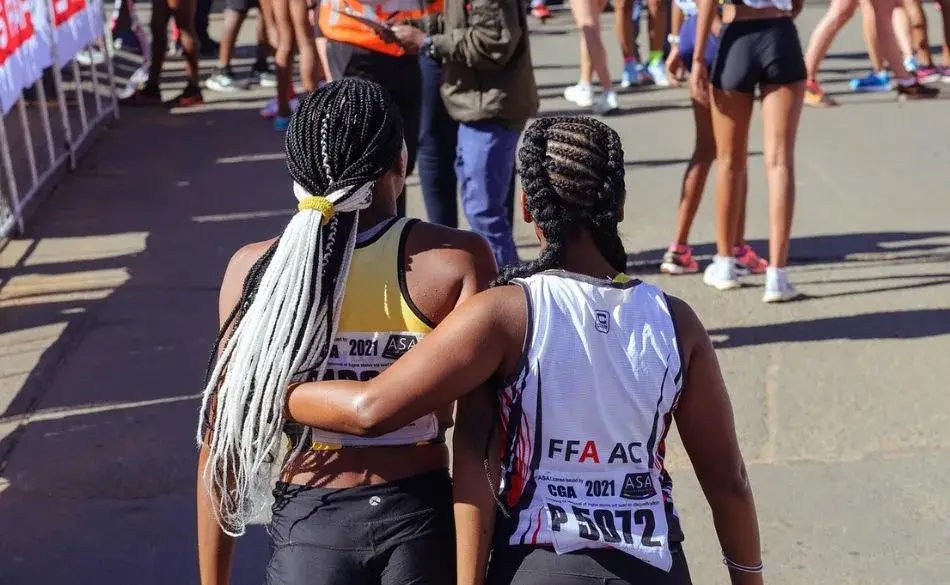
PRs also give you a sense of ownership. No one else can take your PR from you. Whether you’re first or last in a race, a new PR is always a personal victory.
Even elite athletes celebrate PRs. World records come and go, but a personal record is something every runner values.
How to Track Your PR
Use these tools:
- Official Race Results: Most meets and races post times.
- GPS Watches and Apps: Garmin, Strava, and others automatically log best times.
- Training Logs: A simple notebook or spreadsheet works. Record date, time, distance, weather, and effort.
Extra tips:
- Track your splits.
- Note shoe model and how you felt.
- Record both workout and race PRs, but label them clearly.
If you’re serious about progress, reviewing your past PRs can guide your training. For example, if you ran a mile PR on a day you slept well, ate a good breakfast, and ran at 6 p.m., those details matter.
You can also use apps that show pace trends. Are you speeding up in the first half and fading? Splits tell a story.
Some runners even track gear changes, like switching to lighter shoes or running in new socks. These small tweaks sometimes lead to big results.
If you’re a coach or parent, help younger runners start a habit of logging PRs early. It builds confidence and teaches goal setting.
Setting Goals Using Your PR
👉 Swipe to view the full table →
| Runner Level | Target Event | Short-Term Goal (4–6 Weeks) | Season Goal (8–12 Weeks) | Stretch Goal (Long-Term) |
|---|---|---|---|---|
| Beginner | 1 Mile | Run entire mile without walking | Beat previous PR by 30 seconds | Run a sub-8:00 mile |
| Intermediate | 400 m | Improve by 2 seconds | Run under 70 seconds | Break 65 seconds consistently |
| Recreational Adult | 5K | Cut 1 minute from finish time | Run a sub-25:00 5K | Break 23:00 and sustain pace |
| Competitive HS Athlete | 800 m | Refine pacing strategy | Lower PR by 3–5 seconds | Qualify for state championship |
| Returning Runner | Any | Rebuild endurance base | Match pre-injury PR | Surpass lifetime PR |
Adjust your training to match your goal. Increase volume, add intervals, or work on pacing.
Use the SMART goal method:
- Specific: Focus on one distance.
- Measurable: Know your current time.
- Achievable: Aim for a small improvement.
- Relevant: Match the goal to your race season.
- Time-bound: Set a deadline, like “in 8 weeks.”
Setting too many goals at once makes progress hard to track. Stick to one PR goal per race distance. Once you hit it, set the next one.
Also, celebrate progress. Even if you don’t hit your goal, just running close to a PR shows growth. Progress often comes in waves.
If you’re not sure how to set goals, ask your coach or running group for advice. Their experience can help you build a smart plan.
Need a real-world target? If your next milestone is a faster 5 K, this coaching plan for running a 28-minute 5 K breaks down pacing, workouts, and week-by-week progressions.
How to Improve Your PR
To beat a PR, you need smart training:
- Speed Work: Intervals, sprints, and strides build pace.
- Endurance: Longer runs improve aerobic base.
- Strength Training: Core and leg work adds power.
- Recovery: Sleep and nutrition affect performance.
Try one hard session, one long run, and two easy days per week. Review data to find weak spots (e.g., slowing in the last lap) and train to improve them.
Incorporating strength training can significantly enhance your running performance. Explore this
10-week strength training program for runners to build speed, endurance, and reduce injury risk.
Also, make sure your training includes race-specific work. For example:
- 200m repeats for 800m races
- Mile repeats for 5Ks
- Sprint drills for block starts
Recovery matters too. Without it, training doesn’t stick. Schedule rest days and pay attention to soreness. If you’re constantly tired, you’re likely overtraining.
Finally, stay consistent. One great workout won’t lead to a PR. But 8–12 weeks of steady training can make a big difference.
Finally, make sure your toughest workouts are structured correctly. See What Hard Running Days Should Really Look Like for sample sessions and smart recovery tips.
How Weather Affects PR Attempts
Heat, wind, rain, and altitude can all affect performance:
- Heat/Humidity: Slows you down. Hydrate and adjust expectations.
- Wind: Headwinds slow sprints; tailwinds help.
- Rain: Wet tracks can affect traction.
- Cold: Muscles may tighten. Warm up longer.
Track conditions in your log. Compare similar-weather performances.
Some days just aren’t PR days, and that’s okay. Use those races to learn pacing, build mental toughness, or test a strategy.
If conditions are poor, focus on execution instead of the clock. Did you run an even pace? Did you push in the last lap? These efforts matter.
Remember: your body works harder in extreme weather. A slower time on a hot day might be just as impressive as a faster time in perfect conditions.
If you’re trying to plan a big PR attempt, choose a race in a cooler climate or at sea level. These small choices improve your chances.
PR Benchmarks by Age and Experience
Benchmarks help provide context but aren’t a rule. Everyone progresses differently.
If you’re ahead of these times, great. If not, that’s okay too. Focus on your own progress.
Also, age and experience play big roles. A 13-year-old who just started running won’t have the same PR as a 17-year-old varsity athlete.
Use benchmarks to motivate, not compare. And update them yearly. As you improve, your old goals become new baselines.
Some runners use age-graded calculators online to compare performances. These tools adjust times based on age and gender to help you track fitness more fairly.
👉 Swipe to view the full table →
| Event | Middle School | High School | College |
|---|---|---|---|
| 100 m | 13–16 s | 12–13 s | < 11 s |
| 400 m | 70–90 s | 54–65 s | < 50 s |
| Mile | 7:00–9:30 | 4:50–6:30 | < 4:20 |
| 5 K | 24–32 min | 17–21 min | < 15:30 |
Final Thoughts: Your Record, Your Progress
A personal record in track is more than a number. It’s proof that your training is working.
Keep tracking, training, and trying. You don’t need to be the fastest runner to feel proud of setting a new PR.
Set goals, be consistent, and review your data. Improvement takes time, but with the right focus, it always comes.
Even when your pace plateaus, the habit of chasing a PR builds resilience. You learn discipline, self-awareness, and how to bounce back from setbacks.
And remember: every elite runner started with a first PR. They built from it. So can you.
Celebrate every small improvement. Share your wins with your coach, your team, or even just your training log. Those moments matter.
Your next PR might be one run away.