






Want help turning consistency into progress? Coaching keeps your training simple, structured, and sustainable.
Start Coaching →
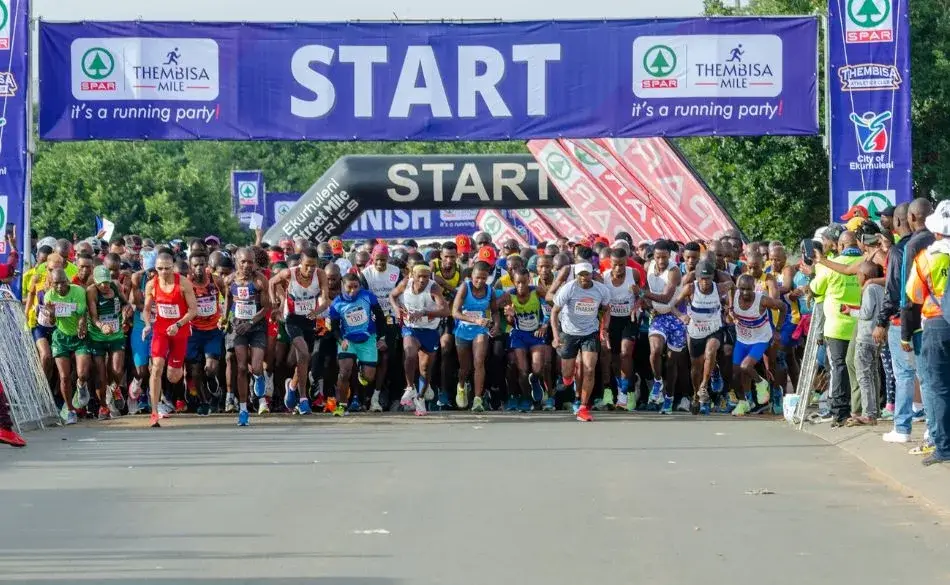
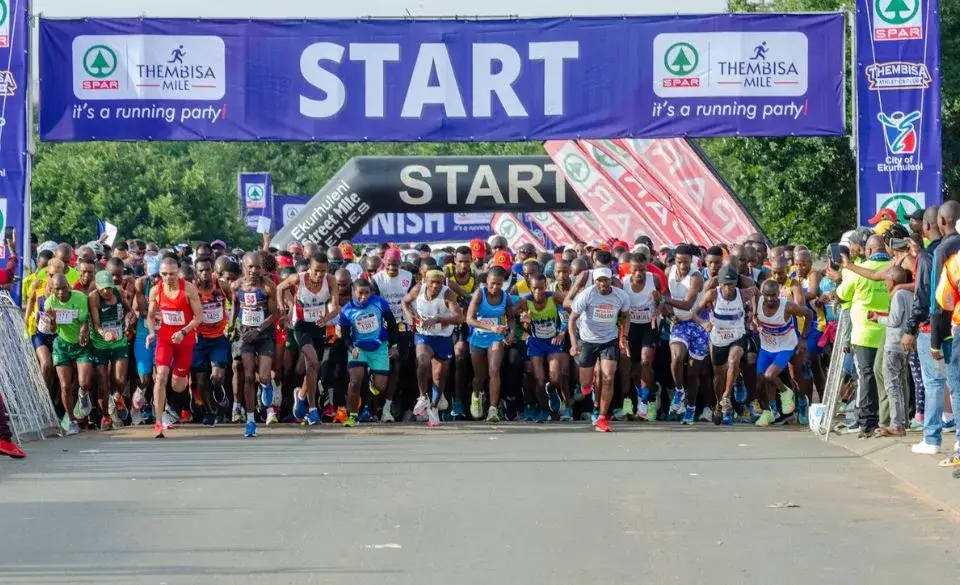
Large group of runners starting a 5K community race, showing why a 5K is so popular with beginners and casual runners

Last updated:

Why the 5K Is the World’s Most Popular Race Distance

The 5K is the most entered road race distance on earth. In the United States alone, roughly 2.6 million people complete a 5K event each year, and participation grew by approximately 740% between 2000 and 2016. In Australia, the free weekly parkrun — held every Saturday morning at venues across the country — has made the 5K the most familiar distance in recreational running. There are 5K charity events, fun runs, colour runs, glow runs, corporate challenges, school fitness events, and elite road races all sharing the same 5,000-metre distance. No other race length comes close to matching its reach. This article explains exactly why — what it is about 3.1 miles that makes it the default starting point for new runners and a permanent fixture for experienced ones.

Chat with a SportCoaching coach

Not sure where to start with training?

Tell us your goal and schedule, and we’ll give you clear direction.

No obligation. Quick, practical advice.

Article Categories:

Explore our running training content for more helpful articles and resources.

Quick Answer

The 5K sits at the perfect intersection of achievable and meaningful. It’s short enough to complete after 6–8 weeks of beginner training, long enough to feel like a genuine athletic challenge, and fast enough to finish well within a morning. It accommodates walkers, joggers, and competitive runners on the same course. Recovery takes days, not weeks. And the global parkrun movement has made the 5K the most socially accessible running event in history — free, untimed pressure, and open to everyone every single week.

The Distance Makes Sense to People

One of the most underappreciated reasons for the 5K’s popularity is cognitive. Five kilometres is a number that lands. People can picture it. It’s a manageable unit — the length of a few city blocks, the distance to a nearby suburb, something you might cycle in 15 minutes. A marathon, by contrast, is abstract to most people who haven’t run one. Even a 10K can feel conceptually distant. A 5K sits within a range of distances people recognise from everyday life, and that familiarity makes it feel possible before training has even begun.

This matters enormously at the moment a person considers their first race. The barrier to signing up isn’t fitness — it’s belief. If you can picture yourself finishing the distance, you’re far more likely to commit to training for it. The 5K clears that psychological hurdle better than any other road race distance. Our guide on how many miles a 5K is breaks down what the distance looks and feels like in practical terms for anyone approaching it for the first time.

It's Achievable From Almost Any Starting Point

The 5K is the only road race distance that genuinely requires no prior running background to target. A person who hasn’t run in years — or ever — can realistically prepare for a 5K in six to ten weeks using a structured run-walk programme. The Couch to 5K concept exists precisely because the distance is achievable enough to make that progression credible. No equivalent programme exists for a 10K or half marathon targeting non-runners, because the timeline would be too long to sustain motivation.

The run-walk approach also means the 5K is never fully exclusive. Walkers and run-walkers compete in the same event as runners. There’s no minimum speed required, and no course cut-off at most community events. This radical inclusivity — everyone from a first-time walker to a club runner chasing a personal best sharing the same start line — is unique to the 5K in mainstream road racing. Our guide on slow jogging versus fast walking covers the physiological case for why a run-walk approach at the 5K distance is not just acceptable but often the smartest strategy for beginners.

That inclusivity is supported by data. Running USA’s 2012 analysis showed that 58% of 5K participants were women — a participation profile that is the reverse of gender ratios in longer distance events. The 5K’s accessibility actively removes barriers that longer races create, and the result is a broader, more diverse participation base than any other distance.

Training Time Is Measured in Weeks, Not Months

Getting ready for a 5K takes six to eight weeks for most beginners. Getting ready for a half marathon takes twelve to sixteen. Getting ready for a marathon takes sixteen to twenty. This difference in training commitment is decisive for the vast majority of recreational runners who are balancing work, family, and competing demands on their time.

Six weeks is a manageable mental horizon. It’s close enough to feel real and far enough to allow meaningful progress. A beginner can see the finish line of training before they start, which makes it easier to commit. The training itself also fits into normal life — 5K training typically involves three to four runs per week of 20–40 minutes each. It doesn’t require blocking out Sunday mornings for three-hour long runs, and it doesn’t demand the kind of weekly mileage that disrupts sleep, appetite, and social life. Our running frequency guide covers how a 3-day training week is genuinely sufficient to prepare for a 5K, which matters for runners fitting training around a full schedule.

For experienced runners, the short training cycle is equally valuable in the other direction. A 5K training block of six weeks can be inserted between longer training cycles, sharpening speed and testing fitness without the months of commitment a marathon cycle demands. The 5K serves as a fitness test, a speed development tool, and a racing experience that doesn’t require extended recovery — you’re back to normal training within days of a 5K race. Our sub-24 minute 5K training guide covers what a focused 5K block looks like for runners working toward a performance target.

Recovery Is Fast

After a marathon, most runners need two to four weeks before they can train hard again. After a half marathon, one to two weeks. After a 5K, most runners are fully recovered within two to four days. This short recovery window makes the 5K uniquely repeatable — you can race one every few weeks during a season without disrupting training, which means faster feedback on progress and more chances to improve.

The fast recovery also means the 5K is approachable for older runners and those managing health conditions, for whom the recovery demand of longer distances is a genuine barrier. A 60-year-old who races a 5K every two to three weeks during parkrun season accumulates far more race experience and fitness stimulus than one who targets a single half marathon. Our guide for runners over 60 covers how the 5K fits into an age-appropriate training and racing programme.

Parkrun Made the 5K a Weekly Ritual

It’s impossible to explain the 5K’s modern popularity without acknowledging parkrun. Founded in the UK in 2004 and now operating globally, parkrun is a free, timed 5K event held every Saturday morning at parks and open spaces worldwide. Participation is free, results are automatically recorded, and the events are explicitly welcoming to walkers, dogs, prams, and all paces. It is, in every meaningful sense, the most accessible mass-participation running event ever created.

Parkrun has done more to normalise the 5K than any other single development in running. It turned a race distance into a weekly community ritual — something people do every Saturday with friends, families, and neighbours regardless of fitness level or competitive ambition. It removed the cost barrier (no entry fee), the commitment barrier (you can show up any week without pre-registration for a specific date), and the intimidation barrier (everyone from elite club runners to first-timers to walking groups shares the same course). Our parkrun guide for Australia covers how to find your nearest event and what to expect on your first visit.

In Australia, parkrun operates at hundreds of venues every Saturday morning. The number of registered participants runs into the millions nationally. For enormous numbers of Australians, the 5K parkrun is their first — and often most consistent — running experience. The 5K’s popularity and parkrun’s popularity are now inseparable.

It Works for Every Type of Runner

One of the most remarkable things about the 5K is how useful it is across the entire running spectrum — not just for beginners. The distance requires both aerobic endurance and anaerobic speed, which makes it a genuinely challenging race even for highly trained athletes. Elite male runners compete in the 13–14 minute range; elite women in the 15–16 minute range. These performances require exceptional VO2 max, lactate threshold, and running economy — the same qualities that define performance at longer distances, compressed into a shorter window.

For intermediate runners, the 5K serves as the most reliable fitness benchmark available. Because it’s raced frequently and the results are repeatable across different courses and conditions, 5K times offer better insight into current fitness than infrequent longer races. It’s also used by coaches as a predictor for half marathon and marathon performance — a runner’s 5K time reliably estimates what they’re capable of at longer distances. Our running pace calculator uses 5K time as one of its key inputs for projecting performance at other distances.

For experienced runners who are also managing other life commitments, the 5K is the distance they can always find time to train for. Our guide on whether running twice a week is enough covers how even two training sessions per week can maintain 5K fitness — a threshold that other distances can’t honestly make.

The Events Are Everywhere

A practical but underrated reason for the 5K’s dominance: there are simply more of them. The 5K is the default event distance for charity fun runs, corporate team events, school sports days, community festivals, and new race series. Any organisation looking to host a running event almost always defaults to 5K — it’s accessible to the widest possible participant pool, it fits neatly into a morning, and it requires minimal course infrastructure compared to longer events.

This creates a self-reinforcing cycle. More events at 5K means more exposure to the distance. More exposure means more people identifying it as their natural race distance. More participants sustains the supply of events. The 5K ecosystem is self-generating in a way that longer distances simply are not — there aren’t charity half marathons every weekend in every suburb. There are charity 5Ks.

In the US, the 5K made up close to half of all paid race registrants in recent years according to race discovery services. No other single distance comes anywhere near that market share.

The 5K as a Gateway Race

The 5K is not the end point for most runners who take it seriously — it’s the beginning. The vast majority of runners who complete their first half marathon, marathon, or triathlon started with a 5K. The distance serves as the gateway to the wider running world: it provides the first experience of race-day preparation, the start line, pacing under pressure, the finish chute, and the satisfaction of completing a goal. It answers the question “can I do this?” in the most efficient and accessible way possible.

From the 5K, the natural next step is the 10K — double the distance with a similar training commitment. From there, the half marathon. The progression is logical, gradual, and manageable. The 5K is where that progression begins for almost everyone.

It’s also worth noting that many runners never leave the 5K. Not because they lack ambition, but because they’ve found what they enjoy. Running a fast 5K every Saturday at parkrun, slowly improving over months and years, is a perfectly valid and deeply satisfying relationship with running. The distance accommodates obsessive pursuit of a personal best just as well as it accommodates a casual Saturday morning jog. That range of valid relationships with the same distance is genuinely rare in sport.

5K Times by Experience Level

👉 Swipe to view full table
Runner typeTypical 5K timeMin/km paceTraining required
Walker45–60 min9:00–12:00None — walk at comfortable pace
Run-walk beginner35–50 min7:00–10:006–8 weeks run-walk programme
Beginner runner28–38 min5:36–7:368–12 weeks consistent training
Recreational runner22–28 min4:24–5:36Regular training, 3–4 runs/week
Club / competitive runner18–22 min3:36–4:24Structured training with intervals
Advanced club runner15–18 min3:00–3:36High-volume, quality-focused plan
Elite runner13–15 min2:36–3:00Full-time training

The range from 13 minutes to 60 minutes at the same race distance, on the same course, in the same event — this is the 5K’s defining characteristic. No other mainstream race distance contains that breadth of performance within a single event. It’s why a 5K in your local park on Saturday morning can contain a sub-16 minute club runner and a 55-minute first-timer, both genuinely participating and both genuinely finishing. Our guide on running 3km every day covers the consistency principles that underpin steady improvement toward any 5K time target.

What to Do Once You've Decided on a 5K

If you’re reading this because you’re considering your first 5K, the next step is straightforward: find an event and start training. Parkrun is the easiest entry point in Australia — free, untimed pressure (though your time is recorded), welcoming to all paces, and available every Saturday. For a first race with a slightly more formal feel, most city and regional running clubs host 5K events throughout the year.

On the training side, a beginner programme built around three sessions per week of 20–35 minutes is sufficient to prepare for a first 5K in eight weeks. The key is consistency over those weeks — not the pace or distance of any single run, but showing up reliably for each session. Our guide on interval running covers how to add simple speed work once you have a base of easy running, which is the most effective way to improve 5K time once you can run the distance comfortably.

Ready to Train for Your 5K?

Whether it's your first 5K or you're chasing a new personal best, a structured training plan takes the guesswork out of preparation — telling you exactly what to run, when, and at what effort.

FAQ: Why Is a 5K So Popular?

Why is a 5K so popular?
The 5K sits at the intersection of achievable and meaningful — short enough for beginners to complete after 6–8 weeks of training, long enough to feel like a genuine athletic challenge. It accommodates walkers, joggers and competitive runners on the same course. Parkrun has made the 5K a free weekly community ritual attended by millions. Recovery takes days, not weeks, making it repeatable across a whole season.

Is a 5K good for beginners?
Yes — it’s the ideal first race distance for most beginners. It can be completed using a run-walk approach with no requirement to run the full distance, can be prepared for in 6–10 weeks, and finishes in under an hour for almost all participants. The 5K is explicitly welcoming at community events — there is no minimum pace and no course cut-off at most events including parkrun.

How long does it take to run a 5K?
Most recreational runners complete a 5K in 22–35 minutes. Beginners using run-walk typically finish in 38–50 minutes. Walkers take 45–60 minutes. Elite men approach 13–14 minutes; elite women around 15–16 minutes. For specific time targets and pace charts, our running pace calculator shows what training pace is needed to hit any given finish time.

How many people run 5K races?
In the US, approximately 2.6 million people complete 5K races annually, and participation grew by roughly 740% between 2000 and 2016. Parkrun alone has registered more than 10 million participants worldwide. The 5K accounts for close to half of all paid road race registrations in the US.

What should a beginner aim for in a 5K?
For a first 5K, finishing is the goal — regardless of time. After the first event, sub-40 minutes is a natural first time target for most new runners. Sub-30 minutes is achievable within 6 months of consistent training. See our sub-24 minute 5K training guide for what focused training toward a specific time target looks like.

Find Your Next Running Race

Ready to put your training to the test? Here are some upcoming running events matched to this article.

Graeme - Head Coach and Founder of SportCoaching

Graeme

Head Coach & Founder, SportCoaching

Graeme is the founder of SportCoaching and has coached more than 750 athletes from 20 countries, from beginners to Olympians, in cycling, running, triathlon, mountain biking, boxing, and skiing. His coaching philosophy and methods form the foundation of SportCoaching's training programs and resources.

750+
Athletes
20+
Countries
7
Sports
Olympic
Level

Start Your Fitness Journey with SportCoaching

No matter your goals, SportCoaching offers tailored training plans to suit your needs. Whether you’re preparing for a race, tackling long distances, or simply improving your fitness, our expert coaches provide structured guidance to help you reach your full potential.

  • Custom Training Plans: Designed to match your fitness level and goals.
  • Expert Coaching: Work with experienced coaches who understand endurance training.
  • Performance Monitoring: Track progress and adjust your plan for maximum improvement.
  • Flexible Coaching Options: Online and in-person coaching for all levels of athletes.
Learn More →

Choose Your Next Event

Browse upcoming Australian running, cycling, and triathlon events in one place. Filter by sport, check dates quickly, and plan your training around something real on the calendar.

View Event Calendar