How to Perform Plyometric Push-Ups Correctly
Mastering the plyometric push-up takes more than strength. It’s about control, coordination, and timing. Done right, this move activates your fast-twitch muscle fibers and builds the kind of explosive upper body power you can feel in every rep. Done wrong, it can strain your shoulders or wrists, so let’s break it down the right way.
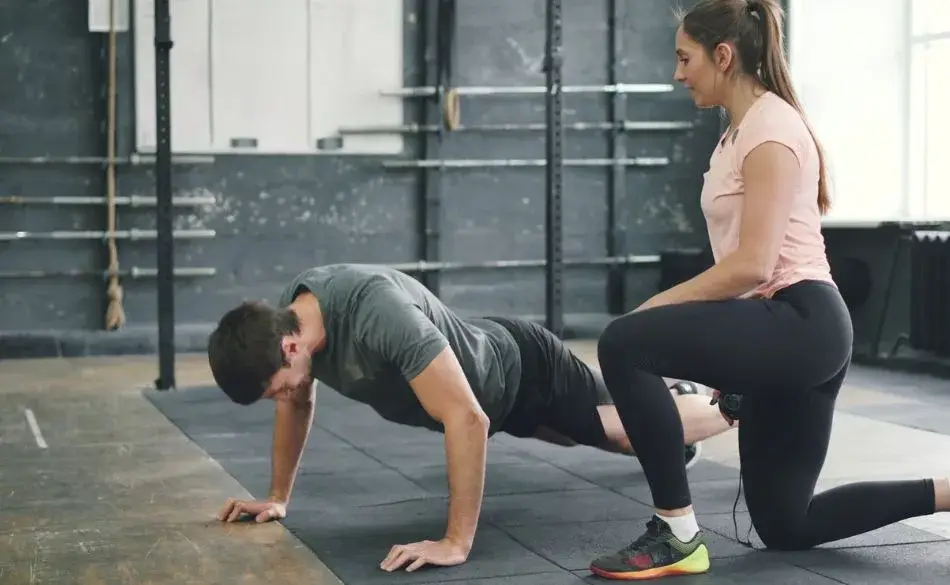
Start with a strong base. Your body should form a straight line from head to heels. Engage your core stability to keep your hips from sagging and your lower back supported. As you lower your chest toward the floor, inhale slowly. When you reach the bottom, push through your palms with everything you’ve got (like you’re trying to launch yourself upward).
The key is to keep your form tight and your landing soft. Think of the ground as a springboard, not a crash pad. If you land stiff or collapse, you’ll lose the benefits of the plyometric training and risk injury. Instead, absorb the landing by bending your elbows slightly and staying in control.
Here’s a simple step-by-step guide:
- Start in a high plank position with your hands shoulder-width apart.
- Lower your chest until it nearly touches the ground.
- Push up explosively, lifting your hands completely off the floor.
- Land softly and immediately move into the next repetition.
- Keep your head neutral and your gaze slightly forward.
For beginners, start small. You can modify by pushing onto an elevated surface like a bench or step. Once you build confidence and strength, progress to clap push-ups or even resistance band push-ups for added challenge.
Consistency is key. Even two to three sessions per week can help you improve your upper body strength, speed, and coordination. Over time, your push-ups will feel lighter, faster, and more powerful. Proof that your plyometric push-up form is working.
For anyone looking to further improve chest strength and power, exploring different types of chest-focused training can make your results even more complete.


What Makes Plyometric Push-Ups So Effective?
When you perform a plyometric push-up, your muscles do more than just push your body upward. They load, contract, and release energy in one explosive motion. This rapid sequence (called the stretch–shortening cycle) is what makes the exercise so powerful. It trains your fast-twitch muscle fibers, the ones responsible for quick bursts of strength, speed, and agility.
Unlike standard push-ups that focus on slow, controlled strength, plyometric push-ups use quick, explosive energy to engage more muscle fibers and improve coordination. This kind of fast-twitch activation is key to developing speed and athletic power. You can read more about the science behind these movements in this Healthline guide on plyometric exercises.
One of the biggest advantages of upper body plyometrics is that they develop strength you can actually use. Think of it like a rubber band snapping back after a stretch. Over time, you’ll notice improvements in upper body explosiveness, power output, and even posture.
You’ll also engage your core stability more than you expect. Each rep asks your midsection to stay tight and your shoulders to control impact on landing. Done with good form and smart progressions, this strengthens stabilizing muscles, which may lower the chance of shoulder or wrist strain while you build power.
Here’s a quick comparison to show how plyometric training stands apart from standard push-ups:
👉 Swipe to view full table
| Exercise Type | Main Focus | Muscle Fiber Type | Primary Benefit |
|---|---|---|---|
| Traditional Push-Up | Endurance & Control | Slow-twitch | Builds stability and muscle tone |
| Plyometric Push-Up | Explosive Power | Fast-twitch | Increases strength, speed, and reaction time |
By combining both styles, you’ll create a balanced plan that develops strength, speed, and control at the same time.
Building explosive power requires the right balance between training and recovery. Our Running Coaching programs help you structure your sessions, manage recovery, and improve overall performance. Learn how to balance intensity and rest to keep your body in top form.
- Custom training plans: built around your goals, schedule, and recovery needs
- Smart recovery guidance: learn when and how to recover effectively after power training
- Performance improvement: combine focused training with proven recovery techniques
- Ongoing feedback: professional coaching to help you progress safely and consistently
Train with purpose, recover with precision, and reach your next level of performance.
Start Personalized Coaching →

What Are the Real Benefits of Plyometric Push-Ups?
Plyometric push-ups do more than build a strong chest. They develop real, usable power. Each rep teaches your body to generate force quickly, a skill that translates to faster reactions and stronger movements across every sport and activity. Whether you’re sprinting, throwing, or striking, this kind of upper body power gives you a noticeable edge.
The secret lies in the stretch–shortening cycle, where your muscles store and release energy in a split second. This process activates fast twitch muscle fibers that are responsible for speed and explosiveness. Over time, you’ll notice improved upper body explosiveness and smoother, more coordinated movement patterns.
Each repetition also improves your control. As you launch upward and land, your shoulders, elbows, and wrists learn to absorb and redirect force efficiently. This increases joint stability and can support shoulder health when performed with proper form and gradual progression. Plus, your core has to stay locked in to prevent energy leaks, making core stability a major side benefit supported by sports-science research.
Beyond strength, these movements provide a conditioning boost. Quick, powerful sets raise your heart rate and challenge your endurance, giving you both strength and cardio benefits in one compact session. For busy athletes or fitness enthusiasts, this makes plyometric training one of the most efficient workouts you can do.
- Power Transfer: Converts gym strength into real athletic speed and reactivity.
- Joint Stability: Reinforces shoulder and wrist control through repeated force absorption.
- Core Activation: Builds total-body tension and balance during every rep.
- Training Efficiency: Develops strength and cardiovascular endurance simultaneously.
- Performance Carryover: Boosts explosive ability for sports, lifting, and daily movements.
By blending explosive push-ups with traditional push-ups, you create a balanced routine that improves strength, coordination, and power output together. Over time, your performance, posture, and reaction speed all benefit.


How to Safely Add Plyometric Push-Ups to Your Workout Routine
Adding plyometric push-ups to your program can deliver big results, but only if you build up to them the right way. Because these are high-intensity, high-impact movements, preparation and progression matter just as much as power. The goal is to train smart, not just hard.
Before starting, make sure you can perform at least ten to fifteen strong, controlled traditional push-ups without your hips sagging or your shoulders rotating forward. This ensures you’ve built the foundation of upper body strength and core stability needed for explosive training. Always begin each session with a proper warm-up that includes dynamic shoulder, chest, and core activation drills to prime your muscles for plyometric training.
If you’re new to plyometric push-ups, begin with smaller, less demanding variations and gradually increase difficulty. Here’s a progression path to safely integrate explosive push-ups into your plan:
- Phase 1 – Elevated Push-Ups: Start by performing push-ups on a stable platform or bench to reduce load while practicing controlled landings.
- Phase 2 – Power Push-Ups: Push forcefully off the ground without lifting your hands, focusing on speed through the concentric phase.
- Phase 3 – Plyometric Push-Ups: Lift your hands slightly off the floor at the top of each rep to train quick force production.
- Phase 4 – Clap Push-Ups: Add a hand clap at the top for maximum explosiveness once strength and stability improve.
- Phase 5 – Advanced Variations: Try resistance bands, alternating-arm takeoffs, or elevated landings for extra challenge.
Recovery is critical. Since upper body plyometrics stress joints and muscles intensely, schedule at least forty-eight hours between sessions. Combine your push-up days with lower body plyometric exercises like jump squats on alternate days to spread out fatigue and maintain balanced power development.
Finally, listen to your body. Sharp pain or joint discomfort isn’t normal fatigue, it’s a sign to pause and reassess technique. When you respect recovery and form, plyometric push-ups can safely elevate your strength and conditioning to new levels. If you’re looking to add more variety to your arm training without using equipment, check out this guide on how to work out your biceps without dumbbells for more ideas.
Explosive upper-body strength and endurance go hand in hand with powerful cycling performance. Our Cycling Coaching programs are designed to help athletes develop balanced power, enhance core control, and manage recovery—perfect for riders and cross-trainers looking to build full-body performance through structured, progressive training.
- Explosive strength integration: training sessions that complement upper-body power work
- Balanced endurance and control: build strength and stability that transfers to cycling and overall fitness
- Smart recovery planning: reduce fatigue and improve muscle readiness between workouts
- Personalized progression: expert feedback to guide performance and prevent overtraining
Combine power, precision, and recovery with a cycling coaching plan tailored to your performance goals.
Start Cycling Coaching →
Common Mistakes and How to Fix Them
Even experienced athletes can make errors when performing plyometric push-ups. Because these movements are explosive, small technique issues can quickly lead to inefficiency or injury. Recognizing and correcting these mistakes early keeps your plyometric training both safe and effective.
1. Letting Your Core Collapse
One of the most common problems is losing tension through the midsection. When your hips sag or rise, you lose power transfer and stress your lower back. The fix is simple, brace your core stability as if preparing to take a punch, keeping your body in a straight line from head to heels. Practice holding this alignment during standard push-ups before progressing to explosive push-ups.
2. Landing Too Hard
A heavy, uncontrolled landing can strain your wrists and shoulders. Focus on landing softly by bending your elbows as you return to the ground, like a spring absorbing impact. Imagine catching yourself quietly. Over time, this soft landing improves joint control and overall shoulder health.
3. Rushing Progressions
It’s easy to get excited and move straight to clap push-ups or advanced versions. But without a solid base of strength and stability, this approach leads to fatigue or form breakdown. Take your time with each stage, mastering the mechanics before adding speed or height. Quality beats quantity every time.
4. Ignoring Recovery
Because upper body plyometrics are intense, doing them daily is a recipe for overtraining. Muscles and connective tissues need at least forty-eight hours to recover and adapt. Alternate between push, pull, and lower-body power days to give your system room to grow stronger.
5. Poor Hand Positioning
Placing your hands too far forward or wide limits force generation and strains your shoulders. Keep your hands slightly wider than shoulder-width with fingers spread for balance and stability. This small adjustment increases your pushing power and control.
By avoiding these mistakes, you’ll get the most out of every rep while reducing injury risk. Clean form, patience, and proper rest transform plyometric push-ups from a risky move into a powerful training tool that builds true athletic performance.


Building a Complete Routine with Plyometric Push-Ups
Now that you understand how to perform and progress your plyometric push-ups, it’s time to build them into a full routine. Whether you’re training for athletic performance, strength, or general fitness, structure is what turns effort into results. The key is balancing intensity with recovery and pairing explosive movements with stability work.
Start by using explosive push-ups as a primary power exercise two to three times per week. Place them early in your workout (right after your warm-up) when your muscles are fresh and your nervous system is primed for speed. Keep the reps low and the quality high. Focus on power, not volume.
Here’s an example of how you can integrate plyometric training into your weekly plan:
- Day 1: Plyometric Push-Ups (3–5 sets of 5 reps) + Dumbbell Press + Core Work
- Day 2: Lower Body Plyometrics (Jump Squats, Bounding) + Mobility Work
- Day 3: Rest or Light Cardio (Active Recovery)
- Day 4: Traditional Push-Ups (3 sets of 15–20) + Shoulder Stability Drills
- Day 5: Plyometric Push-Ups (3 sets of 6–8) + Pull Exercises + Core Stability
Cycle intensity every four to six weeks. For example, you might increase height or resistance bands for two weeks, then back off for one to recover. This mirrors how athletes structure strength and conditioning blocks for long-term progress.
Finally, remember that upper body plyometrics thrive on precision. It’s not about who can clap the loudest, it’s about controlled power and proper landing mechanics. Keep your focus on form, stay patient with your progressions, and respect recovery. Over time, you’ll feel more explosive, stable, and confident in every push and movement you perform.


Plyometric Push-Ups vs Traditional Push-Ups — What’s the Difference?
At first glance, plyometric push-ups might look like regular push-ups with extra flair. But beneath the surface, they’re completely different beasts. The main difference lies in intent. A standard push-up builds strength and endurance through controlled movement. A plyometric push-up, on the other hand, focuses on explosive power (how fast and forcefully you can generate movement).
Traditional push-ups emphasize the slow-twitch muscle fibers responsible for sustained effort. You’re building control, stability, and muscular endurance. In contrast, explosive push-ups rely on fast-twitch muscle fibers, which are responsible for bursts of speed and power. This shift in activation changes everything, from the type of strength you gain to how your body adapts.
The other big difference is neuromuscular. Plyometric training teaches your brain and muscles to fire together faster, a process known as improving your rate of force development. This skill carries over to sprints, throws, or even quick changes of direction. That’s why athletes often include both push-up styles in their strength and conditioning programs.
There’s also a recovery component. Because upper body plyometrics are more demanding on the joints and nervous system, you need longer rest between sets and workouts. Traditional push-ups can be performed more frequently since they place less stress on connective tissue. If you enjoy explosive, full-body movements that test both endurance and strength, you’ll love the intensity of the Navy Seal burpees workout. A powerful complement to plyometric push-ups.
Think of it this way: traditional push-ups build your engine, while plyometric push-ups fine-tune your acceleration. Together, they create the perfect balance of strength, control, and power. Essential for any well-rounded fitness routine.
Explosive strength training, like plyometric push-ups, plays a major role in developing total-body power and control. Skills that directly enhance triathlon performance. Our Triathlon Coaching programs combine structured endurance sessions with targeted strength and conditioning work to help athletes move efficiently, recover faster, and perform stronger across all three disciplines.
- Explosive power development: strength sessions that complement swim, bike, and run performance
- Functional strength training: build coordination, balance, and body control through movement-focused workouts
- Smart recovery structure: reduce fatigue and improve consistency with a personalized training load
- Performance-focused coaching: ongoing feedback to refine form, pacing, and recovery routines
Combine endurance and power training with expert guidance to unlock your full athletic potential in every discipline.
Start Triathlon Coaching →

Variations to Keep Your Plyometric Push-Ups Challenging
Once you’ve mastered the basic plyometric push-up, it’s time to mix things up. Variety keeps your muscles guessing and your motivation high. Plus, different versions target slightly different muscle groups and coordination patterns, making your plyometric training more complete.
Here are some effective variations you can try:
- Clap Push-Ups: The classic power move. Launch off the ground and clap before landing. Focus on timing and control.
- Single-Arm Plyometric Push-Ups: Push explosively with one arm while the other provides balance. Great for building unilateral strength.
- Resistance Band Push-Ups: Loop a band across your upper back for added resistance at the top of each rep.
- Incline Plyometric Push-Ups: Perform on a bench or step to reduce impact while maintaining speed—perfect for beginners.
- Depth Plyometric Push-Ups: Start with your hands elevated on blocks, drop down, absorb the landing, then push explosively back up. This increases reaction time and power output.
Whichever variation you choose, keep the fundamentals the same (tight core, soft landings, and controlled power). Rotate between two or three versions every few weeks to keep progress steady. Adding these to your upper body strength training keeps workouts exciting and helps you avoid plateaus while building even more upper body explosiveness. If you’re ready to take your arm definition and endurance further, try following a structured 30-day arms challenge that complements your push-up training.


Who Should (and Shouldn’t) Do Plyometric Push-Ups
Plyometric push-ups aren’t just for elite athletes, but they do require a certain level of readiness. If you can perform multiple sets of traditional push-ups with good form and have healthy shoulders, you’re likely ready to begin. They’re especially useful for athletes who rely on quick upper-body power (boxers, swimmers, sprinters, and functional fitness competitors) all benefit greatly from explosive push-ups.
For general fitness enthusiasts, these can spice up your routine and challenge muscles in new ways. They’re an efficient way to build upper body strength and improve reaction time without heavy equipment. Just make sure to progress gradually and prioritize form over flash.
However, if you have a history of shoulder, wrist, or elbow injuries, approach cautiously. Start with incline or band-assisted plyometric push-ups and strengthen the stabilizers first. For some, sticking to traditional or tempo push-ups may be safer and still highly effective.
Teens and beginners should learn solid push-up mechanics and stability before attempting upper body plyometrics. For older adults, it’s possible to perform low-impact versions, such as wall plyometric push-offs, which deliver similar benefits without excessive stress.
The bottom line? Plyometric training is for anyone who wants to move faster, react better, and feel stronger, as long as it’s done intelligently. Respect your current ability, follow the right progressions, and the power will come naturally. For endurance athletes like cyclists, incorporating upper-body strength training can greatly improve stability, control, and overall riding performance.
Conclusion: Power, Precision, and Progress
Plyometric push-ups are more than a flashy strength move, they’re a complete performance upgrade for your body. When practiced with precision and patience, they enhance upper body power, coordination, and total-body control. You’ll not only feel stronger, but also move with sharper speed and purpose in every workout or sport you take on.
The beauty of explosive push-ups lies in their simplicity. No expensive gear, no fancy machines, just your body, gravity, and a bit of intent. But as with all plyometric training, the key is technique and progression. Start small, land softly, and listen to your body. Consistency, not intensity, will unlock the results you’re after.
When integrated into a smart strength and conditioning plan, these push-ups can reshape how you perform and feel. You’ll notice faster reactions, better posture, and stronger, more explosive movements that carry over into daily life. It’s a reminder that real power isn’t just about how much you lift, it’s about how effectively you move.
So, the next time you drop into push-up position, challenge yourself to go beyond the basics. Turn strength into speed, control into confidence, and effort into momentum. That’s what mastering plyometric push-ups is all about.