







Find Your Next Cycling Race
Ready to put your training to the test? Here are some upcoming cycling events matched to this article.
 Coach Graeme
Last updated:
Not sure where to start with training?
Tell us your goal and schedule, and we’ll give you clear direction.
No obligation. Quick, practical advice.
Explore our cycling training articles for more helpful articles and resources.
A twelve-minute effort might sound too short to measure your fitness, but it captures more than you think. When you ride at the hardest pace you can hold for the full duration, you get a clear picture of how your aerobic engine works under stress. That’s why the 12-minute cycle test has become so popular. It’s short, practical, and tough enough to reveal your true ability.
A key reason this test works is the balance between duration and intensity. Twelve minutes is long enough to rely heavily on your aerobic system, yet short enough that you can push close to your limit. This makes your 12-minute average power number very meaningful. Most cyclists notice they fade if they start too hard, so pacing becomes a skill. Learning this skill helps in every ride you do.
The test also helps riders who don’t have time for longer assessments. Many athletes struggle to complete full 20-minute tests or 60-minute threshold efforts. With this shorter version, you can still estimate your FTP with solid accuracy. That’s why riders often treat it as a FTP test alternative when they don’t have lab access.
Beginners appreciate how friendly this format feels. It’s easier to commit to. You don’t need hours of preparation or a perfect training day. If you can warm up well and stay focused, you’ll get useful data. And because it’s not exhausting like longer tests, you can repeat it more often to see trends.
One of my coaching clients, Mitch, used a 12-minute power test every four weeks during his base phase. Even small increases (like 8 or 12 watts) gave him confidence. Those steady gains helped him trust the process and avoid the “I’m not improving” trap that so many cyclists fall into.
When you understand why this test works, you’re more likely to use it well. And when you use it well, it becomes one of the simplest and smartest tools in your training toolbox.
Pacing a short test sounds simple, but this is where most riders struggle. If you go out too hard, you’ll crash halfway through. If you hold back too much, the result won’t reflect your ability. So how do you find the right balance?
The key is to treat the effort like a controlled time trial. Your goal is to settle into a strong rhythm by the end of the first minute. Many cyclists push too aggressively early because they feel fresh. But those early surges drain energy you need later. When you think about how to pace a 12-minute cycling test, imagine a smooth climb instead of a sprint.
Try this: start the test at about 95% of the power you think you can hold. This allows your body to warm into the effort without panic. After the first two minutes, you should feel pressure but still in control. Your breathing will be heavy, but not desperate.
Halfway through, ask yourself a simple question: “Can I hold this for six more minutes?” If the answer is yes, lift power by 3–5 watts. If the answer is no, keep steady. This small decision helps shape your final numbers, especially when you want accurate results for calculating FTP from 12-minute test data.
During the last three minutes, focus on posture and smooth cadence. You’re trying to protect your form as fatigue builds. Many cyclists lose 10–20 watts here because they tense up. Relax your shoulders. Keep your hands soft. Think of turning the pedals like stirring warm honey – steady, sticky, controlled.
When the final minute arrives, empty the tank. Even a slight rise in power makes your test more representative. This helps riders who use the short cycling FTP test protocol or need reliable numbers for training zones.
To understand how these small changes translate into real improvements over weeks of training, check out our How Much Can I Increase My FTP? guide for realistic expectations and progress tracking tips.
Many cyclists struggle to interpret their numbers and apply them effectively in training. A few simple adjustments in pacing, interval selection, or training structure can make every session more productive. If you want clear guidance while building confidence in your workouts, our Cycling Coaching program provides personalised advice and practical tweaks to help you progress safely and efficiently.
Perfect for riders who want actionable feedback, structured guidance, and reassurance that each session is improving your performance.
Explore Cycling CoachingYour test result is more than a single power number. It’s a snapshot of how your body performs when effort is high, pacing matters, and fatigue builds. When cyclists look at their 12-minute cycle test data, they often assume higher is always better. But the real value comes from understanding the pattern behind the numbers.
Your 12-minute average power is the first thing to check. This number shows the maximum sustainable effort you held. It reflects your aerobic power, your pacing skills, and even how well you managed discomfort. But it doesn’t stand alone. It gains meaning when you compare it to past attempts.
Here’s what matters most when interpreting your results:
When riders want to know how to calculate FTP from 12-minute test performances, they often expect a perfect formula. But cycling isn’t that rigid. Most cyclists take 86–90% of their 12-minute power to estimate FTP. This isn’t exact, but it’s close enough for training plans, especially for riders who don’t want the stress of a full 20-minute test.
Trends over time tell an even deeper story. A 5-watt gain means something different depending on where you started. Beginners often see big jumps early. Advanced riders improve slowly, sometimes only a few watts every month. That’s normal. Progress is never linear.
If you’d like a clearer view of your performance relative to your body weight, try our Power to Weight Ratio Calculator, it helps make sense of your power output in real‑world terms and can guide your training priorities.
Cyclists have many ways to measure fitness, but not all of them fit into real life. That’s why the 12-minute cycling fitness test has become a favourite for riders who want something simple, repeatable, and accurate enough for real training. To understand its strengths, it helps to compare it with other testing methods.
Longer tests (like the 20-minute FTP test or the classic 60-minute threshold ride) give strong data. But they’re demanding. Many cyclists avoid them because they feel mentally draining and easy to pace poorly. The 12-minute power cycling test fills that gap by providing meaningful information with less fatigue and less stress.
Shorter tests also have value. Ramp tests, 3-minute all-out efforts, and peak power assessments can measure different parts of your fitness. But they don’t always translate well to everyday training zones. If you’ve ever done a ramp test, you know how quickly things escalate. It’s helpful, but it doesn’t show how you hold steady power under pressure.
That’s where the 12-minute format sits neatly in the middle. You get enough time to test aerobic ability, enough intensity to reveal weaknesses, and short enough duration to repeat during regular training blocks. When riders ask whether the 12-minute cycle test is “accurate,” the answer comes down to context. It offers accuracy for pacing, aerobic power, and FTP estimation, but it’s not a lab test. And that’s okay. Most cyclists don’t need lab-grade precision.
If you’re curious how FTP typically changes across decades, check out our Average FTP by Age guide. It offers benchmarks and guidance to help you interpret your test results relative to age norms.
Below is a clear comparison of how the 12-minute test stacks up against common testing methods:
👉 Swipe to view full table
| Test Type | What It Measures | Best For | Pros | Cons |
|---|---|---|---|---|
| 12-Minute Cycle Test | Aerobic power, pacing skill, threshold estimate | Time-crunched riders and repeatable testing | Short, practical, low fatigue, easy to repeat | Not as precise as lab or longer FTP tests |
| 20-Minute FTP Test | Higher-accuracy FTP estimate | Intermediate to advanced cyclists | Widely used and validated | Mental fatigue and pacing errors common |
| 60-Minute Threshold Test | True functional threshold power | Well-trained and competitive cyclists | Gold standard for real-world FTP | Very demanding and rarely attempted |
| Ramp Test | Max aerobic power (MAP) and prediction models | Indoor training platforms | Quick, automated, minimal pacing skill | Can overestimate or underestimate FTP |
| 3-Minute All-Out Test | Critical power model estimation | Advanced physiology testing | Strong lab correlation | Extremely painful, poor for beginners |
The 12-minute test isn’t perfect, but it’s practical and practicality is what keeps you consistent. A test only works if you’re willing to do it often. That’s where this one shines.
You don’t need a lab or a fancy set-up to run a solid 12-minute cycle test. You just need a power source, a plan, and a bit of focus. When you set things up the same way each time, your results become easy to compare and trust.
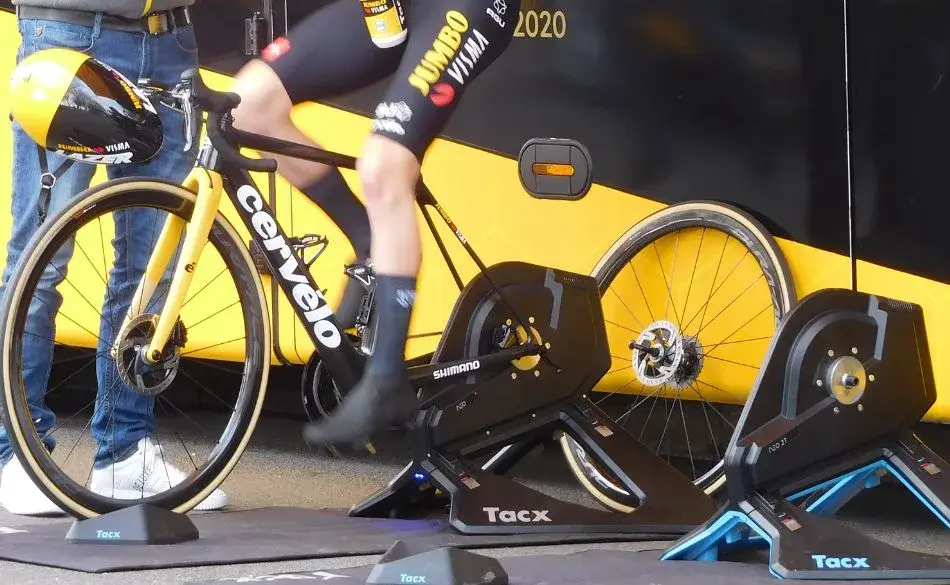
Most riders do a 12-minute FTP test on a smart trainer or bike with a power meter. Indoors is ideal because there’s no traffic, wind, or stops. But you can also test outside on a quiet, steady climb or a flat loop if that feels more natural for you.
Here’s a simple way to structure your cycling threshold test at home:
When you repeat the 12-minute cycling fitness test, try to match conditions each time. Use the same bike, same trainer, similar time of day, and similar rest the day before. Small changes can affect your numbers more than you think.
The goal isn’t to create the “perfect” test day. The goal is to create a test you can repeat. That’s how you see real progress and how your data starts to tell a clear story.
Once you finish a 12-minute cycle test, the real work begins. Your numbers show where you are today, but the way you use them shapes where you’ll be in a few weeks or months. When you understand the story behind your data, training becomes clearer and more purposeful.
The first step is to calculate your FTP estimate. Most riders take 86–90% of their 12-minute average power to set training zones. This isn’t perfect science, but it’s reliable enough for everyday workouts. It gives you a starting point, not a fixed identity.
Once you have your threshold estimate, you can build sessions that match your fitness. The 12-minute cycling test can guide how long your intervals should be, how hard to push on climbs, and how steady your endurance rides need to feel.
Here’s how to use your test results right away:
The best part about using the FTP test for training is how simple it makes progression. You don’t need perfect conditions or rare breakthroughs. Even a small rise (like 3 or 4 watts) shows your work is paying off.
And remember this: numbers tell part of the story, but how you feel matters too. If you’re performing better in rides, handling hills more easily, or finishing intervals with more control, that’s progress no chart can measure.
If you want to dive deeper into understanding FTP, how to measure it accurately, and how to apply it to your training sessions, check out our FTP Test Cycling Guide for a complete step-by-step approach.
The 12-minute cycle test is more than just a number on a screen. It’s a tool that helps you understand your power, pacing, and limits. When used regularly, it gives insight into how your fitness is improving over weeks and months.
Whether you’re a beginner or a seasoned rider, the test is simple, repeatable, and practical. It can guide your cycling sessions, shape training zones, and even help you plan intervals and endurance rides.
Remember, numbers are only part of the story. How your legs feel, how your breathing responds, and how your body adapts all matter. Use the test, track your results, learn from them, and celebrate the small gains along the way. Consistency and awareness will help you ride smarter and enjoy every session more.
Ready to put your training to the test? Here are some upcoming cycling events matched to this article.



Head Coach & Founder, SportCoaching
Graeme is the founder of SportCoaching and has coached more than 750 athletes from 20 countries, from beginners to Olympians, in cycling, running, triathlon, mountain biking, boxing, and skiing. His coaching philosophy and methods form the foundation of SportCoaching's training programs and resources.
No matter your goals, SportCoaching offers tailored training plans to suit your needs. Whether you’re preparing for a race, tackling long distances, or simply improving your fitness, our expert coaches provide structured guidance to help you reach your full potential.
Structured cycling coaching to build power, endurance, and speed.
What’s included
Browse upcoming Australian running, cycling, and triathlon events in one place. Filter by sport, check dates quickly, and plan your training around something real on the calendar.
Choose your plan to get started with personalized training plans designed to help you reach your goals.


Minna Backman
When you’re new, feedback is especially important, and Graeme is highly skilled at both analyzing numbers and understanding the importance of mental strength.











