




Find Your Next Cycling Race
Ready to put your training to the test? Here are some upcoming cycling events matched to this article.
 Coach Graeme

Last updated:
Not sure where to start with training?
Tell us your goal and schedule, and we’ll give you clear direction.
No obligation. Quick, practical advice.
Explore our cycling training content for more helpful articles and resources.
Functional Threshold Power (FTP) is often described as the maximum average power you can sustain for about one hour. While that’s a good working definition, it’s really a field-based approximation of your lactate threshold. The point where your body shifts from primarily aerobic energy to a mix of aerobic and anaerobic.
Why does this matter? At intensities below FTP, your muscles can clear lactate as fast as they produce it. Above FTP, lactate accumulates quickly, forcing fatigue. Knowing this balance point allows you to set precise training zones that target different physiological systems. Without it, “hard” and “easy” are vague feelings, not measurable efforts.
When I coach athletes, I remind them that FTP isn’t a perfect physiological marker, but it’s reliable and repeatable in the real world. That’s why it’s the backbone of structured training platforms. Power-based zones (endurance, tempo, threshold, VO₂ max) are all scaled from your FTP. This ensures that two riders with very different abilities can train at intensities appropriate to their own physiology.
It also gives you a clear metric to track progress. Small increases in FTP, even 5–10 watts, signal meaningful improvements in aerobic capacity and muscular endurance. Over time, this helps athletes predict pacing for events like time trials, triathlons, and long climbs.
Testing doesn’t have to be overly complex. Many cyclists start with the 20-minute test because it’s straightforward and repeatable. Ramp protocols are also popular since they’re shorter and reduce the pacing challenge. For newer riders, the best FTP test protocol for beginners is whichever method can be performed consistently without overthinking execution.
In practice, the FTP cycling test is less about the exact number and more about the framework it provides. It’s the anchor that makes training purposeful, measurable, and progressive. If you want to stop guessing and start training with precision, FTP is the number you need.
Want a realistic view of progress? Read our guide on how much you can increase your FTP and what drives real gains.
There are several ways to test FTP, and while they all aim to measure the same thing, each has unique strengths and weaknesses. Choosing the right test depends on your experience, goals, and the equipment you have available.
The most established method is the 20-minute FTP test. You ride as hard as possible for 20 minutes, then take 95% of your average power as an estimate of your FTP. This test works well if you understand pacing and can manage your effort evenly. Many experienced cyclists still prefer this option because it mirrors real-world time trial efforts.
The FTP ramp test has become popular in recent years, especially for indoor training. Power increases every minute until you reach failure, and your highest one-minute value is used to calculate FTP. It’s shorter and less mentally demanding, but some riders find it less accurate if they have unusual strengths or weaknesses. Understanding the 20-minute vs ramp FTP test differences is important: the 20-minute test rewards endurance pacing, while the ramp test highlights peak aerobic capacity.
The 8-minute test is another alternative, involving two all-out 8-minute intervals with recovery between. FTP is estimated from the combined effort. This protocol can be useful for riders with strong anaerobic ability, though it’s less commonly used today.
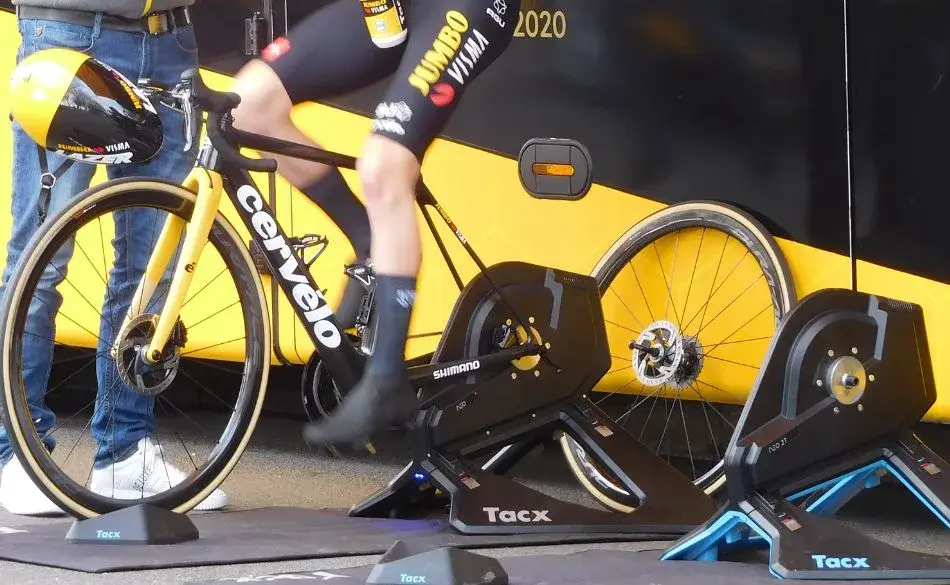
Regardless of the method, repeatability matters most. Conducting the test in a controlled environment reduces variables. Many athletes now prefer a FTP test cycling with a smart trainer because it ensures stable resistance and accurate power measurement. Indoors, you don’t have to worry about wind, gradient changes, or traffic interruptions, making your results easier to compare from test to test.
Ultimately, the best protocol is the one you can perform consistently. Whether you prefer the grit of a 20-minute effort or the stepwise grind of a ramp test, consistency is the key to reliable data and smarter training decisions.
Curious how your number stacks up? Check our average FTP by age benchmarks for context.
Testing your FTP is just the start—what really matters is how you train with it. Our Cycling Coaching Programs turn your FTP results into structured, progressive training that drives real performance gains.
Unlock the full power of your FTP with structured coaching designed for lasting progress.
Get Cycling Coaching →Getting an accurate FTP result doesn’t just come down to how hard you push on test day. Preparation is just as important. The goal is to eliminate variables so the only thing that changes from one test to the next is your fitness.
First, timing matters. Don’t test after a hard training block or when you’re carrying fatigue. Schedule your FTP test at the end of a recovery day or after an easy week. This ensures you’re rested enough to give a true maximum effort.
Your warm-up should also be consistent. Many riders skip this step, but it’s critical. An effective routine includes progressive ramps, a few short accelerations, and then a reset before the main test. Following the same warm-up each time keeps results comparable.
Nutrition and hydration play a role too. A small meal 2–3 hours before testing, plus a carbohydrate drink if needed, will help sustain energy. Skipping food or showing up dehydrated will only make the test harder and the data less reliable.
Equipment setup is another key factor. If you’re testing indoors, use a fan to control body temperature. For those using smart trainers, calibrate the device beforehand to avoid drift. Riders often overlook these small details, but they matter. These are simple but powerful tips for accurate FTP test cycling that can make or break your results.
Finally, think about pacing. Even with ramp protocols, effort management is important. With the 20-minute test, for example, many riders go out too hard in the first five minutes and pay for it later. Practicing different FTP test pacing strategies (like holding back slightly at the start) can help you achieve a truer reflection of your fitness.
Preparation won’t make the test painless, but it will make it honest. And that’s exactly what you need if you want to measure progress with confidence.
Turn your result into training zones with our Cycling Power Zone Calculator.
FTP testing isn’t just for cyclists. It’s a powerful tool for triathletes too. Our Triathlon Coaching Programs integrate FTP results into bike workouts, pacing strategies, and brick sessions so you can perform at your best across all three disciplines.
Turn your FTP into faster bike splits and stronger triathlon performances with expert coaching support.
Get Triathlon Coaching →Once you’ve completed your FTP test, the real value comes from how you use the data. FTP is the anchor for creating training zones that target specific physiological systems.
By training in these zones, you stress specific energy systems. Over time, this leads to balanced development instead of just “riding hard” or “riding easy.”
One common question is whether to perform an indoor FTP test vs outdoor time trial. Indoor tests control variables and are ideal for tracking progress. Outdoor time trials show how well you apply power in real conditions like wind, terrain, and tactical pacing.
Be consistent. If you always test indoors, set zones from that number, then validate them outside when possible.
Remember, FTP changes with training, recovery, and even nutrition. Re-test every 6–8 weeks to keep zones aligned with your current fitness.
Using FTP to guide zones ensures purposeful, measurable, and progressive training. Exactly what you need for long-term gains.
FTP testing is straightforward in theory, but in practice, many riders make small errors that lead to inaccurate results. These mistakes don’t just affect the test day, they skew training zones for weeks afterward.
The most common issue is poor pacing. In a 20-minute test, riders often surge too hard in the opening five minutes and fade badly by the end. That initial enthusiasm can knock 10–15 watts off the true average. Smart pacing means holding back slightly early, then maintaining a steady effort until the final push.
Another frequent problem is testing under fatigue. If you schedule an FTP test the day after a long ride or hard intervals, your body won’t be able to deliver. The number you get will be artificially low, which may cause your training zones to underload you. Always test when rested, ideally after a light day or recovery block.
Environmental factors also matter. Testing indoors with a fan running feels very different from testing in a hot garage without airflow. Heat stress alone can reduce power output significantly. Consistency is key: use the same setup each time so you know the changes are fitness-driven, not condition-driven.
I had one athlete who constantly saw “flat” results. On paper, he wasn’t improving, even though his training had been excellent. After digging deeper, we realized he tested at random times – sometimes late in the evening after work, sometimes straight after a long commute ride. Once we standardized his protocol, his next test jumped by 15 watts. The training was working; the testing method was the problem.
Finally, don’t treat FTP as the only measure of success. It’s an important benchmark, but improvements in endurance, recovery, and repeatability are just as valuable. Avoid the trap of chasing a number for its own sake.
Knowing your FTP is only the first step. Our Cycling Training Plans use your FTP results to build structured workouts that target endurance, power, and speed—so every ride has purpose.
Use your FTP results to follow a plan that builds power, endurance, and long-term cycling fitness.
View Cycling Training Plans →A single FTP test is useful, but its real value comes from repeating it at the right times. Fitness isn’t static, and neither is your threshold. Knowing how often should you should test your FTP is a common question, and the answer depends on your training load and experience level.
For most riders, testing every 6–8 weeks is a good rule of thumb. This window gives your body enough time to adapt and produce measurable changes without testing so often that fatigue or minor fluctuations cloud the results. Beginners may benefit from testing slightly more frequently, especially in the first months of structured training when improvements come quickly.
More experienced riders, on the other hand, often test less. If your training plan is stable and you’re not making big shifts in focus, three to four tests per year can be enough. Many athletes time their tests around training cycles—after a base phase, before a build block, and ahead of key races.
Tracking progress isn’t only about chasing a bigger FTP number. Look at how your training zones feel. If endurance rides that once felt taxing now feel comfortable, or if threshold intervals are more manageable, that’s progress—even before the next test confirms it. Using tools like training software or power analysis charts can highlight improvements in consistency and fatigue resistance that FTP alone might not show.
One more consideration: don’t retest if you’re sick, injured, or severely fatigued. Testing under those conditions won’t reflect your true capacity. Wait until you’re rested so the result is meaningful.
Think of FTP testing as a checkpoint, not a race. It’s there to guide your training, show trends, and keep your efforts aligned with your current fitness. Over time, those checkpoints tell the story of your progress more clearly than any single test ever could.
FTP isn’t just a number on a screen. Its real value comes when you apply it to workouts, pacing, and racing. Structured training zones allow you to target specific systems and make every session count.
For endurance rides, staying in Zone 2 (below 70% of FTP) develops aerobic efficiency without overloading your body. During build phases, spending more time at tempo or sweet spot—just under threshold—improves muscular endurance and teaches you to hold strong efforts for longer. High-intensity sessions above FTP, in Zones 5 and 6, expand your aerobic ceiling and increase your ability to respond to surges. Every one of these sessions connects back to the FTP value you’ve tested.
In racing, FTP is a pacing guide. On long climbs or time trials, it keeps you from starting too aggressively and fading later. It shows you where the sustainable line sits. Go over it for short bursts if you must, but know that each second above threshold carries a cost in fatigue. Riders who understand this balance can distribute effort far more effectively than those relying only on feel.
FTP also provides insight into recovery. If training zones based on your last test start feeling too easy, it may be time to retest. If those same zones suddenly feel unmanageable, it might signal accumulated fatigue or the need for more recovery.
It’s important to remember that FTP is a framework, not a restriction. Group rides and races often force you above threshold. That’s part of the sport. The key is knowing how long you can sustain those efforts and how quickly you can recover before dropping back into a sustainable zone.
Applied correctly, FTP transforms raw effort into purposeful training and confident racing.
Cyclists often ask which FTP test is “best.” The truth is, each protocol has strengths and weaknesses, and the right choice depends on your goals, experience, and available tools. A side-by-side look can make the differences clear.
Here’s a simple comparison:
👉 Swipe to view full table
| Test Type | Duration | Strengths | Limitations | Best For |
|---|---|---|---|---|
| 20-Minute Test | 20 min effort (95% avg) | Well-researched, simulates time trials, accurate with good pacing | Requires strong pacing, mentally demanding | Experienced riders, outdoor time trials |
| Ramp Test | 8–15 min to failure | Shorter, less pacing required, ideal indoors, popular with smart trainers | Can overestimate FTP for anaerobic riders, painful finish | Indoor athletes, frequent testers |
| 8-Minute Protocol | 2 x 8 min efforts | Shorter duration, easier to repeat with limited time | Inflated FTP due to anaerobic contribution, less common | Riders with strong anaerobic power, time-crunched athletes |
| Outdoor Time Trial | 40–60 min steady effort | Closest to “true” FTP, highly specific to racing conditions | Hard to control environment, poor repeatability | Experienced racers, validation of indoor results |
This table shows why there isn’t a single “best” option. The 20-minute test is reliable for riders who can manage pacing. The ramp test is practical, especially for indoor use with a smart trainer. The 8-minute protocol may suit athletes with time constraints or strong short-term power. And the outdoor time trial is the truest reflection of race-day performance, but repeatability is low.
What matters most is consistency. If you start with a 20-minute test, stick with it. If you prefer the ramp test on your trainer, repeat it under similar conditions. By using the same method each time, you’ll be able to track progress accurately and apply zones with confidence.
Improving FTP is all about structured work near your limit. Our Cycling Threshold Training Plan focuses on proven threshold intervals that raise your sustainable power and translate testing gains into stronger rides.
Turn your FTP test results into higher power and better performance with a plan built for threshold development.
View Threshold Plan →FTP testing isn’t glamorous. It’s tough, uncomfortable, and at times intimidating. But it’s also one of the most valuable tools you have as a cyclist. By measuring your Functional Threshold Power, you give structure to your training, remove guesswork, and open the door to steady, measurable improvement.
We’ve looked at what FTP represents, the different testing protocols, how to prepare, and how to apply the results. Whether you use a 20-minute test, a ramp test, or even an outdoor time trial, the principle stays the same: find your benchmark and use it to guide training zones. Re-test regularly to keep your zones aligned with your current fitness, and you’ll always know exactly where you stand.
Remember that FTP isn’t the whole story. It won’t capture sprint ability, endurance depth, or race tactics. But it gives you the foundation that makes every other metric more meaningful. A consistent approach—same protocol, same setup, same pacing plan—ensures that each test builds on the last, painting a clear picture of your progress over months and seasons.
If you’re new, don’t worry about finding the “perfect” test. The best FTP test protocol for beginners is the one you can perform confidently and repeat in the future. Over time, you’ll learn what pacing feels right, how your body responds, and how to use the results to fine-tune your workouts.
So ask yourself: when was the last time you tested? If it’s been more than a couple of months, it may be time to schedule your next one. Set up your bike, follow your plan, and commit to the effort. It won’t be easy, but neither is progress.
FTP testing isn’t just about chasing numbers, it’s about turning numbers into smarter training, stronger rides, and bigger results on the road.
Ready to put your training to the test? Here are some upcoming cycling events matched to this article.
Head Coach & Founder, SportCoaching
Graeme is the founder of SportCoaching and has coached more than 750 athletes from 20 countries, from beginners to Olympians, in cycling, running, triathlon, mountain biking, boxing, and skiing. His coaching philosophy and methods form the foundation of SportCoaching's training programs and resources.
No matter your goals, SportCoaching offers tailored training plans to suit your needs. Whether you’re preparing for a race, tackling long distances, or simply improving your fitness, our expert coaches provide structured guidance to help you reach your full potential.
Structured cycling coaching to build power, endurance, and speed.
What’s included
Browse upcoming Australian running, cycling, and triathlon events in one place. Filter by sport, check dates quickly, and plan your training around something real on the calendar.
Choose your plan to get started with personalized training plans designed to help you reach your goals.


Minna Backman
When you’re new, feedback is especially important, and Graeme is highly skilled at both analyzing numbers and understanding the importance of mental strength.