
















Find Your Next Running Race
Ready to put your training to the test? Here are some upcoming running events matched to this article.
 Coach Graeme
Last updated:
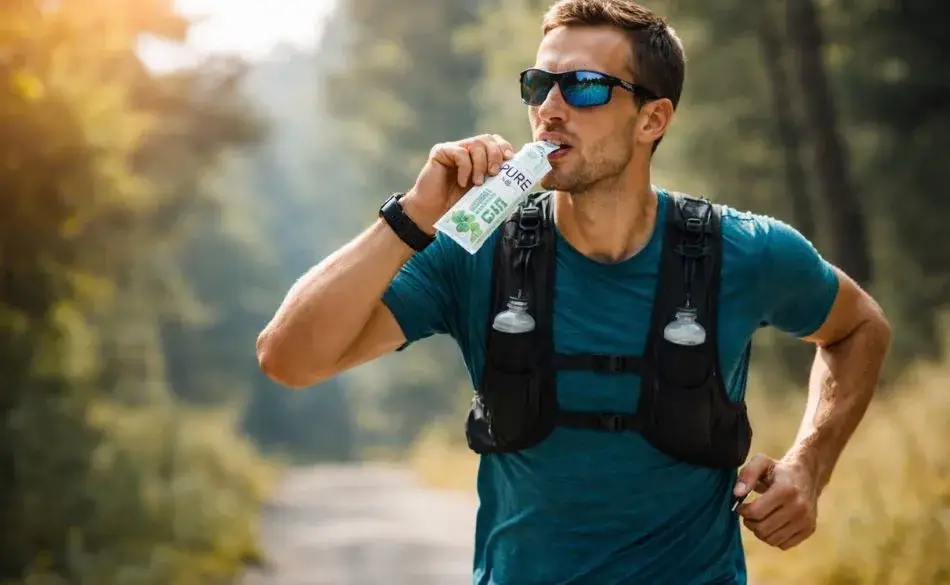
Energy gels are one of the most effective tools in a runner's kit — and one of the most misused. The wrong gel at the wrong time without enough water is a reliable way to end up doubled over at km 28. The right gel, used correctly in a strategy you've practised in training, is the difference between hitting the wall and running through it. This guide covers how gels work, what to look for, the top options by use case, and exactly how to use them without stomach problems.
Not sure where to start with training?
Tell us your goal and schedule, and we’ll give you clear direction.
No obligation. Quick, practical advice.
Explore our running workouts and tips for more helpful articles and resources.
The best energy gel is the one you’ve trained your gut to tolerate. For sensitive stomachs: Maurten Gel 100. For Australian availability with real ingredients: Pure Sports Nutrition Energy Gel. For isotonic (no water needed): SiS Go Isotonic. For high carb output: Neversecond C30. For budget: GU Original. Take your first gel at 40–45 minutes, then every 30–45 minutes. Always pair standard gels with 150–200ml water — never with isotonic sports drink.
Your muscles run on glycogen — glucose stored in muscle and liver tissue. At race pace, glycogen is your primary fuel source. The problem: your body stores roughly 90 minutes of glycogen at moderate-to-hard intensity. After that, without external carbohydrate input, blood glucose drops, pace slows, and the wall arrives.
Gels deliver fast-absorbing carbohydrates — typically a blend of glucose (or maltodextrin) and fructose — directly to the gut, entering the bloodstream within 10–15 minutes. The glucose/fructose combination is important: the body uses two separate intestinal transport channels to absorb them. A 2:1 glucose-to-fructose ratio allows uptake of up to 90g of carbohydrate per hour, compared to around 60g from glucose-only products. This is why gels listing both maltodextrin and fructose on the label outperform single-sugar options on longer efforts. For a deeper explanation of the absorption science and hydration pairing rules, the complete guide to hydration gels for running covers the full picture.
| Type | What It Does | Water Required? | Best For |
|---|---|---|---|
| Standard energy gel | Fast carbohydrates only (maltodextrin, glucose, fructose) | Always | Road races with frequent aid stations |
| Isotonic gel | Carbohydrates pre-diluted to body-fluid concentration | Optional | Trail runs, limited water access, sensitive stomachs |
| Hydration / electrolyte gel | Carbohydrates + sodium, potassium, magnesium | Yes | Hot conditions, heavy sweaters, long runs over 90 min |
| Hydrogel (encapsulated) | Carbohydrates in polymer matrix — reduces gut irritation | Optional | Runners with GI issues, high carb intake needs |
| Caffeinated gel | Carbohydrates + 25–100mg caffeine | As per base type | Late-race fatigue, km 28+ in marathon, mental focus |
| Factor | What to Look For | Why It Matters |
|---|---|---|
| Carbohydrate content | 20–30g per gel (standard); 30g+ for longer efforts | Determines how frequently you need to take gels |
| Carb source | Maltodextrin + fructose (2:1 ratio) | Dual transport channels allow up to 90g/hr absorption |
| Sodium content | 50–150mg per gel for hot/long efforts | Replaces sweat sodium; reduces cramping risk |
| Caffeine | 25–75mg for race use; check total daily intake | Reduces perceived effort; use in second half of race only |
| Consistency | Thicker = needs more water; thinner = easier to take | Affects ease of use mid-run and GI tolerance |
| Ingredients list length | Shorter = generally cleaner; fewer additives | Relevant for sensitive stomachs and dietary requirements |
Pure Sports Nutrition is a New Zealand-based brand with strong availability across Australia and a focus on real-food ingredients rather than purely synthetic carbohydrate blends. Their Energy Gel range is well-suited to Australian conditions — particularly the electrolyte-containing variants which address the higher sodium losses common in warm-weather training.
The range comes in four flavours: Manuka Honey (non-caffeinated), Kola Nut & Kokomomo Juice (30mg caffeine), Espresso Coffee (30mg caffeine), and Orange, Lemon & Lime (non-caffeinated). Each 35g sachet delivers carbohydrates from real-food sources, with a consistency that sits between a thin gel and a thick liquid — easier to take mid-run than denser alternatives. The caffeinated variants at 30mg provide a moderate boost suitable for use from km 20+ in a marathon without the jitteriness risk of higher-caffeine products (75–100mg).
Best for: Australian runners wanting real-food ingredients, moderate caffeine options, and easy in-store availability. The Manuka Honey flavour in particular is well tolerated by runners with sweet-sensitivity, as the honey base provides a less artificial sweetness profile than maltodextrin-heavy gels. As with all standard gels, pair with 150–200ml of water — do not take with isotonic sports drink.
| Use Case | Recommended Gel | Key Reason | Carbs per Gel |
|---|---|---|---|
| Sensitive stomach | Maurten Gel 100 | Hydrogel technology minimises gut irritation; only 6 ingredients | 25g |
| Australian availability / real food | Pure Sports Nutrition Energy Gel | Real-food ingredients, Manuka Honey base, moderate caffeine options | ~22–25g |
| Isotonic (no water needed) | SiS Go Isotonic | Pre-diluted; ideal for trail or limited water access | 22g |
| High carb output | Neversecond C30 | 30g per gel; 2:1 maltodextrin/fructose; isotonic | 30g |
| Budget | GU Original Energy Gel | Widely available, proven formula, ~$2–3 per gel | 22g |
| Late-race caffeine boost | GU Roctane or Maurten Gel 100 CAF | Higher caffeine (35–100mg) for km 28–32 fatigue management | 22–25g |
| Ultra / 3+ hours | Rotate gels with real food | Gel palatability drops after 2.5–3 hrs; flavour fatigue is real | Varies |
If you find you can’t stomach any commercial gel, there are effective real-food alternatives that work particularly well for slower long runs and ultra distances. The running gel alternatives guide covers everything from rice cakes to Medjool dates to homemade honey-based options.
| Gel | Carbs | Sodium | Caffeine | Consistency | Price (approx) |
|---|---|---|---|---|---|
| Pure Sports Nutrition | ~22–25g | Moderate | 0mg or 30mg | Medium | ~$3–4 |
| Maurten Gel 100 | 25g | 55mg | 0mg (CAF = 100mg) | Firm gel | ~$4–5 |
| SiS Go Isotonic | 22g | 28mg | 0mg or 75mg | Very thin | ~$2–3 |
| GU Original | 22g | 40–55mg | 0mg or 20–40mg | Thick | ~$2–3 |
| Neversecond C30 | 30g | 55mg | 0mg (C30+ = 75mg) | Medium-thin | ~$3–4 |
Made with real-food ingredients including Manuka Honey, Kola Nut, and fruit juices rather than purely synthetic carbohydrate blends. The Manuka Honey base provides a noticeably less artificial sweetness than maltodextrin-heavy gels — important for runners who experience flavour fatigue over longer efforts. Widely available in Australia and New Zealand. The 30mg caffeine variants (Espresso Coffee and Kola Nut) are well-calibrated for mid-race use — substantial enough to be felt without the jitteriness of 75–100mg options. Best for: Australian runners wanting real-food credentials and moderate caffeine; runners who find standard gels too sweet.
The benchmark for sensitive-stomach runners. Maurten’s hydrogel polymer matrix encapsulates the carbohydrates, protecting them from stomach acid and allowing faster transit to the small intestine where absorption occurs. Only six ingredients, no added colours, flavours, or preservatives. The unflavoured profile divides opinion — some runners love the neutrality, others find it difficult to take without a taste cue to trigger swallowing. At ~$4–5 per gel it’s expensive, but for runners who regularly bonk on cheaper gels, the GI reliability is worth the premium. The CAF 100 variant (100mg caffeine) is one of the strongest on the market — limit to one per race, used at the 30–35km mark. Best for: runners with sensitive stomachs, anyone who has experienced GI issues with other gels, experienced athletes who can afford to train on them.
The most widely used isotonic gel on the market. Pre-diluted so it can be taken without water, making it the go-to for trail runners and athletes who struggle to coordinate gel intake with aid stations. The thin consistency is easy to take mid-effort and the mild fruit flavours are inoffensive. Lower carb content and low sodium means heavier sweaters and marathon runners may need to supplement electrolytes separately. Best for: trail and off-road runners, anyone who finds thicker gels hard to take at race pace.
The most popular gel in the world and the benchmark against which most others are judged. Uses maltodextrin + fructose at a 2:1 ratio for dual-transport absorption. Over 20 flavours available including Espresso Love (40mg caffeine) and Salted Caramel. The thick consistency genuinely requires water — this is the gel most likely to cause problems when taken without fluid at aid stations. Contains BCAAs and amino acids which may support muscle recovery on longer efforts. Best for: budget-conscious runners at road races with regular aid stations, runners who want flavour variety.
One of the highest carbohydrate-per-gel options at 30g, in an isotonic format. The 2:1 maltodextrin-to-fructose ratio maximises absorption efficiency. Larger pack size than most gels — designed to be sipped over several minutes rather than taken in one hit. The C30+ (75mg caffeine) is a serious late-race option. Informed Sport certified — relevant for anyone racing under anti-doping rules. Best for: runners targeting high hourly carb intake (marathon and above), athletes who want isotonic delivery with maximum carb output per gel.
With dozens of options available, narrowing down your gel comes down to four practical filters. Work through them in order and you’ll have a shortlist of 2–3 options to trial in training.
If you’ve had GI issues with gels before — cramping, nausea, bloating — start with an isotonic or hydrogel option. SiS Go Isotonic and Maurten Gel 100 are the most consistently well-tolerated across runners with sensitive guts. Avoid high-fructose formulas and gels with artificial sweeteners if you have known sensitivity. If you’ve never had GI issues, a standard 2:1 maltodextrin/fructose gel (GU, Pure Sports Nutrition, Neversecond) will work well and costs less.
Texture matters more than most runners expect — especially at km 30+ when flavour fatigue sets in. Thick gels (GU, Hammer) require more water and can be hard to take at high effort. Thin/isotonic gels (SiS, Neversecond) are easier mid-run. Neutral/unflavoured suits runners who find sweetness overwhelming (Maurten). Real-food bases like Pure Sports Nutrition’s Manuka Honey provide a milder, less artificial sweetness. Trial at least two different textures in training — what feels fine at easy pace can be unpleasant at race pace.
| Requirement | What to Check | Options |
|---|---|---|
| Vegan | Some gels contain beeswax, gelatin, or dairy | GU (most flavours), SiS, Neversecond, Maurten |
| Gluten-free | Maltodextrin is typically GF but verify per brand | Maurten, SiS, GU (most), Pure Sports Nutrition |
| No caffeine | Choose clearly labelled caffeine-free variants | All major brands offer non-caffeinated versions |
| Anti-doping / Informed Sport | Required for competitive athletes under WADA rules | Neversecond C30, Precision Fuel & Hydration |
| Natural / minimal additives | Short ingredient list, no artificial colours/flavours | Maurten, Pure Sports Nutrition, Huma |
Gel costs add up quickly across a full training block. A 20-week marathon build with weekly long runs means 40+ gels before race day. At $4–5 per gel (Maurten), that’s $160–200 in training nutrition alone. At $2–3 per gel (GU, Pure Sports Nutrition), it’s $80–120. A practical approach: use a budget gel for most training runs and reserve premium gels for race-specific long runs and race day — the sessions where GI reliability matters most. Never trial a cheaper substitute on race day if you’ve trained on a premium gel.
| Distance / Duration | First Gel | Subsequent Gels | Total Gels |
|---|---|---|---|
| 10K (under 60 min) | Not needed | — | 0 |
| 10K (60–75 min) | Optional at 40 min | — | 0–1 |
| Half marathon (sub 1:45) | 40 min | Every 35–40 min | 2 |
| Half marathon (1:45–2:15) | 40 min | Every 35–40 min | 2–3 |
| Marathon (sub 3:30) | 45 min | Every 30–35 min | 4–5 |
| Marathon (3:30–4:30) | 45 min | Every 35–40 min | 5–7 |
| Ultra (4+ hours) | 40–45 min | Every 30–40 min + real food from ~3 hrs | Gels + solid food |
These figures assume moderate-to-hard race effort. For easy-paced long training runs, your body uses more fat for fuel and you can stretch gel intervals by 5–10 minutes. The marathon training plan includes long run sessions where practising your gel strategy is built into the programme — both the fuelling amount and the timing relative to pace.
Standard and hydration gels are hypertonic — more concentrated than your body fluids. They need water to dilute them before absorption. Without water, your body draws fluid from the gut lining itself, increasing dehydration and causing the cramping and nausea runners blame on “the gel.” The fix is simple: take 150–200ml of water with every standard gel. A few mouthfuls at an aid station cup is enough.
The trap that catches many runners on race day: washing down a standard gel with the isotonic sports drink offered at aid stations instead of water. The combined carbohydrate concentration overloads the gut’s absorption capacity. If you use standard gels, drink only water with them. If you want an isotonic drink, skip the gel at that station and take the gel between stations with your own water. This pairing mistake is one of the most preventable causes of late-race GI issues. The full breakdown of fluid and fuelling interaction is in the endurance hydration strategy guide.
For heavy sweaters or those running in warm conditions, electrolyte replacement becomes increasingly important beyond 90 minutes. A hydration gel with added sodium is one option; another is pairing standard gels with sodium from natural sources or dedicated salt tablets. If you’re unsure how much sodium you lose, a sweat test gives you a precise personal number to work from.
The gut’s capacity to absorb carbohydrates from gels is trainable — the enzymes and transport proteins involved increase with repeated exposure. A runner who takes their first gel in a race has an untrained gut handling a trained athlete’s fuelling plan. The result is predictable.
The rule: use gels on every long run of 75 minutes or more in the 6–8 weeks before your race. Not just occasionally — every time. This builds both the enzymatic capacity and the psychological familiarity with fuelling mid-effort. It also reveals which gels your stomach tolerates at race pace, which can differ from what works on easy long runs. The carbohydrate gel guide covers the gut training process in detail alongside the practical dosing approach. If stomach problems persist despite consistent training, cramping and GI distress during running often have an electrolyte imbalance component that gel choice alone won’t fix.
Want a training plan that builds your fuelling strategy in from the start?
Nutrition and gel timing are part of every long run in our coached programmes — not an afterthought on race week. At SportCoaching, we build personalised plans for running, cycling, and triathlon that include pacing, fuelling, and hydration protocols matched to your target event.
What are the best energy gels for running?
The best gel depends on your needs. For sensitive stomachs: Maurten Gel 100. For Australian availability with real ingredients: Pure Sports Nutrition Energy Gel. For isotonic (no water needed): SiS Go Isotonic. For high carb output: Neversecond C30. For budget: GU Original Energy Gel. The most important factor is testing your chosen gel during training — never try a new gel on race day.
When should I take energy gels during a run?
Take your first gel at 40–45 minutes into any run lasting over 75 minutes. After that, one every 30–45 minutes. For a half marathon: 2–3 gels. For a marathon: 5–7 gels. Always pair standard gels with 150–200ml water. Never take a gel at the same time as an isotonic sports drink.
How many gels do I need for a marathon?
For a 3:30–4:30 marathon, plan for 5–7 gels starting at 45 minutes and taken every 30–40 minutes. Map gel timing to aid station locations. Use a caffeinated gel at km 28–32. Never exceed 2–3 caffeinated gels in a race.
Do I need to drink water with energy gels?
With standard and hydration gels: always — 150–200ml per gel. These are hypertonic and must be diluted before absorption. Isotonic gels (SiS Go, Maurten, Neversecond C30) can be taken without water. Never wash a standard gel down with isotonic sports drink — this doubles carbohydrate concentration in the gut.
What causes stomach problems with energy gels?
The four main causes: taking gels without water, combining standard gels with isotonic sports drink, using gels for the first time on race day, and taking gels too frequently. Fix: practise on every long run of 75+ minutes for 6–8 weeks before your race, always take water with non-isotonic gels, and never try a new product on race day.
Ready to put your training to the test? Here are some upcoming running events matched to this article.



Head Coach & Founder, SportCoaching
Graeme is the founder of SportCoaching and has coached more than 750 athletes from 20 countries, from beginners to Olympians, in cycling, running, triathlon, mountain biking, boxing, and skiing. His coaching philosophy and methods form the foundation of SportCoaching's training programs and resources.
No matter your goals, SportCoaching offers tailored training plans to suit your needs. Whether you’re preparing for a race, tackling long distances, or simply improving your fitness, our expert coaches provide structured guidance to help you reach your full potential.
Smart, progressive training from 5km to marathon with weekly guidance.
What’s included
Browse upcoming Australian running, cycling, and triathlon events in one place. Filter by sport, check dates quickly, and plan your training around something real on the calendar.
Choose your plan to get started with personalized training plans designed to help you reach your goals.


Minna Backman
When you’re new, feedback is especially important, and Graeme is highly skilled at both analyzing numbers and understanding the importance of mental strength.











