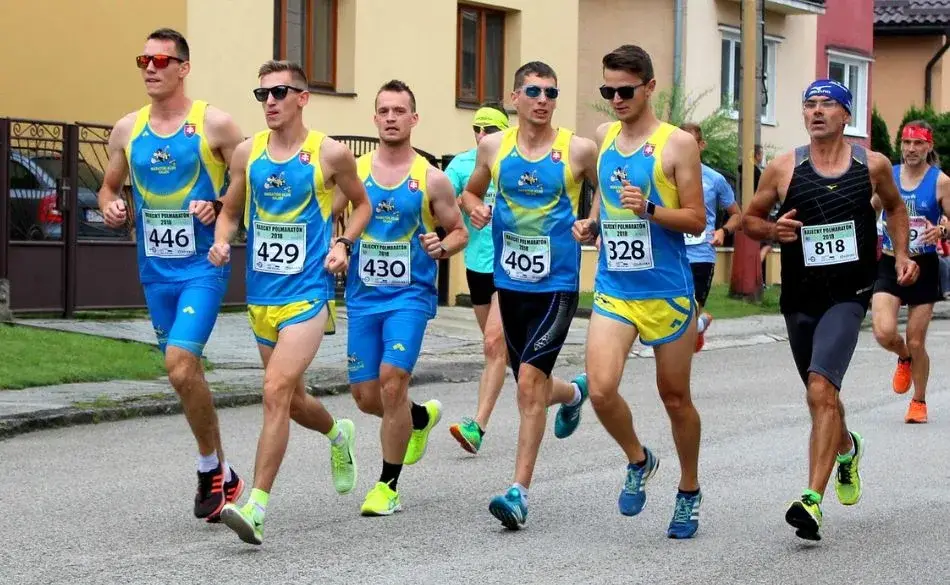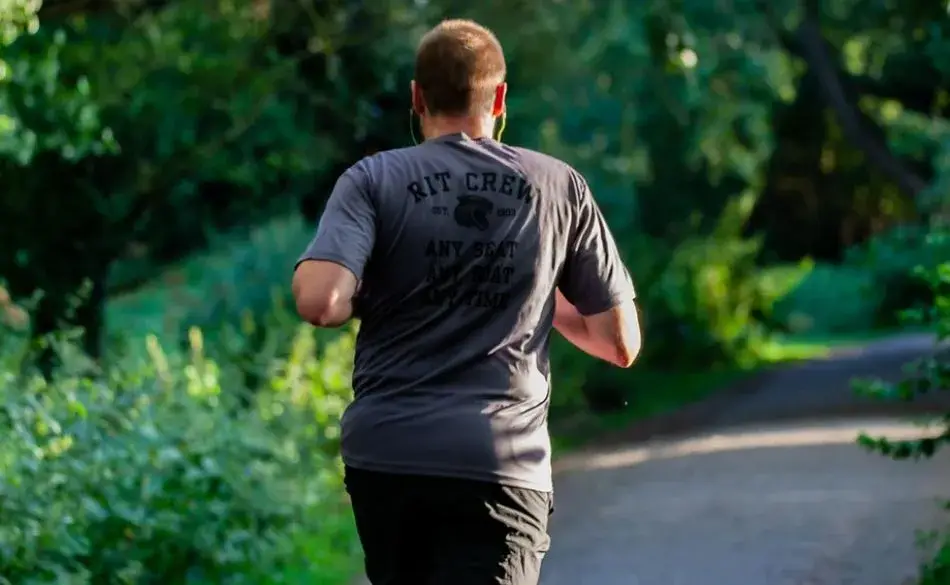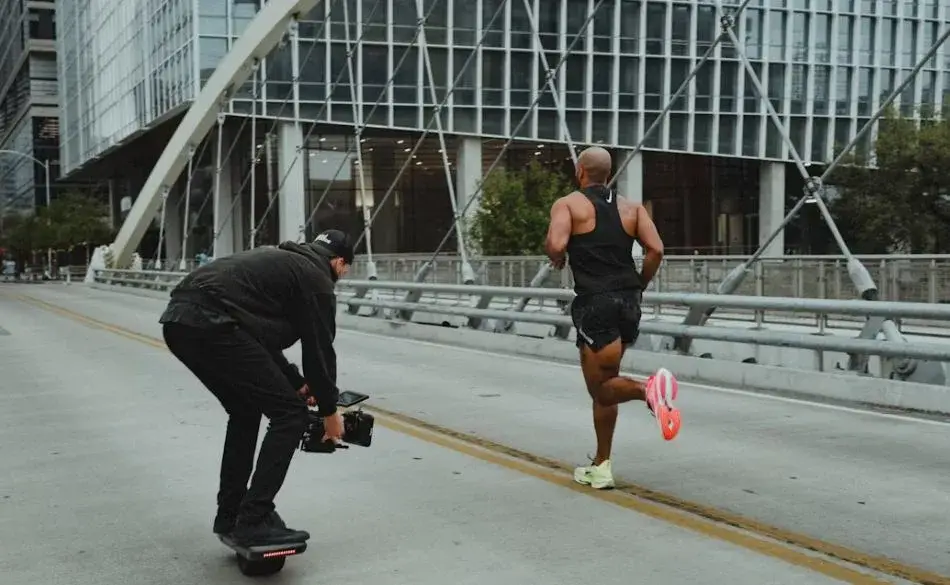
Posture and Alignment – The Foundation of Distance Running
If you’ve ever finished a long run with tight shoulders or an aching lower back, chances are your posture slipped as fatigue set in. The truth is, correct running posture for long distance is the base of everything else in your form.
When you run, think of stacking your head, shoulders, hips, and ankles in one smooth line. This alignment keeps your body balanced and reduces wasted energy. Instead of leaning from the waist, tilt slightly forward from your ankles. Imagine the wind gently pushing you ahead, rather than you forcing every step.
Many beginners struggle with hunching forward or craning their necks. Both lead to inefficient breathing and extra strain. I tell my athletes to picture a string pulling the crown of their head upward. This simple cue opens the chest, relaxes the shoulders, and makes each stride feel lighter.
Breathing also improves when you hold yourself tall. A collapsed chest makes deep belly breathing harder, while an upright stance lets your lungs expand fully. This means more oxygen delivery to your muscles when you need it most.
Another underrated element is eye focus. Looking too far down collapses your posture, while staring upward creates tension. Instead, keep your gaze about 10–15 meters ahead. This is enough to anticipate the terrain while staying relaxed.
Here’s an insider tip from coaching: posture can be trained even when you’re not running. Practice standing tall during daily tasks (whether waiting in line or walking). Over time, your body learns to hold that alignment naturally, so it’s easier to maintain in the late miles of a marathon.
- Strong posture doesn’t just come from running. Building stability with core workouts for runners helps you maintain alignment late in long runs when fatigue sets in.
- Flexibility plays a role too. A quick 15-minute stretching routine keeps your chest open and your stride feeling light.
Getting posture right may not feel like a big performance booster at first, but over 10, 20, or 30 kilometers, small inefficiencies add up. Nail this foundation, and every other part of your distance running technique will fall into place.
Efficient form isn’t just for elite athletes. It’s the key to running farther, faster, and with fewer injuries. Our Running Coaching program gives you personalised guidance to refine posture, stride, and cadence while building the endurance you need for long-distance success.
- Individual technique feedback to improve efficiency and reduce injury risk
- Structured training plans tailored to your fitness and race goals
- Guidance on cadence, stride, and breathing to build lasting endurance
- Strength and mobility support to keep your body balanced during mileage buildup
- Ongoing coach support to keep you motivated and accountable
Train smarter, run smoother, and unlock your best distance running form with expert coaching.
Get Running Coaching →

Foot Strike and Stride Efficiency – Finding Your Natural Rhythm
Every runner has a unique stride, but when it comes to covering long distances, some habits make your body work harder than it should. The key is learning how to find an efficient rhythm that feels natural and sustainable.
One of the biggest mistakes I see in athletes I coach is overstriding. This happens when your foot lands too far in front of your hips, usually with a hard heel strike. Over time, that braking motion adds stress to the knees and shins. For distance events, you want your feet to land almost directly under your center of gravity. Think of your legs as wheels rolling smoothly forward, not anchors stopping your momentum.
A midfoot landing often works best for endurance running. It helps distribute impact forces more evenly and makes transitions through your stride feel quicker. You don’t need to force yourself into it, simply shorten your stride slightly and increase your cadence. Most runners find that this naturally shifts them toward a more efficient midfoot landing technique for endurance running.
Cadence, or step rate, deserves attention too. Research suggests that 170–180 steps per minute reduces injury risk and improves running economy. That doesn’t mean you must hit those numbers exactly, but if your cadence is very low, increasing it gradually can pay off. A simple way to check is to count how many times one foot hits the ground in 30 seconds, then double it.
Here’s a coaching example: one of my marathon trainees struggled with shin splints for months. Once we adjusted her stride to land under her hips and boosted cadence from 160 to 172, the pain disappeared within weeks, and she could handle long runs with far less fatigue.
- Stride mechanics can be confusing at first. This breakdown of step length vs stride length shows exactly how to measure and adjust your stride for better efficiency.
- Shoes matter too. Following a guide to rotating running shoes spreads impact forces and keeps legs fresher during training.
- If you tend to land on the outer edge of your feet, these underpronation tips can help you adjust your form and reduce injury risk.
In distance running, small tweaks like stride length and cadence may not feel revolutionary at first. But over miles and hours, they save energy, protect your joints, and let you run stronger when it matters most.
The 10km is one of the most rewarding distances in running. Our 10km Running Training Plan gives you structured sessions that balance endurance, pacing, and recovery so you can reach the start line confident and prepared.
- Progressive workouts designed to improve both speed and stamina
- Race-day pacing strategies to help you run strong from start to finish
- Strength and mobility routines built in to prevent common 10km injuries
- Recovery guidance so you arrive at the start line fresh and ready
- Step-by-step structure suited for both first-time racers and experienced runners chasing a new personal best
Prepare with confidence and run your strongest 10km yet.
View 10km Training Plan →

How Should You Swing Your Arms on Long Runs?
Most runners don’t realize how much their arms affect their stride. On long runs, your arms help control rhythm, balance, and even breathing. When they’re tense, everything feels harder. When they’re relaxed, you save energy mile after mile.
The basics are simple: bend your elbows at about 90 degrees and let them swing close to your sides. The movement should be forward and back, never across your body. Crossing the midline twists your torso, which wastes energy and tires out your core.
I often tell athletes I coach to imagine their hands brushing along a zipper line on their jacket. That visual keeps the swing compact and efficient. Over time, it becomes second nature, and your stride feels smoother without extra effort.
Here are a few cues worth remembering during long runs:
- Relax your hands: Pretend you’re gently holding a potato chip. Firm enough not to drop it, but loose enough not to break it.
- Keep shoulders low: If you notice them creeping toward your ears, give a quick shrug and let them drop.
- Match cadence: Quick, compact arm swings naturally keep your legs turning over at the right rhythm.
- Stay steady: Think about pointing your chest forward, not twisting side to side with each stride.
Breathing also improves when the upper body is calm. A relaxed shoulder line keeps your chest open, so air flows deeper into your lungs. On hills, you can add a little more arm drive to power your cadence, but the principle stays the same – smooth and compact.
- Looser arms often start with a looser upper back. These mobility exercises for runners free up shoulder and rib movement so your swing feels natural.
- Strength work also helps. Adding gym exercises for runners can stabilize your core and reduce wasted side-to-side motion in the arms.
The beauty is that these adjustments feel small, but over a marathon they add up to real energy savings.


Cadence and Breathing – Building Endurance Without Wasting Energy
When you’re running long distances, efficiency is everything. Two areas that can transform the way you feel during a run are cadence and breathing. Get these right, and suddenly the miles feel smoother, steadier, and far less draining.
Cadence refers to the number of steps you take per minute. Many runners naturally sit around 150–160, but research shows that increasing cadence closer to 170–180 steps per minute can reduce impact and improve efficiency. It doesn’t mean you need to obsess over the numbers, it’s more about rhythm. Shorter, quicker steps often feel easier on your joints and keep your stride light.
One simple way to experiment is by counting your steps for 30 seconds and doubling it. If you’re low, add a few steps per minute gradually. I’ve seen athletes make huge improvements in endurance by just focusing on this one element of their distance running technique.
Breathing is the other half of the equation. Many runners fall into shallow chest breathing, especially when fatigue sets in. This limits oxygen flow and makes every hill feel twice as hard. Instead, try belly breathing (letting your diaphragm expand fully). It keeps oxygen delivery steady and helps relax your upper body.
A good rhythm is a 3:2 pattern: inhale for three steps, exhale for two. On faster paces or hills, you may shift to 2:2, but the idea is the same (stay controlled and steady). Over time, this breathing syncs with your cadence, creating a rhythm that carries you forward like a metronome.
- Check cadence: Count steps for 30 seconds, then adjust slowly.
- Breathe deep: Focus on belly breathing, not shallow chest breaths.
- Sync rhythm: Try a 3:2 or 2:2 breathing pattern with your steps.
Improving step rate doesn’t mean running faster, it means running smoother. This running cadence guide explains how to raise cadence gradually without stress.
Wondering what cadence is realistic for your build? Use this ideal cadence by height reference to find a good starting point.
If breathing issues cause side stitches, check out these side-stitch fixes that combine breathing techniques with simple posture cues.
These small tweaks might not feel dramatic at first, but over an hour or two of running, they save huge amounts of energy. The result? You finish stronger, breathe easier, and recover faster after long efforts.
The half marathon blends stamina with strength, making it one of the most popular race distances. Our Half Marathon Running Training Plan provides structured workouts and recovery strategies to help you cover 21.1km with confidence and control.
- Progressive long runs to build lasting endurance
- Tempo and interval sessions designed to improve pace and race strength
- Strength and mobility training integrated to reduce common overuse injuries
- Recovery and taper guidance so you arrive fresh on race day
- Step-by-step structure for both first-timers and experienced runners chasing a personal best
Train smart and run your best half marathon with a plan designed for results.
View Half Marathon Training Plan →

Mental Focus and Relaxation – Staying Smooth When Fatigue Hits
No matter how strong your training, fatigue always shows up in long-distance running. Muscles tighten, your stride shortens, and your mind starts whispering doubts. This is where mental focus and relaxation become just as important as posture or cadence.
When tired, many runners tense their bodies without realizing it. Shoulders creep upward, hands clench, and the jaw tightens. That tension spreads through the whole body, costing energy with every step. One of the best distance running tips I share with my athletes is to run a quick body scan every couple of miles. Ask yourself: Are my shoulders relaxed? Are my hands loose? Is my jaw unclenched?
Staying mentally engaged helps prevent sloppy form. Some runners use mantras like “light and tall” or “strong and smooth” to keep posture and stride steady. Others focus on rhythm (counting breaths or steps) to stay locked in. Whatever cue you choose, it should feel simple enough to repeat under pressure.
Relaxation isn’t about being lazy; it’s about conserving energy. Elite marathoners look effortless not because they’re not working hard, but because they’ve trained themselves to stay calm under stress. You can do the same by practicing relaxation techniques on easy runs and carrying them into harder sessions.
One of my athletes training for a 50K used to tighten up in the final miles, wasting precious energy. Once we built in mindful check-ins and breathing cues, she not only ran smoother but also finished races with more in the tank. That mental adjustment made as much difference as the physical training itself.
- Body scan: Relax your shoulders, jaw, and hands every few miles.
- Use mantras: Short, positive phrases help keep form steady.
- Stay rhythmic: Match breathing or step count to maintain focus.
When fatigue hits, the ability to stay calm, smooth, and focused is what separates finishing strong from just surviving.

Bringing It All Together – A Quick Guide to Distance Running Form
By now, you’ve seen how posture, stride, cadence, breathing, and relaxation all play a role in the best running form for distance. Each element works together, like gears in a well-oiled machine. To make things easier, here’s a quick reference table you can use as a reminder during training.
👉 Swipe to view full table
| Form Element | Key Focus | Benefit for Distance Running |
|---|---|---|
| Posture & Alignment | Tall stance, slight forward lean from ankles | Improves breathing and reduces wasted effort |
| Foot Strike & Stride | Midfoot landing under hips, shorter stride | Protects joints and boosts efficiency |
| Arm Swing | Compact, forward and back, relaxed hands | Keeps rhythm steady and reduces upper-body tension |
| Cadence | 170–180 steps per minute (adjust gradually) | Enhances running economy and lowers injury risk |
| Breathing | Belly breathing, 3:2 or 2:2 rhythm | Delivers more oxygen and keeps body relaxed |
| Mental Focus | Body scans, mantras, steady rhythm | Maintains smooth form under fatigue |
This table isn’t meant to overwhelm you. It’s a reminder that small adjustments add up. Even if you only focus on one element at a time, like cadence or posture, the benefits compound. Over weeks and months, these form habits become automatic. The result? You’ll run more efficiently, stay injury-free, and actually enjoy the journey of distance running.
The marathon is as much mental as physical. Our Marathon Running Training Plan gives you a structured path to develop endurance, pacing, and strength so you can cross the finish line feeling strong and confident.
- Progressive long runs built to increase endurance steadily
- Tempo and interval workouts to sharpen race pace and aerobic strength
- Strength and mobility sessions included to reduce injury risk during heavy mileage
- Recovery and taper guidance so you arrive at the start line ready to perform
- Clear week-by-week structure for both first-timers and experienced marathoners chasing a personal best
Train smarter and run your marathon with strength, endurance, and confidence.
View Marathon Training Plan →
Conclusion – Running Farther with Better Form
Distance running isn’t only about fitness. The way you carry yourself determines how efficiently you use energy, how well you breathe, and how long your body holds up without injury. Posture, stride, cadence, arm swing, breathing, and focus each play a part. Together, they create the foundation for consistent, strong performances.
Think of small changes as investments. A slightly higher cadence, a smoother midfoot landing, or simply lowering your shoulders can save energy mile after mile. Over a marathon, those savings mean stronger finishing splits and quicker recovery afterward.
The process doesn’t require perfection overnight. Focus on one element at a time during training. For example, dedicate one run to working on posture, another to cadence, or use long runs to practice breathing patterns. Over weeks, these adjustments become habits that carry into every run.
The athletes I coach who commit to these refinements consistently see results. They stay injury-free longer, recover faster, and enjoy running more. Efficiency isn’t about looking perfect, it’s about finding a form that feels natural and sustainable for your body.
Your best running form for distance is built step by step. Start with posture, add stride adjustments, and practice relaxed breathing. As these elements click, you’ll notice running feels smoother, easier, and more rewarding.