How Bodyweight Chest Training Boosts Triathlon Performance
When people think of triathlon strength training, they picture squats, core work, and long endurance rides. But here’s what many overlook: your chest muscles play a quiet but powerful role in all three disciplines. Strengthening them through bodyweight chest exercises can improve your swim technique, cycling posture, and even your running form.
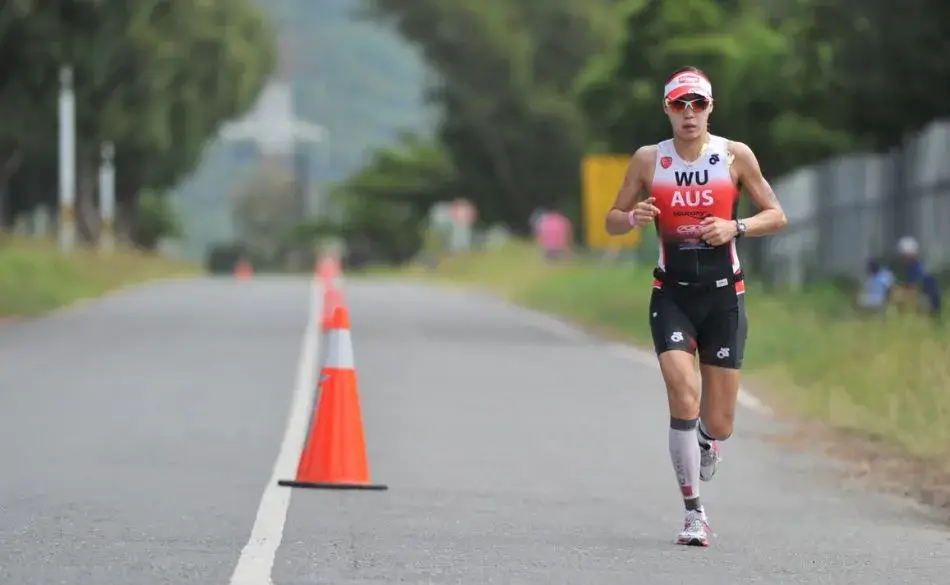
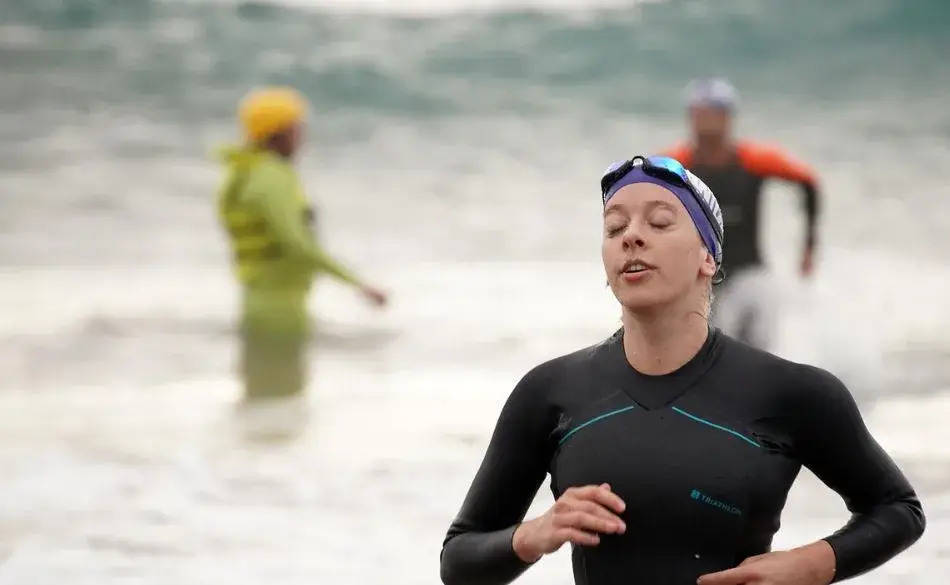
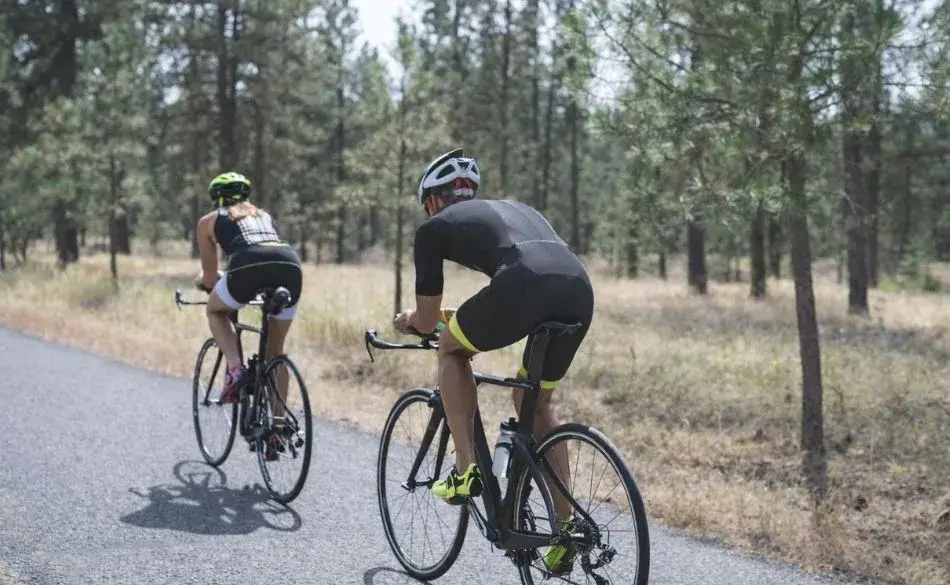
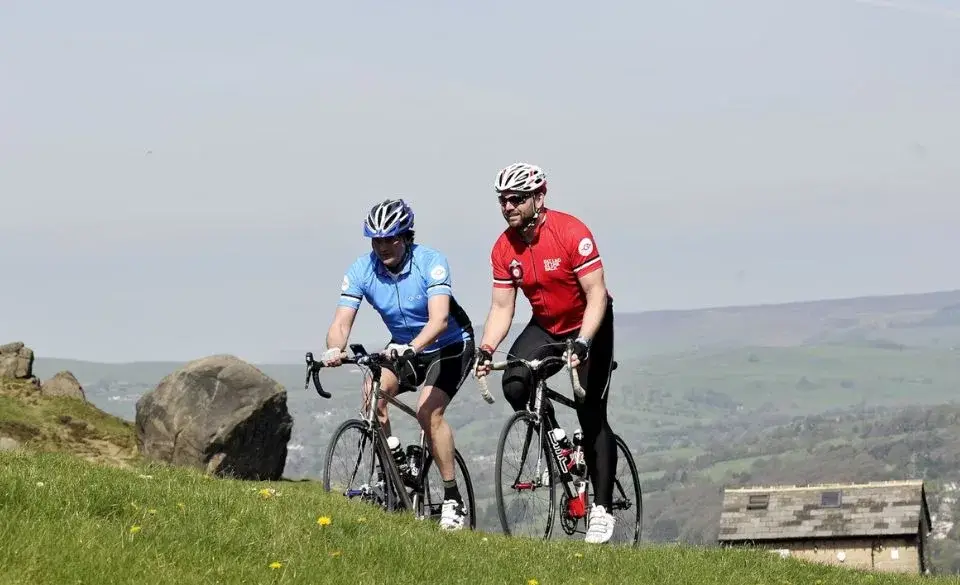
During the swim, the pectoralis major and anterior deltoids help drive your arm pull. A strong chest reduces shoulder strain and keeps your stroke powerful deep into longer sessions. On the bike, your chest helps stabilize the upper body and absorb vibration, keeping you efficient over hours in the saddle. When running, it balances the upper body rotation, helping your arms swing freely and rhythmically.
Here’s a quick look at how chest strength influences triathlon performance:
👉 Swipe to view full triathlon chest muscle guide
| Triathlon Discipline | Role of Chest Muscles | Training Benefit |
|---|---|---|
| Swim | Drives the pull phase of each stroke | Improves propulsion and endurance |
| Bike | Supports upper body stability on handlebars | Reduces fatigue and discomfort on long rides |
| Run | Controls arm drive and posture | Enhances rhythm, balance, and breathing |
From my experience coaching athletes, those who added bodyweight chest training twice a week saw noticeable improvements in swim control and posture within four weeks. One athlete, Sarah, used to fatigue halfway through open-water sessions. After adding push-up variations and dips to her routine, she reported smoother arm recovery and less shoulder tension by race day.
So, whether you’re preparing for your first sprint triathlon or targeting a 70.3, don’t skip chest work. Building strength here will help you hold form when fatigue sets in, translating to faster transitions and more consistent race performance.
If you’re preparing for a Half-Ironman and want to improve overall control, power, and efficiency across all three disciplines, our Half-Ironman Triathlon Training Plans are built to help you get there. Each plan balances endurance development with functional strength work to support every swim, ride, and run.
The programs include race-specific conditioning, mobility drills, and recovery strategies designed to keep you strong and steady through every stage of training.
Train consistently, stay powerful, and reach the finish line feeling strong and confident.
Explore Half-Ironman Training Plans
The Best Bodyweight Chest Exercises for Triathletes
When it comes to strength work, triathletes need movements that build power without adding unnecessary bulk. The best bodyweight chest exercises target stability and endurance as much as strength. That’s why form matters more than the number of reps. Each movement below develops control through the full range of motion, preparing your body for swim strokes, bike handling, and running efficiency.
Here are some of the most effective no-equipment chest exercises for triathletes:
Push-Up Variations
Push-ups are the heart of every bodyweight chest workout for triathletes. They build strength, control, and stability through your upper body. All of which are essential for long swims, steady bike posture, and powerful arm drive during runs. What makes push-ups so effective is their simplicity. No equipment, no gym, just your body and gravity.
Each variation brings a unique challenge that mimics real triathlon demands. Incline push-ups reduce load and help refine form, perfect for beginners or recovery days. Decline push-ups hit the upper chest and shoulders, training your muscles to stay strong through each swim stroke. Diamond push-ups shift focus to the triceps and inner chest, improving arm extension power. And tempo push-ups build muscular endurance, teaching your body to handle fatigue. Just like the last few miles of a race.
If you want to feel the difference, aim for three sets of 10–20 reps. Keep your core tight and your elbows at about 45 degrees. That small adjustment can protect your shoulders and engage your chest more efficiently.
Tip: Try doing a few push-ups after your swim or indoor trainer session. It’s a great way to simulate upper-body fatigue under race-like conditions and it doesn’t add much extra time to your day.
Recent studies confirm that push-ups can match traditional weight training for building chest strength and endurance. You can read more in this research article from the National Institutes of Health: Low-load bench press and push-up induce similar muscle hypertrophy.
To layer in complementary core-control work, consider pairing push-up variations with the windshield wipers exercise to enhance rotational stability and upper-body endurance.


Dips – Building Depth and Power Through Stability
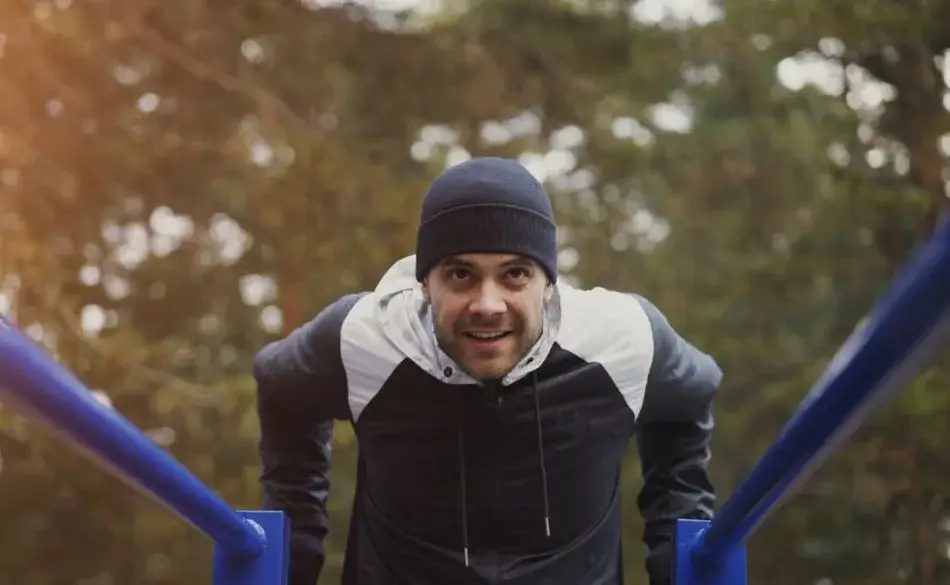
Most triathletes overlook dips because they seem like a bodybuilder’s move. But here’s the truth, dips are one of the best bodyweight chest exercises for building functional upper-body power. They strengthen your chest, triceps, and shoulders all at once, and the movement closely mirrors the push phase of swimming.
When you lower into a dip, your pectoralis major and anterior deltoid stretch under control, teaching your body to handle tension. The same kind you feel when driving through each pull in open water. As you press back up, your triceps and chest work together to stabilize your upper body, improving strength for steady bike posture and powerful arm recovery.
If you don’t have access to parallel bars, a sturdy bench or chair works just fine. Bench dips are a great starting point, especially if you’re new to strength work or balancing multiple triathlon sessions per week. Keep your shoulders back, chest lifted, and elbows at about a 45-degree angle as you lower yourself slowly.
For athletes I coach, adding dips twice weekly improved shoulder endurance and swim propulsion within a month. One of my age-group triathletes reported feeling “lighter” in the water, not from losing weight, but because his pull phase felt smoother and stronger.
Here’s how to get started:
- Beginners: 3 sets of 8–10 reps, feet on the floor
- Intermediate: 3 sets of 10–15 reps, legs extended
- Advanced: 3 sets of 12–20 reps using parallel bars
Tip: If you ever feel pinching in your shoulders, shorten your range of motion slightly. Quality movement beats volume every time.
If you’re aiming to build total-body stability and smoother power transfer across all three disciplines, our Ironman Triathlon Training Plans provide structured programs designed to boost endurance, coordination, and strength for consistent race-day performance.
Each plan includes progressive conditioning and mobility work that complements your swim, bike, and run sessions — helping you stay balanced, strong, and efficient even in the later stages of long-distance racing.
Train with purpose, stay consistent, and feel the difference in every stride, stroke, and pedal.
Explore Ironman Training Plans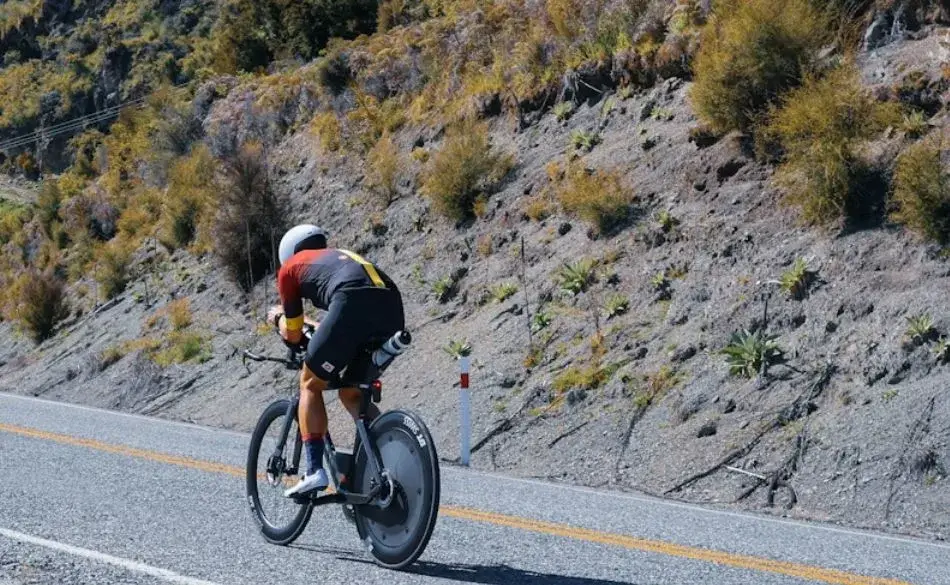
Plank to Push-Up
The plank to push-up may look simple, but it’s one of the most underrated bodyweight chest exercises for triathletes. It blends strength, control, and endurance. Three things every triathlete needs on race day. What makes it so valuable is how it connects your upper body to your core, teaching both to work together efficiently.
When you transition from a plank to a push-up, you engage your pectoralis major, deltoids, and triceps, while your abs and lower back fight to keep your body stable. This mimics how your body functions during a triathlon – multiple muscles working together to maintain rhythm and posture under fatigue.
Start in a high plank position with your hands under your shoulders and your body in a straight line. Lower onto one forearm, then the other, before pressing back up to full extension. Alternate the leading arm each time. Go slowly to keep control and avoid swaying your hips.
What I love about this exercise is how quickly it exposes weak links. If your core or shoulders fatigue early, your form will tell you right away. Over time, this move builds upper body stability for triathletes, helping you maintain better alignment in long swims and during long rides in aero position.
Try this quick workout structure:
- Beginner: 3 rounds of 20 seconds on, 20 seconds rest
- Intermediate: 3 rounds of 30 seconds on, 15 seconds rest
- Advanced: 4 rounds of 45 seconds on, 15 seconds rest
Tip: Pair this movement with a tempo push-up or bench dip for a killer endurance combo. It’s a small addition that pays off with noticeable improvements in race posture and late-stage form control.
For extra shoulder and core stability between strength sessions, pair this drill with our wobble board exercises for athletes to improve balance and control.

Isometric Chest Squeeze
The isometric chest squeeze might not look like much, but it’s one of the best low-impact bodyweight chest exercises for triathletes who already train hard. It strengthens your inner chest, improves shoulder alignment, and helps you maintain upper-body control through long endurance sessions.
To perform it, stand tall with your feet shoulder-width apart. Bring your palms together in front of your chest, elbows out to the sides. Press your hands together as hard as possible while keeping your shoulders relaxed. Hold for 20–30 seconds, then release slowly. That’s one rep.
What makes this so effective is the constant muscle engagement without joint strain. You’re not moving through a range, you’re building endurance by sustaining tension. This mirrors how your chest and shoulders work during long swims or steady bike efforts, where the goal is maintaining pressure and control rather than explosive power.
Triathletes often overlook these small, controlled efforts, but they’re essential for long-term shoulder health. The squeeze activates the pectoralis major and serratus anterior, muscles responsible for chest stability and shoulder tracking. A stronger connection here means fewer overuse issues and better swim mechanics.
Here’s how to include it in your weekly training:
- Beginners: 3 sets of 20-second holds
- Intermediate: 3 sets of 30-second holds
- Advanced: 4 sets of 40-second holds or add resistance using a medicine ball
Tip: Try doing this exercise right before your swim warm-up or indoor trainer ride. It “primes” your chest and shoulders, improving neuromuscular control before your key session. It’s one of those small additions that make a big difference over time.
To expand your at-home strength routine beyond chest stability, check out our strength training for triathletes at home guide for more bodyweight and core exercises that complement this movement.


Plyometric Push-Up
If you’re ready to take your bodyweight chest training to the next level, the plyometric push-up is the move that separates strength from power. While most endurance athletes focus on slow, steady effort, explosive chest work helps develop the fast-twitch control you need when accelerating in the water or sprinting out of a transition.
Start in a normal push-up position. Lower yourself slowly, then push upward with enough force for your hands to briefly leave the ground. Land softly, keeping your elbows slightly bent to absorb the impact. This burst of force trains your pectoralis major, triceps, and serratus anterior to activate quickly, improving your ability to generate power efficiently.
Triathletes often overlook power-based exercises, but even a small dose of plyometrics enhances neuromuscular coordination and muscle recruitment. This leads to smoother swim starts, quicker transitions, and stronger surges on the bike.
Here’s how to safely integrate them:
- Beginners: Start with small hops or push-ups against a wall
- Intermediate: Push off the ground lightly with controlled landings
- Advanced: Try clapping push-ups or explosive incline push-ups for maximum power output
Perform 2–3 sets of 6–10 reps once a week. Because this move is intense, always do it early in your strength session when your muscles are fresh.
Tip: Combine plyometric push-ups with static holds like the isometric chest squeeze for a blend of speed and stability. That mix teaches your muscles to both explode and sustain. The perfect combo for triathletes seeking more powerful, controlled movement through every stage of the race.
If you’re ready to take your bodyweight chest training and overall triathlon strength to the next level, our Triathlon Coaching program gives you a personalized plan that fits your goals, schedule, and training load — no gym required.
Every plan focuses on improving posture, endurance, and total-body stability, helping you swim stronger, ride longer, and run with more control. You’ll receive real feedback from experienced endurance coaches who know how to blend strength work and triathlon training seamlessly.
Train smarter, move stronger, and feel more confident on race day.
Explore Triathlon Coaching PlansHow to Structure Your Bodyweight Chest Workouts
A good bodyweight chest workout should fit seamlessly into your triathlon plan, not fight against it. The goal isn’t to build bulky muscle, it’s to create a chest that supports endurance, stability, and form across all three disciplines. When structured the right way, these sessions enhance your swimming power, cycling posture, and running efficiency without adding recovery stress.
For most triathletes, two sessions per week are enough to see real improvements in strength and posture. Think of it as maintenance training that reinforces what you do in the pool, on the bike, and on the run.
Here’s a simple structure that balances chest endurance and stability:
- Session 1 – Strength & Stability
- Incline Push-Ups – 3 x 12–15
- Dips – 3 x 10–12
- Isometric Chest Squeeze – 3 x 30 seconds
- Plank to Push-Up – 3 x 30 seconds
- Session 2 – Endurance & Control
- Decline Push-Ups – 3 x 12–15
- Diamond Push-Ups – 3 x 10–12
- Plyometric Push-Ups – 2 x 8
- Shoulder Taps (in Plank) – 3 x 20 taps
These workouts take about 20–25 minutes and can be added after your endurance training. Rest 45–60 seconds between sets.
If you’re preparing for a long-distance event like a 70.3 or Ironman, alternate between higher-rep endurance sessions one week and slower, strength-focused tempo work the next. That variation builds both power and staying power. Exactly what you need when fatigue sets in late in the race.
Remember to always prioritize your key endurance sessions first, then fit in strength work. Treat these workouts as the foundation that supports everything else (not extra fatigue). Over a few weeks, you’ll notice better posture, smoother swim mechanics, and stronger arm drive during runs.
As you build your upper-body strength, don’t forget your lower leg support. Pairing chest workouts with foundational movements like the toe raises – how to, benefits & variations helps you stabilize your stride and support the transition from bike to run.

Conclusion: Small Movements, Big Results
You don’t need machines or heavy weights to develop the kind of strength that carries you through long triathlons. The truth is, consistent bodyweight chest training builds more than just muscle. It builds resilience. Every push-up, dip, or hold you perform teaches your body control under fatigue, which is exactly what endurance athletes need.
I’ve seen it over and over again with the athletes I coach. The ones who stick to short, smart strength sessions each week end up swimming smoother, holding better bike posture, and finishing runs with less shoulder tension. That’s the quiet power of functional training, it doesn’t just make you stronger, it helps you move better.
So, whether you’re training for your first sprint triathlon or your fifth Ironman, add these movements to your routine. Start small, stay consistent, and you’ll notice it: stronger strokes, steadier rides, and a more confident stride to the finish line.