How to Do Butt Kicks Properly (and Avoid the Common Mistakes)
The butt kicks exercise looks simple, but good form turns it into a powerful warm-up. It mirrors the recovery phase of running and helps your hamstrings contract quickly, which supports smoother, more efficient strides.
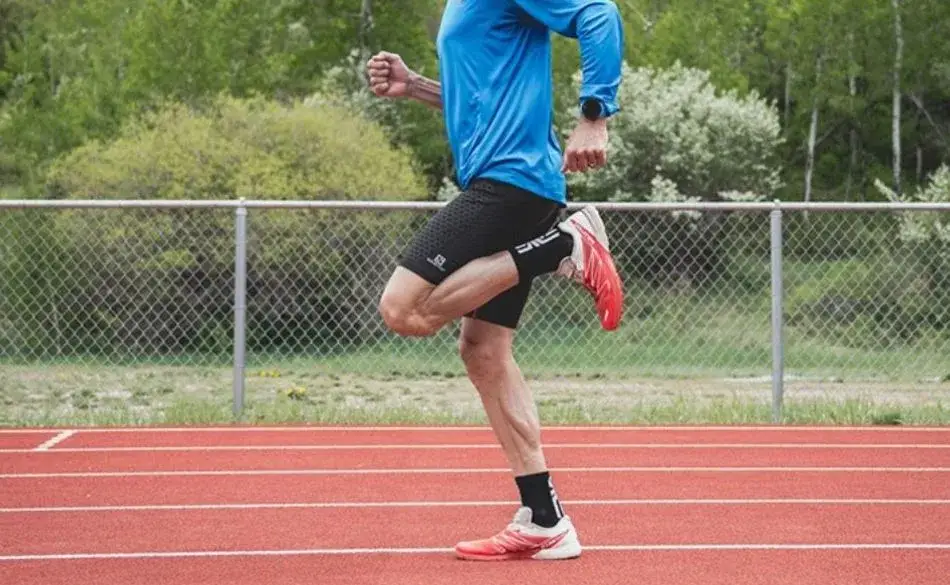
Stand tall with your chest open and your core lightly engaged. Start a gentle jog in place and bring your heel toward your glute. Keep your knees pointing straight down and land softly on the balls of your feet. Move with rhythm, not speed, so you feel your hamstrings, glutes, and calves switch on.
Use short bouts to build quality. Go for 20 to 30 seconds, rest briefly, and repeat for 3 to 4 rounds. You should feel warmth through your posterior chain and a light bounce in your step, like your legs are waking up for the work ahead.
- Stand with feet hip width apart and brace your core.
- Begin a light jog and drive one heel toward your glute.
- Keep knees aligned and close together as they track downward.
- Swing your arms naturally to maintain balance and cadence.
- Land softly on the forefoot to reduce joint impact.
One athlete I coach, Jamie, struggled with hamstring tightness before runs. After adding two sets of butt kicks to her dynamic leg warm-up, her stride felt smoother within two weeks and post run stiffness dropped. Small dose, big payoff.
Avoid rushing, leaning forward, or snapping the knee. Think of this as a running form drill that teaches timing and quick hamstring pull, not an all out sprint. With posture tall and movements fluid, this simple drill primes your lower body for better training and easier miles.


Why Butt Kicks Matter More Than You Think
Most people treat butt kicks as a quick warm-up, but this simple move does more than raise your heart rate. It helps activate your hamstrings, glutes, and calves, while also engaging the quads and hip flexors to a lesser degree. Together, these muscles power every step you take.
Dynamic warm-ups prepare your body better than static stretching because they mirror real movement patterns. The butt kicks exercise fits this perfectly. It supports faster muscle reactions and smoother coordination, which is exactly what you need before running, HIIT, or strength work.
When you perform body-weight butt kicks with good form, you’ll notice your legs find a steady rhythm. Your hamstrings pull the heel upward with quick timing, your glutes stabilize the hips, and your lower legs handle light, springy ground contact. It’s not a strength workout by itself, but it’s an efficient way to “switch on” key running muscles so your training starts on the right foot.
Here’s what’s happening under the hood:
- Hamstrings contract quickly to support smoother leg recovery and help reduce overstriding.
- Glutes engage early to aid propulsion and hip stability.
- Hip flexors and quads move dynamically to assist turnover and rhythm.
- Calves contribute to light, controlled foot contact for better balance and coordination.
Runners I coach often report lighter, more connected strides and less stiffness after adding this running form drill to their routine. Think of it as a fast, reliable way to prime movement patterns. It won’t replace strength training, but it can make your warm-up smarter and your first steps feel easier.
When done correctly, this simple movement can elevate your heart rate, improve coordination, and activate key muscles before running or strength sessions. It’s a staple in many dynamic warm-ups because it mimics the motion of efficient running. For a deeper breakdown of form and muscle engagement, see this detailed guide on butt kicks from Healthline.
Every runner, from beginner to elite, benefits from structure and balance. Our Running Coaching programs are designed to help you train smarter, recover better, and perform stronger. Each plan is built around your fitness level, goals, and lifestyle. Giving you the right mix of intensity and rest to keep improving safely.
- Personalized training structure: sessions tailored to your pace, distance, and recovery needs
- Smart recovery planning: reduce fatigue and prevent injury through data-driven rest strategies
- Performance development: improve speed, endurance, and efficiency with proven running methods
- Ongoing expert feedback: continuous support from professional running coaches to keep you progressing
Run with purpose, recover with intent, and reach your next personal best with a structured coaching plan built for you.
Start Running Coaching →

Which Muscles Do Butt Kicks Work (and Why It Matters)?
The butt kicks exercise might look simple, but it secretly trains the same muscles that make your stride powerful and fluid. Think of it as a quick tune-up for your lower body, like oiling a machine before it runs.
Your hamstrings are the stars of the show. They contract fast to lift your heel toward your glutes, mimicking the recovery phase of running. When these muscles fire correctly, you spend less time overstriding and more time gliding forward. It’s one of those subtle changes that can make running feel easier almost instantly.
Next come your glutes, the stabilizers of your stride. When they switch on early, they keep your hips steady and your knees tracking straight. You’ll notice that your torso stays upright instead of wobbling side to side. A key difference between efficient runners and tired ones.
Your calves provide that springy, elastic bounce. They help you land softly and rebound smoothly, turning each rep of butt kicks into a gentle lower-body cardio exercise that fires up circulation and coordination. You can further strengthen your lower legs with our toe raises: how to benefits & variations guide, which focuses on ankle stability and shin control for runners.
Even your quads and hip flexors join the party. While they’re not the main drivers, they move dynamically through their range of motion, supporting rhythm and turnover. This balance between contraction and stretch keeps your legs moving freely.
The beauty of this dynamic leg warm-up is how it makes your stride feel connected. When I’ve had athletes use it before a speed session, they often say their legs feel “awake” within seconds. Every muscle is communicating, firing in sequence with no wasted effort.
If you remember just one cue, make it this: light feet, quick heel, tall chest. That’s the secret rhythm of an efficient stride and a perfect warm-up.


Perfecting Your Butt Kicks Form: Common Mistakes to Avoid
The butt kicks exercise only works its magic when you do it with solid technique. Too many people rush through it, treating it like a casual jog. But good form makes the difference between a warm-up that just looks active and one that actually prepares your body to perform.
When I coach athletes, I slow the movement down first. Once they control their rhythm and timing, we gradually add speed. The goal isn’t to see how high you can kick, it’s to build smooth, balanced movement that wakes up your lower body without strain.
Here’s a breakdown of how to do it right and what to avoid:
👉 Swipe to view full table
| Technique Element | Do This | Avoid This | Why It Matters |
|---|---|---|---|
| Posture | Keep your chest up and core engaged. | Leaning forward or arching your back. | Upright posture helps maintain proper hip alignment and supports safe movement. |
| Knee Position | Point knees straight down during movement. | Letting knees swing forward like a jog. | This helps keep the focus on hamstring activation rather than hip flexion. |
| Heel Kick | Bring your heel gently toward your glute. | Kicking too hard or snapping your leg back. | Controlled motion may help reduce knee stress and improve timing. |
| Foot Strike | Land softly on the balls of your feet. | Landing flat-footed or on your heels. | Soft landings support better rhythm and coordination for efficient movement. |
| Arm Swing | Move arms naturally in sync with your stride. | Holding arms stiff or tense. | Relaxed arms help maintain balance and support a natural rhythm. |
| Pace | Start slow, then increase cadence as form improves. | Going too fast too soon. | Building gradually helps maintain technique and supports long-term consistency. |
A great way to test your form is to record a short clip from the side. If your knees drift forward or your back rounds, slow down and reset. Remember, this is a hamstring activation exercise, not a sprint.
When done with attention and control, the butt kicks warm-up drill may help improve coordination, rhythm, and muscle readiness before harder sessions.
Every strong cyclist knows performance is built on structure, not guesswork. Our Cycling Coaching programs are designed for riders who want to train smarter, recover faster, and reach peak fitness with personalized, data-driven plans. Whether you’re targeting a race, a long-distance event, or all-around improvement, our coaching brings clarity and focus to your training.
- Structured power development: targeted sessions to increase FTP and endurance strength
- Custom performance analytics: track progress with professional training data reviews
- Recovery optimization: tailored workloads that balance fatigue and adaptation
- Ongoing expert support: direct feedback from experienced cycling coaches
Train with purpose, master your power, and unlock your best performances with personalized cycling coaching.
Start Cycling Coaching →
How to Add This Move to Your Training Routine (for Runners, Gym-Goers, and Beginners)
This movement fits almost anywhere in your routine (before a run, between lifts, or at the end of a circuit). It’s quick, low-impact, and requires no equipment. Use it as a warm-up to prepare your legs, not to fatigue them.
If you’re a runner, include it after a short jog. It helps your hamstrings activate and supports smoother leg turnover before faster work. Pair it with other dynamic leg warm-ups like high knees, A-skips, or leg swings.
If you’re a gym-goer, try adding short sets between lower-body exercises. Doing 20–30 seconds of this drill between squats or lunges may help keep blood flowing and support hip mobility without adding extra strain. You can complement this by exploring more gym exercises for runners that strengthen supporting muscles and improve running form.
For beginners, use it as light cardio or coordination training. Start with 15–20 seconds, rest, and repeat for three rounds. As coordination improves, build up to 45–60 seconds. Keep the pace controlled and focus on rhythm, not speed.
- Warm-Up Routine (5–7 minutes)
1 min light jog → 3 × 20 sec of this drill → 3 × 20 sec high knees → 10 walking lunges - Between Strength Sets (Mobility Maintenance)
After each set, perform 30 sec of controlled reps; prioritize posture and rhythm - Cardio Finisher
Alternate 20 sec of this move with 20 sec jumping jacks for 3–5 rounds
You can also include it in a no-equipment cardio circuit at home or outdoors. This exercise helps warm up key lower-body muscles, supports coordination, and may improve how smoothly you transition into tougher work. It doesn’t replace structured strength or speed training.


Which Variations Should You Try Next?
The right amount depends on your goal and how your body feels that day. You want enough movement to wake things up, but not so much that you burn out before the main session. For a simple warm-up, start small (3 to 4 rounds of 20–30 seconds with light jogging in between). Keep the rhythm easy and smooth, focusing on tall posture, quiet feet, and a gentle heel-to-glute path. You’ll build coordination and feel lighter on your feet without tiring out your legs.
Before a speed session, add a little snap. Try 4–6 rounds of 15–20 seconds at a slightly higher cadence. Keep the motion compact and think “quick heel, soft land.” You’re priming your nervous system, not chasing fatigue. If you’re lifting, you can sprinkle in short bouts between sets (20 to 30 seconds after squats or lunges). This keeps your hips active and stride pattern sharp without robbing you of strength for the main lifts.
For beginners, go slower and more deliberate. Start with 2–3 rounds of 15 seconds and rest generously between sets. Once the movement feels natural, add rounds or extend the time. Always chase quality before quantity. On recovery days, treat this as an easy running form drill.Pair 30 seconds of gentle reps with leg swings or ankle circles, keeping your breathing calm and controlled. You should finish feeling better than when you started.
Progress should be simple: first master control, then add cadence, and only then increase time. If your posture slips or your foot strikes get heavy, reset and shorten the set. Good reps matter more than long sets. Ask yourself: Was your chest tall? Were your knees pointing down? Were your landings quiet? If yes, you nailed it. With consistency, this hamstring activation exercise fits perfectly into your no-equipment leg drills, helping your stride feel smoother and more connected.
Once 4 × 30 seconds feels easy and crisp, you’re ready to layer in faster strides or strength work right after. For a deeper guide on how to incorporate and maximise strides in your running sessions, check out our Strides Running article.


Why Consistency Beats Intensity Every Time
Let’s be honest, one good session won’t change much. What really transforms how you move is doing the small things consistently. The butt kicks exercise isn’t about burning calories or setting records. It’s about teaching your muscles to communicate better, one smooth repetition at a time.
When I first introduced this drill to one of my athletes, she brushed it off as “too easy.” A few weeks later, she noticed her stride felt lighter, and her post-run soreness dropped dramatically. That’s the quiet power of repetition done right.
The more regularly you practice, the more your brain and muscles sync up. The hamstrings learn to fire on time. The glutes switch on without delay. Your coordination improves so that your running feels effortless, not forced.
Even two or three minutes a few times a week can make a difference. Consistency builds muscle memory, which supports smoother form and reduces fatigue over time. That’s why I always tell athletes: “A small dose daily beats a big dose occasionally.”
If you’re someone who loves tracking progress, note how your first few steps in a run feel after a few weeks of this drill. Chances are, your legs feel “awake” faster. That’s your neuromuscular system responding.
So don’t rush it. Don’t skip it. Make it part of your routine, the same way you brush your teeth. It’s one of those subtle habits that quietly lifts performance, stride by stride.


The Small Drill That Makes a Big Difference
It’s easy to overlook the simple stuff. But sometimes, that’s exactly what your body needs. The butt kicks exercise might look basic, yet it may help build the foundation for smoother movement, stronger coordination, and better control.
You don’t need to spend hours perfecting it, just a few focused minutes before each session. That’s where progress often begins. When you move with intention, every step starts to feel connected. Your hamstrings fire when they should, your glutes support each stride, and your body moves more efficiently over time.
Think of this exercise as a bridge between warming up and performing. It supports better hip alignment, helps activate key muscles, and prepares your body for more demanding work. Over time, that awareness may carry into every workout, long run, and recovery day.
So next time you lace up, don’t skip it. Add a few rounds of butt kicks to your warm-up and notice how your stride feels. The changes may be subtle at first, but consistency builds results. That’s how smart training works – small movements, practiced often, that quietly make you a stronger, more efficient athlete. For another easy way to personalise your warm-up routine, check out our Warm-Up Calculator for Runners & Endurance Athletes.