









Find Your Next Running Race
Ready to put your training to the test? Here are some upcoming running events matched to this article.
 Coach Graeme
Last updated:
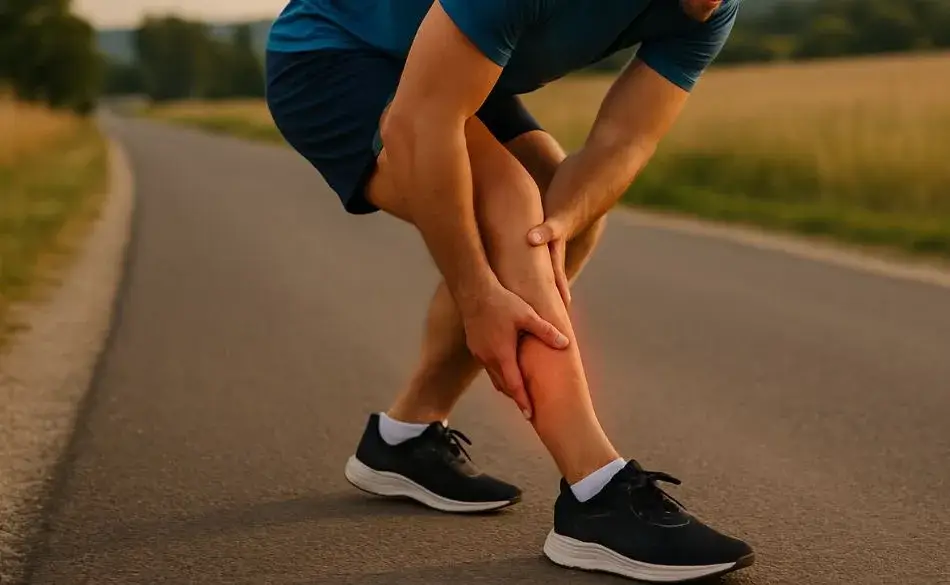
Finishing a run feeling strong, then waking up the next morning with calves that feel like concrete — it is one of the most familiar experiences in running. Calf DOMS after running is extremely common and, in most cases, a normal signal that your muscles are adapting to training stress. But not all calf soreness is the same, and understanding what is behind it helps you recover smarter, return to training sooner, and prevent it from happening as often going forward.
Not sure where to start with training?
Tell us your goal and schedule, and we’ll give you clear direction.
No obligation. Quick, practical advice.
Explore our running advice and tips for more helpful articles and resources.
DOMS stands for delayed onset muscle soreness. It describes the dull, diffuse ache and stiffness that develops in muscles 12–24 hours after unaccustomed or intense exercise, typically peaking around 24–72 hours post-run. Despite what you may have heard, DOMS is not primarily caused by lactic acid buildup — lactic acid clears within an hour of finishing exercise. The current scientific understanding points to eccentric muscle contractions as the main driver.
During running, your calves work eccentrically during two key phases: the loading phase when your foot makes contact with the ground and absorbs impact, and the push-off phase when the calf forcefully extends the ankle to propel you forward. Eccentric contractions — where the muscle generates force while lengthening — cause greater micro-structural stress on muscle fibres than concentric contractions. These microscopic tears trigger an inflammatory response, bringing increased blood flow, immune cells, and fluid to the area. It is this inflammation that creates the characteristic soreness, stiffness, and reduced range of motion you feel the next day.
The calves — primarily the gastrocnemius (the large, two-headed muscle visible at the back of the lower leg) and the soleus (the flatter, deeper muscle beneath it) — absorb and generate significant force with every running stride. Research estimates the calf complex absorbs forces equivalent to several times your body weight with each foot contact. That volume of eccentric loading, repeated thousands of times per run, makes the calves one of the most DOMS-prone muscle groups in runners.
Several running-specific factors make calf DOMS more likely or more severe. Downhill running dramatically increases eccentric loading on the calves as they act as a brake during descent. A sudden jump in mileage or intensity gives the calf muscles more work than they have been conditioned for. Returning to running after a break of two or more weeks means your calves face workloads they have temporarily lost adaptation to. Transitioning to a lower-drop shoe reduces the heel lift that cushions the calf and substantially increases the demand on the Achilles tendon and calf complex.
This is the most important distinction for any runner dealing with calf pain. DOMS is a normal training adaptation; a calf strain is an injury that requires rest and careful management. Confusing the two can turn a minor strain into a significant setback.
👉 Swipe to view full table
| Feature | DOMS | Calf Strain |
|---|---|---|
| Onset | 12–24 hours after run | Sudden, during the run |
| Pain type | Dull, diffuse ache; stiffness | Sharp, specific point of pain |
| Location | Both calves, general area | Usually one calf, exact spot |
| Swelling | Minimal or none | Possible; may bruise |
| Pain on touch | Generalised tenderness | Sharp pain at specific point |
| Running possible? | Yes, with reduced intensity | Usually painful or impossible |
| Duration | 3–5 days | Days to weeks depending on grade |
If you felt a sudden sharp pain or a “pop” in your calf during the run itself — rather than waking up sore the following day — assume a strain until assessed otherwise. Stop running, apply ice, and seek assessment from a physio or sports doctor. Running through a calf strain dramatically increases the risk of a more serious tear.
Most calf DOMS resolves on its own within 3–5 days and does not require medical care. However, certain signs warrant prompt assessment. These include sudden sharp pain during a run rather than delayed onset, significant swelling or visible bruising in the calf, one calf that is notably more swollen, red, or warm than the other (which can indicate a deep vein thrombosis), pain that is not improving after 7–10 days, and — importantly — brown or cola-coloured urine after exercise, which can indicate rhabdomyolysis (a rare but serious condition where muscle breakdown products overwhelm the kidneys). If you experience the latter, seek emergency care.
There is no treatment that eliminates DOMS entirely — the underlying tissue repair process takes the time it takes. What the following strategies do is reduce perceived soreness, restore range of motion faster, and support the tissue repair process.
Keep moving at low intensity. Complete rest is not the optimal approach for DOMS. Easy walking or a very light jog increases blood flow to the affected muscles, delivering oxygen and nutrients while helping clear inflammatory byproducts. The caveat is that the activity must feel genuinely easy — if you are limping or compensating, you need more rest first.
Foam rolling and massage. Manual pressure on the gastrocnemius and soleus helps break up localised tissue tension and increases circulation. Roll slowly from the Achilles insertion up to the back of the knee, pausing on tender spots for 20–30 seconds. A firm massage ball or lacrosse ball can target more specific areas. Keep pressure moderate — aggressive rolling on inflamed muscle does not accelerate healing and may increase soreness temporarily.
Cold water immersion. Immersing your lower legs in cold water (10–15°C) for 10–15 minutes immediately after a hard session is one of the better-supported strategies for reducing DOMS severity in the following 24–48 hours. It is less effective as a treatment once DOMS is already established. If you do not have access to an ice bath, a cold shower directed at the calves provides some benefit.
Hydration and protein. Adequate hydration supports the inflammatory clearance process and helps prevent the muscle cramping that can accompany DOMS. Protein intake of 1.6–2.2 g per kg of body weight per day provides the amino acids needed for muscle repair. Timing a protein-containing meal or shake within two hours of a hard session supports this process.
Compression sleeves. Graduated compression calf sleeves worn during and after hard sessions improve venous return from the lower legs, reducing the fluid accumulation that contributes to swelling and soreness. They are particularly useful for recovery in the 24 hours following long runs or intense speed work.
Active recovery sessions. Swimming, cycling, or aqua jogging maintain cardiovascular conditioning without the eccentric loading that caused the DOMS in the first place. These are valuable options on days when your calves are too sore to run comfortably but you do not want to lose fitness entirely. Strength exercises that do not load the calves — such as glute bridges, hip work, and upper body — can also continue during calf recovery days.
Preventing DOMS entirely is not possible — it is an inherent part of progressive training. What you can control is its frequency and severity by managing training load intelligently.
👉 Swipe to view full table
| Prevention Strategy | How It Helps | Practical Application |
|---|---|---|
| Progressive overload | Prevents sudden load spikes | Increase weekly mileage no more than 10% per week |
| Eccentric calf strengthening | Builds tissue resilience | Heel drops off a step: 3 sets of 15, twice weekly |
| Gradual hill introduction | Reduces eccentric overload | Add hills incrementally; avoid sudden hilly races |
| Shoe transition management | Avoids Achilles/calf overload | Alternate new and old shoes for 4–6 weeks when changing drop |
| Adequate warm-up | Prepares muscle tissue | 10 min easy jogging + dynamic calf raises before speed sessions |
| Recovery between hard sessions | Allows adaptation | Minimum 48 hours between hard runs; use easy days truly easy |
Eccentric heel drops — lowering the heel slowly over the edge of a step from a raised position — are particularly effective for building calf resilience in runners. The Alfredson protocol was originally developed for Achilles tendinopathy but the same eccentric loading principle builds tolerance across the entire calf complex and reduces DOMS in runners who introduce it progressively. Start with two sets of 15 reps per leg on a flat surface before progressing to step drops.
The most common mistake runners make with calf DOMS is treating it as a reason to either push through at full intensity or to stop completely. Neither is optimal. Mild DOMS — soreness you feel at rest or when starting a run, but which eases within the first kilometre — is compatible with easy training. Severe DOMS that causes you to alter your gait or compensate with other muscles warrants a rest day or very light cross-training.
Repeated calf DOMS that never fully resolves, or that becomes the default experience after most runs, signals that your training load is outpacing your recovery capacity. This is worth reviewing with a coach. The goal of a well-designed running training plan is progressive adaptation — enough stress to force improvement, with enough recovery to allow the adaptation to occur. When DOMS is chronic, the balance has tipped too far toward stress. Our running coaches can help recalibrate that balance and build your calf resilience progressively.
Struggling with recurring calf soreness or injury?
A structured coaching program builds load progressively, so your calves adapt rather than break down.
Get Running Coaching → Browse Training Plans →Why are my calves sore after running?
Calf DOMS is caused by eccentric muscle contractions during running — particularly during foot strike and push-off — which create microscopic tears in the gastrocnemius and soleus muscles. The subsequent inflammatory response peaks 24–48 hours later, producing the characteristic stiffness and ache.
How long does calf DOMS last after running?
DOMS typically peaks between 24 and 72 hours after the run and resolves within 3–5 days. Soreness that persists beyond 7 days, worsens with time, or is accompanied by sharp localised pain or swelling may be a strain rather than DOMS.
Can I run with calf DOMS?
Easy running with mild calf DOMS is generally fine and can promote recovery. Keep intensity very low and monitor for any sharp pain that worsens during the run. If you are significantly altering your gait due to calf pain, take a rest day instead.
How do I prevent calf DOMS after running?
The key strategies are progressive mileage increases (no more than 10% per week), eccentric calf strengthening exercises, gradual introduction of hills and speed work, and adequate recovery between hard sessions. DOMS cannot be eliminated entirely but its frequency and severity reduces significantly as your calves adapt.
What is the fastest way to recover from calf DOMS?
Easy movement, foam rolling, adequate hydration and protein intake, and compression sleeves are the most consistently supported strategies. Cold water immersion (10–15°C for 10–15 minutes) applied after a hard session helps prevent the next day’s soreness from being as severe.
Ready to put your training to the test? Here are some upcoming running events matched to this article.


Head Coach & Founder, SportCoaching
Graeme is the founder of SportCoaching and has coached more than 750 athletes from 20 countries, from beginners to Olympians, in cycling, running, triathlon, mountain biking, boxing, and skiing. His coaching philosophy and methods form the foundation of SportCoaching's training programs and resources.
No matter your goals, SportCoaching offers tailored training plans to suit your needs. Whether you’re preparing for a race, tackling long distances, or simply improving your fitness, our expert coaches provide structured guidance to help you reach your full potential.
Smart, progressive training from 5km to marathon with weekly guidance.
What’s included
Browse upcoming Australian running, cycling, and triathlon events in one place. Filter by sport, check dates quickly, and plan your training around something real on the calendar.
Choose your plan to get started with personalized training plans designed to help you reach your goals.


Minna Backman
When you’re new, feedback is especially important, and Graeme is highly skilled at both analyzing numbers and understanding the importance of mental strength.











