







Find Your Next Running Race
Ready to put your training to the test? Here are some upcoming running events matched to this article.
 Coach Graeme
Last updated:
Running without socks has genuine appeal — it feels lighter, cooler, and for triathletes it saves meaningful time in transition. But it also comes with real risks that most articles either overstate or dismiss entirely. The honest answer isn't yes or no. It depends on your distance, your shoes, and whether you've prepared your feet for it. This guide covers exactly when sockless running works, when it doesn't, and what you need to do your feet if you're going to try it.
Not sure where to start with training?
Tell us your goal and schedule, and we’ll give you clear direction.
No obligation. Quick, practical advice.
Explore our running training resources for more helpful articles and resources.
Socks do four things that directly affect comfort and foot health during running: they absorb sweat before it pools against the shoe liner; they create a friction buffer between skin and shoe material; they provide a thin layer of cushioning at pressure points; and they help maintain a consistent fit as the shoe flexes. Remove them and you lose all four simultaneously.
Without socks, bare skin rubs directly against the shoe lining on every footstrike. That friction builds heat at contact points — typically the heel, the outer arch, and the toes. On shorter runs this may feel fine. As distance increases, heat accumulates at these points faster than skin can tolerate, progressing from warmth to redness to a hotspot to a blister. The rate at which this happens depends heavily on the shoe’s internal construction, the temperature, and individual sweat rate.
Sweat also becomes a problem without socks. Feet have a high density of sweat glands and produce significant moisture during exercise. Socks wick this moisture away from skin. Without them, sweat remains against skin inside a sealed shoe — the ideal environment for bacterial and fungal growth. Athlete’s foot (tinea pedis) is a direct consequence of this environment sustained across multiple runs. It’s also worth noting that direct sweat contact degrades shoe liners faster, shortening the useful life of your footwear.
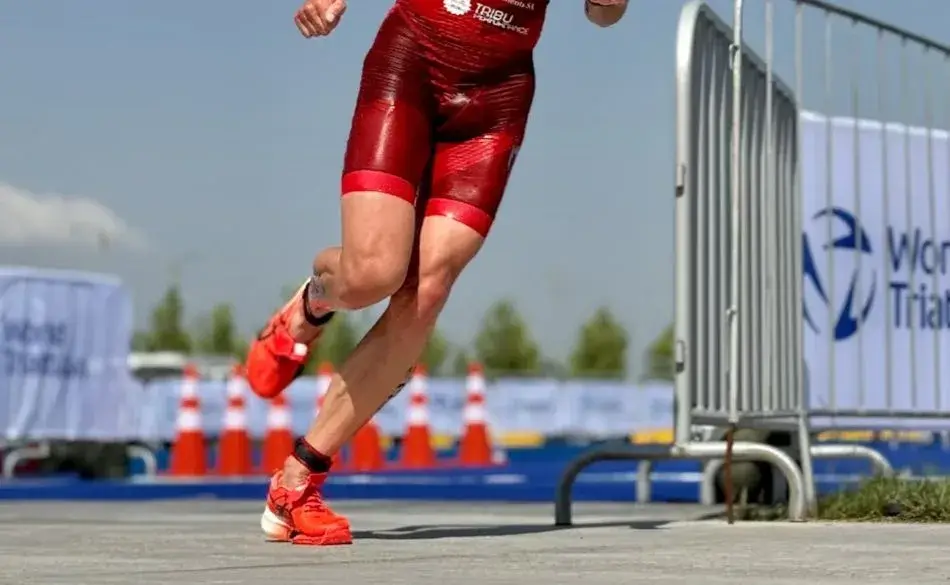
This is the strongest legitimate case for sockless running. In a sprint or Olympic-distance triathlon, putting on socks in T2 takes 30–45 seconds — time that may decide your finishing position. Elite and competitive age-group triathletes routinely run their 5–10km race leg without socks, using shoes specifically built for it and anti-friction lubricant applied in T1 or pre-race.
This works because the distance is short enough to manage friction, the shoe is chosen specifically for sockless use, and athletes condition their feet to it over weeks of training. If you’re planning to race sockless, you must practise sockless — running your brick sessions and race-simulation runs without socks in your race shoes so your feet are adapted before race day. Never race sockless for the first time in competition.
For runs under 5km in shoes designed for sockless wear, the blister risk is manageable for most runners — particularly in cooler conditions where sweat accumulation is lower. Some runners genuinely prefer the feel for short, fast efforts and find it works consistently for them without issue. This is fine, provided the shoe has a smooth seamless interior and you’re not cutting corners on hygiene (more on that below).
Some minimalist runners progressively condition their feet by introducing short sockless sessions as part of a broader approach to foot strength and proprioception. This is legitimate when done gradually — starting with 1–2km and building very slowly over weeks. It’s not a shortcut; it’s a methodical process that takes months to do safely.
Beyond 10km, sockless running becomes genuinely risky for the majority of runners. The cumulative friction over that distance in a standard shoe — even one designed for sockless wear — is enough to produce blisters at multiple sites. Heat, hills, and wet conditions accelerate this further. For half marathon or longer distances, the risk of significant foot damage is high enough that it’s not worth it outside of triathlon racing contexts where the distance is managed and preparation is meticulous.
In shoes not designed for sockless running, the risk starts earlier. Standard training shoes often have internal stitching, heel tabs, and liner materials that cause friction against bare skin within the first few kilometres. You’ll know quickly — within 3–5km you’ll typically feel the first hotspot. By the time you feel it, the friction damage has already begun.
Running in hot or humid conditions without socks is also higher risk regardless of distance. Sweat output increases substantially in heat, accelerating moisture buildup and softening skin faster — which makes it blister more readily. For Australian runners training through summer, this is a significant factor. See also our guide to running in the rain — wet conditions have a similar effect on barefoot friction risk regardless of weather type.
👉 Swipe to view full table
| Distance | Sockless-designed shoe | Standard training shoe | Verdict |
|---|---|---|---|
| Under 5km, cool conditions | Low risk with lubricant applied | Moderate risk — friction starts early | Manageable with right shoe |
| 5–10km | Moderate risk — hotspots likely without prep | High risk — blisters probable | Socks recommended |
| 10–21km | High risk even with prep | Very high — blisters near-certain | Wear socks |
| 21km+ | Very high — significant foot damage likely | Extreme — race-ending blisters possible | Always wear socks |
| Triathlon run leg (5–21km) | Manageable if trained sockless + lubricant | Not suitable | Triathlon shoes + prep only |
👉 Swipe to view full table
| Option | Blister Protection | Moisture Management | Best For | Drawbacks |
|---|---|---|---|---|
| No socks | None — skin on liner | Poor — sweat pools in shoe | Triathlon T2, sub-5km in right shoe | Blisters, fungal risk, shoe odour |
| No-show / invisible socks | Good — covers heel and toe | Good — wicks sweat | Looks sockless, full protection | Can slip if poorly fitted |
| Thin technical running socks | Excellent | Excellent — moisture-wicking | Most running distances | None for most runners |
| Cushioned running socks | Excellent + extra padding | Very good | Long runs, trail, heavy trainers | Slightly warmer in heat |
| Toe socks (e.g. Injinji) | Excellent — eliminates toe-on-toe friction | Very good | Runners prone to toe blisters | Takes getting used to |
| Double-layer anti-blister socks | Outstanding — layers slide on each other | Good | High-blister-risk runners, ultras | Slightly bulkier |
For runners who want the aesthetic of no socks but the protection of wearing them, no-show running socks are the obvious answer. They sit below the ankle collar of most shoes and are genuinely invisible from the outside while providing full friction and moisture protection. This is almost always the better choice over going fully sockless for anything beyond a triathlon race.
The single biggest factor in whether sockless running works is the shoe’s internal construction. Shoes designed for sockless wear have specific features that standard trainers lack:
Seamless or minimal-seam interior. Internal stitching is the most common cause of friction blisters in sockless running. Shoes built for sockless use route seams to the outside or eliminate them entirely in the footbed and heel area.
Smooth, skin-friendly lining. The interior material needs to feel smooth against bare skin across a full range of foot motion. Rough or textured liners create friction hotspots within kilometres.
Antimicrobial treatment. Shoes designed for sockless wear typically incorporate antimicrobial technology in the lining to reduce bacterial and odour buildup from direct sweat contact. Without this, shoes deteriorate quickly and carry infection risk.
Heel design without tabs or hardware. Heel tabs, pull-loops, and internal hardware that work fine against a sock will cause friction against bare skin. Sockless-compatible shoes often have low-profile or softened heel constructions.
If your shoes don’t have these features, no amount of preparation fully compensates. The shoe’s construction is the foundation.
Start very short. Begin with 2–3km maximum in your target shoes. Assess foot condition immediately after — red patches, hotspots, or early skin breakdown are clear signals that the shoe or friction isn’t manageable at longer distances.
Apply anti-friction lubricant. Before every sockless run, apply petroleum jelly, Body Glide, or a similar anti-chafe product to the heel, the outer arch, the ball of the foot, and between toes. Reapply before long races. This does not eliminate friction but meaningfully delays the onset of hotspots.
Use foot powder in the shoe. Talcum powder or an antiperspirant foot powder inside the shoe absorbs sweat and reduces the moisture that softens skin and accelerates blister formation. Combine with lubricant for best results.
Build distance very gradually. Add no more than 1–2km per week to your sockless running. Skin adaptation to friction takes weeks to months, not days. Trying to jump from 3km to 10km sockless will almost certainly result in blisters.
Inspect and care for your feet after every run. Check for hotspots, redness, and the beginnings of blisters before they become established. Early intervention — backing off distance, adding lubricant, or using blister tape — prevents a minor issue becoming one that sidelines your training. For guidance on managing established foot problems, see our full guide to how to not get blisters when running.
Rotate and clean shoes regularly. Sockless shoes accumulate sweat, bacteria, and odour far faster than socked shoes. Allow them to air dry fully between runs (24–48 hours minimum), and wash the insoles regularly. Never wear sockless running shoes two days in a row if avoidable.
The most common foot health consequences of regular sockless running, beyond blisters, are athlete’s foot and general fungal overgrowth. Athlete’s foot (tinea pedis) thrives in warm, damp environments — exactly what the inside of a sockless shoe provides during a run. Symptoms include itching, burning, and dry flaking skin between the toes and on the soles. It’s treatable but tends to recur if the conditions creating it aren’t changed.
Callus formation accelerates with regular sockless running. Some callusing is useful — it toughens skin against friction. But thick calluses can crack under pressure, creating open wounds that are painful and infection-prone. The goal isn’t to eliminate calluses but to keep them managed, smooth, and not cracked. A pumice stone used regularly keeps callus thickness in check.
Toenail issues — blackened nails, nail loss — can also become more common without the sock layer that helps manage nail pressure against the shoe toebox. If you’re already dealing with any ongoing foot pain, address that before experimenting with sockless running. Our guides to why feet hurt after running, heel pain after running, and sore arches cover the most common underlying issues worth resolving first.
For triathletes, the sockless run is a legitimate race strategy — but it requires specific preparation rather than just winging it on race day. Here’s the protocol used by experienced competitors:
Use triathlon-specific running shoes with seamless interiors and antimicrobial liners. Apply petroleum jelly or BodyGlide to all blister-prone areas before the race — either in T1 while on the bike, or at home before heading to transition. Practise your exact race setup in training: run your brick sessions and all runs in the final 4–6 weeks of build-up in your race shoes without socks. Your feet need to be conditioned, not surprised. Keep runs under the race distance initially and build up. On race day, baby powder or talc lightly inside the shoes can help manage moisture if conditions are warm.
For half Ironman or full Ironman run distances, most experienced triathletes do wear socks despite the transition time cost — the distance is simply too long to reliably manage sockless. The transition time saved (30–40 seconds) is insignificant compared to the pace loss from blister-driven discomfort over 21km or 42km.
Foot health, gear choices, and race-day preparation all feed into your overall running performance. Our running coaching programme covers every element of race preparation — from shoe selection and pacing to nutrition and transition strategy for triathletes.
Explore Running Coaching →Should you run without socks?
For most runners, no — socks reduce friction, wick sweat, and significantly lower blister risk. Sockless running makes sense for triathlon transitions and short runs under 5km in shoes specifically designed for it. Beyond that, the risk outweighs the benefit.
What happens if you run without socks?
Bare skin rubs against the shoe lining, creating heat at friction points that progresses to hotspots and blisters. Sweat accumulates without wicking material, creating ideal conditions for athlete’s foot and bacterial growth. Shoe liners degrade faster. On short runs with the right shoes and lubricant, this is manageable. On longer runs, it becomes increasingly hard to avoid.
Can you get blisters from running without socks?
Yes — blister risk increases significantly without socks at any distance beyond about 5km. The heel and arch are the most common sites. Anti-friction lubricant reduces but doesn’t eliminate the risk. See our full guide to preventing blisters when running for full prevention and treatment detail.
Is it OK to run without socks in triathlon?
Yes, for sprint and Olympic-distance events with the right shoes, lubricant, and specific preparation in training. For half Ironman run legs (21km) and beyond, most athletes wear socks — the distance is too long to reliably manage sockless, and the 30–40 second saving becomes irrelevant.
What running shoes can be worn without socks?
Look for seamless interiors, smooth antimicrobial linings, and no internal hardware against skin. Triathlon running shoes are specifically designed for this. Standard training shoes with rough liners and internal stitching will cause blisters within a few kilometres sockless regardless of preparation.
Ready to put your training to the test? Here are some upcoming running events matched to this article.



Head Coach & Founder, SportCoaching
Graeme is the founder of SportCoaching and has coached more than 750 athletes from 20 countries, from beginners to Olympians, in cycling, running, triathlon, mountain biking, boxing, and skiing. His coaching philosophy and methods form the foundation of SportCoaching's training programs and resources.
No matter your goals, SportCoaching offers tailored training plans to suit your needs. Whether you’re preparing for a race, tackling long distances, or simply improving your fitness, our expert coaches provide structured guidance to help you reach your full potential.
Smart, progressive training from 5km to marathon with weekly guidance.
What’s included
Browse upcoming Australian running, cycling, and triathlon events in one place. Filter by sport, check dates quickly, and plan your training around something real on the calendar.
Choose your plan to get started with personalized training plans designed to help you reach your goals.


Minna Backman
When you’re new, feedback is especially important, and Graeme is highly skilled at both analyzing numbers and understanding the importance of mental strength.











