

Quick Answer
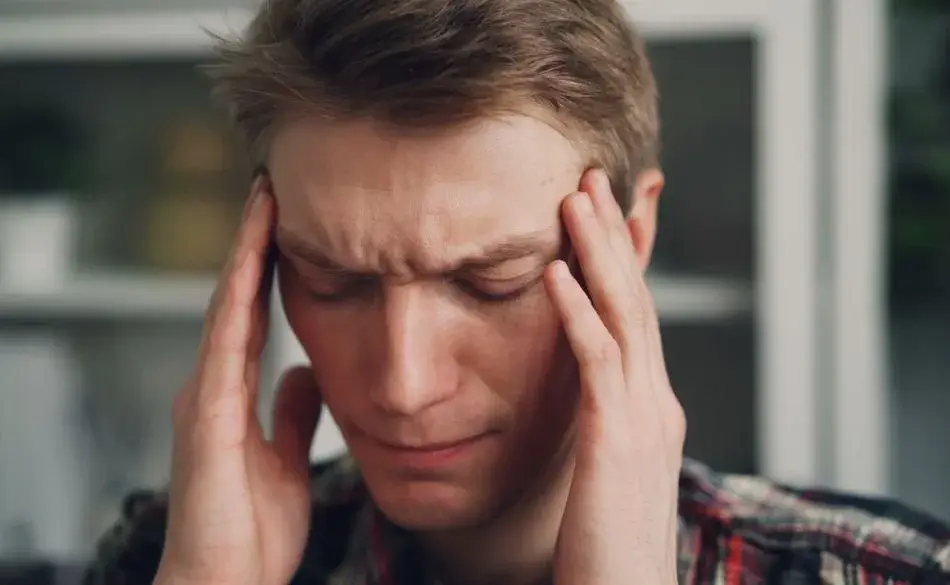
Light aerobic exercise (walking, stationary cycling) is safe to begin within 24–48 hours of concussion, provided symptoms do not worsen with activity. The key rule: symptoms must not increase more than 2 points on a 0–10 scale during or after exercise. High-intensity exercise, contact sport, and activities with collision or fall risk are prohibited until full medical clearance. Prolonged complete rest (beyond 72 hours) is no longer recommended — it is associated with longer recovery and increased risk of post-concussion syndrome. All return to sport decisions require healthcare provider involvement.
What Changed: From Complete Rest to Active Recovery
The old “cocoon therapy” approach — strict rest in a dark room until all symptoms resolved — was based on the assumption that the brain needed total protection from stimulation to heal. Research over the past decade has challenged this assumption significantly.
A landmark 2016 study published in JAMA found that early participation in physical activity following acute concussion was associated with significantly lower rates of persistent post-concussive symptoms in children and adolescents. Participants who returned to light physical activity within 7 days had better outcomes than those who remained completely inactive. Separately, research by Leddy, Haider, and colleagues demonstrated that sub-threshold aerobic exercise improved autonomic nervous system function and reduced recovery time, while exercise above the symptom threshold was associated with delayed recovery.
The 2022 Amsterdam Consensus Statement — developed by the Concussion in Sport Group, representing the highest-level international consensus on concussion management — formally updated guidelines to reflect this evidence. Key changes from previous guidelines:
Complete rest beyond 72 hours is no longer recommended. Relative rest (maintaining normal daily activities as tolerated) for 24–72 hours is appropriate, not strict inactivity. Light aerobic exercise can begin within 24–48 hours if symptoms allow. The concept of “symptom-limited” activity — exercising below the threshold that provokes symptom worsening — replaces waiting for full symptom resolution before any movement.
This does not mean athletes should push through symptoms or return to training quickly. It means that controlled, light, sub-threshold movement is now understood to be beneficial to recovery rather than harmful — when properly managed.

Red Flags: When to Stop and Seek Emergency Care
Before discussing what exercise is appropriate, it is essential to understand when symptoms indicate a more serious injury that requires immediate medical attention. These are not concussion management decisions — they are emergency situations.
Seek emergency care immediately if you experience any of the following after a head injury:
Worsening headache that does not settle with rest. Repeated vomiting. Seizures or convulsions. Loss of consciousness, even briefly. Progressive confusion or disorientation that is worsening over time. Unusual or inappropriate behaviour or personality change. One pupil noticeably larger than the other. Clear fluid from the nose or ears. Weakness, numbness, or tingling in the arms or legs. Difficulty walking or loss of coordination. Slurred speech.
These symptoms may indicate a more serious traumatic brain injury — a subdural haematoma or skull fracture — that requires urgent imaging and medical assessment. Do not manage these at home. Call emergency services or go to an emergency department.
The absence of these red flags does not mean a concussion is minor or that exercise is safe — it means the risk of serious structural injury is lower. All concussion management, including any return to exercise, should still involve a healthcare professional.


The Symptom Threshold Rule
The single most important concept in post-concussion exercise management is the symptom threshold — the point at which exercise intensity provokes a worsening of concussion symptoms. All exercise after concussion should remain below this threshold.
The practical measurement: symptoms should not increase by more than 2 points on a 0–10 scale during or after exercise. If you rate your headache as a 3 before exercise, it should not reach 5 or above during or after. If it does, the exercise was too intense, and you need to reduce to a lower level or rest for that session.
Symptoms that may worsen with exercise above threshold:
Headache or head pressure. Dizziness or balance difficulty. Nausea. Fatigue disproportionate to effort. Difficulty concentrating (“brain fog”). Light or noise sensitivity increasing.
If symptoms worsen by more than 2 points and do not settle within 60 minutes of stopping exercise, return to the previous stage of the protocol and rest before trying again. The 2-point threshold and 60-minute resolution window are consistent across the major return-to-sport protocols including the NCHSAA (2024) and KSHSAA (2024) forms.


The 6-Stage Graded Return-to-Sport Protocol
The graded return-to-sport protocol is the internationally recognised framework for progressing from rest back to full competition. It was established by the Concussion in Sport Group and is used by sports medicine practitioners, physiotherapists, and athletic trainers globally. Each stage requires a minimum of 24 hours before progression — and progression is only appropriate if the previous stage produced no significant symptom worsening.
| Stage | Activity | Objective | Medical clearance required? |
|---|---|---|---|
| Stage 1 | Relative rest — normal daily activities as tolerated. Sleep. Light household tasks. | Symptom-limited recovery. No sport or vigorous activity. | No — begin within 24–72 hours of injury |
| Stage 2 | Light aerobic exercise: walking, stationary cycling at easy pace. No resistance training. No contact risk. | Increase heart rate gently. Confirm sub-threshold tolerance. | No — if symptoms allow. Stop if symptoms worsen >2 points. |
| Stage 3 | Sport-specific exercise without body contact. Running, swimming, skating. Still no head impact risk. | Add movement complexity. Increase intensity modestly. | No — but should be symptom-free at Stage 2 first |
| Stage 4 | Non-contact training drills. Can begin integrating with team environment in non-contact settings. | Restore exercise tolerance and motor skills. | Yes — medical clearance required before Stage 4 |
| Stage 5 | Full contact practice after medical clearance. Normal training activities with contact. | Restore confidence and assess functional skills under full load. | Yes — medical clearance required |
| Stage 6 | Return to competition. | Full unrestricted participation. | Yes — medical clearance required |
The critical threshold is Stage 4 — moving from non-contact to contact activity requires formal medical clearance from a licensed healthcare provider (physician, athletic trainer, physiotherapist, or neuropsychologist depending on jurisdiction). This is not optional and is the standard requirement across all major national concussion protocols.
Stages 1–3 can typically be self-managed with symptom monitoring, though having a healthcare professional involved throughout is strongly recommended. Anyone who is not progressing through Stages 1–3 within 7–14 days should seek medical review — prolonged difficulty with sub-threshold exercise is a sign of physiological exercise intolerance that benefits from specialised assessment (the Buffalo Concussion Treadmill Test or equivalent).

What Types of Exercise Are Safe in the Early Stages
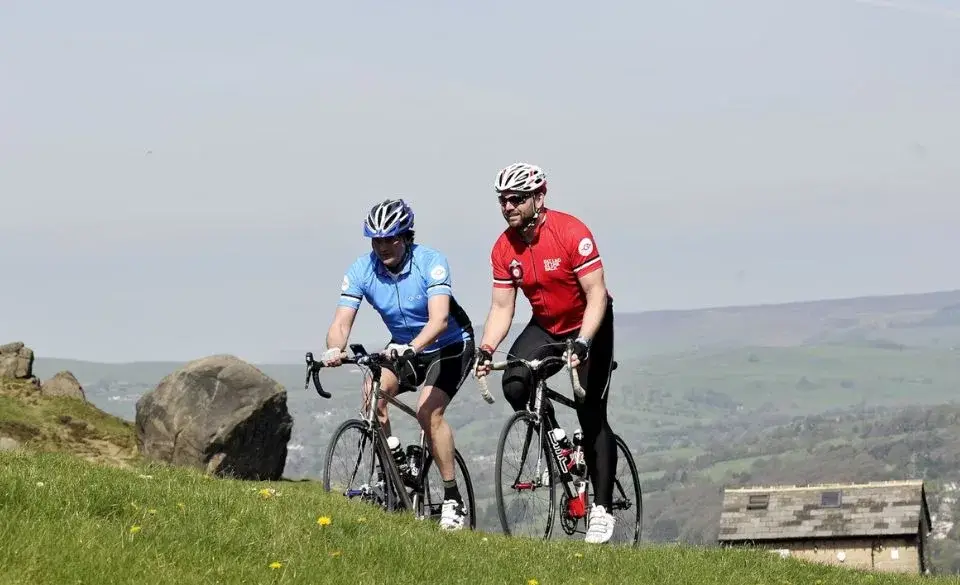
The key characteristics of appropriate early post-concussion exercise: low impact, no collision risk, no fall risk, easily stopped, and intensity easily modulated.
Walking. The most accessible and appropriate Stage 2 activity for most people. Easy to control effort level, no balance demands beyond normal, and can be done at whatever pace keeps symptoms below threshold. Start with 15–20 minutes at a conversational pace and assess symptoms during and 60 minutes after.
Stationary cycling. The preferred option in clinical settings because effort is precisely controllable and there is no fall risk. The Buffalo Concussion Bike Test uses stationary cycling specifically because it produces a graded, measurable increase in heart rate without any impact. At home, a stationary bike at low resistance is an excellent Stage 2 option. Our guide on cycling and sleep is relevant here — some evidence suggests evening exercise can affect sleep quality, which matters during concussion recovery when sleep is a key healing component.
Swimming (with caution). Appropriate once balance is confirmed to be normal — a balance deficit from vestibular concussion symptoms creates drowning risk. If dizziness, balance difficulty, or vertigo are present, swimming should wait.
Light yoga or stretching. Gentle range-of-motion work is generally appropriate in Stage 1–2. Inverted positions (downward dog, headstands) should be avoided while symptoms are active — changes in intracranial pressure can worsen headache. No high-intensity yoga flows or heated classes.
What to avoid in Stages 1–3: Running at pace or with significant impact, weightlifting above light resistance, team sports, activities with collision or fall risk, anything with rapid direction changes (agility drills), and activities requiring sustained complex cognitive attention alongside physical effort.
Returning to Running After Concussion
Running is a common goal for athletes recovering from concussion, and it sits in the progression between Stage 2 (easy jogging on flat terrain) and Stage 3 (sport-specific running, agility work). The key considerations specific to running:
Start with walking before jogging. The impact load of running is significantly higher than walking — each stride applies force through the body including the head. Begin with brisk walking and progress to run/walk intervals only once walking is completely symptom-free. Slow jogging vs brisk walking covers the physiological differences that matter during early return — the key insight is that brisk walking can provide meaningful cardiovascular stimulus without the impact of running.
Flat, even terrain first. Uneven terrain increases the proprioceptive and balance demands of running, which may exceed threshold in the early recovery phase. Start on a track or treadmill where surface is predictable and fall risk is minimal.
Monitor for 24 hours, not just during the run. Some runners feel fine during easy jogging but experience symptom worsening several hours later or the following morning. A rule of thumb: the run was too much if you wake up the next morning with noticeably worse symptoms than the day before. Once back to full running, understanding how often to run matters — our guide on minimum running frequency is relevant context for athletes rebuilding consistency after a concussion break. Easy runs should be genuinely easy — our Zone 2 pace guide covers what easy effort should feel like in practice.
For athletes returning to regular training volume after concussion clearance, our return to exercise guide covers the connective tissue lag and load management principles that apply to all fitness returns after an enforced break — including the 50% volume rule and 10% weekly progression. If you find your running struggles unexpectedly after returning, our guide on suddenly struggling to run covers the common reasons performance dips after a break, including detraining effects that overlap with concussion recovery.


Concussion in Older Athletes and Masters Runners
Recovery from concussion in older athletes (40+) may differ from younger populations. Research suggests that age is a modifying factor in concussion recovery — older athletes may take longer to become symptom-free and may require more conservative progression through the return-to-sport protocol. Comorbid factors more common in older athletes — hypertension, prior concussion history, sleep disorders — can extend recovery timelines.
For masters athletes and older runners, the most important additional considerations are: conservative symptom threshold management (treat symptom increase of 1 point as the threshold rather than 2), longer time at each stage before progression, and lower-impact exercise choices throughout the early stages. Our running over 60 guide covers general load management principles for older runners that apply equally to recovery contexts.
Sleep, Cognitive Rest, and the Role of Screen Time
Exercise is one part of concussion management. Two other factors are equally important in the early recovery phase:
Sleep. Sleep is the primary mechanism through which the brain consolidates healing. The 2022 Amsterdam Consensus emphasises prioritising sleep quality and quantity during recovery. Avoid activities that disrupt sleep — late evening high-intensity exercise, screens in bed, stimulants. Napping during the day is generally appropriate in the first 24–72 hours.
Cognitive rest in the first 48 hours. The 2022 guidelines recommend reducing screen time on electronic devices during the first 48 hours after sustaining a concussion. This means reducing phone use, computer work, video games, and television — all of which impose cognitive load on a brain under metabolic stress from injury. Academic or work accommodations may be needed during this period.
As symptoms improve, cognitive activities can be gradually reintroduced in the same way physical activity is — starting with short periods and increasing as tolerance improves. Cognitive load and physical load both consume the same recovering resources.
Return to Training With Structured Support
Once your healthcare provider has cleared you to return to sport, a structured coaching programme helps you rebuild safely — with appropriate load progression, recovery monitoring, and adjustments when needed. SportCoaching works with athletes returning from injury and enforced breaks across running, cycling, and triathlon.

FAQ: Can You Exercise With a Concussion?
Can you exercise with a concussion?
Yes — sub-threshold aerobic exercise (walking, stationary cycling) within 24–48 hours is supported by current guidelines and appears to speed recovery. High-intensity exercise and contact sport are prohibited until medical clearance. The rule: symptoms must not increase more than 2 points on a 0–10 scale during or after exercise.
How long should you rest before exercising after a concussion?
24–72 hours of relative rest (normal daily activities) is appropriate. Complete strict bed rest beyond 72 hours is no longer recommended — it is associated with longer recovery and increased post-concussion syndrome risk. Light aerobic activity can begin within 24–48 hours if symptoms allow.
What are the red flags to stop exercising after a concussion?
Worsening headache, repeated vomiting, seizures, confusion worsening over time, unequal pupils, weakness or numbness in limbs, or fluid from nose or ears all require emergency medical assessment immediately. During exercise, stop if symptoms increase more than 2 points on a 0–10 scale or new neurological symptoms appear.
What types of exercise are safe after a concussion?
Stages 1–3: walking, stationary cycling at low resistance, easy swimming (once balance is normal). Stage 4 onwards (non-contact training, full contact, competition) requires formal medical clearance from a licensed healthcare provider.
Does exercise speed up concussion recovery?
Sub-threshold aerobic exercise appears to speed recovery. A 2016 JAMA study found early physical activity was associated with lower rates of persistent post-concussive symptoms. Pushing above the symptom threshold delays recovery. The benefit is specifically from controlled, light, sub-threshold activity.















