




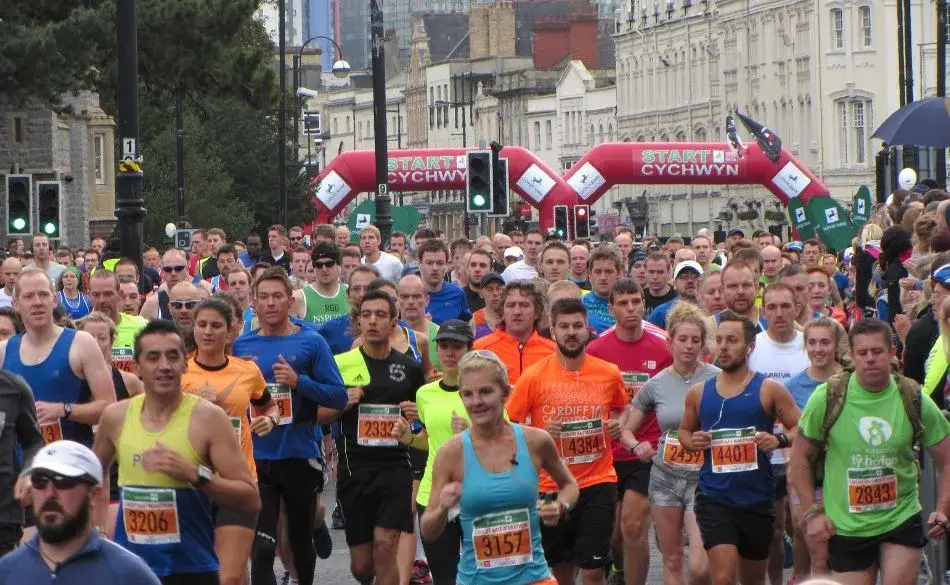











Find Your Next Running Race
Ready to put your training to the test? Here are some upcoming running events matched to this article.
 Coach Graeme

Last updated:
The most common training mistake I see isn't running too hard on hard days. It's running a little too hard on easy days, week after week, until the cumulative fatigue quietly undermines everything else. The effort feels fine in the moment — controlled, sustainable, like you're doing something productive. But "fine" isn't the same as easy, and there's a specific zone where this tends to go wrong.
Easy runs are supposed to do two things: build your aerobic base, and let your body recover from the sessions that matter most. When they drift above easy effort — even slightly — they start competing with those goals rather than supporting them. Hard sessions feel heavier than they should. Recovery takes longer. Progress slows or stalls, and it's not obvious why because you've been consistent. This guide is about what easy actually means in practice, how to tell if you're getting it right, and why slowing down on easy days tends to make everything else better.
Not sure where to start with training?
Tell us your goal and schedule, and we’ll give you clear direction.
No obligation. Quick, practical advice.
Explore our running training articles for more helpful articles and resources.
Easy isn’t about pace. It’s not a number on your watch and it’s not what a training plan table says. It’s a level of internal effort — and the best description of it is that your breathing should feel almost unremarkable. Not laboured, not careful, not working. Just… there, ticking over in the background while you’re thinking about other things.
The talk test is the most practical check most runners have access to. If you were running with someone, could you hold a normal conversation without choosing your words around your breathing? Could you tell them a story, ask a question, laugh at something? Not manage a few words and then breathe — actually talk, the way you would while walking briskly. That’s the standard. If you have to pause mid-sentence, shorten your sentences, or find yourself speaking in clipped bursts, you’re above easy effort and need to slow down.
The feel of an easy run in the legs is equally specific. There should be no burning, no real accumulation of fatigue through the session. Your legs should feel like they’re doing something rhythmic and comfortable, not like they’re working. Towards the end of a well-paced easy run, your perceived effort often barely increases even as the minutes tick by. That flat effort curve is one of the hallmarks of genuine Zone 2 running — you’re not accumulating the kind of metabolic stress that makes the last 10 minutes feel harder than the first 10.
Another way to think about it: you should finish an easy run feeling better than slightly depleted. Refreshed is too strong a word, but you shouldn’t need to sit down for ten minutes afterward. If you’re finishing easy runs with heavy legs, elevated heart rate that takes a while to come down, or a sense that you earned something, those runs probably weren’t easy.
The table below maps the key signals across effort zones — easy, grey zone, and hard. Most runners will recognise themselves somewhere in the middle column more often than they’d like.
| Signal | Easy (Zone 2) ✓ | Grey zone (Zone 3) ⚠️ | Hard (Zone 4–5) |
|---|---|---|---|
| Breathing | Unremarkable — barely noticing it | Conscious of it, slightly elevated | Heavy, laboured, can't ignore it |
| Talk test | Full sentences, normal conversation | Short sentences, pausing occasionally | Single words or nothing |
| Legs | Rhythmic, comfortable — no burn | Mild fatigue building through the run | Burning, heavy, demanding focus |
| Effort curve | Flat — effort barely increases over time | Gradual build — last 10 min noticeably harder | Steep — effort compounds quickly |
| Heart rate | 60–70% max; stable throughout | 70–80% max; drifts upward | 80%+ max; climbing |
| After the run | Could have kept going; not depleted | Glad it's done; mildly tired | Needing rest; genuinely spent |
| Next morning | Feel similar to before the run | Slightly more tired than usual | Noticeably fatigued; need recovery |
In a standard five-zone heart rate model, easy running sits in Zone 2 — roughly 60 to 70 percent of your maximum heart rate. If your maximum heart rate is 180, that puts Zone 2 at approximately 108 to 126 beats per minute. That will feel genuinely slow to most runners. Disturbingly slow, in some cases.
The formula most watches use to estimate maximum heart rate — 220 minus your age — is a useful starting point but has meaningful individual variation. Some people’s true maximum is 10 to 15 beats higher or lower than the formula predicts. If your watch keeps telling you you’re in Zone 3 on runs that feel genuinely comfortable and pass the talk test, that’s often a sign the zone calculations need adjusting rather than a sign you should slow down further. Our heart rate training zones calculator can help you set zones more accurately based on your own data rather than an age-based formula.
A few things that push heart rate above Zone 2 without changing your effort level: heat and humidity, running at altitude, fatigue from previous sessions, hills, lack of sleep, and cardiovascular stress from illness. In these conditions, slowing down to stay in Zone 2 is the right call — even if the pace feels awkward. The heart rate is reflecting your body’s actual cost of the run, and that cost is higher under those conditions. Our Zone 2 running pace guide covers how to calibrate easy pace across different conditions and fitness levels in more detail.
There’s a specific effort level that most recreational runners gravitate toward. It’s not truly hard — it doesn’t feel like a workout in the traditional sense. But it’s not truly easy either. It sits somewhere in between, feeling productive and controlled, like you’re training without overdoing it. The problem is that this grey zone — what some coaches call Zone 3 — tends to produce accumulated fatigue without the targeted adaptations of either genuine easy running or genuine hard running. You’re too tired to fully recover, but not fresh enough to make hard sessions count.
Research published in the American Journal of Biological Anthropology suggests runners default to their most energetically efficient pace rather than their easiest pace. Those two things aren’t the same. Energy-efficient often lands in the moderate effort range because that’s where movement economy is best relative to speed. Easy, by contrast, means running below the aerobic threshold, which for many runners requires slowing down to a pace that feels almost embarrassingly unhurried.
The Strava analysis of recreational runners’ training intensity found that the 80/20 split — roughly 80% easy, 20% hard — that characterises elite training is almost completely inverted in the average recreational runner. Most amateur runners are doing something closer to 40% genuinely easy, 50% moderate, and 10% hard. The moderate portion is where the problem lives. It adds fatigue without adding much adaptation — and it quietly crowds out both the genuine easy running that builds your aerobic base and the hard running that drives specific performance gains. The same imbalance shows up in cyclist training too — our cycling training week structure guide covers an identical principle for riders: easy days must be genuinely easy, or they erode the quality of everything else.
The reason easy running deserves so much of your training week isn’t that it’s a compromise — it’s that it’s where the most fundamental aerobic adaptations happen. Zone 2 effort builds mitochondrial density (the energy-producing structures in your muscle cells), increases capillary networks that deliver oxygen to working muscles, and trains your body to use fat as a primary fuel source. These aren’t minor benefits. They’re the engine that makes every faster pace feel less costly.
The Strength Running analysis of Zone 2 training describes it well: Zone 2 is the intensity where you can accumulate meaningful volume while keeping fatigue under control. That’s the key. Easy runs can be done day after day because they don’t require the recovery that harder efforts demand. Six hours of Zone 2 running in a week is manageable; six hours of Zone 3 or Zone 4 is not. The ability to run more — consistently and without breakdown — is what separates runners who improve steadily over years from those who plateau or cycle in and out of injury.
For runners building toward a first marathon or half marathon, easy running is also where most of the mileage needs to live. The long run, the mid-week medium effort, the recovery jog after a track session — all of these are substantially more valuable when they’re genuinely easy than when they drift into moderate effort. Our guide on building an aerobic base covers the timeline for these adaptations and why they take longer than most runners expect.
Most runners don’t know their easy runs are too fast. The drift is gradual — a few seconds per kilometre here, a few there — and the effort feels controlled at the time. But some patterns give it away.
| Warning sign | What's happening | The fix |
|---|---|---|
| Hard sessions feel disproportionately tough | Easy days have been adding low-level fatigue all week, so you arrive at intervals or tempo runs already carrying a load. You have the fitness but not the freshness. | Slow easy runs by 30–60 sec/km for two to three weeks and reassess how hard sessions feel |
| You need recovery after easy runs | Genuine Zone 2 effort should not require a recovery day. Stiffness or fatigue the morning after a 45-minute easy run is a sign it wasn't easy — maybe pace, maybe terrain, maybe accumulated fatigue before the run started. | Check saddle height equivalent: check your pace against talk test; consider running shorter and slower until you can hold Zone 2 comfortably |
| Heart rate drifts upward at constant pace | Cardiac drift over a short easy run in normal conditions usually means you started above Zone 2 and the body is working harder than it should to sustain that pace economically. | Start the next easy run 20–30 sec/km slower than usual; if drift disappears, that was your real easy pace |
| Tired but never particularly recovered | Chronic grey-zone fatigue: never truly fresh, never deeply tired. Everything feels a bit heavy. The body is accumulating load without sufficient recovery to clear it. | Cut easy run pace significantly for one week; if energy improves, grey-zone effort was the culprit |
For runners who’ve been running their easy days too fast for a while, slowing down feels unnatural. The pace looks wrong on the watch. You feel like you’re barely doing anything. The urge to push a little is strong.
A few things that help. First, leave the watch on pace buried — show heart rate instead, and run to keep that in the Zone 2 range. When pace is visible, ego intervenes. When heart rate is visible, physiology runs the session. Second, if hills push you above Zone 2, walk them without guilt. A walk break that keeps heart rate in range is more valuable than running a hill that pushes you above it. Third, run with someone slightly slower than you. The social constraint does what willpower often can’t.
It’s worth accepting upfront that genuinely easy running at Zone 2 often requires a pace 60 to 90 seconds per kilometre slower than what feels natural. For a 5:00/km runner, that might mean 5:45 to 6:00/km on easy days. For a 6:00/km runner, it might mean 7:00/km or more. This feels like a lot — but it’s roughly what the research and the experience of coaches who’ve worked with athletes across all levels consistently suggests. Our running pace calculator can help you translate your current race fitness into appropriate training pace ranges including easy effort targets.
For newer runners, easy might mean run-walk intervals to keep heart rate in range. There’s nothing wrong with that — in fact, it’s better training than running continuously at too-high an effort. The adaptation you’re building happens in response to aerobic stimulus over time, not in response to continuous running at any cost. Walk breaks that preserve Zone 2 effort produce better aerobic development than continuous running above it.
For experienced runners, easy running sometimes gets neglected because it’s boring. The pace feels too slow to be interesting, there’s no structure to it, and it’s easy to justify skipping it for another tempo or adding a few strides that push effort upward. But experienced runners are often the ones who most underestimate how much their performance depends on the quality of recovery and aerobic volume happening on those easy days. The adaptations from hard sessions consolidate during easy running. That’s not a metaphor — it’s what the physiology of periodisation reflects.
For older runners, recovery between sessions typically takes longer, which makes genuinely easy running even more important. The temptation to keep pace comparable to younger training partners tends to push effort above Zone 2 regularly, and the accumulated cost takes longer to clear. Our guide to training for older athletes covers how intensity balance should shift with age — including why easy days deserve even more protection as you get older.
Here’s a practical test that cuts through all the numbers and zones. The morning after an easy run, how do you feel? You should feel roughly the same as you did the day before the run — rested, maybe mildly stiff from the movement, but not meaningfully more tired. If you regularly wake up the morning after easy runs feeling notably more fatigued, less motivated, or with heavier legs than before the run, those runs are adding to your fatigue debt rather than contributing to recovery.
Easy runs that are genuinely easy are one of the most reliable tools in training. They let you accumulate the volume that builds endurance without the cost that accumulates from hard running. They give your body the regular movement it needs to maintain fitness during recovery periods. And they create the contrast that makes hard sessions productive — you can’t run truly hard if you never arrive at those sessions actually fresh. Slow down on easy days and the rest of your training tends to get better. It’s one of the most reliable coaching observations I know.
If you’re looking for structure around how easy runs fit into a full training week, our marathon training plans and half marathon training plans have easy run days built in with appropriate effort guidance. And if you want a coach to monitor how your training load is balancing across the week, that’s exactly the kind of thing coaching is useful for.
Train Smarter With a Running Coach
SportCoaching's running coaches build plans around your actual training history — balancing easy days, hard sessions, and long runs so the whole thing adds up rather than just accumulates. AUD $143/month, no lock-in, 90-day performance guarantee.
How easy should an easy run feel?
Genuinely comfortable — conversational breathing, no leg burning, a pace you feel you could hold for much longer. You should finish feeling like you could have kept going, not like you need rest. If you have to pause for breath mid-sentence, it wasn’t easy enough.
What heart rate should an easy run be?
60–70% of maximum heart rate (Zone 2). Use 220 minus your age for a rough maximum HR estimate, then find 60–70% of that. The talk test is a more reliable real-world check than a formula — if you can speak full sentences comfortably, you’re in the right range.
Why do easy runs feel too slow?
Because most runners have spent a long time in a moderate grey zone that feels controlled but sits above true Zone 2. True easy pace is slower than that — often 60–90 seconds per kilometre slower than the pace that feels natural. That initial discomfort is usually a sign you’ve found the right effort.
How much of my running should be easy?
Around 70–80%, based on how elite endurance athletes and the 80/20 model structure training. If you run five days a week, three or four of those should be genuinely easy. Most recreational runners have this inverted, doing too much moderate effort and too little genuinely easy running.
Can easy runs be too easy?
Technically, but almost no recreational runner runs easy days too slowly — the problem is almost always the opposite. Running genuinely easy is a skill that takes practice, and erring toward slightly too easy is almost always better than erring toward too hard.
Ready to put your training to the test? Here are some upcoming running events matched to this article.



Head Coach & Founder, SportCoaching
Graeme is the founder of SportCoaching and has coached more than 750 athletes from 20 countries, from beginners to Olympians, in cycling, running, triathlon, mountain biking, boxing, and skiing. His coaching philosophy and methods form the foundation of SportCoaching's training programs and resources.
No matter your goals, SportCoaching offers tailored training plans to suit your needs. Whether you’re preparing for a race, tackling long distances, or simply improving your fitness, our expert coaches provide structured guidance to help you reach your full potential.
Smart, progressive training from 5km to marathon with weekly guidance.
What’s included
Browse upcoming Australian running, cycling, and triathlon events in one place. Filter by sport, check dates quickly, and plan your training around something real on the calendar.
Choose your plan to get started with personalized training plans designed to help you reach your goals.


Minna Backman
When you’re new, feedback is especially important, and Graeme is highly skilled at both analyzing numbers and understanding the importance of mental strength.











