For official course maps, athlete information, and race registration details, visit the IRONMAN 70.3 Melbourne official website.
Building Your Base for IRONMAN 70.3 Melbourne
Every strong race starts with a solid foundation. During the first six weeks of your IRONMAN 70.3 Melbourne journey, the focus is on endurance, technique, and consistency. You’re not chasing speed yet, you’re teaching your body how to train regularly and recover well. This stage builds the aerobic engine that will carry you through race day.
Think of this phase as the “steady grind.” You’ll swim to improve comfort in open water, cycle to build aerobic strength, and run at an easy pace to develop rhythm. The goal is to finish sessions feeling energized, not exhausted. That consistency adds up to fitness you can rely on later.
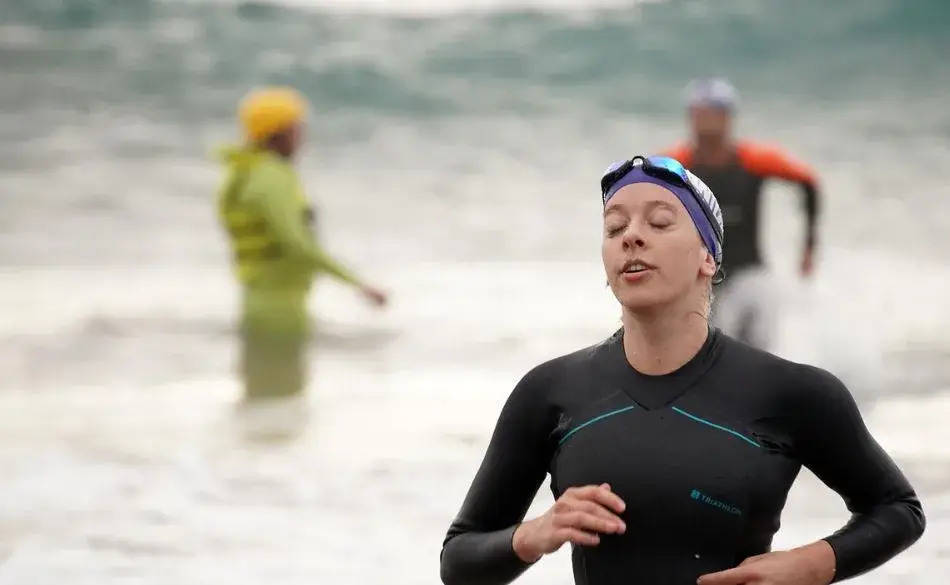
For swimming, commit to two or three sessions per week. Include open water swim drills when possible, or simulate them in the pool with sighting and breathing exercises. Melbourne’s Port Phillip Bay can be unpredictable, so practice swimming in light chop and colder water when you can. Technique trumps distance here (smooth, efficient strokes will save energy during the 1.9 km swim).
During these early weeks, focus on technique and building comfort in the water. Smooth, efficient swimming saves energy for the rest of the race. For more detailed guidance, check out our full article on mastering the 70.3 swim distance to improve endurance, pacing, and open-water confidence.
Your cycling sessions should emphasize endurance over power. Ride two to three times per week, gradually increasing your long ride from 90 minutes to 2.5 hours. Keep cadence steady and heart rate controlled. Use one shorter mid-week ride to focus on pedaling efficiency or light cadence drills. This will pay off on Melbourne’s fast, flat roads where holding position matters more than big bursts of speed.
For running, build slowly. Two or three runs per week is plenty. Start with easy 30- to 45-minute sessions, then add a weekly long run up to 75 minutes by Week 6. Stay conversational in pace, you’re training your heart and legs to endure, not sprint. Include light mobility or core sessions twice a week to protect against injury.
By the end of this base phase, you should feel comfortable with regular training volume and recovery. You’re not race-fit yet, but you’ve built the structure to handle the tougher work ahead. Once you can complete a full week of training without fatigue spilling over, you’re ready to move into the build phase where strength and speed take center stage.
If you want expert structure, accountability, and feedback throughout your build to race day, our Triathlon Coaching service is designed for you. Led by professional coaches, it includes customised swim, bike, and run sessions plus ongoing analysis to help you train smarter, stay consistent, and perform at your best.
- ✔ Personalised weekly plans built around your schedule and goals
- ✔ Regular feedback, race strategy support, and data-driven adjustments
- ✔ Ideal for IRONMAN 70.3 athletes who want more than a generic plan
Train with structure, confidence, and purpose guided by real coaches who understand the journey to Melbourne.
View Triathlon Coaching Options

Building Strength, Speed, and Endurance (Weeks 7–12)
Once you’ve built a strong base, it’s time to take things up a notch. During weeks seven through twelve of your IRONMAN 70.3 Melbourne training plan, the goal shifts toward building strength, endurance, and controlled speed. This is where your body learns how to handle fatigue, sustain effort, and push a little harder without breaking down.
Your sessions now become more structured. You’ll start mixing brick workouts (a bike immediately followed by a run) to simulate race-day transitions. These workouts train your legs to switch smoothly between disciplines and build mental toughness for when fatigue hits on the run. Start with short transitions (30-minute runs after moderate rides) and build up gradually.
In swimming, you’ll focus more on pacing and endurance. Two to three sessions per week should include a mix of long continuous swims (1,500–2,000 m) and interval sets like 8×200 m at steady effort with short rests. If possible, continue to practice open water swimming at least every two weeks as Port Phillip Bay’s chop and current can challenge even strong swimmers.
Cycling becomes the backbone of this phase. Include one long weekend ride of 3 to 4 hours at a steady pace and one mid-week tempo ride around 90 minutes with short power intervals. The aim is to build the ability to ride strong for 90 km while keeping enough energy for the run. Pay attention to aerodynamic position and nutrition on the bike. It’s your best opportunity to set up a fast run later.
Your running sessions should include one interval workout (like 6×800 m at 10K pace), one tempo run (40–60 minutes at controlled effort), and one long run (90 minutes to 1 hour 45 minutes). Maintain form, especially late in each run, when tiredness creeps in. The ability to run well on tired legs separates finishers from performers.
By the end of Week 12, your endurance will be strong, your aerobic base stable, and your pacing instincts sharper. You’ll start to feel the rhythm of triathlon training (how swim, bike, and run fit together). Next comes the fine-tuning phase where intensity, precision, and race execution take the lead.


Race-Specific Fitness and Simulation (Weeks 13–17)
This phase transforms your training into race-day readiness. From weeks thirteen to seventeen, your focus shifts toward race-specific fitness, pacing, and mental preparation for IRONMAN 70.3 Melbourne. The long base and build work are behind you, now it’s about practicing exactly how you’ll race.
One of the key sessions in this phase is the race simulation workout. Every second week, combine all three disciplines into a single day. For example, do a 1,500 m swim followed by a 70–80 km bike ride and finish with a 10–12 km run. These sessions teach you to manage effort, test nutrition, and understand how fatigue accumulates across all legs. Keep them controlled, not all-out, focusing on pacing and rhythm.
Swimming should now mirror race distance. Include sets like 3×1,000 m at a consistent pace or 4×800 m with short rest. If possible, train in open water every week to refine sighting and practice starts and exits. The more comfortable you are in Melbourne’s bay conditions, the calmer you’ll feel on race morning.
On the bike, the focus moves to power management. Practice holding steady wattage or heart rate close to your race target for extended periods. Include one long ride each week (3.5–4.5 hours) and a midweek tempo ride (90 minutes). Every second weekend, add a brick workout after the long ride (30 to 45 minutes of running at goal pace). These workouts replicate the physical and mental challenge of the race.
Your runs should now include more race-paced intervals and longer distances. Try sessions like 3×15 minutes at half-marathon pace or long runs up to 2 hours with short surges in the final 30 minutes. The goal is to train your body to stay efficient even when tired. Pay close attention to recovery as this phase is demanding, and rest days are where real progress happens.
By the end of this block, you should feel strong, confident, and familiar with your race pacing plan. You’ll know how your nutrition works, how to manage transitions, and how to respond when things don’t go perfectly. The final step is the taper. A careful reduction in training that keeps you sharp without wearing you down.
As your sessions become more race-specific, focus on pacing and nutrition that mirror real race conditions. Practicing these elements now will help you stay composed and efficient during your event. Understanding your effort across each leg is crucial if you want to make steady progress toward the finish line. For a deeper look at pacing expectations and time limits, check out our detailed guide on IRONMAN 70.3 cut-off times so you know exactly what to aim for on race day.
If you’re planning your next race or want to keep building fitness after Melbourne, explore our Triathlon Training Plans . Each program is designed by professional coaches to balance swim, bike, and run development while promoting smart recovery and performance consistency across all distances.
- ✔ Structured plans for Olympic, Half, and Full IRONMAN distances
- ✔ Scalable sessions based on available training time and experience level
- ✔ Integrated strength, transition, and pacing work for real-world racing
Keep your momentum going with expert-designed training that adapts to your next challenge with SportCoaching.com.au.
View Triathlon Training Plans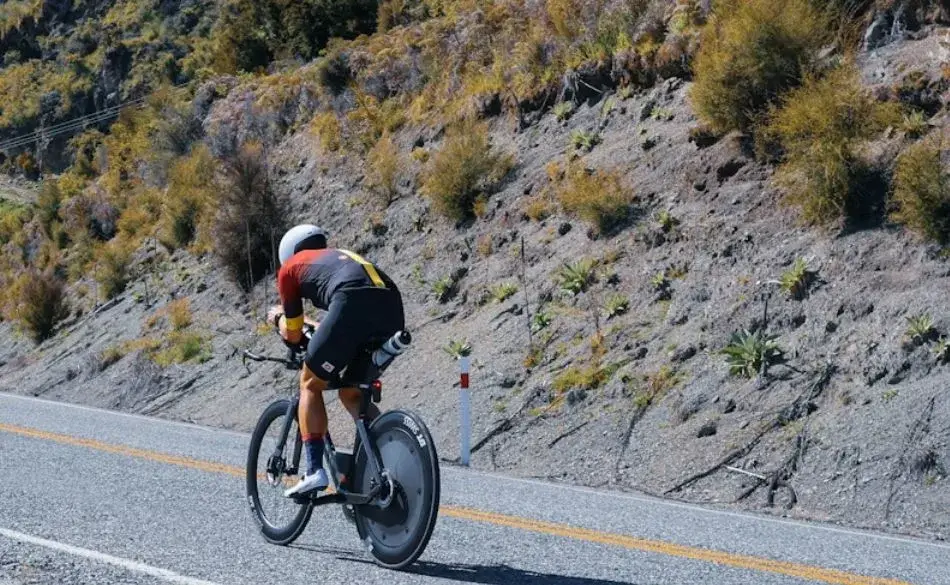

Your Complete 20-Week IRONMAN 70.3 Melbourne Training Plan
Before you begin tapering, it helps to see how all the phases come together. This 20-week plan shows how your half-Ironman training progresses from early base work to peak race readiness. Each week builds on the last, blending endurance, strength, and recovery to prepare you for Melbourne’s fast, flat course.
- Who it’s for: This plan is ideal for intermediate triathletes who’ve completed a few shorter races and can consistently train 8–14 hours per week. For more insights on how to balance training volume and recovery, check out our guide on what’s the ideal weekly training time for an IRONMAN 70.3.
- Beginners: If you’re new to long-distance triathlon, reduce the total training volume by around 15–20%. Focus on consistency and technique before adding intensity.
- Advanced athletes: Extend long rides and runs slightly or include a few structured interval sessions to sharpen performance while maintaining recovery balance.
- How to use it: Treat this plan as a flexible framework. Adjust the duration and intensity to match your fitness level, schedule, and how your body responds to training stress.
👉 Swipe to view full 20-week training plan
| Week | Focus | Swim | Bike | Run | Approx. Weekly Hours |
|---|---|---|---|---|---|
| 1–2 | Base – Technique & Aerobic Foundation | 2–3 sessions (1.5–2 km each, drills + breathing) | 2–3 rides (60–90 min endurance) | 2–3 runs (30–45 min easy) | 7–8 h |
| 3–4 | Base – Build Consistency & Volume | 3 sessions (up to 2.5 km, include 8×100 m) | 3 rides (add long ride 2 h, one cadence session) | 3 runs (one tempo run + one long 60 min) | 8–9 h |
| 5–6 | Base – Endurance & Form Strength | 3 sessions (include 1×1,800 m continuous) | 3 rides (1 long 2.5 h, 1 tempo 90 min) | 3 runs (1 interval 5×5 min, long 75 min) | 9–10 h |
| 7–8 | Build – Power & Early Bricks | 3 sessions (intervals + technique 3 km total) | 3–4 rides (introduce brick 2 h + 20 min run) | 3 runs (1 tempo 45 min, 1 long 90 min) | 10–11 h |
| 9–10 | Build – Aerobic Power & Race Pacing | 3–4 sessions (include 4×400 m at race pace) | 3 rides (threshold 90 min, long 3 h, easy spin) | 3 runs (interval 6×800 m, tempo run, long 1 h 45 min) | 11–12 h |
| 11–12 | Build – Endurance Under Fatigue | 3 sessions (1 long 2 km, 1 speed set 10×100 m) | 4 rides (include brick 3 h + 40 min run) | 3 runs (1 threshold 45 min, 1 long 100 min) | 12–13 h |
| 13–14 | Race Specific – Simulation & Nutrition Practice | 3–4 sessions (1 open water weekly) | 3 rides (long 4 h, tempo 90 min, brick) | 3 runs (1 interval, 1 long 2 h, 1 short easy) | 13–14 h |
| 15–16 | Race Specific – Peak Power & Pacing Control | 3 sessions (4×800 m at race pace) | 3 rides (steady 4 h race simulation, brick 45 min run) | 3 runs (include race pace segments + strides) | 13–14 h |
| 17 | Transition – Begin Taper (~70 % Volume) | 3 sessions (2 km total with drills) | 3 rides (2 h steady, 1 short tempo 60 min) | 2–3 runs (reduce duration to 60 min max) | 10 h |
| 18–19 | Taper – Sharpness & Recovery | 2 sessions (1 open water ~1 km + short intervals) | 2 rides (75 min with race-pace bursts + 45 min easy) | 2 runs (1 interval 5×3 min, 1 30 min easy) | 7–8 h |
| 20 (Race Week) | Taper – Race Readiness & Mental Prep | 2 light swims (600–800 m with sighting) | 2 short rides (30–45 min with race-pace pickups) | 2 short runs (15–25 min relaxed) | 5–6 h + Race |
Understanding the intent behind each workout helps you train smarter, not just harder. The sessions in this plan are structured around a few core principles designed to balance endurance, intensity, and recovery. Here’s what each workout type means and how to approach it:
- Endurance rides and long runs: These steady sessions build your aerobic base and mental stamina. Keep your effort at a conversational pace (roughly 65–75% of your maximum heart rate). You should finish feeling tired but not drained.
- Threshold workouts: Include blocks of sustained effort close to your race pace. For cycling, this might be 2×20 minutes at your functional threshold power (FTP) with short recoveries. For running, think of tempo efforts that challenge you without leaving you gasping.
- Brick sessions: These bike-to-run combinations teach your body to adapt to the heavy, awkward feeling in your legs after cycling. Start with 10–15 minutes of running off the bike and build gradually.
- Technique and drill sessions: Focus on form over distance in the pool. Use pull buoys, paddles, or fins to improve stroke mechanics and breathing control. Quality matters more than volume here.
- Recovery sessions: These are essential. Easy swims, spins, or short runs help your muscles flush out fatigue and improve overall consistency. Don’t skip them, they keep you progressing week to week.
If you’re using a power meter or heart rate monitor, aim to train within specific zones to target the right energy systems. When in doubt, use perceived effort. Moderate should feel like a 6 out of 10, while threshold efforts feel closer to an 8.
The key takeaway: it’s not about doing every session perfectly, but about staying consistent and listening to your body. Small adjustments along the way can make a big difference on race day.
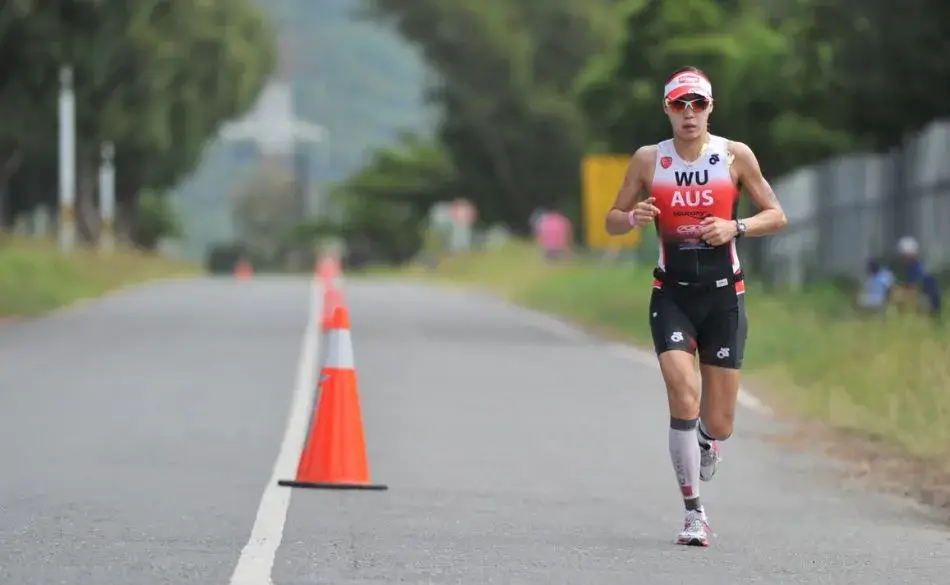
Tapering and Final Preparation (Weeks 18–20)
After months of focused training, your final three weeks before IRONMAN 70.3 Melbourne are about one thing – balance. You’re reducing training stress so your body can absorb the fitness you’ve built while keeping just enough intensity to stay sharp. This is the tapering phase, and it’s where smart athletes separate themselves from overtrained ones.
In the first taper week, cut your total training volume by about 25–30%. Keep a few race-pace efforts in each session, but reduce duration. Swim two to three times per week, focusing on rhythm and feel for the water rather than distance. Include short sets like 6×100 m at race pace to maintain speed. The water at Port Phillip Bay can be cool and unpredictable, so if possible, continue one open-water session to stay confident in race conditions.
For cycling, limit yourself to two or three rides each week. One should be a short tempo ride of 60–75 minutes with brief bursts at race pace, and another a relaxed spin for 45 minutes to keep the legs fresh. During the final week, include a short brick session, like 45 minutes of easy riding followed by a 15-minute run at goal pace (to remind your body of the race-day transition feel).
Running volume should also taper. Two runs per week are enough: one short interval session (like 5×3 minutes at race effort) and one 30–40-minute easy jog. Focus on posture, breathing, and maintaining rhythm. The goal isn’t to get fitte, it’s to keep your body feeling light and responsive. Extra rest, stretching, and quality sleep now matter more than any workout.
As race week arrives, trust your training. Prepare your gear early, review your race pacing plan, and visualize the course (from the swim start at St Kilda to the final stretch along the foreshore). Eat familiar foods, stay hydrated, and resist the urge to “test your fitness.”


Race Day Execution and Mindset for IRONMAN 70.3 Melbourne
Race day is where months of commitment come together. You’ve trained, tapered, and prepared, now it’s time to execute with focus and composure. IRONMAN 70.3 Melbourne rewards athletes who stay calm early, manage effort evenly, and race with patience. The key is to trust your plan and stay adaptable when small things don’t go perfectly.
Start your morning routine early. Eat a balanced breakfast at least two to three hours before the swim (something you should have practiced during long training sessions). Hydrate steadily, and keep a light snack or electrolyte drink before the race start. Once you’re at the start line on St Kilda Beach, take a few deep breaths and focus on rhythm, not speed. The bay’s water can be cool and choppy, but stay relaxed and sight every few strokes to maintain direction. Smooth, steady swimming always beats rushed effort.
On the bike, settle into your plan. Melbourne’s flat, coastal course tempts riders to push too hard early. Resist it. Hold your target power or heart rate and focus on aerodynamics, cadence, and fueling. Eat every 20–30 minutes, alternating between gels, bars, and fluids. A well-paced 90 km ride sets up a strong run, blowing up halfway through doesn’t. Stay mentally engaged, but conserve energy for the final leg.
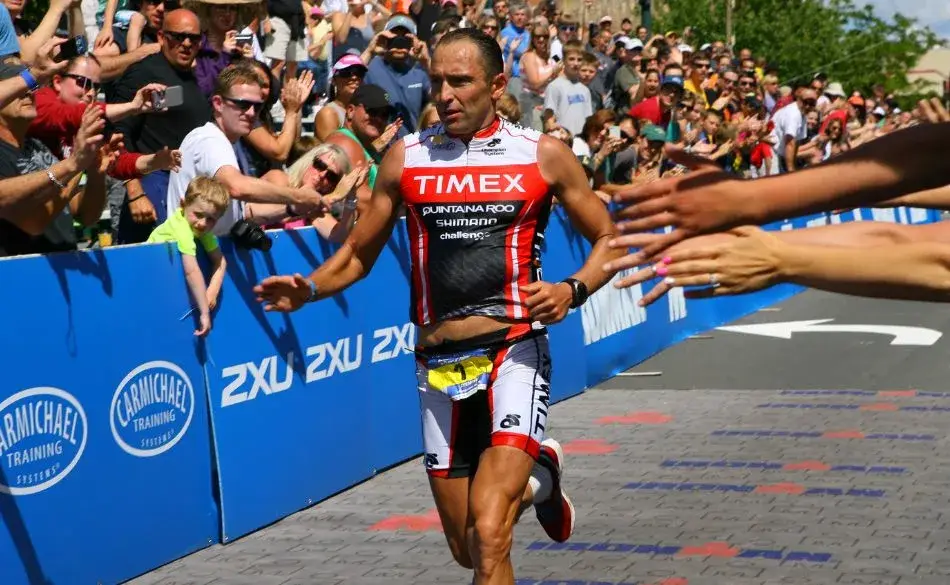
When you hit the run, think control and rhythm. The first few kilometers should feel almost too easy. Let your breathing settle before locking into your race pacing plan. Every aid station counts, so grab fluids, stay cool, and manage your effort. The St Kilda foreshore is lined with spectators; their energy will lift you in the final stretch. When fatigue hits, focus on form: tall posture, steady arms, and relaxed breathing.
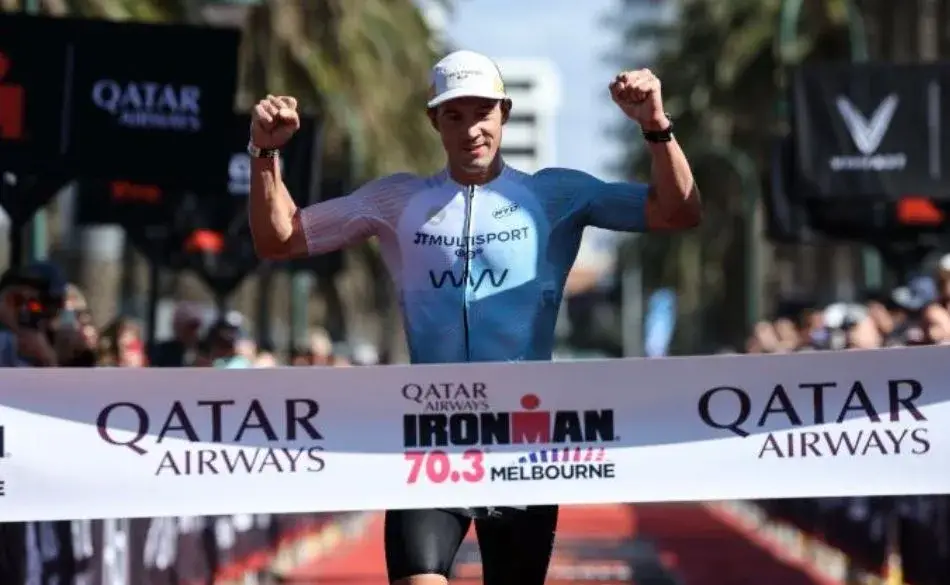
Crossing the finish line isn’t just about endurance, it’s about execution. The best races come from consistent pacing, smart nutrition, and mental resilience. When you see the finish arch ahead, take it in.
If you’re inspired by IRONMAN 70.3 Melbourne and want a proven plan to guide your next race, our Half Ironman Triathlon Training Plans are built for athletes who want to train smarter, race faster, and recover stronger. Designed by professional coaches, these structured programs balance volume and intensity for consistent progress.
- ✔ Choose from beginner, intermediate, and advanced 70.3 plans
- ✔ Includes strength, brick sessions, and pacing guidance for race success
- ✔ Flexible schedules to fit your lifestyle and training time
Take the next step toward your best Half Ironman performance with expert coaching and proven structure from SportCoaching.com.au.
View Half Ironman Training Plans

Recovery, Reflection, and What Comes Next
When you cross the finish line at IRONMAN 70.3 Melbourne, it’s tempting to think the work is done, but recovery is the final discipline. The hours and days that follow determine how quickly you bounce back, both physically and mentally. Treat this period with the same respect as your toughest training week.
Immediately after finishing, focus on hydration and nutrition. Most athletes burn between 2,500 and 4,000 calories during a 70.3, depending on size, pace, and weather. Replace fluids and electrolytes first, then eat a meal rich in carbohydrates and protein within an hour. Even if your appetite is low, small bites and steady sipping go a long way toward restoring energy. Gentle movement like walking or light stretching helps your body restore circulation and reduce post-race soreness.
Take the next few days completely off from structured training. Light activity (an easy swim, walk, or spin) can start after three to four days if you feel ready. Avoid intense sessions for at least a week. This rest allows muscles, joints, and your nervous system to repair from months of accumulated fatigue. Many athletes don’t realize how tired they are until they finally stop, so don’t rush the process.
Once you feel refreshed, take time to reflect. Review your race pacing plan, fueling strategy, and how your body felt at different stages. Did your nutrition hold up? Did your pacing stay steady on the bike and run? Honest reflection helps shape your next training block, whether you’re preparing for another half-Ironman or planning a full-distance race.
If you’re based in Victoria and want hands-on guidance from experienced triathlon coaches, explore our Triathlon Coaching Melbourne programs. They’re designed to help local athletes balance swim, bike, and run training with personalised support tailored to the IRONMAN 70.3 course.
For a broader look at other events across the country, check out our full IRONMAN 70.3 Australia guide for course insights and training advice.