

Quick Answer
The defining trends in running right now: run clubs growing explosively (59% rise in club participation in 2024, new clubs tripling), trail running going mainstream with Nike, Salomon and smaller brands all pushing into the category, ATPU foam taking over everyday shoes from entry-level upward, Zone 2 easy running becoming the dominant training philosophy backed by large-scale Strava data, and race participation continuing to grow — 5% in 2025 — with young adults returning to organised events in record numbers.

Trend 1: Run Clubs Are Booming — and It's a Cultural Shift, Not Just a Fitness Trend
The most significant non-technical trend in running right now is the explosion of run clubs. Strava’s 2024 Year in Sport report — drawing on data from over 135 million users across 190 countries — found a 59% increase in running club participation globally in 2024, and a tripling of new clubs compared to the previous year. Brazil saw an almost 800% increase in new clubs year-on-year.
This isn’t just more people running. It’s a structural shift in why people run. The primary driver, according to survey data, is social connection — not fitness goals. 72% of Gen Z runners join run clubs specifically to meet new people. 58% of Strava respondents reported making new friends through fitness groups. Group runs tend to last 40% longer on average than solo sessions, suggesting that social motivation sustains effort in ways that individual willpower doesn’t.
The demographics of this growth are important. Gen Z and millennials are leading it — and for a sport that spent much of the 2010s worrying about an ageing participant base, the return of younger runners is significant. RunSignup’s 2025 Race Trends Report, released in February 2026, found that 18–29 year olds made up 17.9% of race participants in 2025 — the highest percentage since 2017 and exceeding pre-pandemic levels.
What this means for you
If you’ve been running solo and finding motivation difficult, 2026 is the best time in a decade to find a local run club. The proliferation of clubs means there’s likely a group that matches your pace and schedule within reach. Group activities not only run longer but generate more accountability. Saturday mornings at 9am and Tuesday evenings at 6pm have emerged as the peak community run times globally — if you’ve seen groups at those times, this is why. For building a consistent running habit, the guide to running frequency covers how to structure your week around club runs and solo sessions.


Trend 2: Trail Running Has Gone Mainstream
Trail running has been growing for years, but 2026 represents a threshold moment: mainstream brands are committing resources to it at a scale that signals they believe it’s permanent, not a niche. Nike’s re-launch of the ACG brand in 2026 with significant trail running focus, combined with direct investment in major US trail events including the Broken Arrow Skyrace, is the clearest signal. When Nike redirects resources into a category, the category has arrived.
Salomon, the trail running incumbent, is now leading the push into a new sub-category: gravel running shoes. Gravel shoes sit between pure road and pure trail — designed for mixed surfaces, versatile enough for road use but grippier and more protective for trail. Brands including Craft, adidas, and Mount to Coast are all entering this space for 2026. The category offers brands a new growth lane as traditional road shoe categories become crowded.
The data confirms participation is moving. Trail running featured prominently in SportsShoes’ 2026 Running Report, and multiple race operators report trail events growing faster than road events. For runners who’ve been curious but haven’t tried trail, the barrier to entry has never been lower — there are more accessible beginner trail events, better gear at reasonable prices, and more coaching resources specifically aimed at road-to-trail transitions.
What this means for you
If you’ve been road running exclusively, trail running in 2026 offers a genuine, well-supported alternative. Softer surfaces reduce impact compared to road running — relevant for runners managing knee or hip concerns. The surface comparison guide covers the biomechanical differences in detail. Trail shoes for 2026 are more versatile than ever, with gravel-capable options from multiple brands that don’t require you to choose between road and trail.


Trend 3: ATPU Foam Is Taking Over Running Shoes
The biggest technical shift in running shoes for 2026 isn’t a new plate design or a new stack height — it’s the foam. ATPU (thermoplastic polyurethane-based compounds, marketed under various brand names) is becoming the dominant midsole material across all price points, displacing traditional EVA (ethylene-vinyl acetate) in the mid-range and challenging PEBA (polyether block amide) — the premium foam in super shoes — in everyday trainers.
Why does this matter? ATPU offers meaningfully better energy return than EVA (more bounce per stride), better durability (it degrades more slowly under mileage), and a livelier underfoot feel that makes easy runs more enjoyable. At the highest end, PEBA foam still leads for race-day performance. But the gap between race shoe foam and daily trainer foam has narrowed dramatically in 2026 — and ATPU is the reason.
| Foam type | Energy return | Durability | Where you'll find it in 2026 |
|---|---|---|---|
| EVA / blown EVA | Low–moderate | Good | Budget trainers, older model versions |
| ATPU (various brand names) | High | Very good | Mid-range to premium daily trainers — now the standard |
| PEBA (Adidas Lightstrike Pro, Nike ZoomX etc.) | Highest | Moderate | Elite race shoes and performance flagships |
Notable 2026 shoes moving to ATPU include the Saucony Triumph 24, Puma Velocity Nitro 4, and multiple On and Skechers models. Running shoe sales are actually growing despite macroeconomic headwinds — adult running shoe sales were up 8% in dollar terms in 2025 according to Circana data, with average selling prices rising 4%. Runners are spending more on shoes, and getting meaningfully better technology at mainstream price points in return.
Another shoe trend: stack heights coming down
After several years of maximum stack escalation — shoe heels pushing toward and beyond 40mm — 2026 is seeing a correction. Multiple brands are releasing versions of their flagships with reduced stack heights, citing improved ground feel and more natural movement. The Brooks Glycerin Flex (36mm/30mm) and the ASICS Magic Speed 5 are examples. This isn’t the death of high-stack shoes — the On Cloudmonster Hyper 3 reaches 45mm at an extraordinary 190g — but it reflects a market that has concluded bigger isn’t always better.

Trend 4: Zone 2 Training Is Going Mainstream
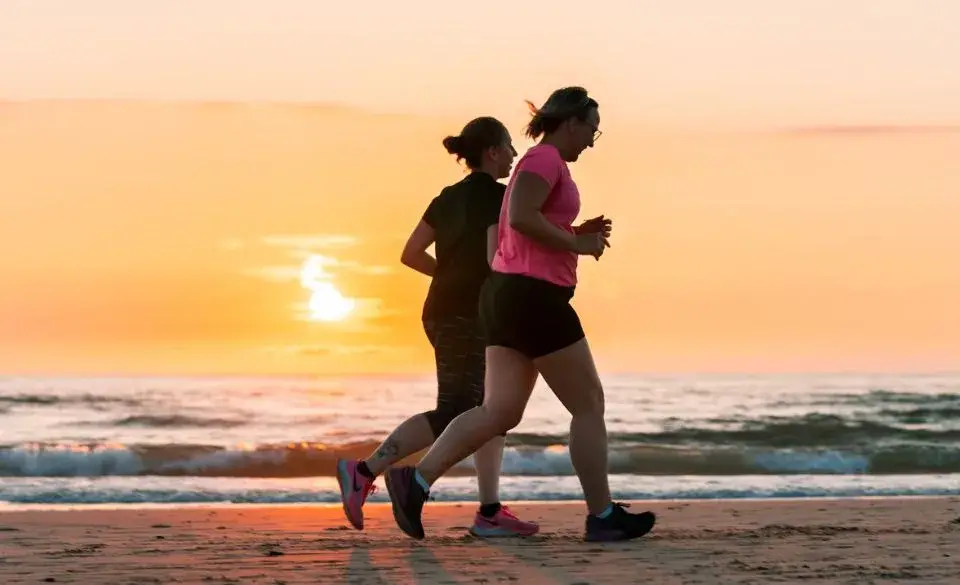
The most significant shift in how recreational runners are thinking about training in 2026 is the mainstreaming of Zone 2 — easy, conversational-pace running that sits at roughly 60–70% of maximum heart rate. This isn’t a new concept in elite coaching circles, but it’s filtering through to everyday runners at a pace not seen before.
The data driving this shift is compelling. Analysis of 120,000 runners’ training data uploaded to Strava found that the single best predictor of marathon performance is how much easy jogging you do each week — not interval sessions, not tempo runs, not weekly mileage in aggregate. Runners who do more easy miles consistently outperform those who push hard but do it less frequently.
This aligns with what exercise scientists have been saying for years: the aerobic base built through sustained low-intensity effort underpins all running performance. Zone 2 develops mitochondrial density, improves fat oxidation efficiency, builds aerobic capacity without accumulated fatigue, and allows higher total training volume because it doesn’t require significant recovery. Peter Attia and other prominent fitness communicators have brought this thinking to a much broader audience, and the search data and training app behaviour reflects the uptake.
What this means for you
If most of your runs feel like moderate-to-hard efforts, you’re probably training harder than you need to — and harder than the data supports for most goal outcomes. Easy running should genuinely feel easy: you can hold a comfortable conversation, your breathing is unlaboured, and the effort feels almost too relaxed. The Zone 2 running pace guide covers how to find and stay in this zone. The slow jogging guide covers the similar niko niko approach from Japanese sports science — the same principle applied to very slow jogging.


Trend 5: Race Participation Is Still Growing — But Differently
RunSignup’s 2025 Race Trends Report (released February 2026, covering 97,000+ events and 12.2 million registrations — roughly 50% of the US endurance market) provides the clearest picture of where participation is heading. Per-race participation grew 5% in 2025, continuing the post-pandemic recovery. But the pace of growth is slowing: 11% in 2023, 8% in 2024, 5% in 2025. The post-COVID boom has passed.
Within this overall picture, important patterns are emerging:
Young adults are back. 18–29 year olds made up 17.9% of participants in 2025 — the highest since 2017 and higher than pre-pandemic levels. This demographic had been declining for years and its return is significant for the sport’s long-term health.
Smaller races are the dominant format. 87% of races have fewer than 500 participants, and these small events attract 38% of total runners. The race landscape is much more distributed than headline-grabbing mega-events suggest. Most runners are competing in community events, not big-city majors.
Entry fees keep rising. Race prices have increased every year since 2022, with 10km entry fees up 21% since 2019. This is creating genuine access barriers and may be contributing to the slower growth at the top end. Marathon and triathlon events are growing slower than shorter distances — likely reflecting the combined effect of higher entry fees and greater training commitment required.
Turkey Trots and social races are the growth stories. November had the highest growth rate of any month in 2025 (10%), driven by Turkey Trot participation. Obstacle courses and hybrid events (Tough Mudder, Spartan Race) are appearing alongside traditional road races in participation data, reflecting the broader “social fitness” trend.
What this means for you
If you’re training for your first event, shorter distances remain the most accessible and fastest-growing entry point. The 5km is the most completed distance. From there, the 24-minute 5km guide and the 15km training guide cover structured progression paths. For the time commitment required for each distance, the 10km time guide gives realistic benchmarks by ability level.

Trend 6: Running and Social Culture Are Converging
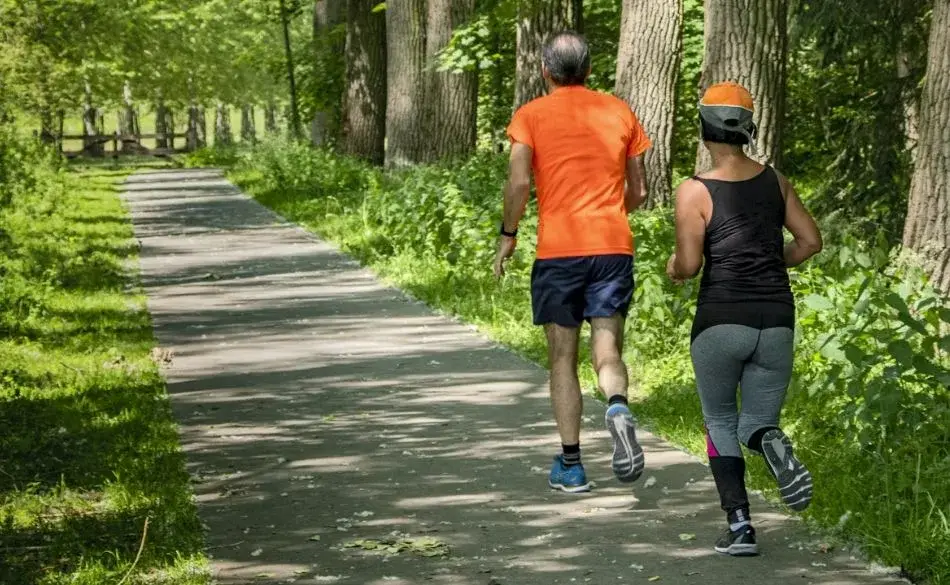
Running in 2026 sits at an unusual cultural intersection. For a growing segment of participants — particularly younger urban runners — running is as much a social identity and lifestyle statement as it is exercise. This is showing up in product design, marketing, and participation patterns simultaneously.
On the gear side, 2026 is seeing a rise in collab colorways and lifestyle-oriented designs for technically capable shoes. The Nike Vomero Premium in Realtree camo, the John Elliott × Hoka Rocket X3 — performance shoes designed to be worn off the run, not just during it. Brands are increasingly designing shoes that satisfy both serious runners and lifestyle buyers, sometimes at the cost of clear performance identity.
On the participation side, the run club boom is inseparable from social media. Younger runners are more likely to post about runs, and group runs generate twice as many kudos on Strava as solo efforts. The social reward loop — run with people, post about it, get recognition — is a genuine driver of participation frequency for this demographic.
This convergence creates tension: as running becomes more fashionable, questions arise about whether design priorities are serving runners or influencers. Marathon Handbook’s assessment from The Running Event trade show summarised it directly: “When a shoe is designed to satisfy runners and influencers at the same time, you start asking hard questions about who it’s really for.” Runners are having to get better at distinguishing performance gear from lifestyle shoes in performance-adjacent packaging.


Trend 7: Wearables and AI Coaching Are Getting Smarter
Running technology in 2026 is moving from data collection to data interpretation. GPS watches have reached near-commodity status. The frontier is what happens with the data they generate.
AI-powered training recommendations are appearing in mainstream consumer platforms — Garmin, Polar, Apple Fitness, and Strava have all moved toward more personalised, adaptive training suggestions based on your logged data. The quality of these recommendations varies significantly, but the direction is clear: training plans are becoming less generic and more responsive to individual performance patterns.
At the hardware frontier, companies like Avelo are embedding sensor technology directly into running shoes to track biomechanics, fatigue, and injury risk in real time — described as a “power meter for runners.” These are not yet mainstream-priced products, but they represent where the category is heading. The crossover between running wearables and the broader health monitoring trend (VO2 max estimation, HRV tracking, recovery scores) is bringing running data into the broader conversation about lifespan and health span that figures like Peter Attia have brought to mainstream audiences. For runners interested in what these metrics actually mean, the running cadence guide covers one of the metrics that wearables now track and what to do with the data.


Trend 8: The "Back to Basics" Counter-Trend
Against the backdrop of rising shoe prices, AI training tools, and performance foam arms races, a quieter counter-trend is visible: runners returning to simpler, more sustainable approaches to the sport. This manifests in several ways.
Lower-stack shoes are seeing renewed interest. Brooks’ Glycerin Flex and Puma’s Velocity Nitro 4 are examples of brands responding to runners who found 40mm+ stack heights disconnected and unstable. A growing segment of runners is actively seeking more ground feel, more natural movement, and less foam between foot and road.
Durability is coming back as a purchasing priority. Trade show observers noted that the word “durability” appeared prominently at The Running Event 2025 for the first time in years — a response to the perception that premium foam shoes degrade unacceptably fast for their price points.
And the Zone 2 training trend is itself a “back to basics” story: elite coaches have been prescribing mostly easy running for decades, and the data is now confirming it for recreational runners. The flashy interval session is being displaced — in many training philosophies — by more time at conversational pace. Consistency over intensity. The daily running habit guide covers how to build consistency as the foundation of progress, which aligns with where the evidence and the cultural momentum is pointing in 2026.
Want training that applies the best of what's working in 2026?
Our running coaching builds plans around consistent easy mileage, structured quality sessions, and real-life flexibility — the approach the data actually supports. Whether you're chasing a 5km PB or stepping up to your first half marathon.


FAQ: Running Trends 2026
What are the biggest running trends in 2026?
The biggest trends are: run clubs growing explosively (59% participation increase in 2024, clubs tripling), trail running going mainstream with major brand investment, ATPU foam replacing EVA in everyday shoes, Zone 2 easy running going mainstream as the evidence-backed training approach, and race participation growing at 5% (down from 11% in 2023) with young adults returning in record numbers.
Are run clubs still growing in 2026?
Yes — strongly. Running club participation grew 59% in 2024, new clubs tripled, and the trend is accelerating into 2026 driven by Gen Z and millennial social fitness culture. Saturday mornings and Tuesday evenings are the peak club run times globally. The growth is driven by social connection rather than fitness goals, with 72% of Gen Z joining primarily to meet people.
What is ATPU foam in running shoes?
ATPU (thermoplastic polyurethane-based foam compounds) is a high-energy-return, durable foam that is replacing traditional EVA in mid-range and premium everyday trainers in 2026. Once found only in elite race shoes, ATPU is now appearing in mainstream trainers from Saucony, Puma, On, and Skechers at standard price points, giving everyday runners access to noticeably better bounce and durability than previous foam generations.
What is Zone 2 running and why is it trending?
Zone 2 is running at a low, conversational intensity — roughly 60–70% of maximum heart rate. Data from 120,000 Strava runners found it’s the strongest predictor of marathon performance: how much easy running you do each week matters more than how many hard sessions. Zone 2 builds aerobic base, improves fat oxidation, and allows high training volume without accumulated fatigue. It’s trending because the data now supports what elite coaches have prescribed for decades. See the Zone 2 pace guide for how to find and train in this zone.
Is trail running growing in 2026?
Yes — trail is one of the fastest-growing running segments. Nike’s re-entry into trail (ACG relaunch, event investments), Salomon leading a new gravel shoe category, and multiple brands launching dedicated trail lines for 2026 all signal the category’s mainstream arrival. Beginner-friendly trail events are growing faster than road distances at many race operators.
Are race entry fees getting more expensive?
Yes. Race entry fees have risen every year since 2022. 10km entry fees are up 21% since 2019. This reflects increased event costs and inflation but is creating real access barriers, particularly for longer distances. Shorter events (5km, 10km) remain more accessible in both price and training commitment, and their participation rates reflect this.















