






Find Your Next Running Race
Ready to put your training to the test? Here are some upcoming running events matched to this article.
 Coach Graeme
Last updated:
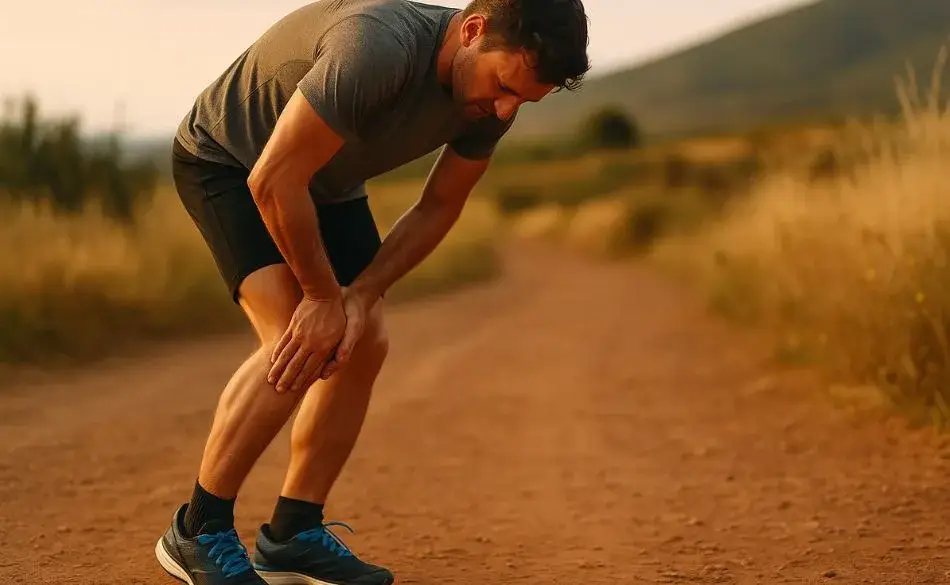
Every runner faces the same decision at some point: the legs are heavy and aching from yesterday's session, and you need to decide whether to lace up anyway or take an extra rest day. The answer depends almost entirely on what kind of soreness you're dealing with, how severe it is, and what session is scheduled. There is no single correct answer that applies to every situation — but there is a clear decision framework that makes the call straightforward once you understand the physiology.
The short version: mild, diffuse post-exercise soreness from a hard effort is generally fine to run through at easy effort. Moderate soreness warrants reducing intensity. Severe soreness, localised pain, one-sided pain, or soreness that worsens during a run are reasons to rest. Everything else falls somewhere in between — and that's where understanding the difference between DOMS and injury becomes essential.
Not sure where to start with training?
Tell us your goal and schedule, and we’ll give you clear direction.
No obligation. Quick, practical advice.
Explore our running training resources for more helpful articles and resources.
The most common cause of post-run leg soreness is delayed onset muscle soreness (DOMS) — the dull, achy heaviness that typically appears 12–24 hours after exercise and peaks somewhere between 24 and 72 hours later. It’s the familiar sensation of struggling to walk downstairs the morning after a long run or hard workout.
DOMS is caused by microscopic tears in muscle fibres — not by lactic acid, despite this being one of the most persistent myths in running. Lactate is a by-product of anaerobic energy production and causes the burning sensation felt during hard efforts, but it clears from the muscles within 1–2 hours of finishing exercise. The soreness that arrives the next morning is caused by the inflammatory response to microscopic fibre damage, not lactate accumulation.
The eccentric phase of movement — where the muscle lengthens under load — causes the most DOMS. In running, this means the quad contraction during footstrike (particularly on downhill running, where the quads act as brakes) and the calf and Achilles load during landing. This is why downhill running, speed sessions, and long runs produce pronounced DOMS, while easy flat running typically produces much less.
DOMS is a normal and expected part of the adaptation process. The microscopic damage triggers repair and supercompensation — muscles rebuild slightly stronger than before. The soreness is not evidence of a problem; it’s evidence of a training stimulus that will produce adaptation if followed by adequate recovery. Our warm-up and cool-down guide covers how proper post-run cool-down protocols can help manage the extent of DOMS by supporting blood flow clearance immediately after training.
Other causes of sore legs in runners include accumulated training fatigue (overtraining), muscle imbalances that cause certain muscle groups to overwork, inadequate recovery nutrition (particularly insufficient protein for muscle repair), and the early stages of overuse injuries — which can present initially as general soreness before localising into a specific injury pattern.
The most important skill for any runner dealing with leg soreness is distinguishing normal DOMS from the early warning signs of an overuse injury. Getting this wrong in either direction is costly: running through a developing injury causes it to worsen into a significant lay-off, while being overly cautious about normal DOMS leads to inconsistent training and lost fitness.
Stop running and seek assessment if you notice: sharp or stabbing pain at a specific point; pain that is only on one side; focal bone tenderness (shin, foot, heel) at a single point when pressed; pain that worsens progressively during a run; or soreness that does not improve at all within 5–7 days. These are red flags for stress fracture, tendinopathy, or overuse injury rather than normal DOMS.| Characteristic | DOMS (normal) | Possible injury (seek assessment) |
|---|---|---|
| Location | Diffuse across a whole muscle group | Localised to a specific point |
| Sides affected | Both legs roughly equally | Predominantly one side |
| Onset timing | 12–72 hours after exercise | During exercise, or immediately after a specific movement |
| Quality of pain | Dull, achy, heavy | Sharp, stabbing, or burning at a point |
| Response to movement | Temporarily improves during easy warm-up | Worsens or stays the same during running |
| Duration | Resolves within 3–5 days, up to 7 | Persists beyond 7 days or recurs in same location |
| Point tenderness | No specific point tender to touch | Specific point very tender when pressed |
The shin is a particular area of concern. Diffuse shin soreness after a hard week is often normal — the tibialis anterior and posterior tibialis are heavily loaded during running. But focal bone tenderness at a specific point on the tibia, pain that worsens during a run and forces a change of pace, or aching that continues at rest are signals that warrant stopping and assessment for medial tibial stress syndrome or a developing stress fracture. Our shin splint exercises guide covers the rehabilitation and strengthening approach for MTSS, and the critical warning signs that distinguish it from a tibial stress fracture.
The decision to run, modify, or rest with sore legs comes down to two primary factors: the severity of the soreness on a 1–10 scale, and whether the soreness affects gait. Altered gait is the most important factor — running with compensatory movement patterns is where DOMS transitions from a manageable discomfort into an injury risk.
| Soreness level | Description | Decision | Session modification |
|---|---|---|---|
| 1–3 / 10 | Mild: noticeable stiffness, full normal movement, no gait change | Run normally | Warm up gently for first 10 min; proceed with planned session |
| 4–5 / 10 | Moderate: uncomfortable, some restriction, gait intact | Run easy only | Replace quality session with 30–45 min easy run at conversational pace |
| 6 / 10 | Significant: clearly affecting how you move, stairs difficult | Cross-train or rest | Easy cycling, swimming, or walking; no running |
| 7–10 / 10 | Severe: significant pain, hobbling, unable to move normally | Rest | Full rest day; if persists beyond 3–4 days, seek assessment |
| Post-race (marathon) | Any level | No running 7–14 days | Walking only for first week; easy running after full recovery |
| Localised / one-sided | Any level | Stop; assess | Do not run through localised or asymmetric pain regardless of scale rating |
The training context also matters. During a peak training block where consistency is critical, a 4/10 soreness day is best managed as a recovery run rather than a rest day — maintaining the habit and the aerobic stimulus while allowing recovery. During a taper or a lower-volume week, an additional rest day with a 4/10 soreness is entirely appropriate and may produce better long-term adaptation. Our strength training programme for runners covers how to schedule gym sessions to avoid creating debilitating DOMS immediately before key running sessions — the most common scheduling mistake that creates unnecessary conflicts between strength work and running quality.
Post-marathon soreness is a different category from training DOMS. The muscle damage from running 42km at race effort is substantially greater than any training run — research using MRI and biomarker analysis has confirmed significant structural muscle damage in marathon runners that takes 10–21 days to fully resolve. Post-marathon soreness that feels similar to hard training DOMS is deceptive: the underlying tissue damage is much more extensive. The standard guidance is no running for 7–14 days after a marathon, followed by a gradual return to easy running. Many experienced coaches use the rule of one easy day per mile raced as a minimum before returning to quality training — approximately 26 days of easy or no running before any intensity returns.
Lower body gym DOMS — particularly from squats, deadlifts, Bulgarian split squats, or Nordic curls — can be severe and affect running gait significantly. Running hard on legs that are acutely sore from a heavy strength session produces poor form, reduced training stimulus from the quality session, and increased injury risk. The practical fix is scheduling: never schedule a heavy lower body gym session within 24–48 hours before a key running quality session (intervals, tempo, long run). Group hard days together and leave recovery days genuinely clear of training stress. Our runner’s lunge guide covers the hip flexor mobility work that helps manage the stiffness from lower body strength work, particularly the hip flexor soreness that can follow heavy split squat and lunge sessions.
A single episode of diffuse DOMS is normal. Recurrent soreness that keeps returning to the same specific location — the same spot on a shin, the same point on a calf, the same area of the knee — is not normal DOMS and should be assessed. Recurring localised soreness is the pattern of an overuse injury in its early stages, before it becomes acute enough to force a stop. Addressing it early — with strength work, load management, and potentially a short reduction in training volume — is far preferable to running through it until it becomes a significant injury requiring extended rest. Our guide to lower back pain when running covers the pattern of recurring soreness that signals a structural cause rather than training fatigue, which applies equally to leg pain in the same repetitive locations.
A 2018 meta-analysis by Dupuy et al. in Frontiers in Physiology compared the effectiveness of multiple common recovery techniques for DOMS. The findings ranked the interventions by their effect on muscle soreness markers and subjective soreness ratings. Massage was the single most effective intervention — more effective than cold water immersion, compression, stretching, or active recovery. Self-massage with hands, a foam roller, or a massage gun all provided benefit, though sports massage produced the strongest effect.
Sleep is arguably the most important recovery tool and the most underused. The majority of muscle protein synthesis — the process by which damaged fibres are repaired and rebuilt — occurs during slow-wave sleep. Consistently getting 7–9 hours per night during hard training blocks accelerates DOMS recovery significantly more than any active intervention. A runner sleeping 6 hours during a high-volume training week is effectively limiting their body’s ability to adapt to the training stimulus being applied.
Protein intake directly supplies the amino acids required for muscle fibre repair. A target of 1.6–2.0g of protein per kilogram of body weight per day is the standard evidence-based recommendation during heavy training. For a 70kg runner, this means 112–140g of protein per day, distributed across meals rather than concentrated in one sitting. Inadequate protein intake is a common reason runners experience persistent, slow-resolving DOMS — the repair process is limited by substrate availability.
Cold water immersion (cold bath at 10–15°C for 10–15 minutes) has moderate supporting evidence for reducing perceived DOMS and is widely used by endurance athletes after long runs or hard sessions. Contrast bathing (alternating cold and warm water) has similar evidence. The mechanism is primarily vasoconstriction reducing post-exercise inflammation and swelling in the worked muscles.
Foam rolling has mixed research evidence — some studies show meaningful reduction in DOMS symptoms, others show minimal effect. The subjective experience of most athletes is positive, and there is no evidence of harm. If foam rolling helps you feel better, use it. If you don’t notice a difference, the time is better spent on sleep or nutrition. Rolling should be moderate pressure across the full length of the muscle — avoid rolling directly over joints, bony prominences, or areas of localised injury.
Static stretching specifically does not reduce DOMS, despite widespread belief that it does. A review of 12 controlled studies found no meaningful reduction in soreness from stretching either before or after exercise. This doesn’t mean stretching has no value — hip flexor and posterior chain flexibility are genuinely important for running mechanics and injury prevention — but stretching is not a DOMS recovery tool and should not be relied upon in that role.
Training That Builds in the Recovery You Actually Need
SportCoaching's running training plans structure hard and easy days to allow proper recovery between quality sessions — so sore legs from Monday's workout don't derail Wednesday's intervals. Coaching provides session-by-session guidance on when to push, when to modify, and when to rest.
Is it OK to run with sore legs?
Mild DOMS (1–3/10), diffuse and bilateral, with normal gait — yes, easy running is fine. Moderate soreness (4–5/10) — reduce to easy recovery pace only. Severe soreness, localised pain, one-sided pain, or soreness that worsens during running — rest and assess. Altered gait is the clearest signal to stop.
What causes sore legs after running?
DOMS — microscopic muscle fibre tears from the eccentric loading phase of running (especially downhill and speed work), triggering inflammation during repair. Not lactic acid, which clears within 1–2 hours post-run. DOMS peaks 24–72 hours after exercise and resolves in 3–5 days.
How do I tell the difference between DOMS and an injury?
DOMS is diffuse, bilateral, dull and achy, temporarily improves with easy movement, and resolves in 3–5 days. Injury pain is localised, often one-sided, sharp or persistent, worsens with activity, and doesn’t resolve within a week. Focal point tenderness at bone (shin, foot) should be assessed rather than run through.
Does running help DOMS or make it worse?
Easy running temporarily reduces DOMS pain through exercise-induced analgesia, but soreness typically returns after the run. Light movement does not prolong recovery. Intense running during DOMS may prolong it or cause further damage. The rule: easy running is fine, quality sessions should be modified or postponed.
What is the fastest way to recover from sore legs after running?
Ranked by evidence: massage (strongest — Dupuy et al. 2018 meta-analysis), sleep (7–9 hours), adequate protein (1.6–2.0g/kg/day), cold water immersion (10–15°C, 10–15 min), foam rolling (mixed evidence but widely helpful). Static stretching does not reduce DOMS based on a review of 12 studies.
Ready to put your training to the test? Here are some upcoming running events matched to this article.



Head Coach & Founder, SportCoaching
Graeme is the founder of SportCoaching and has coached more than 750 athletes from 20 countries, from beginners to Olympians, in cycling, running, triathlon, mountain biking, boxing, and skiing. His coaching philosophy and methods form the foundation of SportCoaching's training programs and resources.
No matter your goals, SportCoaching offers tailored training plans to suit your needs. Whether you’re preparing for a race, tackling long distances, or simply improving your fitness, our expert coaches provide structured guidance to help you reach your full potential.
Smart, progressive training from 5km to marathon with weekly guidance.
What’s included
Choose your plan to get started with personalized training plans designed to help you reach your goals.


Minna Backman
When you’re new, feedback is especially important, and Graeme is highly skilled at both analyzing numbers and understanding the importance of mental strength.











