Why Strength Training Exercises Matters for Cyclists
If you’ve ever hit a hill and felt your legs turn to jelly halfway up, that’s your body telling you it needs more strength. Cycling builds endurance, but it doesn’t always develop the muscle power needed for stability, control, and sprinting efficiency. That’s where strength training for cyclists becomes a game-changer.
When you train key muscle groups (your glutes, quads, hamstrings, and core) you create the foundation for smoother pedaling and better bike handling. These muscles drive every climb, every acceleration, and every hard push on the pedals.
Research in the Journal of Strength and Conditioning Research found that cyclists who added two sessions of cycling performance strength training per week improved time trial results and reduced fatigue over long distances. For more detailed scientific backing see this meta-analysis on strength training for endurance athletes.
Think of strength work as your body’s armor. It helps absorb shock on rough terrain, supports proper posture during long rides, and prevents the overuse injuries common in endurance sports. Injury prevention strength training is especially important for riders logging high mileage or training year-round.
Here’s the thing: the best off-bike strength training for cyclists doesn’t have to be complicated. You don’t need fancy machines or heavy weights. Consistency and control matter more than maxing out the barbell.
Start with bodyweight movements that challenge balance and coordination, like single-leg squats and planks. These teach your body to stay stable on uneven roads and during sharp turns. Once you’ve built a solid foundation, you can add resistance for more power gains.
You’ve built the power in the gym, now it’s time to put it to work on the road. Our Cycling Training Plans help you translate gym strength into real-world speed, endurance, and climbing power. Each plan is designed by experienced coaches who understand how off-bike work connects to better on-bike performance.
Whether you’re chasing a new FTP, preparing for a race, or simply want stronger, smoother rides, our structured programs give you the balance of training and recovery your body needs to perform at its best.
Train smart, build lasting power, and feel stronger every time you ride.
Explore the Training Plans
The Goblet Squat
The goblet squat is one of the most effective strength training exercises for cyclists. It builds strong legs and a stable core without adding unnecessary bulk. By holding a dumbbell or kettlebell close to your chest, you maintain good posture while targeting your glutes, quads, and hamstrings. The same muscles that power every pedal stroke.
How to Do It
- Stand with feet shoulder-width apart and hold a kettlebell or dumbbell at your chest.
- Engage your core and slowly lower your hips between your heels while keeping your chest up.
- Drive through your mid-foot to return to standing, maintaining balance throughout.
- Perform 3 sets of 8–10 controlled reps, resting 60 seconds between sets.
Why It Matters for Cyclists
- Improves leg strength for cyclists. Especially in the quads and glutes used during climbs.
- Encourages even pedal pressure for smoother, more efficient strokes.
- Strengthens connective tissues and supports injury prevention strength training.
- Teaches breathing and bracing, helping you stay stable during long rides or sprints.
Start light and increase load gradually to avoid knee or back strain. This isn’t about heavy lifting, it’s about teaching your body to produce more cycling power with less fatigue. After 6–8 weeks, expect stronger climbing rhythm and greater endurance at the same heart rate. Small, consistent progress turns into huge performance gains when combined with smart off-bike strength training. New to this type of training? Read our full guide on cycling and weight training for beginners to learn how to get started safely and effectively.


Romanian Deadlift
The Romanian deadlift is a must-have in any strength training for cyclists routine. It builds posterior chain strength (that’s your hamstrings, glutes, and lower back) which gives you more control and endurance on climbs and sprints. Stronger hamstrings balance out the constant quad use that cycling demands, helping prevent muscle imbalances and knee pain.
How to Do It
- Hold a barbell or pair of dumbbells in front of your thighs with arms straight and knees slightly bent.
- Hinge forward from your hips, keeping your back flat and shoulders pulled back.
- Lower the weights until you feel a stretch in your hamstrings. Don’t let them round your back.
- Drive your hips forward and squeeze your glutes to return to standing.
- Perform 3 sets of 8–10 reps with slow, controlled movement.
Why It Matters for Cyclists
- Builds leg strength for cyclists that translates into smoother, more efficient pedal strokes.
- Reinforces hip hinge mechanics, which improves posture on the bike.
- Reduces the risk of hamstring tightness and lower back fatigue during long rides.
- Improves stability during seated climbing and sprint acceleration.
This is one of the best off-bike strength training movements for creating balanced power output. Keep the tempo steady (about three seconds down, one second up). It’s not about speed; it’s about control. Over time, you’ll notice your pedal stroke feels smoother, your hips stay steady, and your lower body feels stronger through every rotation. Combine this with squats, and you’ll build the engine that drives cycling performance strength training forward.
Bulgarian Split Squat
The Bulgarian split squat is one of the best strength training exercises for cyclists because it mimics how you produce force. It builds powerful quads and glutes while improving balance, coordination, and knee stability. For riders dealing with uneven pedal strokes or power imbalances, this move can make a huge difference.
How to Do It
- Stand about two feet in front of a bench or step and rest one foot behind you on it.
- Hold a dumbbell in each hand or keep your hands on your hips for balance.
- Lower your back knee toward the floor, keeping your front knee in line with your toes.
- Push through your front heel to return to standing without locking your knee.
- Perform 3 sets of 8–10 reps per leg with slow, steady movement.
Why It Matters for Cyclists
- Develops single-leg strength to correct power imbalances between your left and right leg.
- Enhances hip and knee stability. Critical for injury prevention strength training.
- Engages your core for better balance and control, especially when standing on climbs.
- Improves pedal efficiency by strengthening the muscles used in the upstroke phase.
This exercise is incredibly effective for off-bike strength training for cyclists who want to refine their control and endurance. Keep your torso upright and move slowly to avoid leaning forward. You’ll feel your glutes, hamstrings, and quads working together (just like they do when powering through a steep climb). Over time, you’ll notice more stability on the saddle and less fatigue in your weaker leg. For cyclists aiming to boost cycling power without added bulk, the Bulgarian split squat is pure gold.
Hip Thrust
The hip thrust is one of the most effective strength training exercises for cyclists to build glute power. Your glutes are the biggest drivers of cycling power, especially during climbs, accelerations, and hard seated efforts. Many cyclists overlook this area, relying too much on quads. That’s a big mistake as weak glutes can limit performance and increase your risk of knee and hip pain.
How to Do It
- Sit on the floor with your upper back against a bench or sturdy box and a barbell or dumbbell resting across your hips.
- Bend your knees to about 90 degrees with feet flat on the ground and shoulder-width apart.
- Drive through your heels, lifting your hips until your body forms a straight line from shoulders to knees.
- Pause briefly at the top and squeeze your glutes before lowering back down slowly.
- Perform 3 sets of 10–12 reps, resting 60 seconds between sets.
Why It Matters for Cyclists
- Improves glute strength and endurance, helping sustain higher power outputs on climbs.
- Balances the posterior chain to reduce overreliance on the quads.
- Enhances hip stability for smoother, more controlled pedaling.
- Supports injury prevention strength training by protecting knees and lower back during long rides.
This is a cornerstone move in off-bike strength training for cyclists who want more control and endurance. Keep the motion slow and focus on a full squeeze at the top. Avoid arching your back, the lift should come from the hips, not your spine. Over a few weeks, you’ll feel stronger in your seated climbs, accelerate faster out of corners, and hold higher speeds without burning out. When done right, the hip thrust transforms how your lower body delivers power through every pedal stroke.
You’ve done the miles, now make every ride count. The 7-Day Haute Route Training Plan is designed by experienced coaches to get you peak ready, recover faster, and ride with confidence on your event day.
Whether it’s your first Haute Route style ride or you’re chasing a new personal best, this structured plan gives you the right mix of workouts, recovery, and pacing to perform at your best.
Train smart this week, relax your doubts, and show up stronger than ever.
View the 7-Day Plan
Plank Variations
A strong core is the hidden force behind smooth, efficient riding. Plank variations are simple but powerful strength training exercises for cyclists that build endurance in the muscles that stabilize your spine and pelvis. A strong core prevents wasted movement, supports better posture, and improves control on descents and in crosswinds.
How to Do It
- Start with a forearm plank: elbows directly under shoulders, body in a straight line from head to heels.
- Engage your glutes and draw your belly button toward your spine. Don’t let your hips sag.
- Hold for 30–60 seconds, breathing steadily.
- Progress to side planks and reach-through planks to challenge rotational stability.
- Aim for 3–4 rounds of 30–60 seconds each, resting 30 seconds between variations.
Why It Matters for Cyclists
- Improves core strength for cyclists to maintain posture and form during long rides.
- Reduces upper body fatigue and back pain caused by weak stabilizers.
- Helps transfer power more efficiently from your hips to the pedals.
- Supports better breathing control when riding in aero or climbing positions.
Many riders underestimate how much their core affects cycling performance strength training. Weak core muscles lead to swaying shoulders and wasted energy. Think of planks as your internal frame, the stronger it is, the less energy you lose fighting gravity and motion. Mix in side planks once a week to challenge your obliques, or try stability ball planks to improve coordination. Stronger core muscles won’t just make you faster; they’ll make every ride feel smoother and more efficient. For exercises focused on your back (including the muscles that support your posture and pedaling power) see our detailed guide on best back exercises for cyclists.
Single-Arm Row
When people talk about strength training for cyclists, they often forget the upper body. The single-arm row fixes that. It builds pulling strength, shoulder stability, and posture. All crucial for keeping control of your bike during long rides, climbs, and descents. It also balances the pushing forces developed from the hours you spend leaning on handlebars.
How to Do It
- Place your right knee and hand on a bench for support, holding a dumbbell in your left hand.
- Keep your spine neutral and shoulders level as you pull the weight toward your rib cage.
- Pause briefly, then lower the dumbbell with control. Don’t let it drop.
- Switch sides and repeat for 3 sets of 10–12 reps per arm.
- Focus on a smooth, controlled pull rather than lifting heavy.
Why It Matters for Cyclists
- Improves upper-body strength for cycling, helping you handle the bike with more confidence.
- Reinforces posture, reducing shoulder and neck strain during long rides.
- Stabilizes the scapula for smoother, more controlled movement on rough terrain.
- Balances muscle groups neglected by pedaling and supports off-bike strength training.
This exercise keeps your upper body strong without adding bulk. Think of it as your insurance against fatigue when pushing over climbs or controlling descents. For riders who spend hours in the saddle, strong lats and shoulders make a world of difference. You’ll notice better breathing mechanics and smoother handling. Combine this with planks and squats, and you’ll have a balanced full-body strength program for cyclists that builds both control and endurance. The single-arm row rounds out your training, keeping your body aligned, powerful, and ready for anything the road throws at you. If you’d like to dive deeper into building your upper-body strength, check out our guide on upper body weight training for cyclists for more targeted exercises and expert tips.
Want to shave minutes off your next effort? The Cycling Time Trial Training Plan is crafted by expert coaches to boost your power, refine your pacing, and dominate your next time trial.
Whether you’re racing against the clock or chasing your personal best, this plan gives you the tailored structure, key workouts, and strategic recovery to deliver peak performance.
Train with intention, ride with confidence, and set a new benchmark.
Explore the Time Trial PlanWeekly Strength Training Plan for Cyclists
Now that you know the key strength training exercises for cyclists, it’s time to bring them together into a simple and effective weekly plan. This balanced approach focuses on leg power, core stability, and upper-body control. Everything you need for more efficient and powerful rides. Even two short gym sessions each week can transform your performance when you train with consistency and purpose.
👉 Swipe to view full table
| Day | Focus | Exercises | Sets & Reps |
|---|---|---|---|
| Monday | Lower Body Strength | Goblet Squat, Romanian Deadlift | 3 x 8–10 each |
| Wednesday | Core and Balance | Plank Variations, Pallof Press (optional) | 3 rounds x 30–60 sec each |
| Friday | Full Power Session | Hip Thrust, Bulgarian Split Squat, Single-Arm Row | 3 x 8–10 each |
Progression Tips
- Increase resistance by small amounts – 2 to 4 kilograms at most per week.
- Keep the movement controlled; avoid rushing through reps for the sake of load.
- Rest 60–90 seconds between sets to maintain form and power output.
- Include a deload week every 4–5 weeks by reducing load by 40%.
One of my coached athletes used this exact three-day split while training for a 200km gran fondo. Within eight weeks, his sustained cycling power improved by nearly 5%, and he reported less fatigue on climbs. Consistency and patience matter far more than chasing heavy weights.
This balanced plan works year-round for off-bike strength training for cyclists. It reinforces every pedal stroke you take while preventing the overuse injuries that often sideline endurance athletes. Combine this program with proper recovery, sleep, and nutrition, and you’ll ride stronger, smoother, and faster than ever before.

Bonus Section – Advanced Strength Work for Cyclists
Once you’ve mastered the basics of strength training for cyclists, adding a few advanced movements can help you unlock more stability, control, and raw power. These exercises target smaller supporting muscles that improve balance, posture, and coordination. Essential for riders training for races, climbs, or long endurance events.
1. Pallof Press (Anti-Rotation Core Stability)
- Stand sideways to a cable or resistance band anchored at chest height.
- Hold the handle close to your chest, step out to create tension, and press your arms straight forward.
- Hold for 2–3 seconds, resisting rotation, then slowly return to the start.
- Why it helps: Builds core strength for cyclists and keeps your torso stable when riding out of the saddle or sprinting.
2. Step-Up (Explosive Climbing Power)
- Stand in front of a bench or box at knee height while holding dumbbells.
- Step up with one foot, pressing through the heel, and bring the other leg to meet it on top.
- Lower with control and repeat for 8–10 reps per leg.
- Why it helps: Builds single-leg power that translates directly to more efficient climbing and smoother pedal strokes.
3. Face Pull (Upper-Back and Shoulder Strength)
- Attach a rope handle to a cable station at upper chest height.
- Pull the rope toward your face, leading with your elbows and squeezing your shoulder blades together.
- Control the return to the start position and repeat for 10–12 reps.
- Why it helps: Reinforces posture and shoulder stability, reducing fatigue during long rides and improving upper-body strength for cycling.
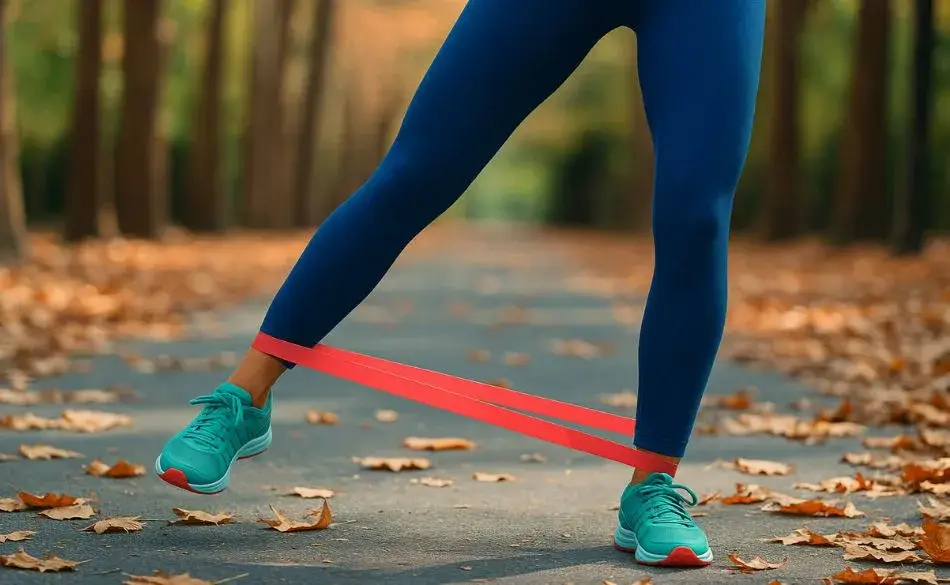
These advanced moves fit best as add-ons after your main lifts or as a quick standalone session on light days. Think of them as fine-tuning your engine. Small, focused tweaks that make a big difference in how smooth, strong, and controlled you feel on the bike. This kind of off-bike strength training for cyclists helps you ride longer, handle better, and push harder when it counts. For riders who prefer lighter, portable tools, our guide on resistance band training for cyclists shows how to build strength effectively anywhere.