





Find Your Next Cycling Race
Ready to put your training to the test? Here are some upcoming cycling events matched to this article.
 Coach Graeme
Last updated:
FTP does decline with age — approximately 5–8% per decade from the mid-30s. But most of that decline is driven by training changes, not physiology alone: volume drops as life gets busier, intensity is reduced out of misplaced caution, and strength work disappears. Age-related physiology matters less than most cyclists assume. This guide covers what is actually changing in your body, average FTP benchmarks by age, how fractional utilization explains why FTP can stay strong even as VO2max declines, and the specific training adjustments that work for masters cyclists.
Not sure where to start with training?
Tell us your goal and schedule, and we’ll give you clear direction.
No obligation. Quick, practical advice.
Explore our cycling fitness resources for more helpful articles and resources.
Understanding the specific mechanisms behind age-related performance decline helps target training adjustments precisely rather than making broad, counterproductive changes.
VO2max declines at approximately 10% per decade after age 30–35. This is perhaps the most consistent finding in exercise physiology research on ageing athletes. VO2max represents the ceiling of aerobic capacity — the maximum rate at which the cardiovascular system can deliver oxygen to working muscles. A declining ceiling means there is less total aerobic capacity to work with. However — and this is the crucial nuance — VO2max is not the primary determinant of FTP for most trained cyclists.
Muscle mass decreases progressively (sarcopenia). Sarcopenia — the progressive loss of skeletal muscle mass and strength with age — begins in the 30s and accelerates through the 40s and 50s. It particularly affects Type II (fast-twitch) muscle fibres, which are responsible for explosive power and short-duration high-intensity efforts. FasCat’s coaching research notes that testosterone declines at approximately 1.6% per year — roughly 16% per decade — which reduces the anabolic signal for muscle protein synthesis and slows recovery from training loads. Cycling without strength training accelerates this process significantly.
Recovery time increases. FasCat’s observed pattern across hundreds of masters athletes: a hard training day at 55 typically requires twice the recovery time as at 35. What used to take one night’s sleep now takes two full days. This does not mean you can train less hard — it means the spacing between hard sessions must increase, and the recovery quality (sleep, nutrition, stress management) matters more than it did at younger ages.
Hormonal environment changes. Beyond testosterone, growth hormone declines and cortisol:testosterone ratios shift unfavourably with age, meaning the same training stimulus produces a smaller anabolic response and a proportionally larger catabolic (breakdown) response. This is why identical training blocks at 50 and 30 produce different outcomes — not because adaptation stops, but because the training:recovery equation requires rebalancing.
What does not change: The physiological mechanisms that drive FTP improvement — mitochondrial development, capillarisation, neuromuscular adaptation, improved metabolic efficiency — remain trainable at any age. CycleCoach’s coaching analysis of athletes over 40 is unequivocal: adaptation does not stop at 40. The margin for error shrinks, but the capacity to adapt remains. This distinction is the foundation of intelligent masters training.
FTP figures vary enormously by training background, body weight, and years of structured training — two 50-year-old cyclists can have FTPs that differ by 100+ watts based on training history alone. The table below gives typical W/kg ranges for recreational cyclists at different ages.
| Age range | Recreational male W/kg | Recreational female W/kg | Well-trained masters W/kg |
|---|---|---|---|
| 20s–30s | 2.8–3.5 | 2.3–3.0 | 3.5–4.5+ (competitive age-groupers) |
| 40s | 2.5–3.2 | 2.1–2.8 | 3.2–4.2 (structured training maintained) |
| 50s | 2.2–3.0 | 1.9–2.6 | 3.0–4.0 (consistent training, strength work) |
| 60s | 2.0–2.7 | 1.7–2.3 | 2.7–3.5 (exceptional for consistently trained) |
| 70s+ | 1.7–2.4 | 1.5–2.0 | 2.3–3.0 (lifelong athletes, competitive masters) |
These are ranges, not ceilings. Athletes who have trained with structure throughout their careers regularly exceed the upper bounds. Those new to structured training in their 50s or 60s often begin below the lower bounds and see rapid improvement in the first 12–24 weeks. The W/kg metric is particularly useful for masters cyclists because it accounts for the body composition changes that accompany ageing — a 60-year-old cyclist with a 220W FTP and 72kg body weight has a 3.06 W/kg FTP that is genuinely strong by any benchmark. Our cycling power zone calculator calculates training zones directly from your FTP, whatever your age.
Fractional utilization is the percentage of your VO2max that you can sustain for prolonged efforts — typically expressed as FTP as a percentage of your VO2max power. For moderately trained endurance athletes, normal fractional utilization sits at 75–85% of VO2max. This means that if your VO2max power is 300W, your FTP might sit at 225–255W (75–85%).
CTS explains the concept through a warehouse analogy: VO2max is the size of the warehouse (total aerobic capacity). FTP determines how full the warehouse is packed (what percentage of that capacity you can sustain). VO2max intervals raise the ceiling — they make the warehouse bigger. Threshold and sweet spot training improve how efficiently you use the available space — they fill the warehouse more completely. For aging cyclists whose VO2max ceiling is declining, improving fractional utilization from 75% to 82% can produce meaningful FTP improvement even without raising the ceiling at all.
The practical implication: Many masters cyclists stop doing threshold and sweet spot training because they feel harder and recovery takes longer. This is precisely the training that maintains fractional utilization — eliminating it accelerates FTP decline faster than VO2max loss alone.
CTS data shows that many athletes in their 50s–70s have fractional utilizations below 75% — meaning there is significant FTP improvement available without any improvement in VO2max, purely through threshold work that fills the existing capacity more completely. This is one of the reasons structured training produces large FTP gains in masters athletes who have previously trained without specific intensity targets — they improve fractional utilization from a low baseline quickly. Our lactate threshold cycling guide covers the specific training that drives fractional utilization improvement.
The most counterproductive thing many masters cyclists do is reduce or eliminate high-intensity training in the belief that older bodies need more gentle riding. Joe Friel’s evidence-based framework for masters cycling, summarised across multiple books and coaching analyses, includes VO2max intervals twice per week as non-negotiable for preserving aerobic capacity. Just twice weekly — not daily high-intensity work — is enough to stimulate the adaptations that maintain the VO2max ceiling and keep fractional utilization high.
Effective VO2max sessions for masters cyclists: 3–6 × 3–5 minutes at 106–120% FTP (Zone 5), with full recovery (3–5 minutes Zone 1) between efforts. Start with shorter intervals (3 × 3 minutes) and build over weeks. The key is that each effort genuinely reaches the target intensity — three quality intervals at 110% FTP produce better VO2max adaptation than six mediocre intervals at 95% FTP.
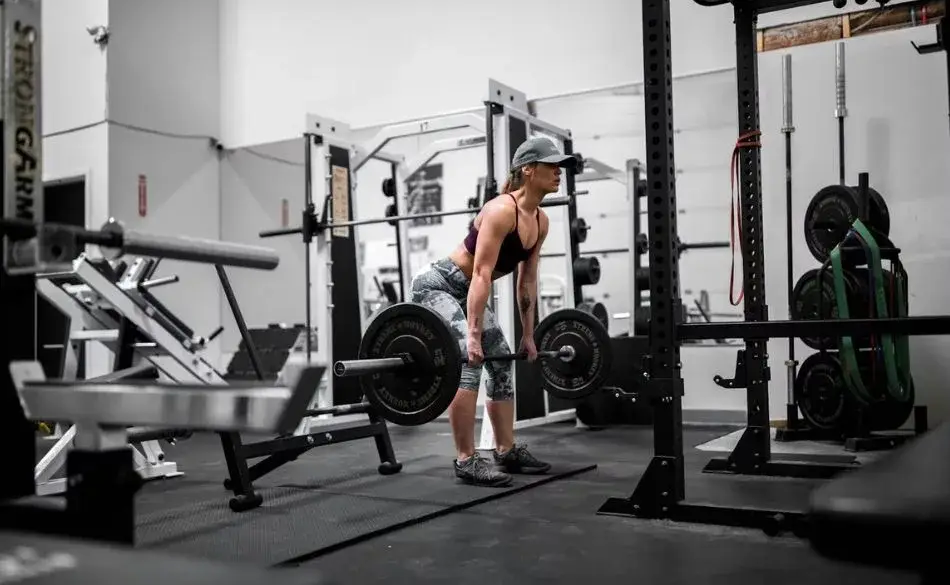
Strength training is the intervention with the strongest evidence for slowing age-related FTP decline. Sarcopenia — the progressive muscle loss that reduces power output — is directly countered by resistance training. Joe Friel’s prescription is two sessions per week, year-round, even during racing season. CycleCoach identifies the aim: not hypertrophy for its own sake, but structural support — maintaining the muscular chassis that allows progressive cycling overload to continue without breakdown.
Key exercises for masters cyclists: single-leg squat or leg press (replicates single-leg cycling force application), Romanian deadlift (posterior chain and hip extension), hip thrusts (glute power), calf raises (pedalling mechanics). Focus on compound movements with moderate load at moderate repetitions (3 × 8–12) rather than maximum effort lifting. Two focused 30–45 minute sessions per week is sufficient and manageable within a cycling training schedule. Our calf exercises for cyclists guide covers the lower-leg specific strength work most relevant to cycling performance.
In a younger athlete, hard sessions can be separated by 24 hours with effective recovery. For most athletes over 45, 48 hours is the minimum effective gap, and 72 hours is often appropriate after very hard threshold or VO2max sessions. This does not mean fewer hard sessions per week — it means structuring the training week differently to accommodate longer spacing.
A typical masters training week structure: hard session Tuesday, easy Zone 2 Wednesday, hard session Thursday or Friday, easy or rest Saturday, long endurance ride Sunday. The 48-hour gap between Tuesday and Thursday quality sessions is the key structural principle — attempting hard sessions on consecutive days in masters cyclists typically produces cumulative fatigue that impairs the second session and extends total recovery time beyond the savings. Our complete cycling training plan guide covers the weekly structure principles that apply broadly — the masters adjustments layer on top of these fundamentals rather than replacing them.
Older athletes need more protein than younger athletes to achieve the same rate of muscle protein synthesis. The recommended intake for masters cyclists is 1.8–2.2g of protein per kilogram of body weight per day — meaningfully higher than general dietary guidelines (0.8g/kg/day) and higher than what most recreational cyclists consume. This protein should be distributed across 4–5 meals/snacks throughout the day rather than concentrated in one or two meals, as older muscle has a blunted anabolic response to any single protein bolus.
Practical target: for a 75kg cyclist, this means approximately 135–165g of protein daily. Post-ride protein consumption (20–30g within 45 minutes of finishing) is particularly important — the post-exercise anabolic window appears to be more significant in older athletes than younger ones.
CycleCoach’s coaching analysis identifies sleep as the most commonly overlooked recovery variable in masters athletes. Less sleep does not just mean subjective tiredness — it means less growth hormone release (which primarily occurs during deep sleep), impaired protein synthesis, elevated cortisol, and reduced neuromuscular function during subsequent training sessions. Seven-plus hours of quality sleep per night should be treated as training, not a luxury, for masters cyclists pursuing FTP maintenance. Our guide on cycling and sleep quality covers how training timing affects recovery — particularly relevant when managing late evening sessions around work and family commitments. And for masters cyclists just beginning structured training who want to understand how long the aerobic building process takes, our guide on building a cardio base covers the realistic timeline for physiological adaptation at different ages.
The aerobic base — long, genuinely easy Zone 2 rides — remains as important at 55 as at 35. FasCat coaches note that while 50+ athletes can no longer back up a hard Saturday with an equally hard Sunday, they can still complete long aerobic rides. This endurance capacity is worth preserving deliberately. One long Zone 2 ride per week (2.5–4 hours depending on time availability) maintains the aerobic base that supports everything else. Our cycling base training guide covers the Zone 2 approach that builds this foundation efficiently.
| Variable | Typical 25–35 year old | Masters 45–55 year old | The adjustment |
|---|---|---|---|
| Hard sessions/week | 2–3 | 2 (max) | Maintain 2 quality sessions; avoid adding a 3rd |
| Gap between hard sessions | 24–36 hours | 48–72 hours | Never two consecutive hard days |
| Strength training | Optional / seasonal | 2×/week year-round | Non-negotiable for masters |
| Long ride duration | 3–5 hrs | 2.5–4 hrs | Slightly shorter; still important |
| Recovery week frequency | Every 4 weeks | Every 3 weeks | More frequent deload weeks |
| Daily protein target | 1.4–1.6 g/kg | 1.8–2.2 g/kg | Increase protein specifically |
| Sleep target | 7+ hours | 7–8+ hours (prioritised) | Protect sleep before training volume |
The single most important structural change for masters cyclists is recovery frequency. FasCat’s research observation: a 50+ cyclist can do everything a 35-year-old can do on a given hard day. What they cannot do is back it up the following day at the same quality. Training structure that respects this — with deliberate recovery spacing rather than consecutive hard days — typically produces significantly better FTP outcomes than equivalent volume with poor spacing. Our sprint training for older athletes guide covers how to specifically develop and maintain top-end power as part of a wider masters training programme.
Stop worrying about peak power numbers from your 30s. FasCat’s coaching insight: most 50+ athletes still ride strong long efforts — centuries, fondos, multi-hour rides. What decreases is primarily the short-duration explosive power and the ability to back up hard efforts on consecutive days. Redefining performance targets around durability and sustained aerobic output — rather than 1-minute peak power or back-to-back hard days — produces both better training outcomes and more enjoyable riding.
Stop reducing intensity across the board. The reflex to train entirely easy as you age produces exactly the FTP decline it is trying to prevent. The intensity needed for FTP maintenance is not extreme — two quality sessions per week is sufficient. Eliminating all hard work removes the primary training stimulus for both VO2max and fractional utilization.
Stop ignoring body composition.** The W/kg equation works in both directions. Improving power-to-weight through modest body fat reduction (not aggressive cutting) improves relative FTP without requiring absolute FTP improvement. Our ideal race weight guide covers the evidence on body composition optimisation — while written for triathletes, the W/kg principles apply equally to road cycling performance.
For context on typical cycling speeds to benchmark where your power output sits relative to others, our typical cycling speed guide gives age-group and fitness-level benchmarks that complement FTP data.
Ride Faster at Any Age With Structured Coaching
SportCoaching's cycling coaches work with masters athletes across all levels — building periodised plans that respect recovery demands, incorporate strength work, and target FTP improvement specifically for cyclists 40+. AUD $143/month, no lock-in, 90-day performance guarantee.
Does FTP decline with age?
Yes — approximately 5–8% per decade from the mid-30s. But training changes (reduced volume, eliminated intensity, abandoned strength work) drive more of this decline than age-related physiology alone. Well-structured masters training can hold FTP flat or improve it well into the 60s.
What is a good FTP for a 50-year-old cyclist?
Typical recreational range: 2.2–3.0 W/kg for men; 1.9–2.6 W/kg for women. Well-trained masters cyclists often achieve 3.0–4.0 W/kg. These are not ceilings — lifelong structured training regularly produces above-average results at any age.
What is fractional utilization and why does it matter for aging cyclists?
Fractional utilization is FTP as a percentage of VO2max power. Normal range: 75–85%. Even as VO2max declines with age, improving fractional utilization through threshold training can keep FTP stable or growing. Many masters athletes have sub-75% utilization — meaning large FTP gains are available without any VO2max improvement.
How should training change as you age as a cyclist?
Key adjustments: add strength training 2×/week year-round; maintain 2 quality sessions per week (don’t eliminate intensity); extend recovery gap between hard sessions to 48–72 hours; increase protein to 1.8–2.2g/kg/day; take recovery weeks every 3 weeks instead of 4; protect sleep as non-negotiable.
Can you increase FTP after 50?
Yes — definitively. CTS coaches report 15–50% FTP gains in 50+ athletes beginning structured training. The mechanisms that drive FTP improvement remain trainable at any age. What changes is the margin for error — recovery, sleep and nutrition matter more, and training must be structured to respect longer recovery windows.
Ready to put your training to the test? Here are some upcoming cycling events matched to this article.
Head Coach & Founder, SportCoaching
Graeme is the founder of SportCoaching and has coached more than 750 athletes from 20 countries, from beginners to Olympians, in cycling, running, triathlon, mountain biking, boxing, and skiing. His coaching philosophy and methods form the foundation of SportCoaching's training programs and resources.
No matter your goals, SportCoaching offers tailored training plans to suit your needs. Whether you’re preparing for a race, tackling long distances, or simply improving your fitness, our expert coaches provide structured guidance to help you reach your full potential.
Structured cycling coaching to build power, endurance, and speed.
What’s included
Browse upcoming Australian running, cycling, and triathlon events in one place. Filter by sport, check dates quickly, and plan your training around something real on the calendar.
Choose your plan to get started with personalized training plans designed to help you reach your goals.


Minna Backman
When you’re new, feedback is especially important, and Graeme is highly skilled at both analyzing numbers and understanding the importance of mental strength.